
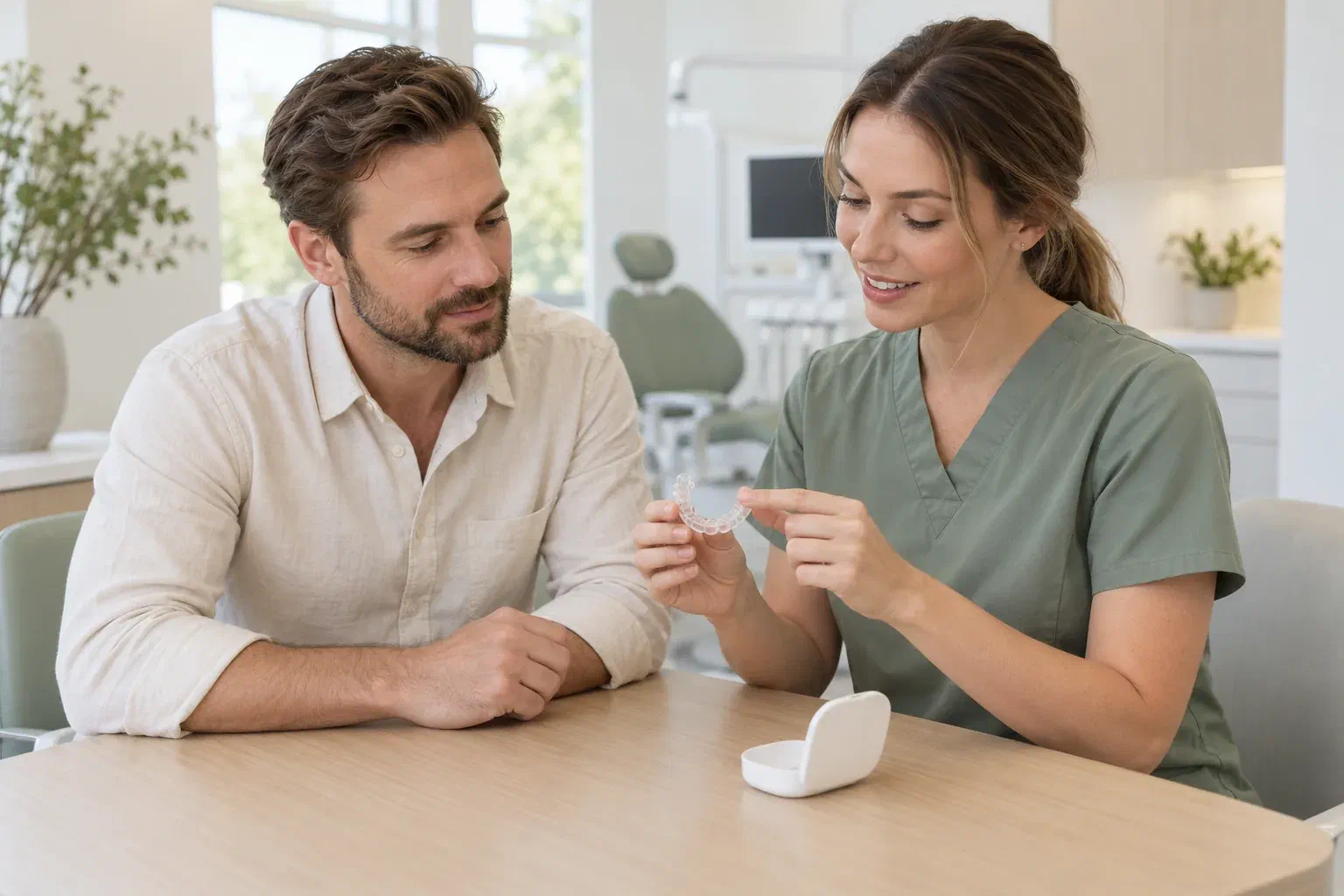
Illustrative explanation of how to handle a custom oral sleep appliance
Specialized Care

Sleep Appliance Fitting

A sleep-appliance fitting should leave you confident about safe insertion, removal, cleaning, and the prescribed starting plan. Discuss fitting and follow-up in Milton as part of coordinated dental and medical sleep care.

A closer look at fitting a sleep appliance

Learn the device with support before making it part of your night.

A fitting appointment is where a custom oral sleep appliance is checked in your mouth and its use is explained. It follows the appropriate assessment and treatment planning. The visit should include more than collecting a device: you need to understand how it seats, how it is removed, and what the starting instructions mean for you.

Different designs have different handling, cleaning, and adjustment requirements. Advice for a friend's device or an online mouthpiece may not apply to yours. Ask the treating clinician to demonstrate the actual appliance and then watch you practise, especially if hand strength, vision, or uncertainty about the mechanism makes the routine difficult.

At Milton Dental Clinic, tell us whether the appliance has already been prescribed or made and which provider is managing your sleep care. We can discuss the fitting arrangements, required records, and appropriate coordination. A fitting visit does not replace medical diagnosis or establish treatment effectiveness simply because the device can be worn comfortably.

Discuss your sleep-appliance fitting arrangements
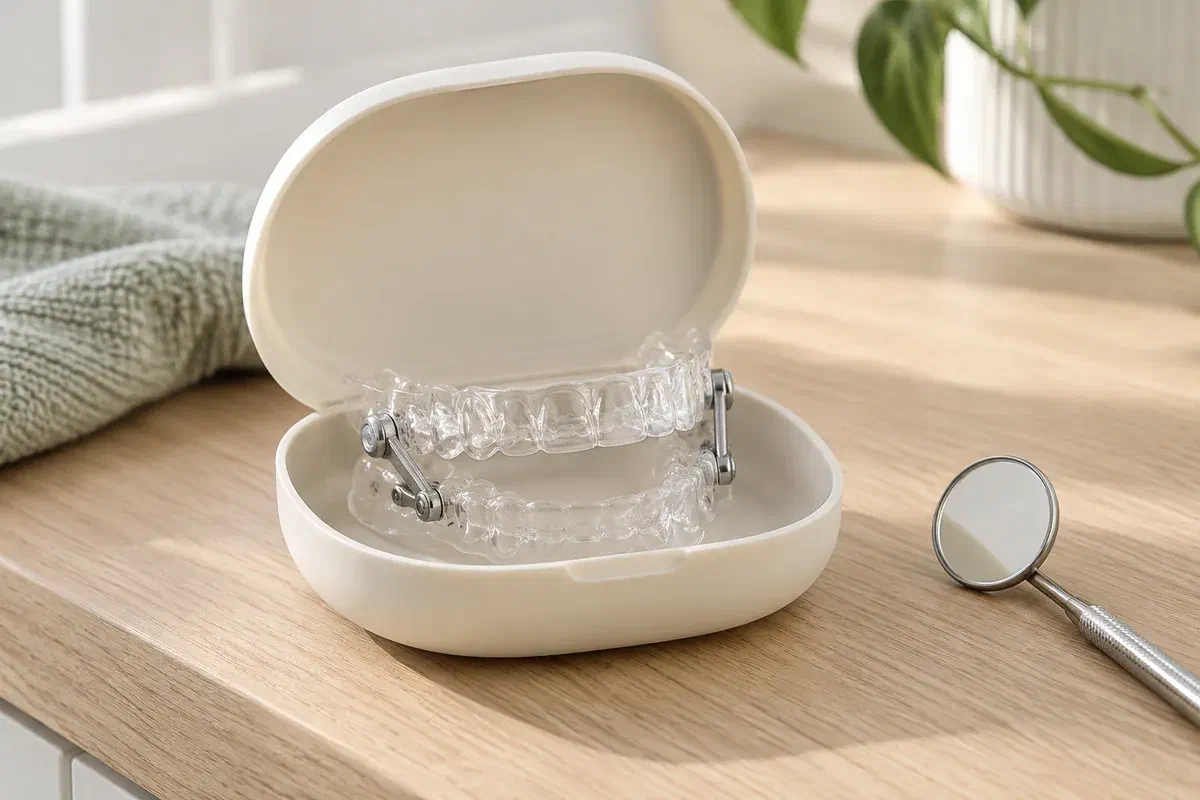
Illustrative connected sleep appliance in an open protective case
What to clarify before taking the device home

The appliance should fit the treatment plan and your ability to use it.

Raise practical questions during the appointment, even if they seem small. Understanding the first steps can prevent avoidable difficulty when you are trying to use the device without the clinician beside you.

How the trays seat and release

Ask where to place your fingers and how the components should engage for your design. Practise removal as well as insertion. Tell the clinician if you cannot reproduce the technique comfortably; the answer should not be to bite harder, force a tray, or hope it becomes easier at home.

A pressure point, sharp edge, or uncertain fit

Describe what you feel while the appliance is checked. Some awareness of a new device is different from pain, tissue injury, or a tray that will not seat. The clinician should evaluate the concern and explain whether adjustment, further assessment, or a different arrangement is needed before use begins.

Unclear instructions about settings and initial wear

Ask which setting is the prescribed starting point and whether any home adjustment is authorized. Confirm exactly what to do, when to do it, and when to stop and call. Do not assume the fitting position is the final treatment position or that every appliance is adjusted by the patient.

Tell the provider about new dental treatment or a change in your teeth since the appliance records were made. A filling, crown, extraction, or new symptom may affect the fit and should be reviewed before the device is accepted for use.

What a complete fitting appointment provides

A checked fit, a demonstrated routine, and a clear next review.

The fitting gives the clinician an opportunity to compare the appliance with the planned design and your current mouth. Ask what is being checked and how any concern will be addressed. A device should not be considered ready merely because it was manufactured from your records; the clinical fit and instructions still matter.

It is also the beginning of an ongoing process. The first position and wearing instructions may be part of a staged plan, with later review of comfort and treatment response. Ask who will manage each step and how the medical provider will assess effectiveness, so you know which questions belong at which appointment.

Patient information: AADSM — appliance delivery, patient instruction, and continuing management

Hands-on practice with your own appliance

Practise the sequence in front of the clinician and ask for another demonstration where needed. Discuss any handling limitations openly. If a caregiver is appropriately involved, clarify what they need to learn too, without assuming the device can simply be inserted or removed using any convenient technique.

Written instructions that match the device

Ask for clear information about wearing, cleaning, storage, and any permitted adjustment. Keep the manufacturer and provider details with those instructions. A written plan is particularly useful when similar-looking components have different functions or when you need to distinguish maintenance from a treatment-setting change.

A baseline and follow-up arrangement

Confirm that relevant fit, bite, and jaw findings are recorded and that you know when the first review is due. Ask how to contact the provider sooner if there is a problem. The appointment should end with a supported plan, not an instruction to tolerate whatever happens until the next routine checkup.

What happens during the fitting

Check the appliance, practise its use, and agree on the starting plan.

Bring your current sleep-care information and mention any changes since the assessment. Ask for time to practise the steps and confirm that the advice makes sense before leaving with the device.

  1. Review the prescription and any changes in oral health

    The clinician confirms the intended device and treatment pathway, then reviews new dental work, symptoms, or medical updates. Ask whether any finding affects readiness to fit the appliance. If it was supplied through another provider, the original records and instructions may need to be clarified first.

  2. Assess seating, retention, and contact with the tissues

    The appliance is checked in relation to the teeth, restorations, and soft tissues. Describe pressure or pain rather than trying to decide whether it is normal. The clinician evaluates whether the device is suitable for use as supplied or needs further attention before the starting plan can proceed.

  3. Demonstrate handling and explain the prescribed routine

    Practise insertion and removal and review the specific cleaning and storage instructions. Confirm the starting position and any authorized progression. Ask the clinician to distinguish the parts you may handle from components that should only be changed professionally, and request clarification if the mechanism remains confusing.

  4. Confirm follow-up, warning signs, and medical coordination

    Ask when the dental review will occur and how the sleep provider will evaluate the treatment response. Obtain advice about significant discomfort, a changed bite, or inability to wear the device. If use must be delayed or interrupted, clarify the appropriate interim sleep-care plan.

Starting to use the fitted appliance

Build the routine from the instructions you were given.

Initial use should follow the individualized plan for your appliance. Do not borrow an adjustment schedule or cleaning method from another device, even if the two appear similar.

Use the demonstrated handling and wearing instructions

Seat and remove the appliance as taught, and follow the prescribed starting routine. Contact the provider if you cannot manage a step or if use causes significant discomfort. Do not force the device, jump ahead in settings, or add an improvised component to hold it in place.

Clean and store it according to its materials and design

Ask which cleaner, water temperature, and storage method are appropriate for the device. Avoid heat or products that have not been approved for it. Keep the appliance protected from pets, accidental disposal, and damage, and bring it to review in the recommended protective case.

Record difficulties and attend the early review

Note problems with wear, fit, jaw comfort, or how the teeth meet after removal. Explain what prevented use rather than changing the plan silently. The provider can review the obstacle and coordinate any necessary medical input instead of assuming the device is being worn successfully.

Deciding what happens at the fitting

A fitting can confirm readiness or identify something that needs attention first.

Ask why the proposed next step is appropriate and whether it changes the treatment schedule. Taking the appliance home should follow a suitable assessment and usable instructions, not pressure to complete a delivery appointment.

When the fit and instructions have been checked

Beginning the prescribed use of a suitable appliance

If the appliance is appropriate to use, the clinician explains the starting routine and review arrangements. Ask how to report issues before the next visit. The initial fitting is a step in care, with later assessment of comfort, oral effects, and the sleep-related treatment response.

When a fit or oral-health concern needs resolution

Further adjustment or dental care before use

A pressure area, seating difficulty, or recent dental change may require additional work. Ask whether it can be addressed at the visit or needs another appointment or laboratory input. It is better to understand the reason for a delay than leave with a device you cannot use safely.

When the appliance cannot meet the current clinical needs

Reconsidering the device or treatment pathway

The findings may lead to a different design, specialist assessment, or discussion with the medical sleep provider. Ask which issue has changed the plan and how care will continue. A fitting problem should not leave you without an agreed approach to the underlying sleep condition.

Questions for the fitting appointment

Practise the steps and ask what to do when something does not feel right.

Device-specific instructions are more useful than a generic routine. Bring questions about handling, comfort, cleaning, and follow-up so the clinician can address them with your actual appliance in front of you.

(905) 876-4488
Is a sleep-appliance fitting just an appointment to collect the device?
No. The clinician needs to check the fit and relevant oral findings, explain the prescribed use, and make sure you can insert and remove it. Ask for a demonstration and written instructions, along with a clear review plan and contact route for problems.
What if I cannot remove the sleep appliance confidently during the fitting?
Tell the clinician and practise the device-specific technique with support. Do not leave assuming you can force it out later or use a tool at home. Handling difficulties may require further teaching or reconsideration of the arrangement before the appliance is suitable for you to use.
Is the position used at fitting necessarily the final sleep-treatment setting?
Not necessarily. Some plans begin at a starting position and include later professionally directed adjustments. Ask what applies to your device and whether any home changes are authorized. Do not advance the appliance simply because it has an adjustment mechanism or another patient used a different schedule.
Can I use any denture cleaner on my newly fitted sleep appliance?
No. Cleaning instructions depend on the materials and design. Ask which products, water temperature, and storage conditions are appropriate, and follow the supplied guidance. An unsuitable cleaner or heat can damage some devices even when it is safe for another type of dental appliance.
Should a new filling be mentioned if it was placed after my appliance impressions?
Yes. A changed tooth surface can affect the fit, so tell the fitting clinician before use begins. The device should be assessed against your current mouth rather than the earlier records alone. Ask whether an adjustment or another step is needed before starting the prescribed routine.
Does successful fitting mean I can stop my existing prescribed sleep treatment immediately?
No. Any transition should follow the plan agreed with the medical provider. A comfortable fit does not prove adequate sleep-apnea control. Confirm when and how the appliance is to be used, what treatment continues meanwhile, and how effectiveness will be assessed.
Plan your fitting in Milton

Make room for the practical questions before the first night of use.

Contact Milton Dental Clinic about sleep-appliance fitting arrangements and the records needed. Tell us whether a device has already been made, who prescribed it, and whether your dental treatment has changed since assessment.

Fitting and treatment instructions depend on the device and the coordinated care plan.

Visit Milton Dental Clinic
Unit 1, 342 Bronte St. S, Milton, ON L9T 5B7
Get directions Clinic hours
Monday–Thursday
11am–7pm
Friday–Sunday
By appointment only

How can we help?

Milton Dental Clinic

Have a question about your smile? Choose the option that works best for you.

For urgent dental concerns, please call.
Messages are reviewed during clinic hours.