
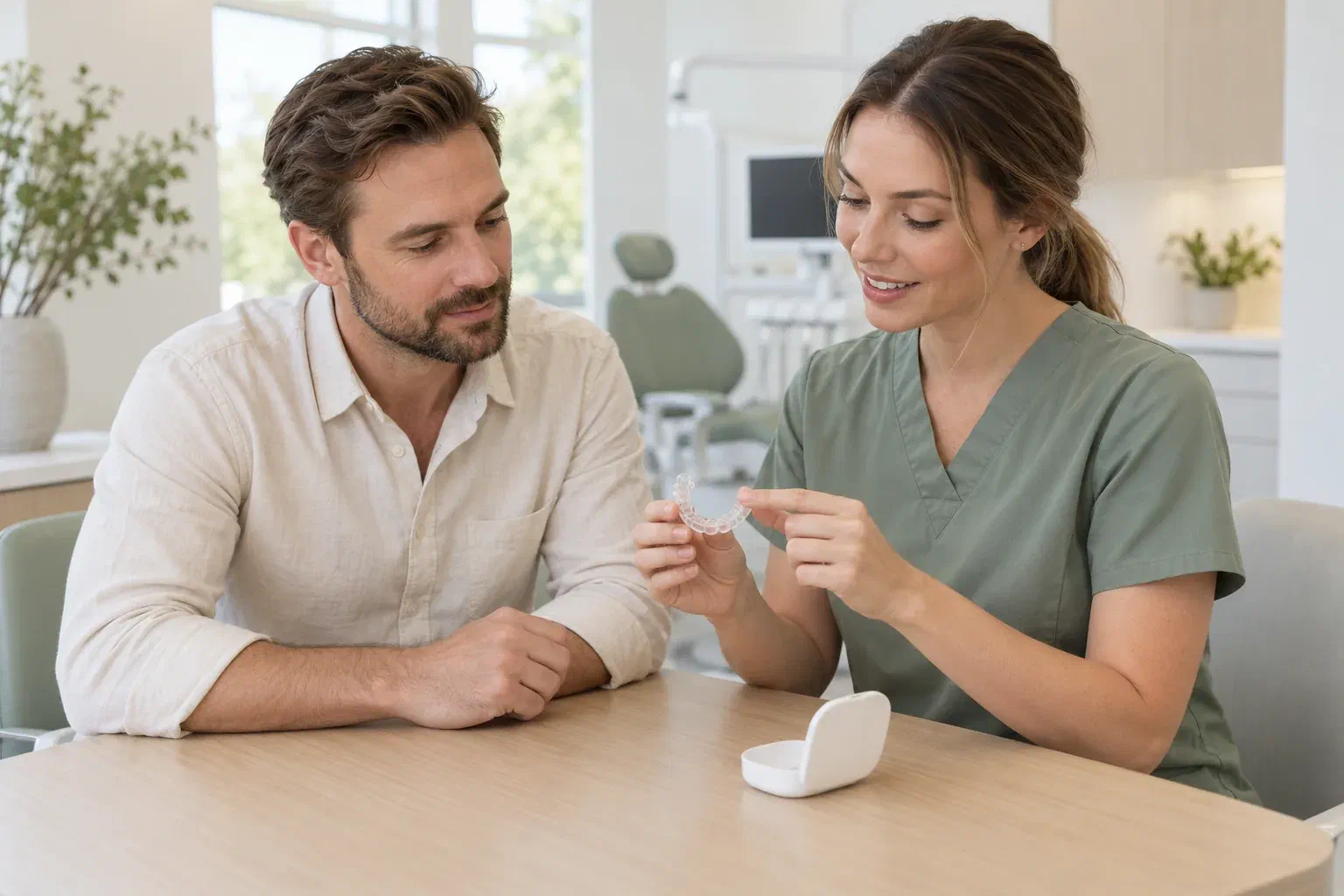
Illustrative explanation of how to handle a custom oral sleep appliance
Specialized Care

Sleep Appliance Fitting in Brampton

Teeth do not stand still while a custom sleep appliance is being made. A new crown or filling can change how it sits. For people in Brampton, a careful fitting checks the device against your mouth today and teaches you to use it with confidence.

Brampton · fitting the mouth you have now

Your records were a snapshot. The fitting checks the present.

Weeks can pass between the impressions or scans for a custom sleep appliance and the day it is ready. In that time, a tooth might be filled, crowned or removed. The fitting is where those changes come to light. It takes place after the proper assessment and planning, and it combines a careful check of the finished device with practical teaching.

Beyond the fit, you need to learn the handling of this exact design: how it seats, how it lets go, how it should be cleaned and whether anything is adjusted. Guidance written for another appliance or an off-the-shelf mouthguard may not match. Watch the clinician handle yours, then practise in front of them, and speak up if dexterity or eyesight gets in the way.

When you contact us, mention any dental treatment since your records, along with whether the appliance has been prescribed or made and which provider is guiding your sleep care. We can then plan the fitting and any coordination. A device that feels comfortable has not been shown, on that basis alone, to be treating the sleep condition.

Tell us about recent dental work before your fitting
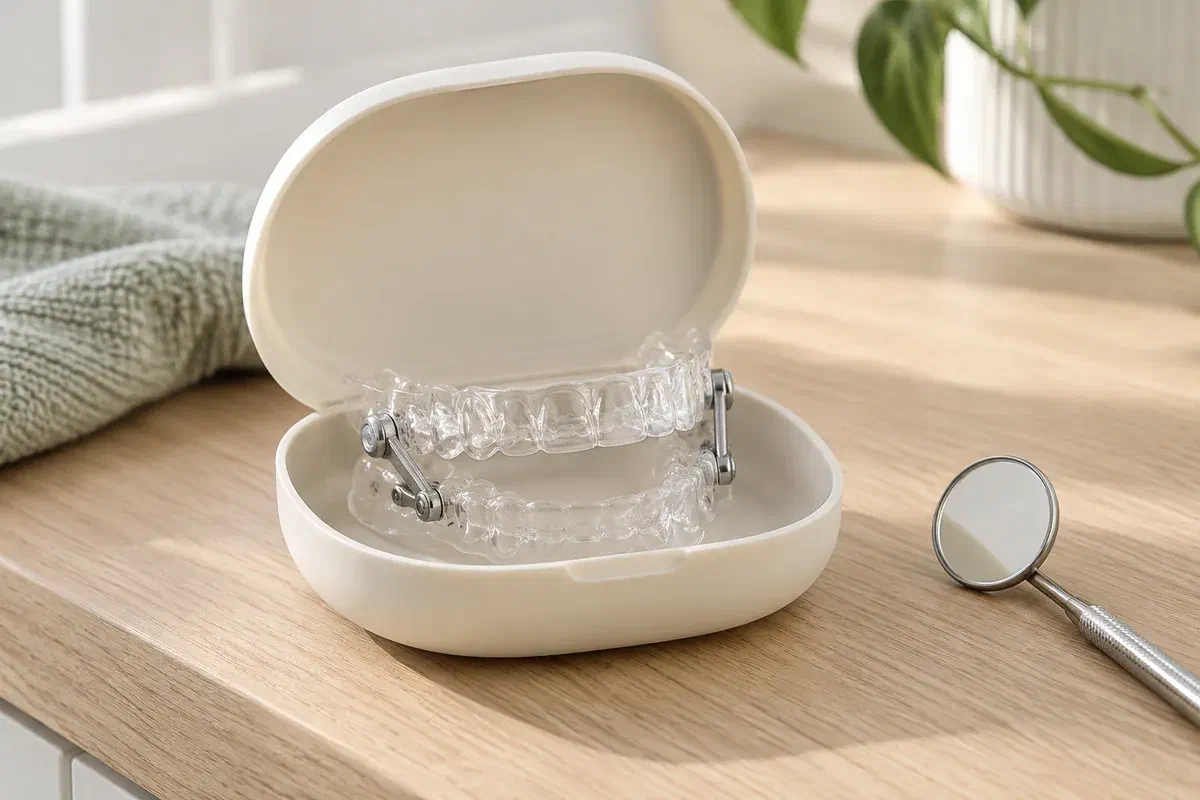
Illustrative connected sleep appliance in an open protective case
Changes to flag at the appointment

Small dental changes, real effects on fit.

Mention anything that might seem minor. A replaced filling or a newly chipped edge could matter to how the appliance grips, and raising it now avoids confusion when you try the device alone.

A tray that seated in the lab but not in your mouth

If the appliance does not go in the way the clinician shows you, say so immediately. Ask about finger placement and how the parts engage, then practise removal too. A tray that needs force is a finding to evaluate, not something to fix by biting down harder at home.

Pressure over a new crown or filling

Point to where you feel pressure, especially near recent work. Simply noticing the device is different from pain, a sore spot on the gum or a tray that will not settle. The clinician can judge whether adjustment, more assessment or a different arrangement is needed before use.

A starting position that no longer feels right

Confirm which position the plan begins at, and whether any home adjustment has been authorized. Ask what you should do and when, and what would mean stopping and calling. The fitting setting may not be the treatment setting, and many appliances are not designed for patient adjustment.

Tell the clinician about anything that has changed in your teeth since the appliance records were taken, including treatment planned in the coming weeks. That way the fit can be reviewed against your mouth as it really is before nightly use begins.

The point of checking carefully

Fit confirmed today, skills practised, review arranged.

A lab can only work from the records it received. At the fitting, the clinician compares the appliance with the planned design and with your current teeth, restorations and gums. Ask what is being looked at and how a problem would be resolved. Being made does not make a device ready; clinical fit and clear instruction still decide that.

The appointment also starts a longer process. A starting position and wear plan may be followed by later adjustments, along with reviews of comfort and treatment response. Ask which steps belong to the dental team and how your medical provider will measure effectiveness, so each question finds the right appointment.

Patient information: AADSM — appliance delivery, patient instruction, and continuing management

Supervised practice

Go through the steps with the clinician watching, and ask to see them again if needed. Mention any handling limitation honestly. If a family member may help at night, clarify what they should learn instead of assuming that any method that gets the appliance in or out is safe.

Notes that fit your design

Ask for written guidance covering wear, cleaning, storage and any adjustment you are allowed. File it with the manufacturer and provider details. Clear notes help when components look similar but work differently, and when you need to separate routine care from a change to the setting.

A baseline for future comparison

Make sure fit, bite and jaw findings are recorded, especially around recent dental work, and that you know when the first review is. Ask how to reach the provider sooner if trouble starts. Expect a supported plan, not an instruction to cope until your next regular visit.

Four parts of the fitting

First the updates, then the fit, then your hands.

Bring your sleep-care information and a list of dental treatment since your records. Mention any other changes, and allow time to practise until the routine feels steady.

  1. Updates since the records

    The clinician confirms the planned device and treatment pathway and asks about fillings, crowns, extractions, symptoms or health changes since your assessment. Ask whether any of these affects readiness. If an outside office supplied the appliance, its original prescription and guidance might have to be clarified first.

  2. The fit against teeth, restorations and gums

    Seating and retention are checked, with attention to any new dental work and the soft tissues. Describe what you feel rather than trying to judge it. The clinician decides whether the device is suitable as delivered or needs further attention before the starting plan.

  3. Practice with handling and the routine

    You rehearse insertion and removal and go over cleaning and storage for this design. The starting position and any approved progression are explained. Ask which components you can handle yourself and which are for professional adjustment only, and request another explanation if anything is still unclear.

  4. Review dates, warning signs and medical input

    Find out when the dental review is due and how the sleep provider will assess response. Ask what to do about significant discomfort, a changed bite or being unable to wear the device. If use must wait or pause, confirm the interim sleep-care arrangement.

Living with the appliance

Keep your other dental care in the loop.

Follow the starting plan for your device, and let any dentist treating your teeth know you now wear an appliance. Instructions written for another device do not transfer, even when it looks similar.

Wear it exactly as taught

Seat and remove the appliance with the technique you practised, and follow your starting routine. If a step is unmanageable or wearing it is properly uncomfortable, call. Never push it into place, move ahead in the settings or add a makeshift way to keep it in.

Protect it between uses

Ask which cleaner and water temperature are right for its materials, and how it should be stored. Keep it away from heat and unapproved products. A case protects it from pets, breakage and accidental disposal; bring that case to every review.

Mention new dental treatment

If you need a filling, crown or extraction after the fitting, tell the appliance provider. Also note problems with wear, fit, jaw comfort or how your teeth meet after removal. Explaining the change, rather than quietly working around it, lets the provider review the fit and coordinate care.

What the fitting may decide

Ready now, ready after a fix, or a different plan.

Ask why a particular next step suits you and whether it alters the timeline. The appliance should go home after a suitable check and with instructions you can follow, not because the delivery appointment has to be completed.

Fit and instructions checked

Begin the prescribed routine

When the device is appropriate, the clinician explains how to start and when to return. Ask how to report concerns in between. Later visits review comfort, effects on the teeth and jaw, and the sleep-related response, so this is a beginning rather than an end.

Recent dental work affects the fit

Adjust or repair before use

A pressure point, seating problem or change from new dental treatment may need more work. Ask whether it can be done today or requires another appointment or the lab. Understanding the reason for a delay beats leaving with an appliance you cannot wear safely.

This device no longer suits your mouth or needs

Change the design or pathway

Significant dental changes or other findings may lead to a new design, specialist assessment or a discussion with the medical sleep provider. Ask what has changed and how care will continue. Your sleep condition should still have an agreed plan in the meantime.

Brampton questions on fit and dental work

What happens when your teeth have changed?

Answers depend on your device and on the dental work involved. Bring a list of recent treatment and your questions, so they can be addressed with the appliance in front of the clinician.

(905) 876-4488
I need a crown soon. Should it be done before or after my appliance fitting?
Discuss the timing with both your dentist and the provider managing the appliance. A crown changes the surface the device fits against, so the plan should account for it. Do not delay necessary dental treatment without advice.
Does a chipped tooth matter for my sleep appliance?
It may. Report it before you start wearing the device, or as soon as it happens if you are already using it. The clinician can check whether the fit has been affected and whether anything needs to be done first.
Will the fit be checked against my new filling or against the old records?
Against your mouth as it is now. That is why it matters to mention any treatment since the records were taken. The clinician can then decide whether an adjustment or another step is needed before use begins.
What should I do if one tooth feels sore after a night of wear?
Note which tooth and how it feels, and mention it to the provider. Some awareness can occur while adjusting, but significant or lasting soreness should be reviewed sooner. Do not try to reshape or adjust the appliance yourself.
Should I tell my hygienist that I wear a sleep appliance?
Yes. Let the whole dental team know, and ask whether to bring the appliance to your next cleaning or checkup. It helps them keep an eye on your teeth and gums with the device in mind.
The lab says my appliance is finished. Does that mean it is ready to wear?
Not yet. The appliance still needs a clinical fit check, along with an explanation of the prescribed use and practice in inserting and removing it. Readiness is confirmed at the fitting, not when the lab completes it.
Booking from Brampton

Arrive with your dental changes written down.

Contact Milton Dental Clinic to set up a sleep-appliance fitting and ask which records we need. Let us know about any fillings, crowns or extractions since your assessment, the prescribing provider, and whether the device has been made.

Fitting instructions depend on your device and coordinated care plan.

Visit Milton Dental Clinic
Unit 1, 342 Bronte St. S, Milton, ON L9T 5B7
Get directions Clinic hours
Monday–Thursday
11am–7pm
Friday–Sunday
By appointment only

Areas we serve

  • Milton
  • Oakville
  • Mississauga
  • Georgetown
  • Halton Hills
  • Acton
  • Campbellville
  • Brampton
  • Burlington
  • Puslinch
  • Rockwood
  • Erin
  • Caledon
  • Etobicoke
  • Old Milton
  • Bronte Meadows
  • Timberlea
  • Dorset Park
  • Dempsey
  • Clarke
  • Beaty
  • Coates
  • Harrison
  • Scott
  • Willmott
  • Ford
  • Bowes
  • Cobden
  • Walker
  • Mountain View
  • Milton Heights
  • Hawthorne Village
  • Valley View
  • Fallingbrook
  • Nassagaweya
  • Trafalgar
  • Esquesing
  • Nelson
  • Brookville
  • Moffat
  • Glen Williams
  • Norval
  • Limehouse
  • Stewarttown
  • Ashgrove
  • Hornby
  • Silver Creek
  • Speyside
  • Scotch Block
  • North Oakville
  • River Oaks
  • Glen Abbey
  • West Oak Trails
  • Palermo
  • Bronte Creek
  • College Park
  • Joshua Creek
  • Uptown Core
  • Preserve
  • Iroquois Ridge
  • Lisgar
  • Meadowvale
  • Meadowvale Village
  • Churchill Meadows
  • Erin Mills
  • Central Erin Mills
  • Streetsville
  • East Credit
  • Creditview
  • Heartland
  • Sheridan
  • Mount Pleasant
  • Credit Valley
  • Huttonville
  • Churchville
  • Springbrook
  • Northwest Brampton
  • Bram West
  • Fletcher's Meadow
  • Fletcher's Creek South
  • Alton Village
  • Orchard
  • Millcroft
  • Headon Forest
  • Tansley
  • Brant Hills
  • Tyandaga
  • Kilbride
  • Lowville
  • Aberfoyle
  • Morriston
  • Arkell
  • Hillsburgh
  • Freelton
  • Carlisle
  • Waterdown
  • Flamborough
  • Mountsberg

How can we help?

Milton Dental Clinic

Have a question about your smile? Choose the option that works best for you.

For urgent dental concerns, please call.
Messages are reviewed during clinic hours.