
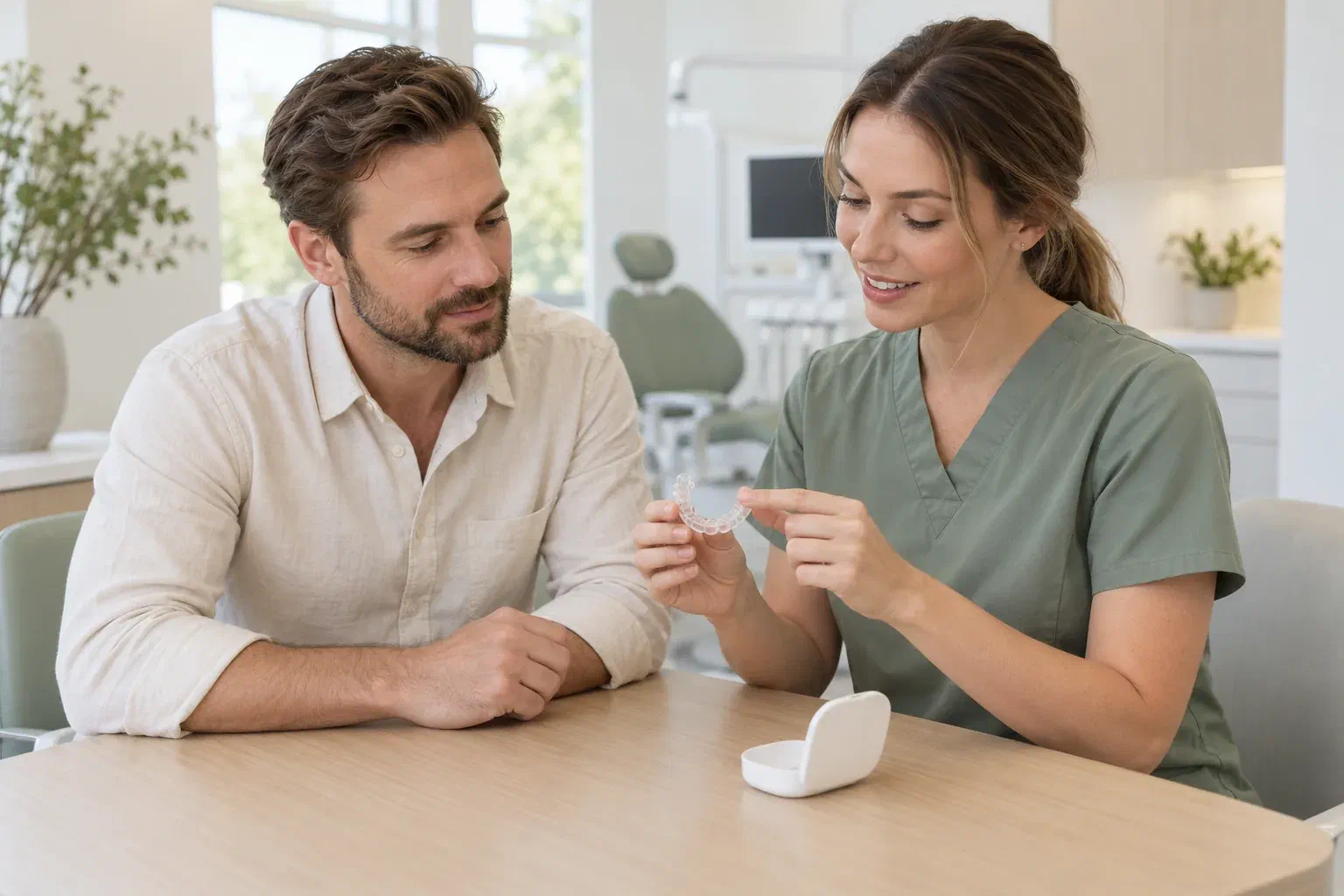
Illustrative explanation of how to handle a custom oral sleep appliance
Specialized Care

Sleep Appliance Fitting in Mississauga

A sleep-appliance fitting is tempting to squeeze between meetings, yet it works best with room to practise and ask. If you are coming from Mississauga, book a slot that lets you learn the device properly before your first night.

Mississauga · making time for the fitting

Not a pickup. A lesson.

With a full calendar, it is easy to treat the fitting as an errand: drop in, collect the appliance, get back to work. That approach skips the part that matters most. Once your assessment and plan are in place, this visit is when the custom device is placed in your mouth, examined, and taught to you until you can manage it yourself.

Each appliance has its own personality. Trays, connectors, cleaning needs and adjustment rules vary from one design to the next, which is why a colleague's tips or a pharmacy mouthguard's instructions may not carry over. Ask the clinician to demonstrate on your device, then take a turn while they observe. Mention anything that makes the routine tricky, such as reduced grip or vision.

When arranging the appointment, tell our team whether the appliance has been prescribed or is already made, and which provider directs your sleep care. We will talk through what records are needed and how coordination will work. Wearing a device comfortably is not a medical finding, and it does not prove the treatment is effective.

Find a fitting time that leaves room to practise
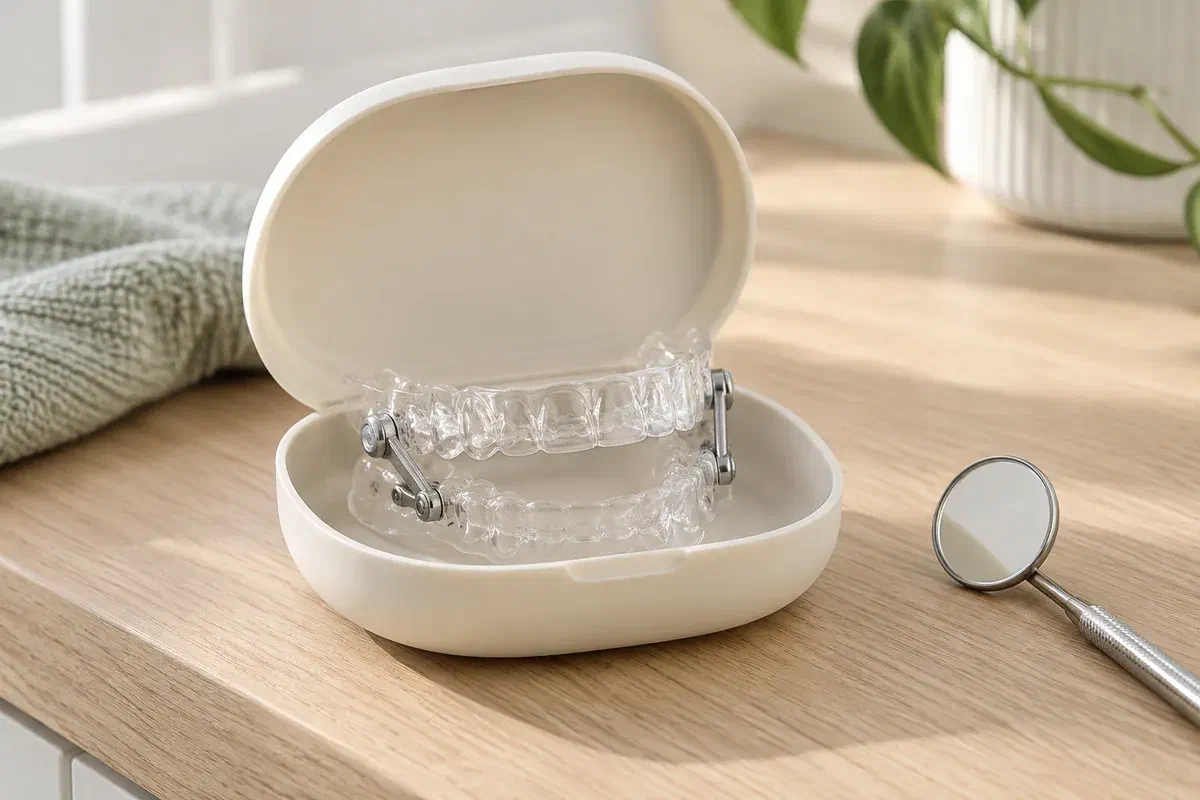
Illustrative connected sleep appliance in an open protective case
Before you rush back out

If it is not clear in the chair, it will not be clear at 11 p.m.

Rushed appointments leave questions unspoken. Take a few extra minutes to cover the practical details; they are far easier to settle now than on a weeknight when the office is closed.

A routine you can repeat half asleep

Insertion and removal should feel repeatable, even when you are tired. Ask precisely where to grip and how the components engage for this design, then practise both directions more than once. Uncertainty is worth admitting before you leave. The fix is never to clench, force a tray or assume it will click eventually.

A sensation you are tempted to ignore

Busy people tend to push through discomfort. Resist that during the fit check. A new-object feeling is one thing; pain, a spot rubbing the gums or a tray that will not settle is another, and the clinician should decide whether to adjust, assess further or change the arrangement first.

Settings explained too quickly

Ask the clinician to slow down on this part. Which position is the starting point? Are you allowed to change anything at home? What should prompt you to stop wearing it and phone? The fitting setting may not be the final one, and many designs are not adjusted by the wearer at all.

If you have had dental work since your records were taken, or noticed a change in your teeth, mention it. Fillings, crowns, extractions and new symptoms can each affect the fit, so the device should be reviewed before you begin.

Time well spent

Why a proper fitting saves you trouble later.

A finished appliance still has to be confirmed in your mouth. The clinician compares it with the design that was planned and with your teeth and gums today, which may have changed since the records. Ask what they are checking and what happens if a concern turns up. Readiness depends on clinical fit and clear teaching, not on manufacture alone.

Expect the fitting to open a sequence rather than close one. Starting position and wear instructions can be early stages of a staged plan, with comfort and response assessed at later visits. Ask who handles each stage and how the medical provider will judge effectiveness, so your questions land with the right person.

Patient information: AADSM — appliance delivery, patient instruction, and continuing management

Hands-on time with your own device

You learn faster by doing than by watching. Practise the sequence while the clinician looks on, and ask for another demonstration without apology. If a partner may need to help at night, check what they should learn, rather than assuming any method that works is acceptable.

A written reference for busy weeks

Ask for instructions on wear, cleaning, storage and any adjustment you are permitted, and keep them with the provider and manufacturer details. On a hectic night, a written page helps you tell apart parts that look alike, and routine care from a change in treatment setting.

A baseline on file and a review in the diary

Confirm that findings about fit, bite and jaw are recorded and put the first review straight into your calendar. Ask how to contact the provider before then if something goes wrong. Leaving with support arranged beats waiting out a problem until a regular dental visit.

What fills the appointment

Why is the fitting longer than a quick hand-off?

Four separate tasks share the visit. Bring your sleep-care information, mention anything that has changed since assessment, and do not book something immediately afterwards.

  1. Checking that the plan still matches your mouth

    The clinician confirms which device and pathway were planned, then asks about any new dental work, symptoms or health changes. Ask whether a finding affects readiness. When an outside provider supplied the appliance, its prescription and guidance may have to be confirmed before going further.

  2. Examining the fit

    Seating, retention and contact with the gums and cheeks are assessed against your teeth and any restorations. Say what you feel rather than deciding whether it is normal. The clinician determines whether the appliance can be used as delivered or needs work before the starting plan begins.

  3. Teaching you to handle it

    You practise putting the appliance in and taking it out, and review how this design is cleaned and stored. The starting position and any approved progression are explained. Ask which parts you may handle and which are for professionals only, and keep asking until the mechanism makes sense.

  4. Locking in follow-up and medical coordination

    Find out when the dental review is booked and how the sleep provider will measure response. Ask what to do about real discomfort, a bite that feels altered or nights you cannot wear it. If use has to be delayed or interrupted, confirm what sleep care continues in the meantime.

Fitting it into your nights

Consistency beats shortcuts.

Begin with the plan written for your device. Skip any adjustment schedule or cleaning hack you have read about for a different appliance, however similar it seems.

Repeat the technique from the fitting

Each night, seat the appliance as you practised, and each morning remove it the same way. Follow the starting routine without improvising. A step you cannot manage, or wear that is properly uncomfortable, is a reason to call. Do not force the trays, advance settings early or add homemade retention.

Look after it between nights

Use the cleaner and water temperature recommended for its materials, and store it the way you were shown. Keep heat and unapproved products away from it. A dedicated case protects it from pets, gym bags and the bin, and should come with you to each review.

Report what gets in the way

Late nights, travel or a sore jaw can all interrupt wear. Note the problem, along with any change in how your teeth meet after removal, and tell the provider rather than quietly changing the plan. They can respond to the obstacle and involve the medical team where needed.

When the visit ends

Three ways a fitting can conclude.

Ask why a proposed step is right for you and whether it shifts your schedule. The appliance should go home with you because it has been checked and you can follow the instructions, never because the delivery visit has to be closed out.

When the fit and teaching check out

Starting nightly wear

If the appliance is suitable, you leave with a starting routine and a review date. Ask how to raise concerns before then. Comfort, effects on the teeth and jaw, and the sleep-related treatment response will all be assessed again at later visits.

When fit or oral health needs attention

Further work before use

Pressure, difficulty seating or a recent dental change may call for more work. Ask whether it can happen today or needs another appointment or input from the lab. A short delay you understand is better than a device you cannot safely wear.

When this appliance cannot meet your needs

A different design or pathway

Findings may point to another design, a specialist assessment or a discussion with the medical sleep provider. Ask which issue changed the plan and how care will continue. The underlying sleep condition still needs an agreed approach while this is resolved.

Mississauga fitting FAQ

Scheduling, routines and the first week.

Your own appliance decides the details. Note your questions in advance so the clinician can answer them with the device right there.

(905) 876-4488
Can I book my sleep-appliance fitting in the evening?
Our clinic is open Monday to Thursday from 11 a.m. to 7 p.m., with Friday to Sunday by appointment only. Ask when booking which times suit a fitting, and choose one that leaves you enough time to practise without watching the clock.
What is an easy mistake to make when collecting a sleep appliance?
Rushing the handling lesson. If you leave unsure how to insert or remove the device, you are more likely to struggle or force it at home. Practise at the fitting until the steps feel repeatable, and ask for written instructions.
I travel for work. How should I carry the appliance?
Keep it in the protective case you were given, and away from heat, such as a hot car. Pack your cleaning supplies and instructions too. If the device is damaged while you are away, contact the provider rather than wearing it.
What if I miss a few nights of wear in the first weeks?
Make a note of it and of what got in the way, then mention it at your review. Do not try to make up for missed nights by changing the settings or the schedule. If you cannot wear the appliance regularly, the provider needs to know.
Can a sleep appliance cause my bite to feel different in the morning?
Some people notice their teeth meet differently for a while after removal. Record what you notice and report it at the review. Contact the provider sooner if the change is significant or does not settle, rather than adjusting the device yourself.
Do I need a demonstration if my appliance came with a video?
Yes. A video can be helpful, but it cannot watch you practise or check your technique. Ask the clinician to demonstrate on your own device and observe your insertion and removal before you take it home.
Planning from Mississauga

Pick a time when you will not be in a hurry.

Contact Milton Dental Clinic to arrange a sleep-appliance fitting and find out what to bring. Let us know whether the device is already made, who prescribed it, and whether you have had dental work since your assessment.

Your fitting depends on the appliance and your coordinated care plan.

Visit Milton Dental Clinic
Unit 1, 342 Bronte St. S, Milton, ON L9T 5B7
Get directions Clinic hours
Monday–Thursday
11am–7pm
Friday–Sunday
By appointment only

Areas we serve

  • Milton
  • Oakville
  • Mississauga
  • Georgetown
  • Halton Hills
  • Acton
  • Campbellville
  • Brampton
  • Burlington
  • Puslinch
  • Rockwood
  • Erin
  • Caledon
  • Etobicoke
  • Old Milton
  • Bronte Meadows
  • Timberlea
  • Dorset Park
  • Dempsey
  • Clarke
  • Beaty
  • Coates
  • Harrison
  • Scott
  • Willmott
  • Ford
  • Bowes
  • Cobden
  • Walker
  • Mountain View
  • Milton Heights
  • Hawthorne Village
  • Valley View
  • Fallingbrook
  • Nassagaweya
  • Trafalgar
  • Esquesing
  • Nelson
  • Brookville
  • Moffat
  • Glen Williams
  • Norval
  • Limehouse
  • Stewarttown
  • Ashgrove
  • Hornby
  • Silver Creek
  • Speyside
  • Scotch Block
  • North Oakville
  • River Oaks
  • Glen Abbey
  • West Oak Trails
  • Palermo
  • Bronte Creek
  • College Park
  • Joshua Creek
  • Uptown Core
  • Preserve
  • Iroquois Ridge
  • Lisgar
  • Meadowvale
  • Meadowvale Village
  • Churchill Meadows
  • Erin Mills
  • Central Erin Mills
  • Streetsville
  • East Credit
  • Creditview
  • Heartland
  • Sheridan
  • Mount Pleasant
  • Credit Valley
  • Huttonville
  • Churchville
  • Springbrook
  • Northwest Brampton
  • Bram West
  • Fletcher's Meadow
  • Fletcher's Creek South
  • Alton Village
  • Orchard
  • Millcroft
  • Headon Forest
  • Tansley
  • Brant Hills
  • Tyandaga
  • Kilbride
  • Lowville
  • Aberfoyle
  • Morriston
  • Arkell
  • Hillsburgh
  • Freelton
  • Carlisle
  • Waterdown
  • Flamborough
  • Mountsberg

How can we help?

Milton Dental Clinic

Have a question about your smile? Choose the option that works best for you.

For urgent dental concerns, please call.
Messages are reviewed during clinic hours.