
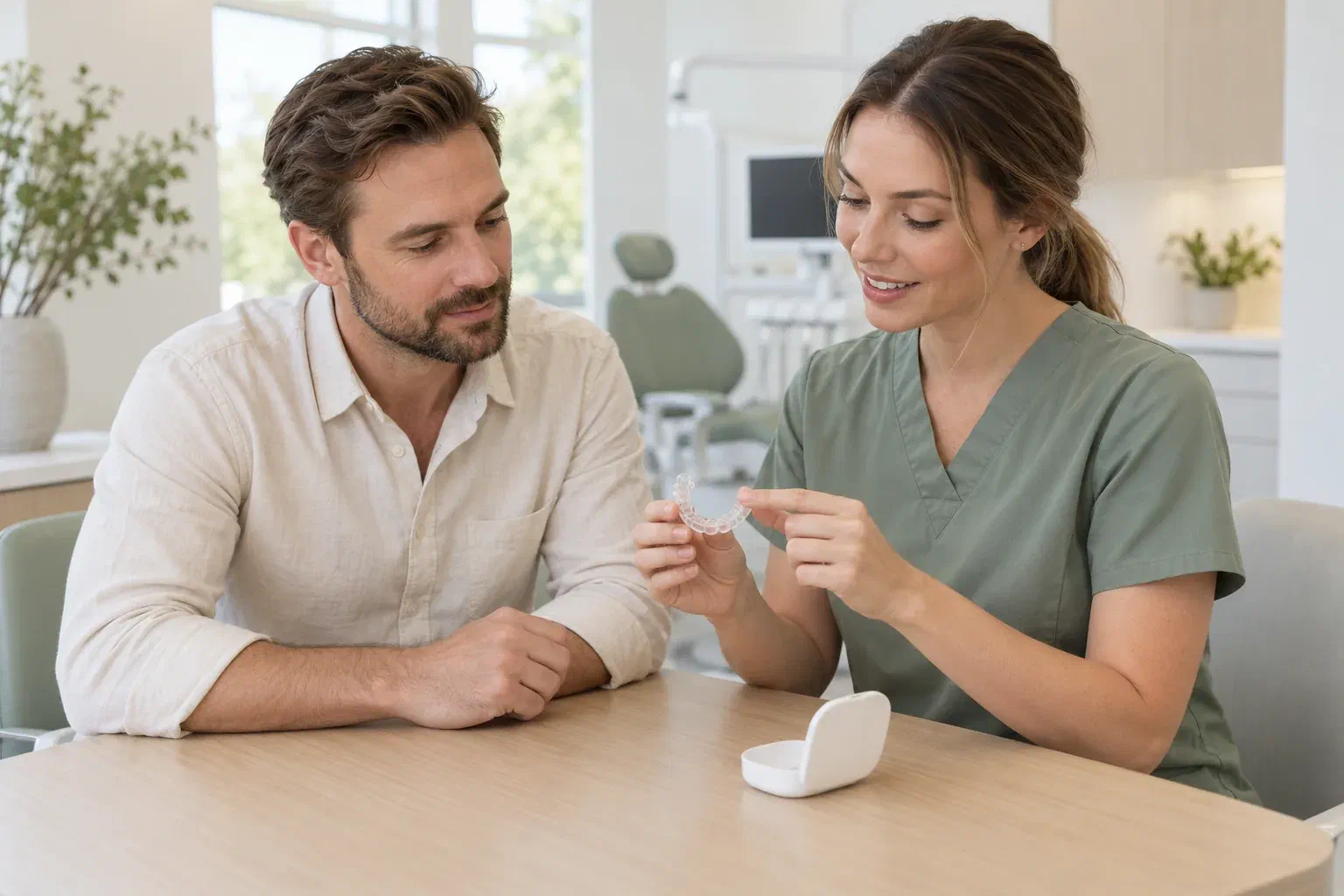
Illustrative explanation of how to handle a custom oral sleep appliance
Specialized Care

Sleep Appliance Fitting in Oakville

Prescriptions, lab paperwork and instructions from more than one office can make a sleep-appliance fitting feel scattered. Coming from Oakville, gather what you have, and we can review the fit, teach the handling and clarify who manages each step.

Fitting for Oakville, with records in order

Several providers, one appliance, and you in the middle.

Oral sleep therapy often involves a physician or sleep clinic, a dental team and a laboratory. By the time a custom appliance is ready, you may hold a referral letter, a sleep report and a box from the lab, and still wonder what the fitting actually involves. In short, it is the visit where the finished device is tried in, checked against your mouth and explained.

It happens after the appropriate assessment and planning, and it should cover more than a hand-off. You need to know how this particular design seats and releases, how it is cleaned, and what its starting instructions mean. Advice from a different design or an over-the-counter mouthguard may not apply. Ask to see your device demonstrated, then practise it yourself under supervision.

When you call, tell us whether the appliance has already been prescribed or made, who created it, and which provider is directing your sleep care. Our team can discuss records, arrangements and coordination. A device that fits comfortably has not, by that fact alone, been shown to treat the sleep condition.

Ask which records to bring to your fitting
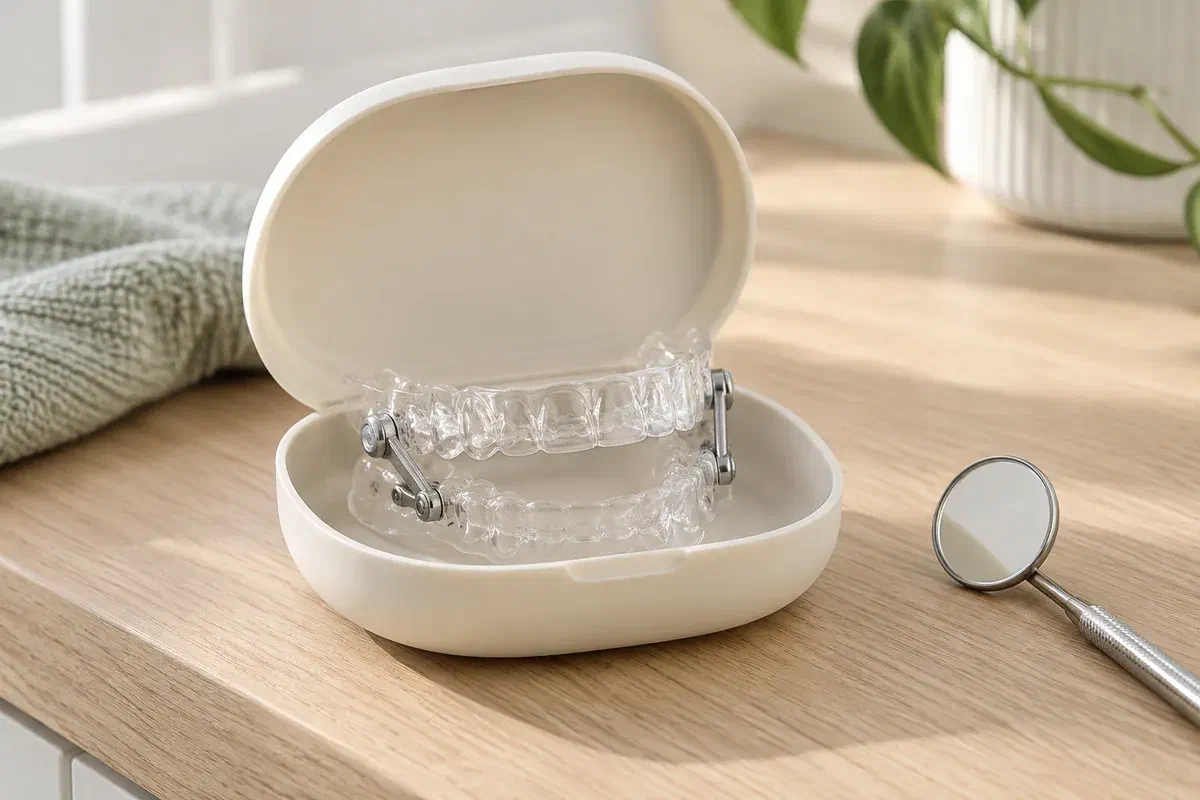
Illustrative connected sleep appliance in an open protective case
Gaps to close at the fitting

Make sure the device, the paperwork and your mouth all agree.

When care passes between offices, details can go missing. Use the appointment to confirm the practical points that would otherwise surface late at night, when nobody is available to ask.

A technique nobody has shown you yet

If the appliance arrived with only a leaflet, ask for a demonstration of where your fingers go and how the parts engage. Practise taking it out as carefully as putting it in. Mention it if you cannot repeat the steps comfortably; forcing a tray or relying on a firm bite is not the fix.

A fit that feels wrong on the day

Report what you feel as the appliance is assessed. Getting used to something new is different from pain, irritation of the soft tissue or trays that will not fully settle. The clinician can decide whether adjustment, more assessment or a different arrangement is required before you begin.

Settings described differently by different offices

Confirm one clear starting position and whether any adjustment at home has been approved, and by whom. Ask what to do, when to do it and which signs mean stop and call. A fitting position is not automatically the treatment position, and not every appliance is designed for wearer adjustment.

Tell the fitting clinician about any dental work or change in your teeth since the impressions or scans. A filling, crown, extraction or new symptom may affect how the device sits and should be checked before you begin using it.

The value of one clear appointment

One place where fit, teaching and next steps come together.

During the fitting, the appliance is compared with its intended design and with your mouth as it is now. Ask what the clinician is checking and how a concern would be dealt with. Having been fabricated from your records does not make the device ready; how it fits clinically, and the instructions that go with it, still decide that.

This is also the start of continuing care. The starting position and wear plan may be one stage of several, with comfort and response reviewed later. Ask who is in charge of each step and how your medical provider will assess effectiveness. Knowing that split saves you from bringing the right question to the wrong office.

Patient information: AADSM — appliance delivery, patient instruction, and continuing management

A supervised run-through with your appliance

Carry out the sequence while the clinician watches, and ask for a second demonstration if needed. Raise any difficulty with handling. If someone at home is appropriately involved, clarify what they should learn too, instead of assuming any method that gets the device in or out is acceptable.

Instructions that match what is in your hand

Request written guidance on wear, cleaning, storage and any permitted adjustment, and file it with the lab and provider details. Written notes become essential when similar components have different purposes, or when guidance from separate offices needs to be reconciled into a single routine.

A documented baseline and named follow-up

Check that fit, bite and jaw findings are recorded, and that you know when and where the first review takes place. Ask how to reach the provider earlier if trouble starts. You should leave with a supported plan rather than being told to wait out problems until a routine checkup.

Inside the fitting visit

From records review to an agreed starting plan.

Bring your sleep report, referral details and anything supplied with the appliance. Mention changes since your assessment, and allow time to practise until the steps are clear.

  1. Reconcile the prescription and your dental changes

    The clinician confirms the intended device and pathway, then reviews new dental work, symptoms and medical updates. Ask whether any finding affects readiness. If another provider supplied the appliance, its original records and instructions may need to be obtained or clarified before the fitting can continue.

  2. Assess seating, retention and soft-tissue contact

    The device is checked against your teeth, restorations and gums. Describe any pressure or pain instead of judging for yourself whether it is expected. The clinician decides whether it can be used as supplied or needs further attention before the starting plan goes ahead.

  3. Walk through handling, cleaning and the starting routine

    You practise insertion and removal and review care and storage specific to this design. The starting position and any authorized progression are confirmed. Ask which parts you may handle and which should be changed only by a professional, and keep asking until the mechanism makes sense.

  4. Settle the follow-up and the medical link

    Find out when the dental review is due and how the sleep provider will evaluate response. Get advice on significant discomfort, a changed bite or being unable to wear the device. If use has to be delayed or interrupted, confirm the interim sleep-care plan.

Wearing it from week one

Stick with the plan written for this device.

Early use should follow your individual instructions. If you received different guidance from separate offices, clarify it rather than mixing schedules or cleaning methods.

Wear and handle it as demonstrated

Insert and remove the appliance the way you practised, and follow the prescribed starting routine. Contact the provider if a step proves unmanageable or if wear causes real discomfort. Do not force it in, move ahead in the settings or devise an improvised way to keep it in position.

Care for the materials it is made from

Ask which cleaner, water temperature and storage method suit the appliance. Avoid heat and any product nobody has approved for it. Keep it in its case, out of reach of pets and safe from damage or accidental disposal, and bring the case along to each review.

Track problems and attend the early check

Note any trouble with wear, fit, jaw comfort, or how the teeth meet after removal. Explain what got in the way rather than adjusting the plan on your own. The provider can then address the obstacle and coordinate medical input, instead of assuming everything is on track.

Decisions the fitting may bring

Go ahead, pause to fix something, or change course.

Ask why a proposed next step fits your situation and whether it alters the schedule. Leaving with the appliance should follow a suitable check and instructions you can use, never pressure to complete delivery.

Fit and instructions confirmed

Begin using a suitable appliance

If the device is ready, the clinician explains the starting routine and when you will be seen again. Ask how to report problems in the meantime. Fitting is one point in care; comfort, effects on the teeth and jaw, and the sleep-related response are all reassessed later.

A fit or oral-health issue to resolve

Address the fit or your teeth first

A pressure area, trouble seating the trays or recent dental work may require more attention. Ask whether it can be handled at this visit or needs another appointment or input from the lab. A clear reason for a delay is better than leaving with a device you cannot use safely.

The appliance cannot meet current needs

Rethink the device or pathway

Findings may lead to another design, a specialist assessment or a conversation with the medical sleep provider. Ask which issue changed the plan and how care continues. A fitting problem should not leave the sleep condition itself without an agreed approach.

Oakville fitting questions

Records, responsibilities and getting started.

Specific answers are more useful than general rules. Bring your questions and paperwork, so they can be addressed with your actual device and records in front of the clinician.

(905) 876-4488
My appliance was made through another office. Can I still have it fitted here?
Contact us first so we can discuss the arrangement. The original prescription, lab details and instructions may need to be obtained or clarified, and the provider managing your sleep care should be known. Once the records are available, the fitting can be planned appropriately.
Which documents should I bring to a sleep-appliance fitting?
Bring what you have: the referral or prescription, sleep-study information, any instructions or paperwork supplied with the device, and details of recent dental work. Ask when booking whether anything else is needed so the visit is not delayed.
Who do I call if the appliance hurts after the fitting?
Ask at the fitting which provider is your first contact for dental discomfort and fit problems, and write it down. Questions about how well treatment is working usually go to the medical sleep provider. Knowing the right contact in advance saves time when something goes wrong.
Does the dental office decide whether my sleep apnea is under control?
No. Comfort and fit are reviewed by the dental team, but whether treatment is effective is assessed through your medical sleep provider. Ask how and when that evaluation will happen, and do not change existing treatment without their agreement.
Is it enough to read the leaflet that came with the appliance?
A leaflet is not a substitute for being shown. Ask the clinician to demonstrate insertion and removal on your own device and watch you practise. If the steps still feel uncertain, more teaching may be needed before the device is suitable for you to use.
Why does a filling I had last month matter for my appliance?
The device was built from records of your teeth at an earlier date. A new filling can change the surface it fits against, so mention it before use begins. The clinician can check the fit against your current mouth and decide whether any step is needed first.
Arranging the visit from Oakville

Bring the paperwork and leave room for questions.

Contact Milton Dental Clinic to plan a sleep-appliance fitting and confirm the records required. Tell us whether the device is already made, who prescribed and fabricated it, and whether your dental treatment has changed since assessment.

Fitting steps and instructions depend on the device and your coordinated care plan.

Visit Milton Dental Clinic
Unit 1, 342 Bronte St. S, Milton, ON L9T 5B7
Get directions Clinic hours
Monday–Thursday
11am–7pm
Friday–Sunday
By appointment only

Areas we serve

  • Milton
  • Oakville
  • Mississauga
  • Georgetown
  • Halton Hills
  • Acton
  • Campbellville
  • Brampton
  • Burlington
  • Puslinch
  • Rockwood
  • Erin
  • Caledon
  • Etobicoke
  • Old Milton
  • Bronte Meadows
  • Timberlea
  • Dorset Park
  • Dempsey
  • Clarke
  • Beaty
  • Coates
  • Harrison
  • Scott
  • Willmott
  • Ford
  • Bowes
  • Cobden
  • Walker
  • Mountain View
  • Milton Heights
  • Hawthorne Village
  • Valley View
  • Fallingbrook
  • Nassagaweya
  • Trafalgar
  • Esquesing
  • Nelson
  • Brookville
  • Moffat
  • Glen Williams
  • Norval
  • Limehouse
  • Stewarttown
  • Ashgrove
  • Hornby
  • Silver Creek
  • Speyside
  • Scotch Block
  • North Oakville
  • River Oaks
  • Glen Abbey
  • West Oak Trails
  • Palermo
  • Bronte Creek
  • College Park
  • Joshua Creek
  • Uptown Core
  • Preserve
  • Iroquois Ridge
  • Lisgar
  • Meadowvale
  • Meadowvale Village
  • Churchill Meadows
  • Erin Mills
  • Central Erin Mills
  • Streetsville
  • East Credit
  • Creditview
  • Heartland
  • Sheridan
  • Mount Pleasant
  • Credit Valley
  • Huttonville
  • Churchville
  • Springbrook
  • Northwest Brampton
  • Bram West
  • Fletcher's Meadow
  • Fletcher's Creek South
  • Alton Village
  • Orchard
  • Millcroft
  • Headon Forest
  • Tansley
  • Brant Hills
  • Tyandaga
  • Kilbride
  • Lowville
  • Aberfoyle
  • Morriston
  • Arkell
  • Hillsburgh
  • Freelton
  • Carlisle
  • Waterdown
  • Flamborough
  • Mountsberg

How can we help?

Milton Dental Clinic

Have a question about your smile? Choose the option that works best for you.

For urgent dental concerns, please call.
Messages are reviewed during clinic hours.