
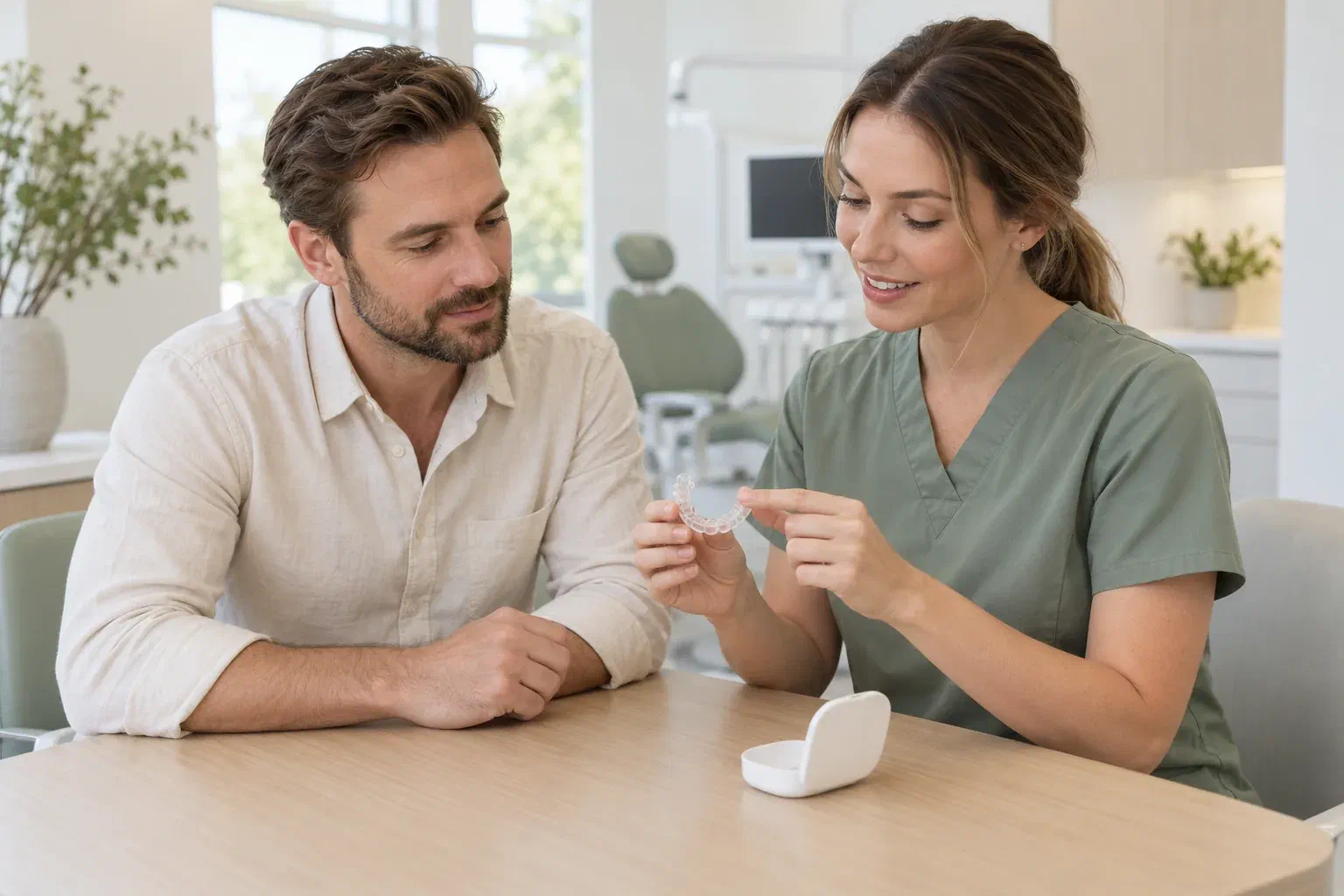
Illustrative explanation of how to handle a custom oral sleep appliance
Specialized Care

Sleep Appliance Fitting in Rockwood

Any new sleep appliance will feel unfamiliar, but a rubbing edge or a sore gum is a different message. Coming from Rockwood, use the fitting to learn which sensations are worth reporting, and leave with a device that has been properly checked.

Rockwood · reading the signals

Strange is expected. Sore is worth a word.

Slip a custom oral appliance in for the first time and your tongue will go exploring. Bulk, tightness and a slightly odd bite are what most people describe. The trouble is knowing when that feeling has crossed into something that needs attention. A fitting, held once assessment and planning are complete, is where the clinician checks the device in your mouth and helps you learn that difference.

Signals vary by design. Edges sit in different places, trays grip in different ways, and cleaning and adjustment rules differ. Someone else's description of what felt normal with their device, or a store-bought mouthguard, is a poor guide. Have the clinician seat your own appliance, describe what you feel out loud, and then practise handling it while they watch.

Before booking, tell our team whether the appliance has been prescribed or made and who is in charge of your sleep care. We will go through records and coordination with you. Bear in mind that an appliance that feels fine is not proof of effective treatment, and the fitting does not stand in for a medical diagnosis.

Ask about having your appliance's fit checked
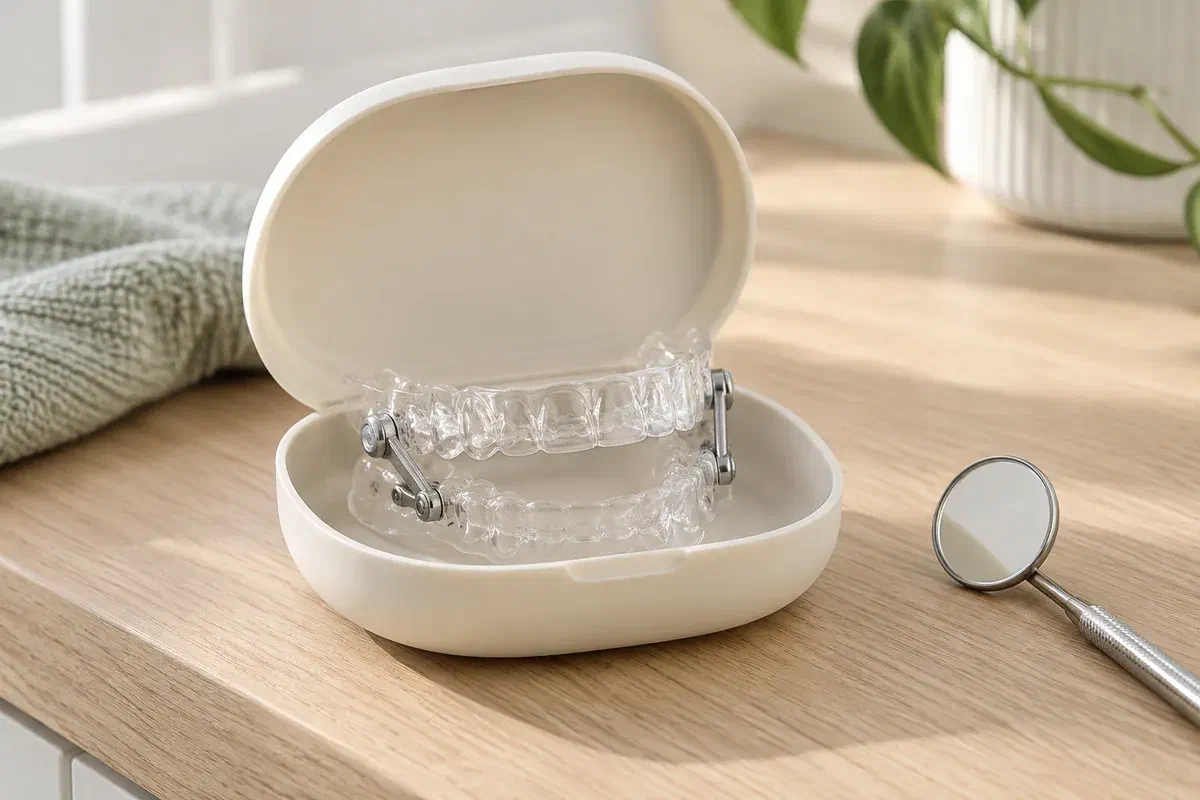
Illustrative connected sleep appliance in an open protective case
Say it out loud during the check

Pressure, rubbing or a tray that will not settle.

Many people stay quiet in the chair, hoping a sensation will fade. It is much easier to sort out while the clinician is holding the appliance than to wonder about it in the dark a few nights later.

Seating that needs more than gentle pressure

A well-made tray should go into place with the technique you are shown, not with a hard bite. Learn where to hold this design and how its parts engage, and repeat the removal as often as the insertion. If either step only works with force, that is something for the clinician to examine.

A spot that rubs the gum or cheek

Point to anything that catches, pinches or aches. A general sense of fullness differs from a single sore point, gum irritation or a tray that rocks. The clinician can smooth or adjust where appropriate, look further, or decide a different arrangement is needed before you start wearing it.

Tightness that might be a setting issue

Some sensations come from the jaw position rather than the trays. Ask which setting the plan starts at and whether you may adjust anything at home. Clarify exactly what, when and which signs mean stop and call. Starting positions often change later, and many designs are only adjusted professionally.

Recent dental work can create new pressure points. If you have had a filling, crown or extraction since the records, or a tooth has started to ache, tell the clinician so the fit can be reviewed before regular use.

Why a careful check pays off

A comfortable start makes every later step easier.

Lab work is precise, but your mouth is the final test. The clinician compares the appliance with the design that was ordered and with your teeth and gums today. Ask what they are looking for and what they would do if something is off. A device is ready once its fit has been confirmed and you know how to use it.

Comfort is reviewed again as care moves forward. The starting position and wear plan may change, with later checks on how you are tolerating the appliance and how your sleep is responding. Ask which concerns belong with the dental team and how your medical provider will judge effectiveness.

Patient information: AADSM — appliance delivery, patient instruction, and continuing management

Practice that builds a light touch

Insert and remove the device several times with the clinician observing, and ask for help refining your technique. Gentle, correct handling protects both you and the appliance. If a family member may help, ask what they should learn, rather than assuming any method is harmless.

Notes on what to report

Ask for written guidance on wear, cleaning, storage and any permitted adjustment, including the sensations that warrant a call. Keep the manufacturer and provider details with it. A clear list makes it easier to separate expected adjustment from a genuine problem.

A starting record of comfort and fit

Check that the clinician records how the appliance fits, how your bite and jaw feel, and any areas that were adjusted. Arrange the first review and learn how to get in touch sooner. You should not be told to put up with soreness until a regular dental visit.

How the fitting is structured

Does the appliance pass every check?

Come with your sleep-care paperwork and any notes on recent dental work. Describe sensations honestly during the visit, and allow time for adjustments and practice.

  1. Updating your history

    First, the clinician reconfirms the planned appliance and the pathway it belongs to, and asks what has happened with your teeth and health since assessment. Raise anything you think could matter. When the device was supplied by another practice, its paperwork may need clarifying before going on.

  2. Feeling for pressure and checking the tissues

    With the appliance seated, the clinician looks at how it meets your teeth, restorations, gums and cheeks. Tell them what you feel instead of trying to judge it yourself. They decide whether it can be used as delivered, needs adjusting, or requires further attention.

  3. Learning gentle, correct handling

    You practise putting the device in and taking it out, and learn how this design is cleaned and stored. The starting setting is explained, with any change you are permitted to make. Ask which parts you may handle and which only a professional should alter.

  4. Knowing when to call and who to call

    Settle the date of your dental review and how your sleep provider will assess the effect of treatment. Ask about pain, sores, a changed bite or nights you cannot tolerate the appliance. If wear must be postponed, be clear on the interim plan for your sleep condition.

Comfort in the first weeks

Notice, note and report.

Follow the starting plan for your own device. Do not borrow another person's adjustment schedule or cleaning method, however alike the two appliances seem.

Handle it the way you were shown

Seat and remove the appliance with the gentle technique from your fitting, and keep to the starting routine. If a step becomes difficult or wearing it hurts, call. Never press it into place, move the setting forward early or pad it with something homemade to ease a sore spot.

Keep it clean and undamaged

Use the cleaner and water temperature approved for its materials and store it as directed. Hot water and unapproved products can warp or roughen surfaces, creating new pressure points. Keep the case shut and out of reach of pets, and bring it to every review.

Track sensations and mention them early

Write down where and when you notice soreness, jaw discomfort or a bite that feels different after removal. Tell the provider rather than wearing it less without explanation. Early reports let them adjust or assess sooner and involve your sleep physician if needed.

What the check may lead to

Comfortable enough to start, or not yet.

Whichever way the visit goes, ask what led to the decision and how it affects your timeline. Leaving with the appliance should depend on a satisfactory fit and instructions you understand, not on finishing the delivery.

No unresolved pressure or fit concerns

Ready to wear

If the appliance passes its checks, you leave with a starting routine and a review date. Ask how to report discomfort between visits. Later appointments revisit comfort, any effects on the teeth and jaw, and how your sleep is responding.

A sore spot or seating problem needs work

Adjustment first

Some pressure areas can be eased during the visit; others need the lab or a further appointment. Ask which applies and why. Waiting a little longer is better than taking home a device that hurts or cannot be worn safely.

The appliance cannot be made comfortable or safe

A different approach

When fit problems cannot be resolved, the options may include a new design, specialist assessment or a conversation with your medical sleep provider. Ask what has changed and what happens next. The sleep condition itself should still have a plan.

Rockwood comfort questions

Is this normal, or should I call?

Your own device and mouth decide the answers. Bring questions about sensations and handling so the clinician can check them with the appliance in place.

(905) 876-4488
How can I tell normal awareness of the appliance from a real problem?
A general sense of fullness or unfamiliarity is common at first. Pain, a sore that develops on the gum or cheek, a tray that will not seat, or a bite that stays changed are worth reporting. When in doubt, call and describe what you feel.
A small sore has appeared where the tray edge sits. Should I keep wearing it?
Contact the provider for advice before continuing. The edge may need adjusting. Do not keep wearing the device through a worsening sore, and follow your interim sleep-care plan if you need to pause.
Can I file down a rough edge on the appliance myself?
No. Home filing or cutting can damage the device and change how it fits. Note where the rough area is and ask the provider to assess and adjust it.
Can the trays be adjusted during the fitting appointment itself?
Sometimes minor adjustments can be made at the visit, while other changes need the lab. Ask the clinician which applies to your concern and how long any extra step is likely to take.
Is soreness in my tongue or cheek worth mentioning?
Yes. Report soreness anywhere in the mouth, not only on the teeth or gums. The clinician can check whether an edge or surface of the appliance is responsible.
Will the appliance eventually feel like it is barely there?
People differ in how they adapt, so there is no fixed answer. Follow the starting routine, keep notes and attend reviews. If discomfort persists or stops you wearing it, contact the provider rather than waiting.
Booking from Rockwood

Have the fit checked before the first night.

Reach Milton Dental Clinic by phone or message to set up a sleep-appliance fitting and check which records we need. Share who prescribed the device, whether it is finished, and any dental work or sore spots you have noticed since your assessment.

Comfort checks and instructions depend on your device and shared care plan.

Visit Milton Dental Clinic
Unit 1, 342 Bronte St. S, Milton, ON L9T 5B7
Get directions Clinic hours
Monday–Thursday
11am–7pm
Friday–Sunday
By appointment only

Areas we serve

  • Milton
  • Oakville
  • Mississauga
  • Georgetown
  • Halton Hills
  • Acton
  • Campbellville
  • Brampton
  • Burlington
  • Puslinch
  • Rockwood
  • Erin
  • Caledon
  • Etobicoke
  • Old Milton
  • Bronte Meadows
  • Timberlea
  • Dorset Park
  • Dempsey
  • Clarke
  • Beaty
  • Coates
  • Harrison
  • Scott
  • Willmott
  • Ford
  • Bowes
  • Cobden
  • Walker
  • Mountain View
  • Milton Heights
  • Hawthorne Village
  • Valley View
  • Fallingbrook
  • Nassagaweya
  • Trafalgar
  • Esquesing
  • Nelson
  • Brookville
  • Moffat
  • Glen Williams
  • Norval
  • Limehouse
  • Stewarttown
  • Ashgrove
  • Hornby
  • Silver Creek
  • Speyside
  • Scotch Block
  • North Oakville
  • River Oaks
  • Glen Abbey
  • West Oak Trails
  • Palermo
  • Bronte Creek
  • College Park
  • Joshua Creek
  • Uptown Core
  • Preserve
  • Iroquois Ridge
  • Lisgar
  • Meadowvale
  • Meadowvale Village
  • Churchill Meadows
  • Erin Mills
  • Central Erin Mills
  • Streetsville
  • East Credit
  • Creditview
  • Heartland
  • Sheridan
  • Mount Pleasant
  • Credit Valley
  • Huttonville
  • Churchville
  • Springbrook
  • Northwest Brampton
  • Bram West
  • Fletcher's Meadow
  • Fletcher's Creek South
  • Alton Village
  • Orchard
  • Millcroft
  • Headon Forest
  • Tansley
  • Brant Hills
  • Tyandaga
  • Kilbride
  • Lowville
  • Aberfoyle
  • Morriston
  • Arkell
  • Hillsburgh
  • Freelton
  • Carlisle
  • Waterdown
  • Flamborough
  • Mountsberg

How can we help?

Milton Dental Clinic

Have a question about your smile? Choose the option that works best for you.

For urgent dental concerns, please call.
Messages are reviewed during clinic hours.