

Illustrative conversation about ongoing sleep-appliance care
Specialized Care

Sleep Appliance Follow-Up

Keep your sleep-appliance care connected as your mouth, comfort, and health change. Discuss follow-up in Milton to review the device, everyday use, and the next steps with your medical sleep-care provider.

A closer look at sleep-appliance follow-up

Check how the treatment fits your life, as well as your mouth.

A sleep appliance needs continuing attention after its first fitting. Follow-up is an opportunity to discuss how you are using it, examine the device and your mouth, and identify changes that deserve further care. It also helps keep the dental part of treatment connected with the medical review of your sleep condition.

Bring the real experience of using the appliance, including nights when you could not wear it or steps that have become difficult. A review is more useful when it reflects what actually happens at home. You do not need a perfect routine or a carefully worded explanation before asking for help with a practical obstacle.

At Milton Dental Clinic, tell us who fitted the device and which provider manages your sleep care. We can discuss the records and arrangements needed for an appropriate review. A dental examination can assess oral and appliance concerns, while the medical sleep-care team determines how treatment effectiveness should be evaluated.

Discuss your appliance follow-up
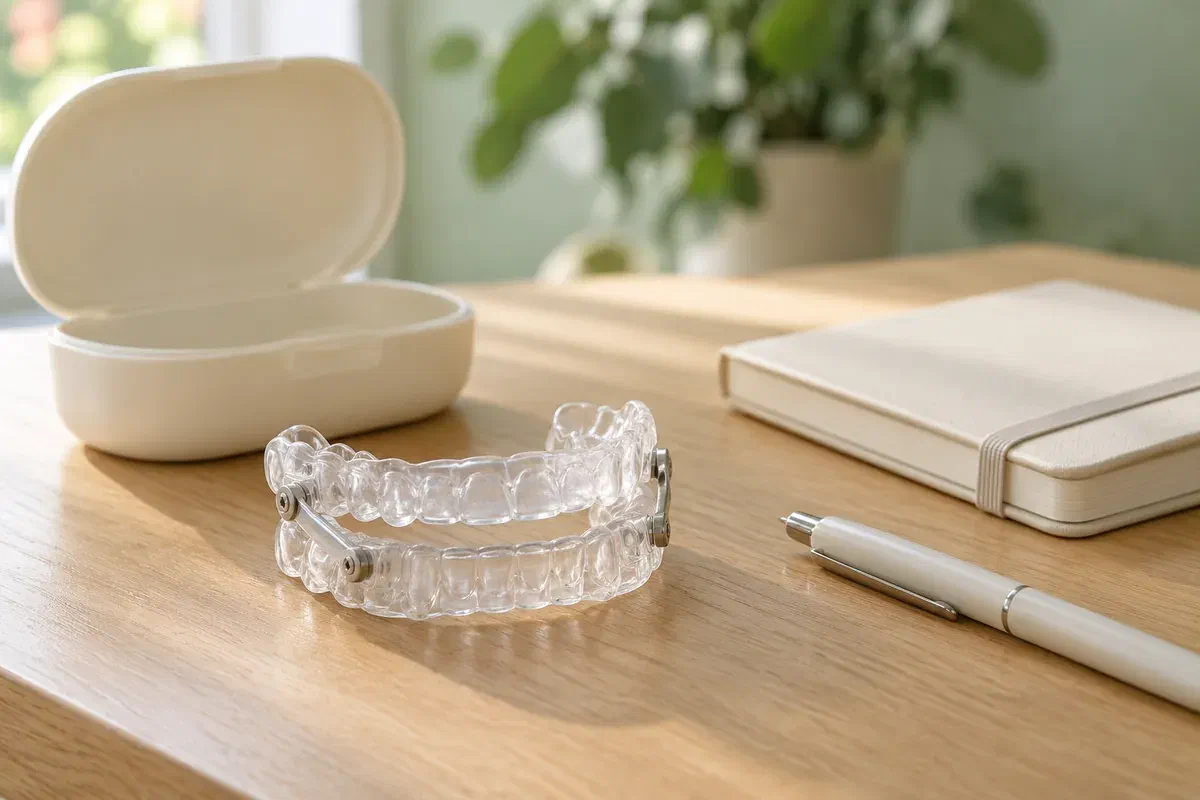
Illustrative oral sleep appliance beside its protective case and a closed journal
Changes to bring to the review

Small observations can help explain a bigger change in your routine.

Think about what has changed since the fitting or last appointment. The timing, frequency, and effect on your ability to use the appliance are useful details, even when you are unsure what caused the problem.

Wearing the appliance has become inconsistent

Explain whether discomfort, handling, dryness, travel, or another obstacle is getting in the way. Describe how often the device is actually worn and what happens on other nights. The clinician needs this information to discuss useful next steps, rather than assuming the original instructions remain workable.

Your bite, teeth, or jaw feel different

Mention changes in how the teeth meet, new pressure, jaw symptoms, or a restoration that has recently been placed. Tell the clinician when the change appears and whether it persists. An appliance that still goes into the mouth may nevertheless need review against your current oral condition.

Sleep-related symptoms have returned or changed

Report renewed snoring, witnessed breathing pauses, or increasing daytime sleepiness to your sleep-care provider as well as at the dental visit. Do not assume a tighter setting is the answer. These observations may prompt medical reassessment, even when the appliance looks intact and feels comfortable.

Contact the treating provider sooner for significant pain, an unsafe fit, or a broken or loose component. Do not wait for a scheduled review to discuss a device you cannot safely use; ask how your sleep treatment should continue meanwhile.

The purpose of ongoing review

Keep the dental findings and the sleep-care plan in conversation.

Follow-up creates a point of comparison. The clinician can consider the present findings alongside earlier records, your account of wear, and any changes in dental treatment. This is more informative than judging the appliance in isolation or assuming that the absence of a complaint means every part of the plan is still suitable.

It also gives you a chance to check who is responsible for the next step. Ask which concerns can be addressed through dental care, which require the original appliance provider, and which belong with the medical sleep team. Clear communication matters when appointments occur in different offices or a provider has changed.

Patient information: AADSM — ongoing dental review and coordinated oral-appliance care

Review the mouth and the condition of the device

The examination can consider teeth, supporting tissues, bite, jaw function, and the appliance itself. Ask what has changed and what requires attention. The purpose is to identify relevant findings and agree on a response, rather than make an automatic adjustment at every follow-up appointment.

Make room for difficulties with everyday use

Discuss the part of the routine that is hardest to maintain. Bring the case and instructions if handling or storage is confusing. A practical conversation may reveal a need for further teaching, a fit assessment, or a different plan instead of simply repeating the original advice.

Connect dental review with medical effectiveness assessment

Confirm whether the sleep provider has received the relevant updates and whether any recommended testing or review remains outstanding. Feeling better is valuable information, but it does not answer every question about control of sleep apnea. Ask how the different findings will inform the ongoing treatment plan.

What happens at an appliance review

Bring the device, describe the experience, and leave with the next step.

A helpful follow-up starts with your account of use and ends with clear responsibilities. Bring available treatment records, appliance instructions, and any recent sleep-care correspondence so the discussion can be specific to your situation.

  1. Update the history and discuss actual wear

    Explain how you have used the appliance since the previous visit, including interruptions and changes you were instructed to make. Share new symptoms, dental work, medicines, or relevant health updates. If you are unsure of the current setting or the last instruction, say so rather than guessing.

  2. Examine the mouth and assess the appliance

    The clinician reviews the relevant oral findings and checks the device's condition and fit. Earlier records may help interpret a change in the bite or tissues. Ask what the examination shows, whether the device remains appropriate to use, and whether another assessment is needed before any modification.

  3. Discuss the findings with the wider treatment plan

    Review which concerns need dental attention and which should be communicated to the medical sleep provider. Ask whether effectiveness testing has been completed or is being considered. The plan should address both tolerability and treatment response without treating one as proof of the other.

  4. Confirm instructions and the review interval

    Ask for the agreed actions, contact details, and next appointment arrangements. Clarify what should trigger earlier contact and whether any instruction about wear or settings has changed. If another provider needs information, establish how it will be shared and who will follow up on the response.

Between follow-up appointments

Notice changes early and keep the instructions easy to find.

The plan may involve continued use, further assessment, or a professionally directed change. Follow the advice given for your device and keep the dental and medical teams informed when the routine becomes difficult.

Keep a brief record of concerns that affect use

Note when discomfort, a fit issue, or a sleep-related concern occurs and whether it changes your wearing routine. A short account is enough; you do not need to track every night in elaborate detail. Bring the information to review and seek earlier help when the problem cannot reasonably wait.

Tell the dental team before treatment changes the fit

Bring the appliance to appropriate appointments and mention planned work on teeth it engages. Ask how the treatment could affect use and whether the appliance provider needs to be involved. Do not force the device over a new restoration or independently reshape it to make it fit.

Keep both dental and medical follow-up arrangements

Ask when each review is due and how to arrange any outstanding testing. Let the team know if access, cost, or scheduling is preventing you from attending. The next step can then be discussed openly rather than allowing an unresolved concern to disappear between separate care providers.

Patient information: NHLBI — living with sleep apnea and keeping treatment under review

Deciding what follows the review

The findings determine whether to continue, adjust, or reassess the plan.

Ask what each proposed action is intended to address. A follow-up visit should not automatically lead to a stronger setting, a replacement device, or discharge from care simply because the appliance appears to fit.

When the current dental findings support continued use

Continue with an agreed monitoring plan

If no change is indicated, confirm the wearing and care instructions and the next review arrangements. Ask which developments should bring you back earlier. Continuing the appliance still involves appropriate medical follow-up; a reassuring dental examination alone is not a complete assessment of sleep-apnea control.

When comfort, fit, or dental findings need attention

Address a specific appliance or oral-health concern

The next step may involve further examination, professional adjustment, treatment of an oral problem, or assessment by the original provider. Ask whether use should continue while this is arranged. Understand the reason for the recommendation before assuming the device has simply worn out.

When symptoms, response, or circumstances have changed

Review the sleep-treatment approach with the medical team

The medical provider may need to reassess effectiveness or discuss alternatives when the current approach is not meeting your needs. Share dental findings and difficulties with use. Do not substitute an unprescribed mouthpiece, stop established treatment, or make a large setting change while waiting for that discussion.

Questions about continuing appliance care

Follow-up should answer the questions that appear after real-world use.

A device can feel familiar while your dental or medical circumstances change. Ask about the review plan, the information to bring, and how to get help between appointments.

(905) 876-4488
Do I need a sleep-appliance review when it still feels comfortable?
Yes, follow the agreed review schedule even when you have no complaint. The clinician can examine the mouth and appliance and compare relevant findings over time. Comfortable wear does not establish that every dental finding is unchanged or that sleep apnea is adequately controlled.
Should I bring my actual sleep appliance to a follow-up appointment?
Yes. Bring the appliance, its case, available instructions, and relevant treatment information. The clinician needs to assess the device itself as well as your mouth. Tell the office beforehand if it is lost, broken, or with a laboratory so the appointment can be planned appropriately.
Can a routine dental cleaning replace a dedicated sleep-appliance review?
Not automatically. A cleaning appointment may not include the relevant appliance assessment or coordination with your sleep provider. Tell the office that you use an oral sleep appliance and ask which review is needed, what records to bring, and whether the visits can be coordinated.
Is it useful to mention nights when I did not wear the sleep appliance?
Yes. An accurate account helps the team understand obstacles and interpret the treatment experience. Explain what prevented use without worrying about presenting a perfect record. The discussion should identify practical support and any necessary change to the care plan.
Does every sleep-appliance follow-up require another sleep study?
No single testing schedule applies to every visit. The medical sleep provider considers the treatment stage, symptoms, previous results, and other relevant changes. Ask whether testing is needed in your case and how it will be arranged; a dental fit check does not substitute for indicated effectiveness testing.
What information matters when a different dentist takes over my appliance follow-up?
Bring the device details, original instructions, relevant dental records, and sleep-care provider information where available. Explain previous adjustments and current concerns. The new clinician may need to obtain additional records or coordinate with the original provider before advising on settings or continued management.
Arrange follow-up in Milton

Bring your appliance and the questions that have come up at home.

Contact Milton Dental Clinic to discuss an appropriate sleep-appliance review. Tell us who supplied the device, when it was last checked, and whether you have a new fit problem, difficulty with use, or an outstanding sleep-care review.

Dental follow-up and medical assessment of treatment effectiveness have complementary roles.

Visit Milton Dental Clinic
Unit 1, 342 Bronte St. S, Milton, ON L9T 5B7
Get directions Clinic hours
Monday–Thursday
11am–7pm
Friday–Sunday
By appointment only

How can we help?

Milton Dental Clinic

Have a question about your smile? Choose the option that works best for you.

For urgent dental concerns, please call.
Messages are reviewed during clinic hours.