

Illustrative conversation about ongoing sleep-appliance care
Specialized Care

Sleep Appliance Follow-Up in Georgetown

Sometimes the first hint that a sleep appliance needs attention comes from the person beside you. From Georgetown, arrange a follow-up that checks the device and your mouth and makes sure your sleep physician hears what has changed.

Listening for changes in Georgetown

Someone else may notice first.

A partner mentions the snoring has crept back. A family member says you seemed to stop breathing for a moment. You feel fine, and the appliance still slips in each night. Observations like these are worth acting on. Follow-up examines the device and your mouth, and makes sure the right people, including your sleep physician, know about the change.

It helps to bring both perspectives. Tell us what you experience, such as a dry mouth or an achy jaw, and pass on what others have noticed while you sleep. None of it needs to be organised or certain. A plain account of what is happening at home is the most useful thing you can offer.

When you book from Georgetown, mention the office that made the appliance and the provider who manages your sleep treatment. We can explain what records would help. The dental review looks at your mouth and the device, and returning symptoms are something your medical team needs to assess.

Book a follow-up after a change
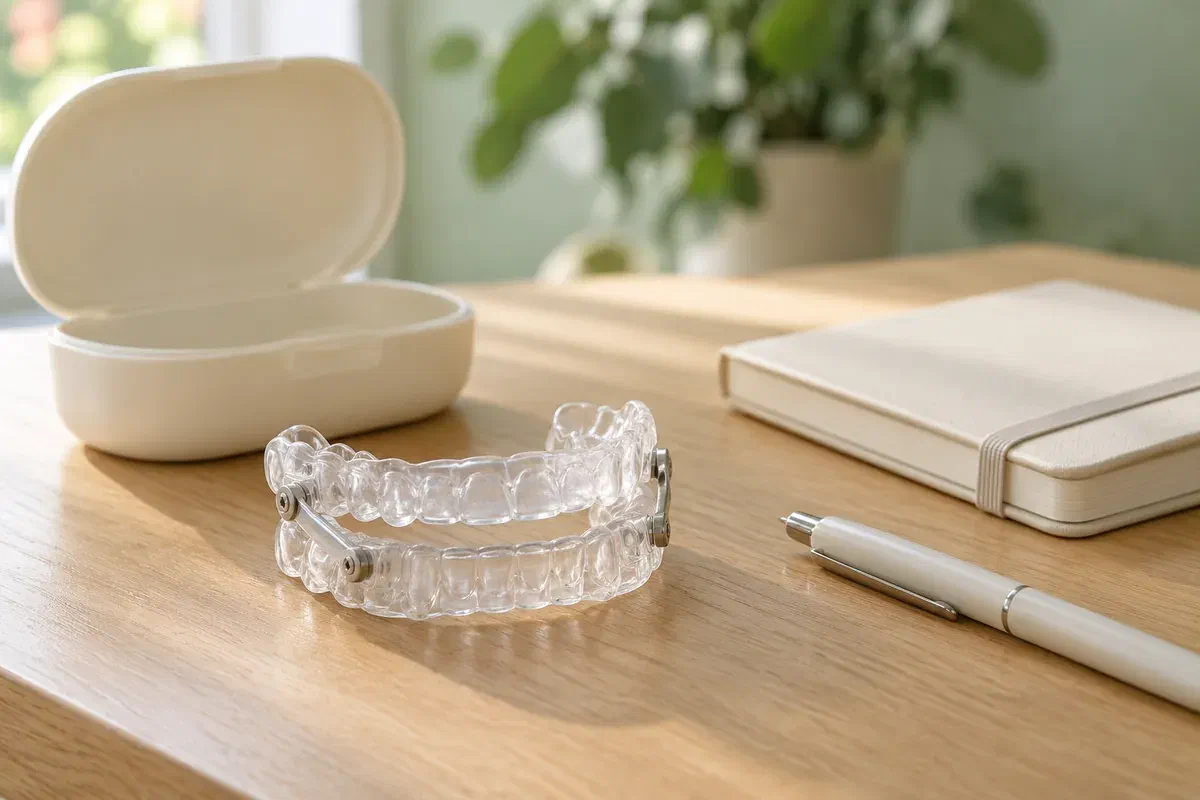
Illustrative oral sleep appliance beside its protective case and a closed journal
Reports to bring along

Your own observations, and what others hear at night

Gather what you and the people around you have noticed since your last review. Even without a clear cause, it's useful to know roughly when something began, how often it happens and whether it has affected your wear.

The appliance isn't going in every night

Be candid about what interrupts wear, from discomfort and dryness to travel, fiddly handling or a busy week. A partner may also notice nights it came out early. A rough count helps the clinician suggest something realistic instead of assuming the original routine still suits you.

Teeth or jaw have started to feel different

Mention a bite that seems altered in the morning, a tooth that feels pushed, jaw discomfort or new dental work. Say when it began and whether it lingers through the day. Fitting easily doesn't rule out the need to check the device against your current mouth.

Snoring, pauses or sleepiness have returned

Reports from a bed partner of louder snoring or breathing pauses, and your own daytime sleepiness, should go to your sleep provider as well as to us. Turning up the appliance isn't the presumed answer. These signs may mean a medical reassessment is needed, even if everything looks normal.

If the device causes significant pain, feels unsafe or has a cracked or loose part, call the provider treating you promptly instead of waiting for your review. Find out what to do about sleep treatment while the appliance is out of action.

Why follow-up helps

Changes mean more when someone can compare them.

The clinician can place today's findings next to your earlier records, your description of wear and any dental treatment since the fitting. With that context, a returning symptom or a small fit change becomes easier to interpret. Looking at the appliance by itself, or assuming silence means success, tells you much less.

Follow-up is also a moment to check responsibilities. Ask which concerns the dental team can handle, which require the office that made the device, and which need your medical sleep provider. When those offices are separate, a clear answer keeps returning symptoms from going unreported.

Patient information: AADSM — ongoing dental review and coordinated oral-appliance care

An examination of the mouth and appliance

Your teeth, gums, bite and jaw movement can be checked, as well as the device's condition and how securely it sits. Ask what has changed and what needs attention. Not every visit ends with an adjustment; the purpose is to notice what is relevant and decide what to do.

A chance to share the household view

Explain which part of the routine is hardest, and pass on anything others have observed at night. Bring the case and instructions if you find them confusing. The outcome may be more guidance, a fit check or a referral, not simply the same advice again.

A prompt to involve your sleep physician

Check whether your sleep provider knows about returning symptoms and whether testing has been recommended. Feeling well is useful to report, but it doesn't confirm control of sleep apnea, especially if others notice changes. Ask how the findings will be combined.

The appointment

What we'll go through together

We begin with your account, and anything others have noticed, and finish with clear next steps. Bring your appliance, the instructions, treatment records and any recent letters from your sleep-care provider.

  1. Hear what you and others have noticed

    Describe your wear since the last visit, including gaps and any instructed changes, and pass on reports about snoring or pauses. Mention new symptoms, dental work, medications or health updates. If you aren't sure of the current setting, say so instead of guessing.

  2. Examine your mouth and the appliance

    The clinician assesses the relevant oral tissues and looks at the device's fit and condition. Earlier records can help explain changes in the bite or gums. You'll hear what the exam showed, whether to keep wearing the appliance, and whether more assessment is needed first.

  3. Decide what your physician needs to know

    Agree which findings are dental and which, like returning snoring, should go to the medical sleep provider. Your physician may want to test how well treatment is working. Comfort and effectiveness are different measures, so the plan should look at both.

  4. Agree actions and the timing of the next visit

    Confirm what will happen, who to contact and when your next review is. Check which symptoms mean you shouldn't wait that long. If your sleep provider or the device maker needs an update, agree who will send it and who will check that it has been received.

Over the coming months

Keep listening, and keep a note.

The plan might be to continue as before, have a further assessment or make a change directed by a professional. Follow the advice for your appliance, and tell both teams if wear becomes difficult or symptoms return.

Record changes you or others notice

Note the date when discomfort, a fit problem, louder snoring or a reported breathing pause occurs, and whether the appliance was in. A line on a calendar is plenty. Share it at your review, and call earlier if it can't reasonably wait.

Mention the device before dental work

Tell the dental team about the appliance when treatment is planned on teeth it grips, and bring it to the appointment. Ask how the work might affect its fit and whether the maker should be consulted. Don't push it over new work or alter it at home.

Keep up with dental and medical reviews

Check when each type of review is due and how to arrange any outstanding test. If cost, time or getting to appointments makes it hard, say so. Raising the problem openly stops a concern from falling between offices.

Patient information: NHLBI — living with sleep apnea and keeping treatment under review

Next steps for Georgetown appliance users

What a review can lead to

Ask what any proposed step is designed to address. A device that seems to fit isn't, on its own, a reason for a stronger setting, a new appliance or ending follow-up.

When dental findings support ongoing wear

Continue with an agreed monitoring plan

If nothing needs to change, confirm your wear and care routine and when to return. Ask which signs, including anything a partner notices, should bring you in sooner. Medical follow-up carries on, because a reassuring dental exam isn't enough to confirm sleep apnea control.

When comfort, fit or dental findings call for attention

Deal with a specific fit or mouth issue

The response might be more examination, a professional adjustment, dental treatment or referral back to whoever made the device. Ask whether to keep wearing it in the meantime, and understand the reason before concluding the appliance is worn out.

When symptoms or treatment response have changed

Take returning symptoms to your sleep team

Your physician may reassess effectiveness or consider alternatives if treatment isn't meeting your needs. Share dental findings and any difficulty with wear. Until then, don't switch to an unprescribed mouthpiece, stop treatment or make a big setting change yourself.

Questions families ask

When the snoring comes back, or someone sees a pause

People close to you often notice night-time changes first. These answers cover what to report, who to tell and what follow-up can and can't show.

(905) 876-4488
My partner says the snoring is back. Who should I tell?
Tell your medical sleep provider, and mention it at your dental follow-up too. Returning snoring can have several explanations, and your physician may want to reassess treatment. Don’t change the appliance setting on your own.
Can a family member come with me to the appointment?
Yes, if you would find it helpful. Someone who has watched you sleep may be able to describe snoring or pauses more accurately than you can. Let the office know when booking, and feel free to bring written notes from them if they can’t attend.
If the appliance looks fine, why would snoring return?
There can be several reasons, and the appliance is only one factor. Health changes, new medications or shifts in your bite may all play a part. The dental review checks fit and oral findings, while your sleep provider considers the wider picture and whether testing is needed.
Should I keep wearing the device while I wait to see my doctor?
Generally, continue as instructed unless it causes pain, feels unsafe or is damaged. Ask your treating provider for advice specific to your situation, and don’t stop prescribed treatment without discussing it.
Does a routine cleaning include a look at my sleep appliance?
Not automatically. A standard hygiene visit is focused on your teeth and gums, not on the device. Tell the office you use an oral sleep appliance and ask whether a separate review is needed, what to bring and whether visits can be arranged together.
How do I describe breathing pauses I can't remember?
Pass on what others have told you, including roughly when and how often they noticed it. You don’t need certainty. Your sleep provider can decide whether further assessment is needed.
Arrange your Georgetown visit

Come with the appliance and what you've heard at home.

Reach Milton Dental Clinic to arrange a sleep-appliance review. Tell us who fitted your device, roughly how long ago it was examined, and whether snoring has returned, the fit has changed, or a sleep-care appointment is overdue.

Dental review and medical assessment of how well treatment works go together.

Visit Milton Dental Clinic
Unit 1, 342 Bronte St. S, Milton, ON L9T 5B7
Get directions Clinic hours
Monday–Thursday
11am–7pm
Friday–Sunday
By appointment only

Areas we serve

  • Milton
  • Oakville
  • Mississauga
  • Georgetown
  • Halton Hills
  • Acton
  • Campbellville
  • Brampton
  • Burlington
  • Puslinch
  • Rockwood
  • Erin
  • Caledon
  • Etobicoke
  • Old Milton
  • Bronte Meadows
  • Timberlea
  • Dorset Park
  • Dempsey
  • Clarke
  • Beaty
  • Coates
  • Harrison
  • Scott
  • Willmott
  • Ford
  • Bowes
  • Cobden
  • Walker
  • Mountain View
  • Milton Heights
  • Hawthorne Village
  • Valley View
  • Fallingbrook
  • Nassagaweya
  • Trafalgar
  • Esquesing
  • Nelson
  • Brookville
  • Moffat
  • Glen Williams
  • Norval
  • Limehouse
  • Stewarttown
  • Ashgrove
  • Hornby
  • Silver Creek
  • Speyside
  • Scotch Block
  • North Oakville
  • River Oaks
  • Glen Abbey
  • West Oak Trails
  • Palermo
  • Bronte Creek
  • College Park
  • Joshua Creek
  • Uptown Core
  • Preserve
  • Iroquois Ridge
  • Lisgar
  • Meadowvale
  • Meadowvale Village
  • Churchill Meadows
  • Erin Mills
  • Central Erin Mills
  • Streetsville
  • East Credit
  • Creditview
  • Heartland
  • Sheridan
  • Mount Pleasant
  • Credit Valley
  • Huttonville
  • Churchville
  • Springbrook
  • Northwest Brampton
  • Bram West
  • Fletcher's Meadow
  • Fletcher's Creek South
  • Alton Village
  • Orchard
  • Millcroft
  • Headon Forest
  • Tansley
  • Brant Hills
  • Tyandaga
  • Kilbride
  • Lowville
  • Aberfoyle
  • Morriston
  • Arkell
  • Hillsburgh
  • Freelton
  • Carlisle
  • Waterdown
  • Flamborough
  • Mountsberg

How can we help?

Milton Dental Clinic

Have a question about your smile? Choose the option that works best for you.

For urgent dental concerns, please call.
Messages are reviewed during clinic hours.