

Illustrative conversation about ongoing sleep-appliance care
Specialized Care

Sleep Appliance Follow-Up in Halton Hills

A new crown or filling on a tooth your sleep appliance grips can change how it sits. For households across Halton Hills, a follow-up checks the device against your current teeth and keeps your sleep physician up to date.

Appliance care alongside dental treatment

Planning dental work? Bring the appliance into the conversation.

An oral sleep appliance is shaped around the teeth it was made for. When those teeth gain a crown, lose a filling or shift slightly, the device may sit differently even though it still goes in. Regular follow-up catches those changes. It examines the appliance and your mouth together and keeps the dental side of treatment linked to your physician's review of your sleep.

You can bring the details as they come to you. Perhaps the appliance clicks in more firmly since a recent filling, or one side feels looser than the other. Mention it, even if it seems minor or you are not sure it is connected. Real observations guide better advice than a polished summary does.

From Georgetown, Acton, Glen Williams or anywhere else in Halton Hills, let us know who made the device and who oversees your sleep care when you call. We will explain which records the review needs. We assess oral and appliance concerns; your medical sleep team decides how to judge whether treatment is working.

Ask about reviewing your appliance fit
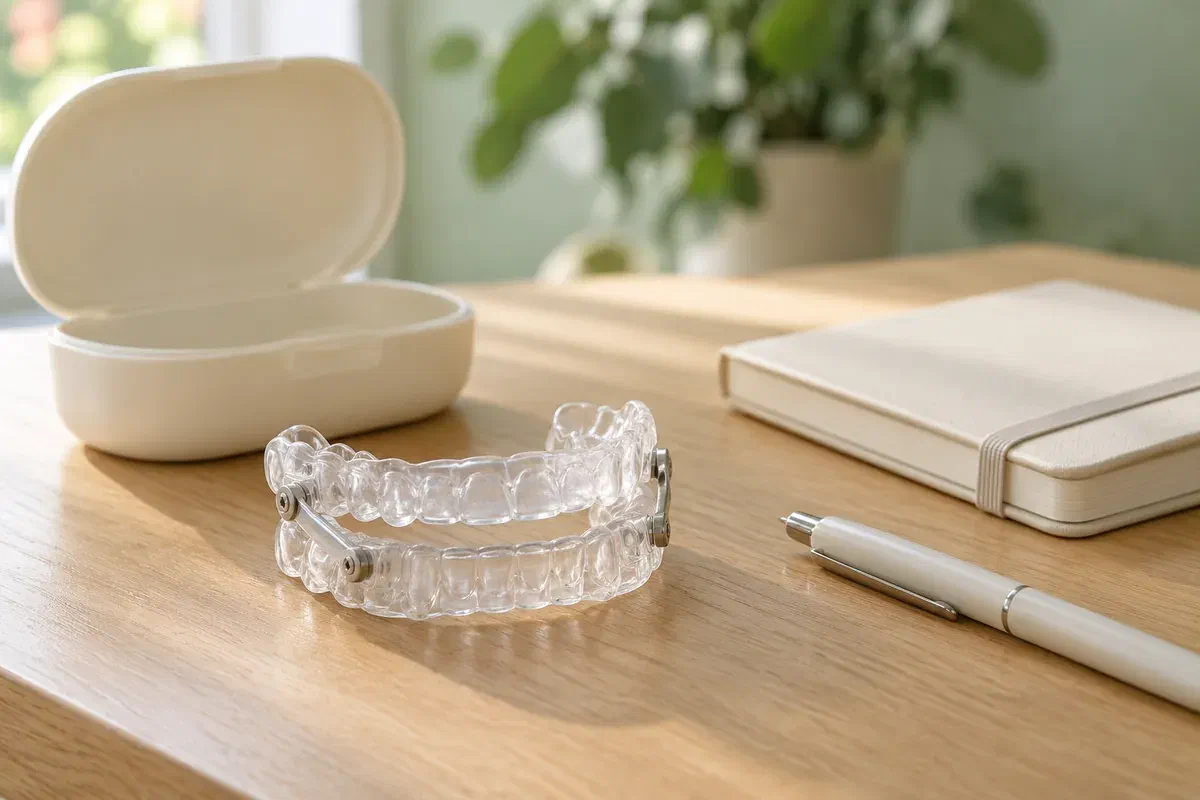
Illustrative oral sleep appliance beside its protective case and a closed journal
What has changed in your mouth

New dental work, a different fit

Consider what has happened since the appliance was fitted or last reviewed. Note when a change started, how often you notice it and what it does to your wear. That is helpful whether or not you can pinpoint the cause.

You're wearing it less since the change

Explain whether a tighter fit, a pressure point, dryness, time away from home or something else has made you reach for it less often. A rough count of nights per week helps. The clinician can then discuss practical next steps rather than presuming the first instructions still apply.

A crown, filling or bite change is new

Tell the clinician about recent dental treatment, a tooth that feels pushed when the device is in, jaw tension, or a bite that seems altered. Mention when you noticed it and whether it lasts. An appliance that seats may still need checking against the work that has been done.

Sleep feels less settled again

Let your sleep-care provider and the dental team know about louder snoring, pauses someone has observed or increased daytime tiredness. A firmer setting isn't assumed to solve it. Changes like these can prompt a medical reassessment even when the appliance appears intact.

If the device suddenly hurts, no longer feels safe to wear, or has a broken or loose component, contact your treating provider promptly. Don't wait for a routine review or force it to fit; ask how your sleep treatment should continue until it is checked.

The value of a follow-up

Earlier records show what the new work has changed.

When dental treatment has happened since your fitting, a comparison is especially useful. The clinician can set current findings against previous records, your description of wear and the details of the new work. That reveals far more than looking at the appliance alone, or assuming that a device which still goes in must still be right.

It also helps clarify who should act. A fit issue caused by new work may involve the dental team, the office that made the device, or both, while changes in sleep symptoms belong with your medical provider. Getting this straight matters when your treatment is spread across separate offices.

Patient information: AADSM — ongoing dental review and coordinated oral-appliance care

A fit check against your current teeth

The examination can cover teeth, gums, the bite, jaw function and the appliance itself, with attention to any new crowns or fillings. Ask what has changed and whether it needs a response. A review doesn't automatically end in an adjustment; it identifies what is relevant first.

Room to talk about daily wear

Describe whichever step of the routine has become harder since the change. Bring the case and any instructions. The conversation may lead to more guidance, a closer fit assessment or a change in plan, rather than repeating what you were told at the start.

A connection to your sleep physician

Check that your sleep provider knows about relevant dental changes and whether any testing is still pending. Feeling rested is useful to share, yet it doesn't settle every question about sleep apnea control. Ask how the dental and medical findings will be used together.

What the review involves

Your history, the exam, the wider plan and the follow-up

The appointment begins with how you have been using the appliance and ends with clear responsibilities. Bring the device, its instructions, details of recent dental work and any correspondence from your sleep-care provider.

  1. Review recent dental work and wear

    Explain how you have used the appliance, including interruptions, and describe any treatment on teeth it engages. Mention new symptoms, medications and health changes. If you don't know the current setting or your most recent instruction, it's better to say so than guess.

  2. Check the mouth and the device fit

    The clinician examines the relevant teeth and tissues and checks the appliance's condition and fit, with particular attention to new restorations. Earlier records may help explain what has changed. Ask what was found and whether the device is still suitable to wear before any modification.

  3. Relate the findings to your sleep care

    Agree which concerns are dental and which should go to the medical sleep provider. You can also find out whether your physician has tested treatment response recently or intends to. Wearing comfortably and responding well are separate, and the plan should cover each.

  4. Confirm the plan and the next contact

    Make sure you know the actions agreed, who to call and when you're next due. Ask what should bring you in sooner and whether any instruction about wear or settings has changed. If the device maker or your physician needs information, agree how it will be passed on.

Between appointments

Plan ahead for any treatment on the teeth it holds.

You may be continuing as before, returning for another assessment or following a professionally directed change. Use the advice for your specific appliance, and keep both the dental and medical teams informed if the routine becomes difficult.

Note fit changes as they happen

When the device feels tighter, looser or uncomfortable, or a sleep symptom appears, jot down the date and whether you wore it. A short note is enough. Bring it to the review, and seek help earlier if the problem can't reasonably wait.

Raise the appliance before new treatment

Whenever a filling, crown or other work is planned on teeth the appliance holds, tell the dental team and bring the device. Ask how the work could affect its fit and whether the maker should be involved. Never force it over a new crown or reshape it yourself.

Stay on top of both reviews

Ask when your dental and medical follow-ups fall and how to book any outstanding test. If cost, timing or getting to appointments is a barrier, mention it. That way the concern is discussed rather than left unresolved between providers.

Patient information: NHLBI — living with sleep apnea and keeping treatment under review

Halton Hills follow-up outcomes

Will the appliance need to change? It depends on what the exam shows.

Ask what each recommended action is designed to address. An appliance that still seats isn't automatically a reason for a stronger setting, a new device or ending your reviews.

When dental findings support carrying on

Continue and keep monitoring

If the new work hasn't affected the fit in a way that needs action, confirm wear and care instructions and the next review. Ask which changes should bring you back sooner. Medical follow-up continues, since a reassuring dental exam can't confirm sleep apnea control on its own.

When the new work or oral findings affect fit

Adjust for a fit or dental concern

This could involve further examination, a professional adjustment, treatment of a dental problem or assessment by the original maker. Ask whether to keep wearing the device while that is arranged, and understand why before assuming it needs replacing.

When symptoms or treatment response change

Revisit the approach with your sleep team

When treatment isn't delivering what you need, your sleep physician can look again at its effect or lay out alternatives. Share dental findings and any difficulty with wear. Meanwhile, avoid unprescribed mouthpieces, stopping treatment or making a large setting change on your own.

Questions about dental work and appliances

When your teeth change, what happens to the appliance?

Fillings, crowns and other treatment can affect how a sleep device fits. These answers explain what to do before and after dental work, and between reviews.

(905) 876-4488
Should I bring my sleep appliance to a filling or crown appointment?
It’s a good idea to mention it when booking and ask whether to bring it. The team can then consider how the treatment might affect the fit and whether an appliance review should follow.
My appliance feels tight after a new crown. Can I still wear it?
Don’t force it. Contact the treating provider and describe the change. They can advise whether to keep wearing it and arrange a fit assessment, and you should ask how to manage your sleep treatment in the meantime.
Can the device be adjusted to fit new dental work?
Sometimes a professional adjustment is possible, but that depends on the examination and the device. Don’t trim or reshape it yourself. The clinician may also need to involve the office that made it.
Who pays attention to my appliance when different dentists treat me?
Tell every office about the appliance and keep the provider who manages it informed of treatment elsewhere. Bring records and the device to your follow-up so the clinician can see the full picture.
Do I need a new sleep study after dental work changes the fit?
Not automatically. Your medical sleep provider decides whether testing is needed based on your symptoms and treatment history. Let them know about significant changes in fit or sleep symptoms.
Is the review still needed if the appliance feels fine after dental work?
Yes, keep to the agreed schedule. A comfortable fit doesn’t confirm that every dental finding is unchanged or that sleep apnea is well controlled. The review compares findings over time.
Book a review from Halton Hills

Bring the appliance and a note of any recent dental work.

Contact Milton Dental Clinic to arrange a suitable sleep-appliance review. Tell us who made the device, what dental treatment you've had since it was fitted, and whether you have a fit concern, trouble with wear, or a sleep-care review still outstanding.

Dental review and medical evaluation of treatment effectiveness work together.

Visit Milton Dental Clinic
Unit 1, 342 Bronte St. S, Milton, ON L9T 5B7
Get directions Clinic hours
Monday–Thursday
11am–7pm
Friday–Sunday
By appointment only

Areas we serve

  • Milton
  • Oakville
  • Mississauga
  • Georgetown
  • Halton Hills
  • Acton
  • Campbellville
  • Brampton
  • Burlington
  • Puslinch
  • Rockwood
  • Erin
  • Caledon
  • Etobicoke
  • Old Milton
  • Bronte Meadows
  • Timberlea
  • Dorset Park
  • Dempsey
  • Clarke
  • Beaty
  • Coates
  • Harrison
  • Scott
  • Willmott
  • Ford
  • Bowes
  • Cobden
  • Walker
  • Mountain View
  • Milton Heights
  • Hawthorne Village
  • Valley View
  • Fallingbrook
  • Nassagaweya
  • Trafalgar
  • Esquesing
  • Nelson
  • Brookville
  • Moffat
  • Glen Williams
  • Norval
  • Limehouse
  • Stewarttown
  • Ashgrove
  • Hornby
  • Silver Creek
  • Speyside
  • Scotch Block
  • North Oakville
  • River Oaks
  • Glen Abbey
  • West Oak Trails
  • Palermo
  • Bronte Creek
  • College Park
  • Joshua Creek
  • Uptown Core
  • Preserve
  • Iroquois Ridge
  • Lisgar
  • Meadowvale
  • Meadowvale Village
  • Churchill Meadows
  • Erin Mills
  • Central Erin Mills
  • Streetsville
  • East Credit
  • Creditview
  • Heartland
  • Sheridan
  • Mount Pleasant
  • Credit Valley
  • Huttonville
  • Churchville
  • Springbrook
  • Northwest Brampton
  • Bram West
  • Fletcher's Meadow
  • Fletcher's Creek South
  • Alton Village
  • Orchard
  • Millcroft
  • Headon Forest
  • Tansley
  • Brant Hills
  • Tyandaga
  • Kilbride
  • Lowville
  • Aberfoyle
  • Morriston
  • Arkell
  • Hillsburgh
  • Freelton
  • Carlisle
  • Waterdown
  • Flamborough
  • Mountsberg

How can we help?

Milton Dental Clinic

Have a question about your smile? Choose the option that works best for you.

For urgent dental concerns, please call.
Messages are reviewed during clinic hours.