

Illustrative conversation about ongoing sleep-appliance care
Specialized Care

Sleep Appliance Follow-Up in Oakville

Got your sleep appliance elsewhere and need someone to pick up its care? If you're coming from Oakville, we can review the device and your mouth, gather the right records and keep your medical sleep team in the loop.

Picking up appliance care from Oakville

Who looks after the appliance now?

People often lose track of appliance follow-up after a move, a change of dentist or a provider retiring. The device keeps going into your mouth each night, yet nobody is checking it against your teeth. A follow-up visit restarts that oversight: it examines the appliance and your mouth, then reconnects the dental part of treatment with your sleep physician's review.

Tell the clinician what using it is really like these days. Maybe it comes out halfway through the night, or a strap or clasp now needs a firm push. Those everyday details shape the advice you get. You are welcome to raise a problem as it is, without first working out how to describe it neatly.

Before your first visit from Oakville, gather what you can: the name of the office that made the device, your sleep provider's details and any paperwork from the fitting. We can explain which records are needed and help request them. Our examination covers your mouth and the appliance; your medical team judges treatment effectiveness.

Start appliance follow-up with us
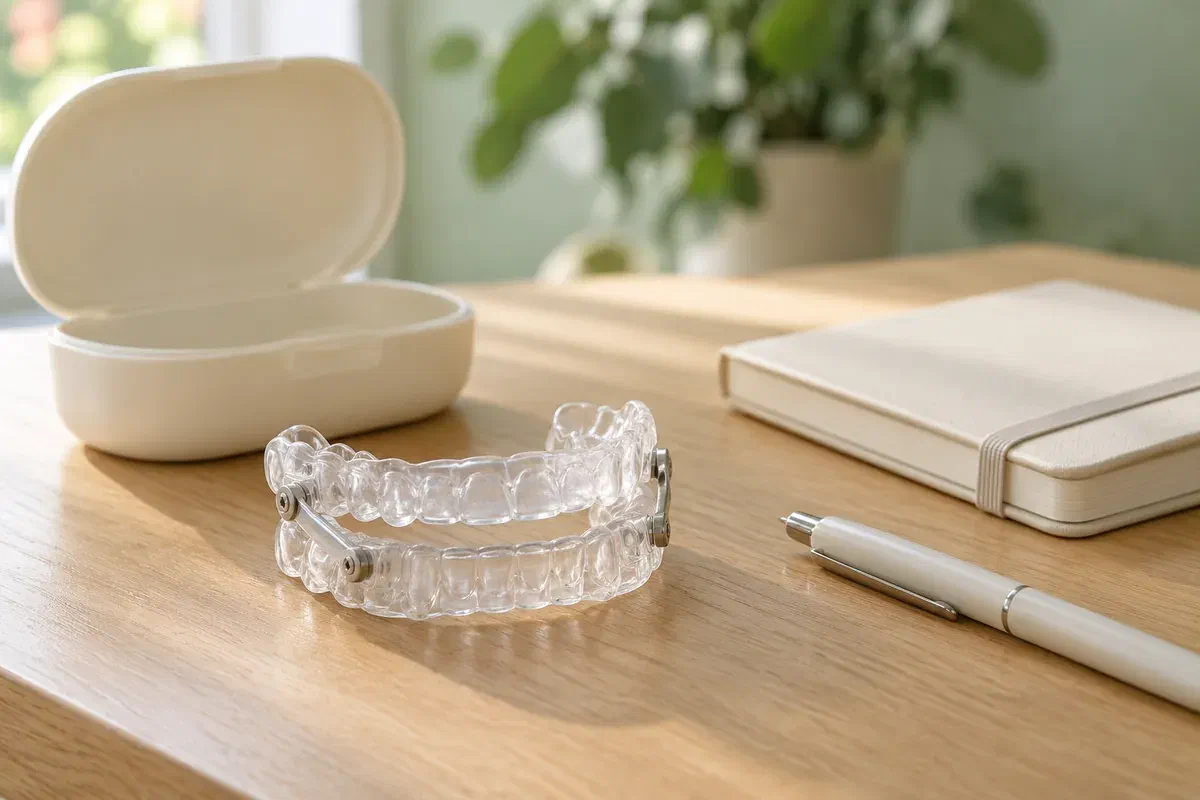
Illustrative oral sleep appliance beside its protective case and a closed journal
Details a new clinician needs

Tell us what has changed, even the small things.

A clinician meeting your appliance for the first time relies on your account. Mention when each change started, how often it happens and whether it affects your wear, whatever you think the cause might be.

Your wearing pattern has slipped

Describe what interrupts use: a pressure point, awkward handling, dryness, being away from home, or no clear reason at all. A rough weekly count of nights worn is helpful. It lets the new clinician suggest realistic next steps instead of assuming the original instructions still suit you.

Something feels different in the bite or jaw

Note any change in how your teeth fit together, a tooth that feels pushed, aching jaw muscles, or work done by another dentist since the fitting. Say when it started and whether it lingers. Even a device that seats easily may need checking against your present mouth.

Signs of poor sleep are returning

Report louder snoring, observed pauses in breathing or growing daytime fatigue to your sleep provider, and mention them at the dental visit too. Turning the appliance up isn't assumed to be the solution. Such changes may call for medical reassessment even if the device looks fine.

Call the provider currently treating you without delay for marked pain, a fit you don't trust, or a component that has cracked or come loose. Don't keep wearing a device that isn't safe while you wait for a booking, and ask how sleep treatment should continue until it is sorted.

Why continuity matters

Earlier records turn a single visit into a comparison.

A first review with a new office works best with history attached. When previous notes are available, current findings can be set against them, together with your description of wear and any dental work in between. That says far more than an appliance examined cold, and more than the assumption that no complaint equals no change.

A change of dentist is also the right time to settle responsibilities. Ask which concerns the dental team can manage, which need the office that made the device, and which go to your medical sleep provider. That matters most when your care is split between offices and nobody has been coordinating.

Patient information: AADSM — ongoing dental review and coordinated oral-appliance care

A fresh examination of mouth and device

The clinician can check teeth, gums, the bite and jaw function, and inspect the appliance for wear and fit. Ask what they notice and whether anything needs action. A first review isn't a reason to adjust automatically; it establishes a baseline and an agreed plan.

Space to raise practical difficulties

Explain whichever part of the routine is hardest, and bring the case and any instructions you still have. A new set of eyes may suggest a refresher on handling, a fit assessment or a different plan, rather than simply restating advice from years ago.

Reconnecting with your sleep provider

Confirm whether your sleep physician has up-to-date information and whether any recommended testing is still pending. Feeling rested is worth sharing, but it doesn't settle whether sleep apnea is controlled. Ask how dental and medical findings will be brought together going forward.

A first follow-up, from Oakville

What we cover when you are new to us

We start with how you have been using the appliance and finish with clear roles for each provider. Bring the device, any instructions, previous records you can get and recent letters from your sleep-care team.

  1. Build the history together

    Explain how and how often you have worn the device, any breaks, and changes a previous provider asked you to make. Share new symptoms, dental work, medications and health updates. If you don't know the current setting, say so; we would rather record an unknown than a guess.

  2. Examine your mouth and the appliance

    The clinician assesses the relevant oral tissues and checks the device's condition and fit. Records from the original provider can help interpret what is found. Ask whether the appliance is suitable to keep wearing and whether more assessment is needed before anything is altered.

  3. Decide where each concern belongs

    Agree which findings need dental attention and which should go to the medical sleep provider. Ask if effectiveness testing has been done or is due. Comfort tells you about tolerability, not response, so the plan should cover both without mistaking one for the other.

  4. Set up ongoing follow-up

    Confirm the actions agreed, who to call and when your next review is. Ask what would warrant an earlier visit and whether any instruction about wear or settings has changed. Where another office needs information, agree how it is sent and who chases a reply.

Between visits

Keep the routine visible, and the paperwork close.

You may be asked to continue as before, return for a further assessment or follow a change a professional has directed. Stick to the advice for your device, and tell both teams if the routine becomes hard to keep.

Note problems that change how you wear it

Record roughly when soreness, a fit concern or a sleep symptom shows up and whether it kept the device out. Short notes are enough. Bring them to your review, and get in touch earlier if something can't reasonably wait.

Tell any dentist treating you about the appliance

If work is planned on teeth the device holds onto, mention it and bring the appliance. Ask how the treatment may affect fit and whether the original maker needs to be consulted. Never force the device over new work or trim it at home to make it fit.

Keep both review schedules alive

Find out when the dental and medical reviews fall due and how to book outstanding testing. If cost, time or getting here makes attending hard, tell us. Talking about it helps prevent a concern from falling between providers who don't usually speak to each other.

Patient information: NHLBI — living with sleep apnea and keeping treatment under review

Where the review leads

Continue, correct or reconsider?

Ask what any proposed step is designed to address. A device that seems to fit doesn't by itself mean a stronger setting, a new appliance or an end to follow-up.

When dental findings support ongoing wear

Continue under a monitoring plan

If nothing needs to change, confirm the wear and care routine and when you will be seen again. Ask which developments would bring you in sooner. Medical follow-up carries on as well, because a reassuring dental exam does not on its own confirm sleep apnea control.

When the exam turns up a comfort or fit problem

Correct a fit or dental concern

That might mean further examination, a professional adjustment, dental treatment or a referral back to the original provider. Ask whether to keep wearing the device in the meantime, and understand the reason for each recommendation before deciding the appliance is past its use.

When symptoms, response or circumstances change

Reconsider treatment with your sleep team

The medical provider may reassess effectiveness or explore alternatives if the current approach isn't working well. Pass along dental findings and any trouble with use. Don't switch to an unprescribed mouthpiece, stop treatment or make a big setting change while you wait.

Questions about transferring appliance care

Starting over with a new office? Here is what people ask.

Changing providers can leave gaps in records and routines. These answers cover what to bring, how coordination works and what to do between visits.

(905) 876-4488
Can you follow up on an appliance made by a different office?
Often, yes. We may need records from the original provider first, so bring the device details, instructions and your sleep physician’s contact information. Explain past adjustments so we can decide whether coordination is needed before advising on settings.
How do I get my old appliance records sent over?
Ask the original office for your treatment records and appliance details, or let us know who they are so we can explain what to request. Having earlier notes helps the clinician interpret changes in your bite or the device.
My new dentist doesn't know I wear a sleep appliance. Should I tell them?
Yes. Mention it whenever you book dental care, especially before work on teeth the appliance engages. The team can then plan treatment with the fit in mind and decide whether an appliance review is needed.
Is a routine checkup enough to cover my appliance?
Not always. A standard visit may not include an appliance assessment or contact with your sleep provider. Say that you use an oral sleep appliance and ask what review you need and whether it can be coordinated with other dental care.
If I feel well rested, does that mean the appliance is working?
Feeling better is encouraging and worth reporting, but it isn’t proof. Your medical sleep provider decides how and when to check effectiveness, which may include testing. A dental exam assesses fit and oral health rather than sleep apnea control.
Can I book from Oakville around a commute or school run?
Tell us which times suit you when you call. Our hours are Monday to Thursday, 11am to 7pm, with Friday to Sunday by appointment only. Bringing the appliance and records to one well-planned visit helps make good use of the trip.
Transfer your follow-up from Oakville

Bring the device, any paperwork and the name of your sleep doctor.

Reach out to Milton Dental Clinic to arrange an appropriate sleep-appliance review. Tell us who made the device, when it was last seen, and whether you have a fit concern, trouble with use, or an outstanding sleep-care review.

Dental review and medical evaluation of treatment effectiveness complement one another.

Visit Milton Dental Clinic
Unit 1, 342 Bronte St. S, Milton, ON L9T 5B7
Get directions Clinic hours
Monday–Thursday
11am–7pm
Friday–Sunday
By appointment only

Areas we serve

  • Milton
  • Oakville
  • Mississauga
  • Georgetown
  • Halton Hills
  • Acton
  • Campbellville
  • Brampton
  • Burlington
  • Puslinch
  • Rockwood
  • Erin
  • Caledon
  • Etobicoke
  • Old Milton
  • Bronte Meadows
  • Timberlea
  • Dorset Park
  • Dempsey
  • Clarke
  • Beaty
  • Coates
  • Harrison
  • Scott
  • Willmott
  • Ford
  • Bowes
  • Cobden
  • Walker
  • Mountain View
  • Milton Heights
  • Hawthorne Village
  • Valley View
  • Fallingbrook
  • Nassagaweya
  • Trafalgar
  • Esquesing
  • Nelson
  • Brookville
  • Moffat
  • Glen Williams
  • Norval
  • Limehouse
  • Stewarttown
  • Ashgrove
  • Hornby
  • Silver Creek
  • Speyside
  • Scotch Block
  • North Oakville
  • River Oaks
  • Glen Abbey
  • West Oak Trails
  • Palermo
  • Bronte Creek
  • College Park
  • Joshua Creek
  • Uptown Core
  • Preserve
  • Iroquois Ridge
  • Lisgar
  • Meadowvale
  • Meadowvale Village
  • Churchill Meadows
  • Erin Mills
  • Central Erin Mills
  • Streetsville
  • East Credit
  • Creditview
  • Heartland
  • Sheridan
  • Mount Pleasant
  • Credit Valley
  • Huttonville
  • Churchville
  • Springbrook
  • Northwest Brampton
  • Bram West
  • Fletcher's Meadow
  • Fletcher's Creek South
  • Alton Village
  • Orchard
  • Millcroft
  • Headon Forest
  • Tansley
  • Brant Hills
  • Tyandaga
  • Kilbride
  • Lowville
  • Aberfoyle
  • Morriston
  • Arkell
  • Hillsburgh
  • Freelton
  • Carlisle
  • Waterdown
  • Flamborough
  • Mountsberg

How can we help?

Milton Dental Clinic

Have a question about your smile? Choose the option that works best for you.

For urgent dental concerns, please call.
Messages are reviewed during clinic hours.