
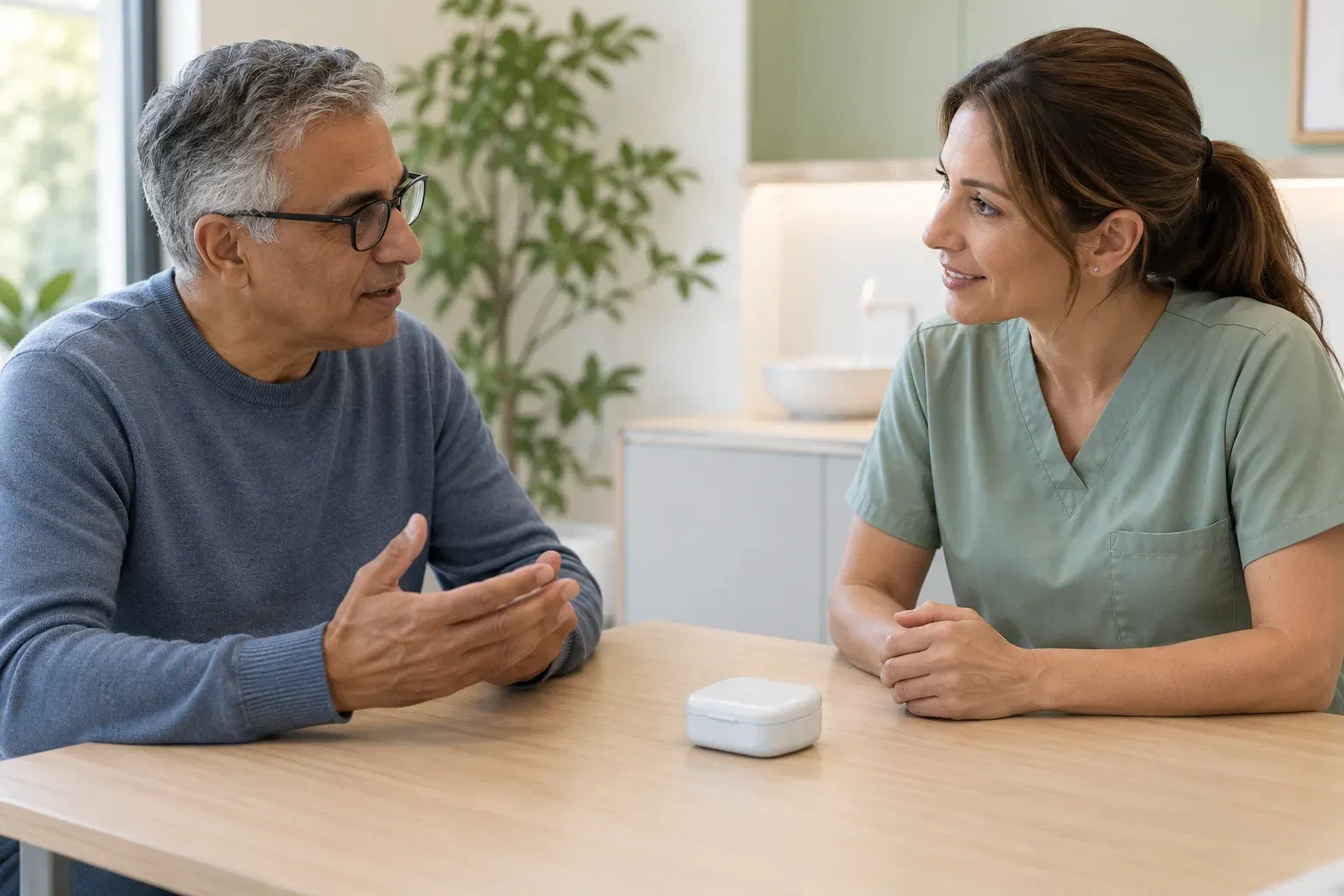
Illustrative discussion about having an oral sleep appliance assessed
Specialized Care

Sleep Appliance Repair in Halton Hills

Your appliance was made by an office you no longer visit, perhaps before a move to Halton Hills, and now it has cracked or come loose. An assessment can still start, with the records you can find and a clear look at the device, its fit and your ongoing sleep care.

Repair help for Halton Hills, wherever the device came from

New dentist, old appliance, fresh problem

People often keep an oral sleep appliance long after they have changed dentists, moved house or lost touch with the office that fitted it. That is fine until something goes wrong. A crack, a missing connector or a tray that no longer sits right raises two questions at once: what has happened to the device, and who has the information needed to decide whether it can be repaired and still used as prescribed?

Start by gathering whatever you can. The case may carry a lab or brand name. Old receipts, emails or instruction sheets can identify the maker. Put the appliance and any detached parts into the case, then make a few notes on when the problem began, whether the fit had been changing, and any dental work, drops or heat exposure since it was made.

From Georgetown, Acton, Glen Williams or elsewhere in Halton Hills, call us with what you have found. We can talk through the damage, how an assessment would be arranged, and whether we should try to reach the original supplier. Some designs can’t be repaired, and parts aren’t always available, so a quick turnaround, a specific component or warranty help can’t be promised before examination.

Ask about assessing an appliance made elsewhere
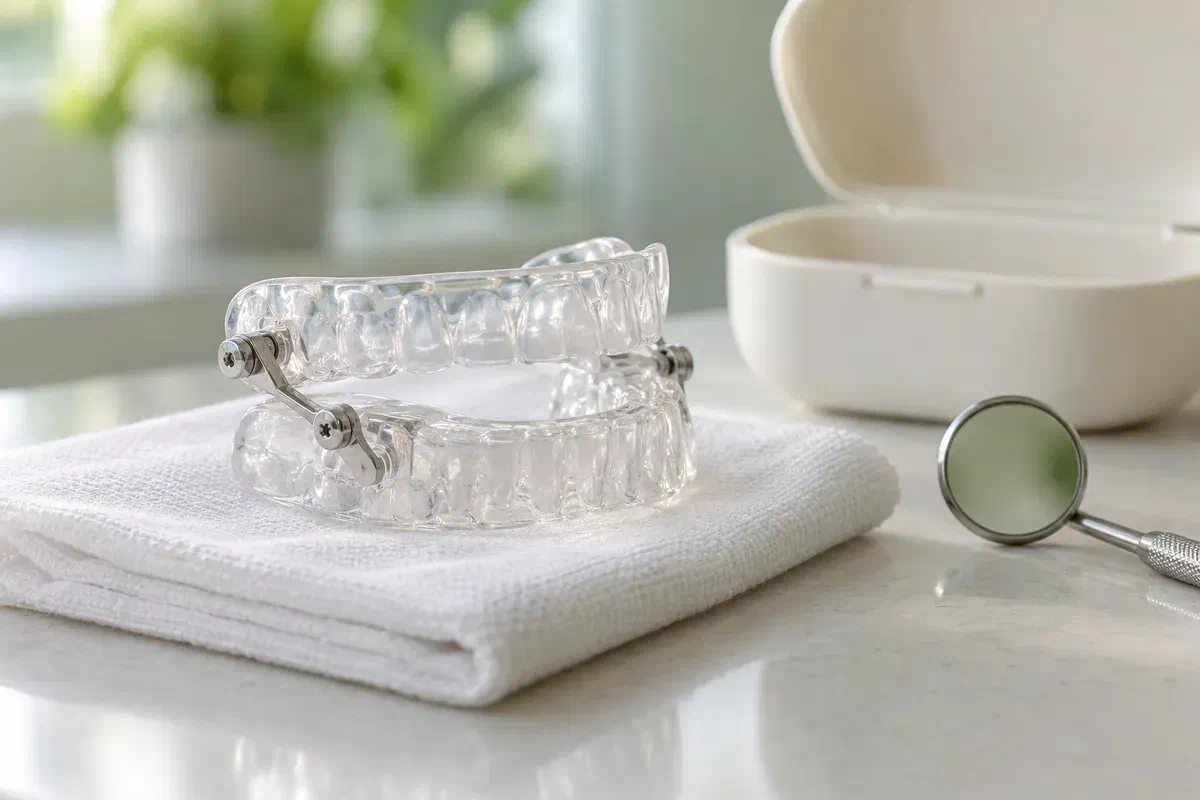
Illustrative intact sleep appliance beside a mirror and protective case before inspection
Changes to report

Three problems, one rule: describe, don’t experiment

If parts are loose, edges are sharp or the fit feels unsafe, stop using the appliance and contact a treating provider. Experimenting for another night can mask the problem and adds risk.

Cracking or a piece that has broken away

Hold on to every fragment and leave them unglued. Say whether the crack followed a mishap or developed during ordinary use. A small defect still deserves attention, because where it is and how this particular appliance is built matter more than how minor it seems.

A connector that is worn, loose or lost

With an older or unfamiliar design, it can be tempting to find a part that looks similar. Please don’t use household hardware, elastics or online spares. Describe the changed component. If something may have been swallowed or inhaled, seek medical advice before anything else.

A tray that has warped or lost its grip

Mention heat exposure, dental work since the device was made, or a tooth that feels pressured. Don’t force the appliance on or soften it in hot water. The clinician needs to work out whether the device or your mouth has changed, as each needs a different approach.

For choking or trouble breathing, call 911. If a part may have been swallowed or inhaled, seek prompt medical advice and describe it. Keep what remains of the appliance so the missing piece can be identified.

Why the background matters

The right repair depends on knowing the device.

Without knowing how an appliance was designed and set, a repair can make it look whole while leaving the jaw position or fit off target. The review weighs the construction, material, damaged area and your current teeth and gums. Ask what any proposed work would restore and how that will be verified.

Treatment also needs a bridge. Tell the physician managing your sleep care that the device is out of use, and ask for interim advice. Don’t rely on an old guard, a sports guard or something bought online to provide the same effect in the meantime.

Rebuilding the paper trail

The original provider, manufacturer or lab may hold design details or settings. Bring anything that helps identify them. Missing information is a reason to keep searching, not a reason to choose a part because it resembles the one you had.

Finding out what led to the damage

Explain earlier pressure points, previous breaks and dental treatment done since the appliance was fitted. Changes in your mouth over that time may affect whether repair is useful, and your treatment plan may need a fresh look as well.

Knowing what is certain before you agree

Ask about the work proposed, the time you may go without the appliance, the likely cost and whether a lab must see it. With a device from elsewhere, some answers may depend on what the original supplier can confirm, and a good estimate should say so.

What happens at the assessment

Piecing together the device’s story, then deciding

Bring the appliance, any loose parts and every record you could find. You won’t be asked to push a damaged tray in to show how it behaves. The appointment establishes what we can assess and what needs input from the original maker.

  1. Share the appliance’s origins and the damage

    Tell us where and roughly when the device was made, how you noticed the problem, whether anything is missing and whether it can still be worn. Describe your sleep-care arrangements, dental work since it was fitted, earlier repairs and any adjustments you made.

  2. Examine the appliance and your mouth today

    The clinician inspects the device together with your teeth, gums and bite to see whether the problem is limited to one component or involves the fit. We may need to contact the original supplier or request records before recommending a repair.

  3. Decide on repair, replacement review or referral

    Discuss the options supported by the findings and any lab work. Ask about the order of steps, costs where available and who will keep you informed. If the appliance can’t be worn, coordinate the interruption with your sleep physician.

  4. Recheck the device before you return to it

    After repair, the appliance needs a clinical review of its fit and function. Ask whether the prescribed position could be verified, which may depend on the original records, and whether instructions have changed. A returned device doesn’t confirm treatment works as before, so follow-up may be advised.

While you track down the records

Keep the device safe and your sleep doctor in the loop.

A plain account of what happened, plus whatever records you can find, is more useful than any home repair. Keep the appliance ready for assessment and follow the advice of the provider treating you.

Store everything in one secure case

Keep the appliance and its pieces together, away from children and pets. Avoid bending, trimming or trying it on repeatedly. Tell us plainly if anything is missing, rather than assuming the gap will be clear from what is left.

Avoid household glue, heat and lookalike parts

These can alter the material or the fit and make assessment harder, especially on an unfamiliar design. If you have already attempted a repair, describe exactly what was done so the clinician isn’t left guessing.

Ask how treatment should continue for now

Contact the medical sleep provider when the prescribed appliance is unavailable or unsafe and ask what interim approach is right. Don’t change PAP settings on your own, stop other prescribed therapy, or assume an old spare is suitable.

Patient information: NHLBI — keeping sleep-apnea treatment and provider follow-up connected

Possible routes forward

When the device came from elsewhere, options depend on what can be confirmed

Ask what each option should achieve and what is still uncertain. The quickest fix may not suit if the appliance can’t regain a suitable fit, the design can’t be identified or the cause hasn’t been dealt with.

When the design is known and the device is sound

Repairing the appliance you have

Repair may be considered when suitable materials, parts and expertise are available and the rest of the appliance is in good condition. Ask whether a lab is needed and how the result will be checked. A repair won’t remove the need for future reviews.

When parts, records or condition rule out repair

A replacement assessment

Extensive damage, distortion, unavailable components or significant changes in your mouth may lead to assessing a new device. Ask why repair isn’t likely to work and which records need to be created or updated. A new appliance should follow your current treatment plan.

When design details or a treatment review are needed

Reaching out to the original maker or sleep team

The original supplier may be the best source for compatible parts or design limits, and your physician may want to review treatment during the gap. Ask who will make each contact and how you’ll learn the outcome.

Patient information: AADSM — device management and continued coordinated care

Questions about appliances from another provider

Common concerns when the original office isn’t nearby

Every appliance and every type of damage is different. Bring the device and whatever history you have rather than relying on photos or a repair method meant for another product.

(905) 876-4488
Can a different dental office assess an appliance it didn’t make?
Yes, an assessment can usually still take place. The clinician examines the device and your mouth, and may need records or input from the original supplier before recommending repair. Whether repair is possible depends on the design and the damage.
Where can I find the name of the lab or brand that made my appliance?
Check the case, any paperwork or receipts, emails from the original office and the instructions that came with it. Some appliances have markings. If you can’t find anything, bring the device anyway and mention what you’ve already looked for.
Do I need my old records to have the appliance repaired?
They help, but they aren’t always essential to begin. Records can show the prescribed position and design. Without them, the assessment may take longer or may point toward a replacement review. Bring what you have and we can discuss what else might be needed.
Will my previous provider’s warranty apply if someone else repairs it?
That depends on the warranty terms and the circumstances. Check with the original supplier directly before work begins. Ask us for the proposed work and an estimate where possible, and remember that a clinical recommendation doesn’t establish coverage.
Should my sleep physician be told that a new office is handling the repair?
Yes. Let them know the appliance is out of use and who is assessing it. They can advise on an interim plan and may wish to review treatment once it is back in use.
How do I arrange an appointment from Halton Hills?
Call with your appliance type, the damage and any supplier details you’ve found. We’ll explain how an assessment is arranged and whether records should be requested before your visit, so the appointment can be as useful as possible.
Assessments for Halton Hills

An unfamiliar device is still worth a proper look.

Contact Milton Dental Clinic with your appliance type, what has gone wrong and whether you’ve stopped using it. Let us know where it was originally made, and we can discuss how assessment works and what information may be needed from the original provider.

With a device made elsewhere, answers on repair, timing and fees wait on an examination and on what the original office or lab can tell us.

Visit Milton Dental Clinic
Unit 1, 342 Bronte St. S, Milton, ON L9T 5B7
Get directions Clinic hours
Monday–Thursday
11am–7pm
Friday–Sunday
By appointment only

Areas we serve

  • Milton
  • Oakville
  • Mississauga
  • Georgetown
  • Halton Hills
  • Acton
  • Campbellville
  • Brampton
  • Burlington
  • Puslinch
  • Rockwood
  • Erin
  • Caledon
  • Etobicoke
  • Old Milton
  • Bronte Meadows
  • Timberlea
  • Dorset Park
  • Dempsey
  • Clarke
  • Beaty
  • Coates
  • Harrison
  • Scott
  • Willmott
  • Ford
  • Bowes
  • Cobden
  • Walker
  • Mountain View
  • Milton Heights
  • Hawthorne Village
  • Valley View
  • Fallingbrook
  • Nassagaweya
  • Trafalgar
  • Esquesing
  • Nelson
  • Brookville
  • Moffat
  • Glen Williams
  • Norval
  • Limehouse
  • Stewarttown
  • Ashgrove
  • Hornby
  • Silver Creek
  • Speyside
  • Scotch Block
  • North Oakville
  • River Oaks
  • Glen Abbey
  • West Oak Trails
  • Palermo
  • Bronte Creek
  • College Park
  • Joshua Creek
  • Uptown Core
  • Preserve
  • Iroquois Ridge
  • Lisgar
  • Meadowvale
  • Meadowvale Village
  • Churchill Meadows
  • Erin Mills
  • Central Erin Mills
  • Streetsville
  • East Credit
  • Creditview
  • Heartland
  • Sheridan
  • Mount Pleasant
  • Credit Valley
  • Huttonville
  • Churchville
  • Springbrook
  • Northwest Brampton
  • Bram West
  • Fletcher's Meadow
  • Fletcher's Creek South
  • Alton Village
  • Orchard
  • Millcroft
  • Headon Forest
  • Tansley
  • Brant Hills
  • Tyandaga
  • Kilbride
  • Lowville
  • Aberfoyle
  • Morriston
  • Arkell
  • Hillsburgh
  • Freelton
  • Carlisle
  • Waterdown
  • Flamborough
  • Mountsberg

How can we help?

Milton Dental Clinic

Have a question about your smile? Choose the option that works best for you.

For urgent dental concerns, please call.
Messages are reviewed during clinic hours.