
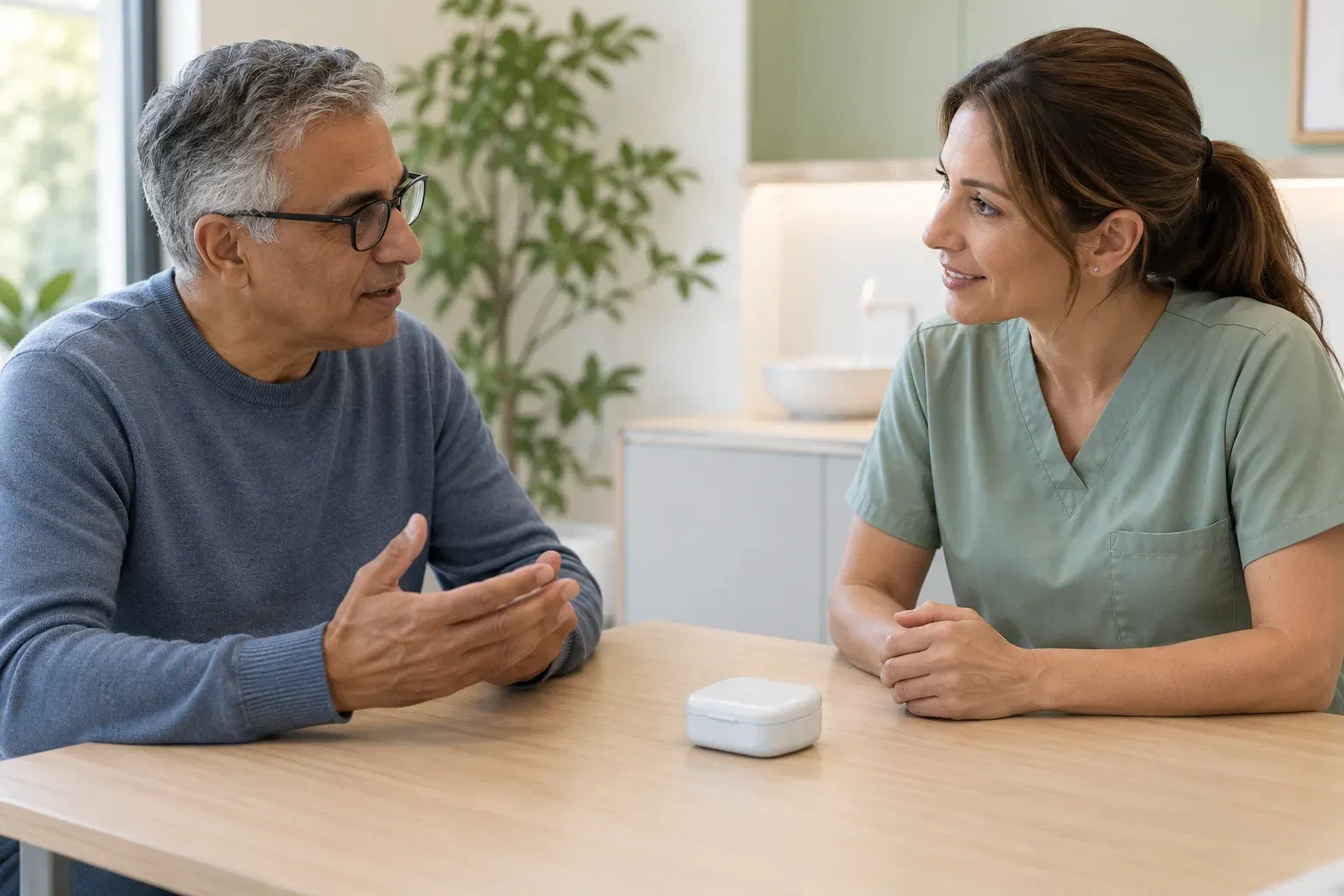
Illustrative discussion about having an oral sleep appliance assessed
Specialized Care

Sleep Appliance Repair in Oakville

The dog found it on the nightstand, or it slipped off the bathroom counter onto tile. When an oral sleep appliance takes a hit, a repair assessment comes before wearing it again. From Oakville, call ahead to plan a review of the damage, the fit and your sleep care.

After an accident with your appliance, from Oakville

Tooth marks that aren’t yours

Pets are drawn to things that smell like their owners, and an appliance left out of its case is an easy target. Falls are common too. Damage from either can be obvious, like a gouged tray, or subtle, like a hinge knocked slightly out of line. What matters is not only how it looks but whether the device can still hold your jaw where your treatment plan needs it.

Gather what is left before you call. Put the appliance and any bits you can find into its case, and add the instructions and supplier details if you have them. Be ready to say what happened and when. It also helps to mention whether the fit had changed recently, or whether you have had dental work or the device has been near heat.

For anyone coming from Oakville, a quick call before the drive saves guesswork. Describe the damage, and we can explain how an assessment is set up and whether the company or office that supplied it should be brought in. Not every design, or every kind of damage, can be repaired, and a same-day result, a particular part or warranty help can’t be counted on before the device is examined.

Ask about an assessment after an accident
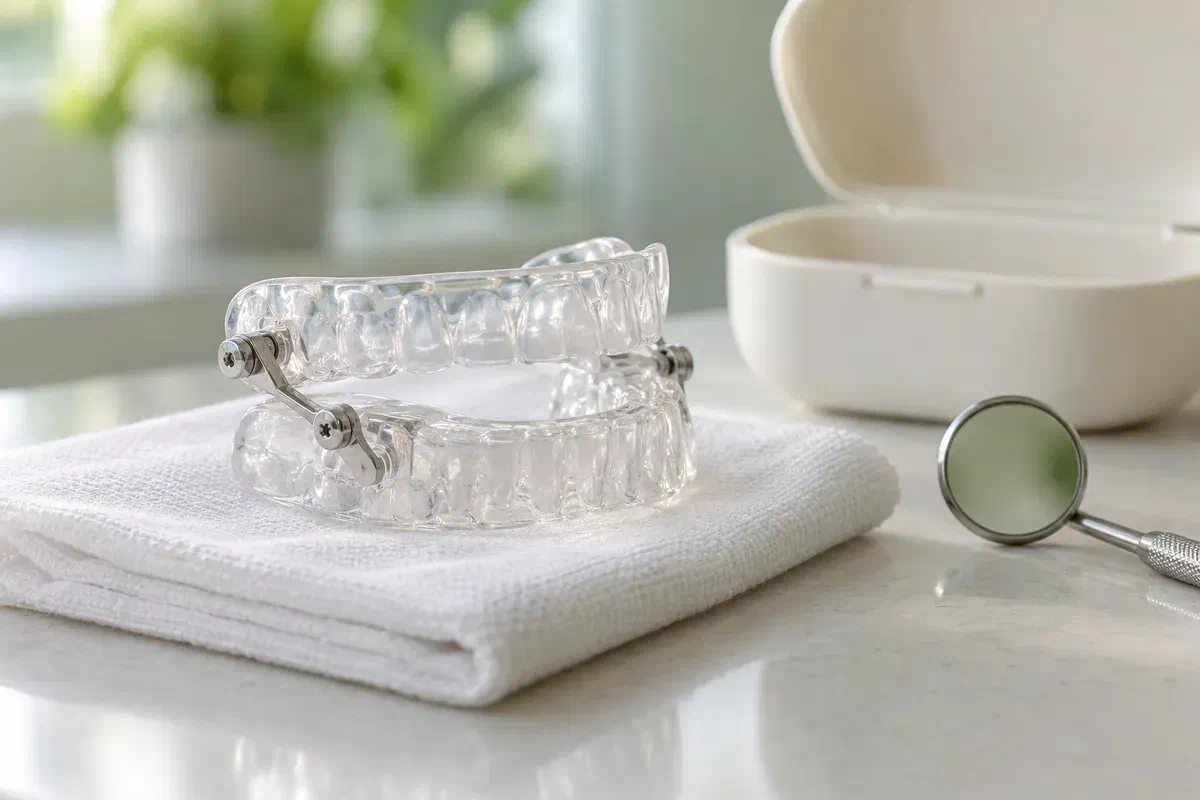
Illustrative intact sleep appliance beside a mirror and protective case before inspection
Damage worth reporting

What did the fall or the chewing actually do?

Stop wearing an appliance that has loose parts, rough or sharp edges, or a fit that feels unsafe, and contact the provider who treats you. Testing it for another night can hide the real problem and adds risk.

Bite marks, a crack or a broken corner

Collect every fragment and keep it with the device, unglued. Say whether the damage came from a pet, a drop or something else. Punctures and cracks can sit in places that carry load at night, so even a small mark needs proper inspection rather than a judgment based on looks.

A bent, loose or missing connector

Don’t swap in a screw from a toolbox, a hair elastic or a part bought online. Explain which component looks different and whether something is missing. If there is any chance a small piece was swallowed or inhaled by you, rather than lost on the floor, seek medical advice first.

A tray that has twisted or won’t sit down

Mention the accident, any warmth the device met, recent dental work or a sore tooth. Don’t force it into place or soften it to bend it back. The clinician has to tell whether the appliance has been distorted or the mouth has changed, since each one calls for a different response.

Call 911 if someone is choking or struggling to breathe. If a missing piece may have been swallowed or inhaled, seek prompt medical advice and describe it. For a pet that has swallowed a fragment, contact a veterinarian. Keep the remaining appliance so the missing part can be identified.

Why the assessment matters after an accident

Damage you can see is only part of the story.

A chewed edge can be smoothed and a crack can be closed, yet the appliance may still not hold your jaw where it was set. The review takes in the design, material, damaged area and the present condition of your teeth and gums. Ask what any proposed work would fix and how the result will be checked before you wear it again.

Think about the nights in between, too. Your sleep physician needs to hear that treatment has been interrupted, and can suggest a plan for the gap. A spare sports guard, a drugstore mouthpiece or a product ordered online is not an equivalent treatment.

Confirming the device and who can service it

Your original provider, the manufacturer or the lab may have information that shapes the repair options. Bring any paperwork and say where the appliance came from. Not knowing the brand is a cue to gather details rather than fit a lookalike part.

Looking past the accident to other causes

An accident may not be the whole explanation. Mention earlier sore spots, past breaks or recent dental treatment. If the device was already weakened, repair might not be the right answer, and your mouth or treatment plan may need attention too.

Knowing the limits before approving any work

Before agreeing, find out the scope of the work, the likely stretch without your appliance, an expected fee and any lab involvement. A helpful estimate is honest about which parts are settled and which still wait on closer inspection or another office’s reply.

What the visit involves

Inspect, discuss, repair or refer, then recheck

Bring every part you recovered and any records. Please don’t try to prove the problem by forcing the damaged tray on. The appointment sorts the questions we can answer in the chair from the ones that need the supplier.

  1. Explain the accident and your treatment background

    Describe what happened, whether pieces are missing, and whether the appliance can still be worn. Share the original provider’s details and how your sleep care is managed. Mention any earlier repairs, recent dental work and anything you have done to the device since the accident.

  2. Examine the appliance and your mouth

    The clinician checks the device together with your teeth, gums and bite. The aim is to see whether the damage is limited to one area or has affected the overall fit. Records or advice from the supplier may be needed before a repair can be suggested.

  3. Settle on repair, replacement review or referral

    You’ll go over the options supported by the findings and any lab steps. Ask about the expected order of events, costs where known, and your contact for updates. If you can’t wear the appliance meanwhile, bring your sleep physician into the plan.

  4. Recheck the device before you sleep in it

    Once repaired, the appliance needs a clinical fit and function review before nightly use resumes. Ask whether the prescribed position has been confirmed and whether instructions have changed. Further follow-up may be needed, because a repaired device does not guarantee that treatment works exactly as it did.

Keeping things steady until your visit

Case it, leave it alone, and call your sleep doctor.

A brief, accurate description of the accident is worth more than a home fix. Keep the device ready for assessment and follow your provider’s guidance on wearing it and when to come in.

Store it where paws and small hands can’t reach

Close the appliance and any fragments in a hard case, up high or in a drawer. Avoid bending, trimming or repeated test fittings. If you suspect a piece is missing, say so plainly rather than assuming it will be noticed.

No glue, no hot water, no improvised parts

Adhesives and heat can change the material and the fit, and they make assessment harder. If someone has already tried to fix it, describe exactly what was used so the clinician can take it into account.

Find out how to manage sleep in the meantime

Your medical sleep provider should hear that the appliance is out of action. They can say what to do for the next few nights. Leave any CPAP settings as they are, keep up other prescribed therapy, and don’t treat an old spare as safe simply because it still slides on.

Patient information: NHLBI — keeping sleep-apnea treatment and provider follow-up connected

Possible outcomes

The damage and your findings point the way

Ask what each option is meant to accomplish and what is still unclear. The fastest or least costly fix may not suit you if the appliance can’t regain a reliable fit or if the cause hasn’t been addressed.

When the remaining device and its design allow it

Repairing the damaged appliance

Repair may be considered when the right materials, components and expertise are available and the rest of the appliance is sound. Ask whether a lab will handle it and what clinical check follows. A repair won’t give the device an unlimited life or replace later reviews.

When the damage is too extensive or the mouth has changed

A replacement assessment

Severe chewing damage, distortion, unavailable parts or changes to your teeth may lead to assessing a new device. Ask why repair is unlikely to work and which records need updating. A replacement should follow your current treatment plan, not simply duplicate an old fit or setting.

When device-specific help or a broader review is needed

Coordinating with the supplier or sleep team

Some answers sit with the company or lab that built the appliance, such as which components fit it or what the design can tolerate. Your doctor might also review your therapy while it is away. Agree on who makes each call and how the outcome reaches you, so nobody assumes someone else is following up.

Patient information: AADSM — device management and continued coordinated care

Accidents, pets and repairs

Questions that come up after a mishap

What can be done depends on your appliance and how it was damaged. Bring the device and its history instead of relying on photos or a fix meant for another product.

(905) 876-4488
My dog chewed my sleep appliance. Can it be repaired?
Sometimes, but it depends on where the damage is, the design and the material. Bite marks can weaken areas that matter for fit and function. Stop wearing it, keep any pieces, and have it assessed. The clinician can explain whether repair or a replacement review is more appropriate.
The appliance fell on a hard floor and looks fine. Should I still have it checked?
If it fits and feels exactly as before, ask your provider whether a check is needed. If anything feels different, such as a loose hinge, a new pressure point or a change in how it seats, stop wearing it and arrange an assessment.
How can I stop pets from getting to my appliance again?
Keep it in a closed, hard case whenever it is out of your mouth, and store the case somewhere a pet can’t reach, such as a high shelf or a closed drawer. Avoid leaving it on a nightstand or bathroom counter to dry.
Can bite marks or rough edges on the tray irritate my mouth?
They can. Rough or sharp areas may rub the cheeks, gums or tongue, and that is one reason not to keep wearing a damaged appliance. Don’t file or sand it yourself. Mention any sore spots when you call so they can be checked.
Would my warranty cover damage caused by a pet or a fall?
That depends on the warranty’s terms, the device and how the damage happened. Ask for the proposed work and an estimate where one is possible before proceeding, then check the policy directly. A clinical recommendation doesn’t decide coverage.
What should I do before driving in from Oakville with a damaged appliance?
Call first and describe the damage. We can tell you how an assessment is arranged and whether to bring supplier details or records. Pack the appliance and every fragment in its case so nothing is lost on the way.
Appliance repair assessments for Oakville

Bring what’s left of it and start with the facts.

Call Milton Dental Clinic and tell us what kind of appliance you have, what happened to it, and whether you’ve had to stop wearing it. We can explain how assessment is arranged and whether information from the original provider is needed first.

Whether repair is possible, and its timing and cost, depend on examining the device and on the provider or lab involved.

Visit Milton Dental Clinic
Unit 1, 342 Bronte St. S, Milton, ON L9T 5B7
Get directions Clinic hours
Monday–Thursday
11am–7pm
Friday–Sunday
By appointment only

Areas we serve

  • Milton
  • Oakville
  • Mississauga
  • Georgetown
  • Halton Hills
  • Acton
  • Campbellville
  • Brampton
  • Burlington
  • Puslinch
  • Rockwood
  • Erin
  • Caledon
  • Etobicoke
  • Old Milton
  • Bronte Meadows
  • Timberlea
  • Dorset Park
  • Dempsey
  • Clarke
  • Beaty
  • Coates
  • Harrison
  • Scott
  • Willmott
  • Ford
  • Bowes
  • Cobden
  • Walker
  • Mountain View
  • Milton Heights
  • Hawthorne Village
  • Valley View
  • Fallingbrook
  • Nassagaweya
  • Trafalgar
  • Esquesing
  • Nelson
  • Brookville
  • Moffat
  • Glen Williams
  • Norval
  • Limehouse
  • Stewarttown
  • Ashgrove
  • Hornby
  • Silver Creek
  • Speyside
  • Scotch Block
  • North Oakville
  • River Oaks
  • Glen Abbey
  • West Oak Trails
  • Palermo
  • Bronte Creek
  • College Park
  • Joshua Creek
  • Uptown Core
  • Preserve
  • Iroquois Ridge
  • Lisgar
  • Meadowvale
  • Meadowvale Village
  • Churchill Meadows
  • Erin Mills
  • Central Erin Mills
  • Streetsville
  • East Credit
  • Creditview
  • Heartland
  • Sheridan
  • Mount Pleasant
  • Credit Valley
  • Huttonville
  • Churchville
  • Springbrook
  • Northwest Brampton
  • Bram West
  • Fletcher's Meadow
  • Fletcher's Creek South
  • Alton Village
  • Orchard
  • Millcroft
  • Headon Forest
  • Tansley
  • Brant Hills
  • Tyandaga
  • Kilbride
  • Lowville
  • Aberfoyle
  • Morriston
  • Arkell
  • Hillsburgh
  • Freelton
  • Carlisle
  • Waterdown
  • Flamborough
  • Mountsberg

How can we help?

Milton Dental Clinic

Have a question about your smile? Choose the option that works best for you.

For urgent dental concerns, please call.
Messages are reviewed during clinic hours.