
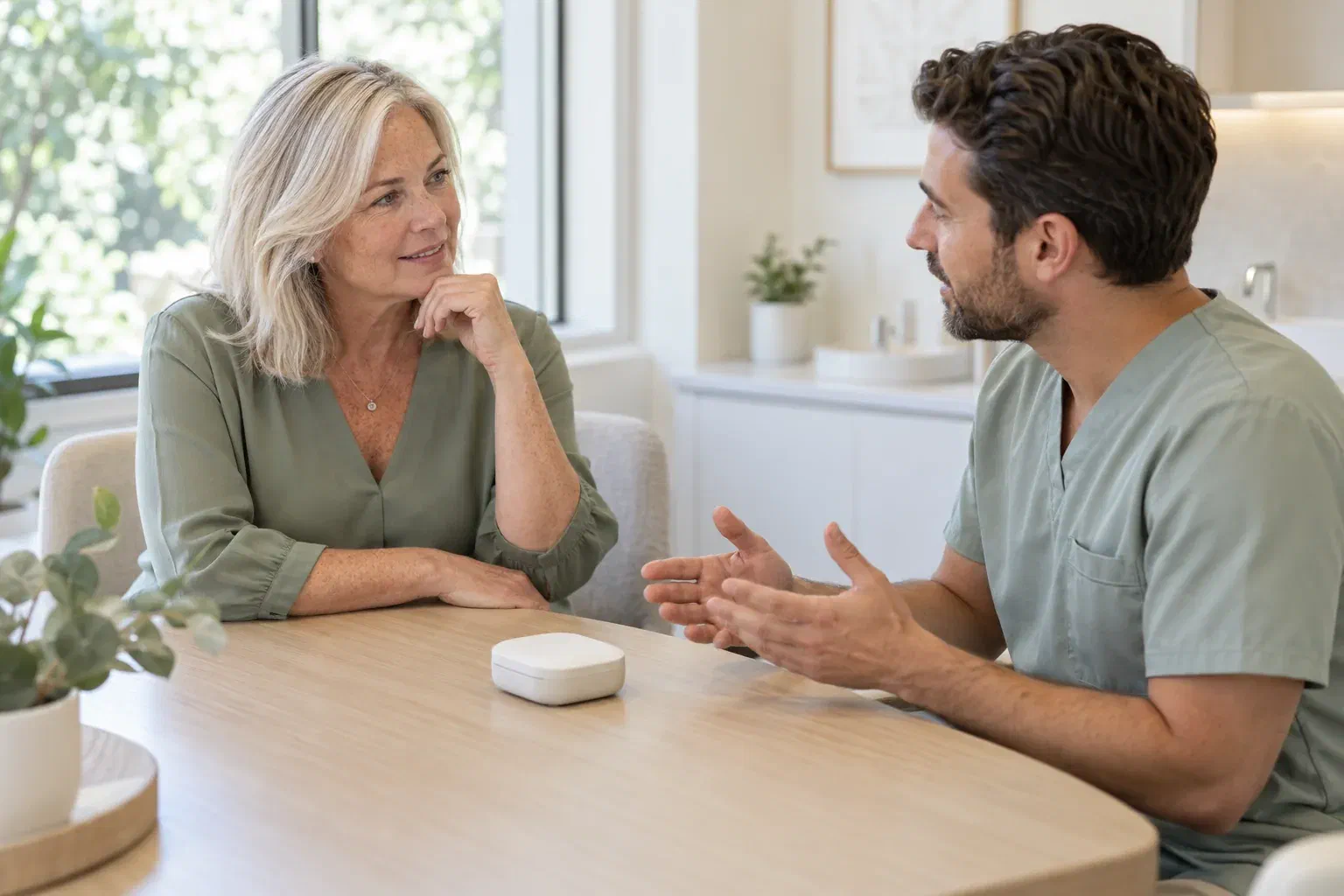
Illustrative consultation about replacing a custom oral sleep appliance
Specialized Care

Sleep Appliance Replacement in Acton

The dentist who made your sleep appliance has retired, the old office has closed, and nobody seems to have your file. Replacement is still possible to plan. From Acton, start with an exam of your mouth as it is today and the details your physician holds.

When the paper trail runs out

No file, no problem — as long as the mouth is examined.

Dental offices close, merge and change hands, and records do not always follow neatly. If you are trying to replace a sleep appliance and cannot locate who has the original paperwork, you are not stuck. Old scans would have reflected an earlier version of your teeth anyway; a fresh examination is usually where planning begins.

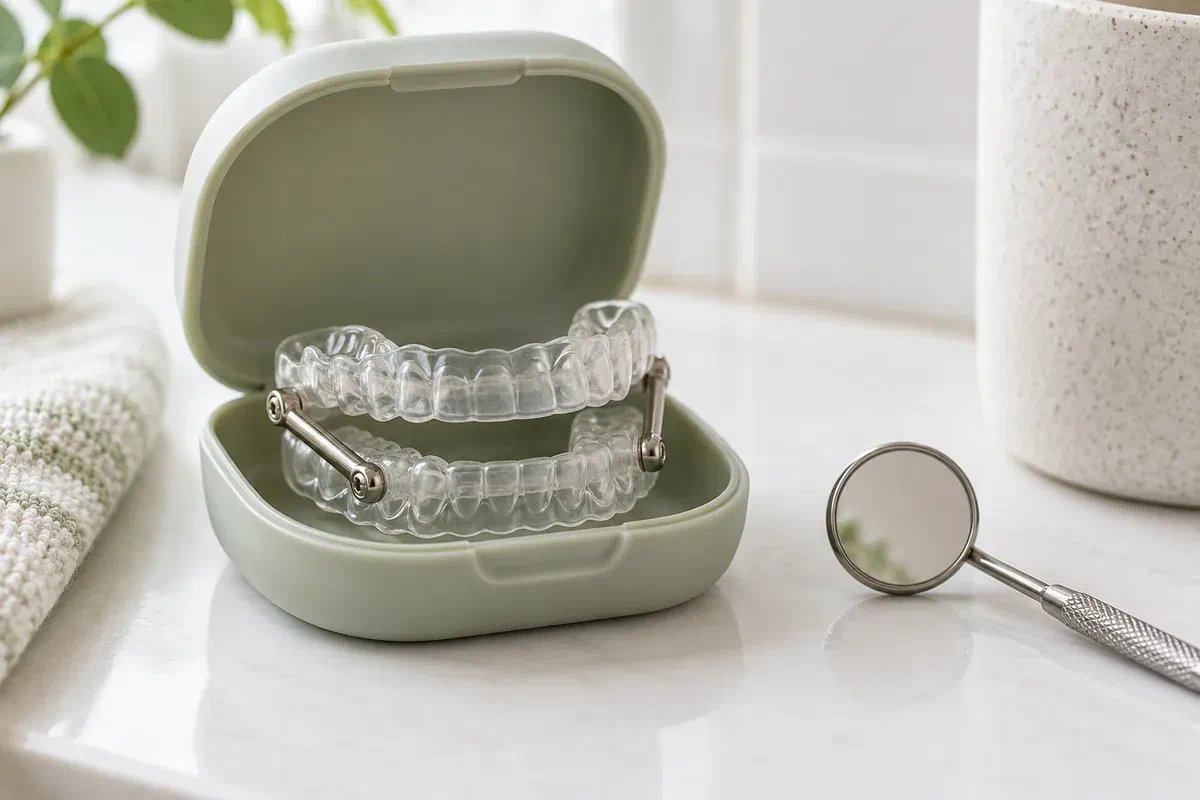
What does help is anything physical or written you still have. The appliance itself, even broken, carries its design in its shape. An instruction sheet, a receipt with the lab or brand name, or a letter from the sleep clinic can fill gaps. Write down how long you wore it, what felt right and what did not.

Your sleep physician, in Acton or elsewhere, is often the steadiest record-keeper, so tell our team who that is and whether you have been seen recently. Milton Dental Clinic can then discuss the right assessment and how to share findings. Whatever the old file said, the new device needs to suit the teeth and treatment plan you have now.

Start a replacement without the old records
Illustrative connected oral sleep appliance inside an open protective case
Sorting out what you are dealing with

Missing records are one problem. What else is going on?

A device can need replacing because it is lost, broken, no longer fits a changed mouth, or no longer seems to help. Naming the reason — on top of the records gap — lets the dentist focus the visit.

Both the device and its file are gone

If the appliance is lost too, note when you last used it and try any successor practice or the dental regulator’s public register for a forwarding contact. Meanwhile, tell your sleep physician you are without treatment and ask how to manage until a replacement decision is made.

You have the appliance, but it is failing

A worn, cracked or loosening device can still be examined even if its maker cannot be reached. Bring it in. Repair is harder to assess without original specifications, and age on its own does not make replacement necessary; the damage and present fit guide the answer.

Your mouth or symptoms have changed since it was made

Years may have passed since the original was fitted. Mention new restorations, extractions, gum problems or a changed bite, along with any return of snoring or tiredness, which should also go to your sleep-care provider. Those changes matter more than the missing paperwork.

An appliance that binds, is cracked or has loose parts should come out of use now. Call us for advice, and check with your physician about sleep care while the device is out of action.

Building a plan from scratch

Start with what can still be known.

Your own memory is a record too. Describe how the device felt in its best days, which problems crept in, and whether a sleep physician ever confirmed it was effective. The dentist combines that account with a careful look at your teeth and the old appliance, if you have it, to rebuild a working picture of your treatment history.

With the old provider out of reach, it is especially useful to confirm who is responsible for what from now on. Which dental work should happen first? Does your sleep clinic want to review you before a new device? Who will fit it and who reviews the result? Setting that out early gives the replacement a clear home.

Patient information: AADSM — current assessment, appliance management, and coordinated follow-up

A thorough baseline examination

Teeth, gums, restorations, bite and jaw movement are recorded as they are now, giving a fresh reference point for any new device. Ask whether something should be treated before records are taken. That baseline also helps future reviews, whoever provides them.

Piecing together what survives

Physical clues on the old appliance, any brand or lab markings, your physician’s letters and past dental charts from other offices can all add context. Ask which are worth chasing. Gaps are common, and a current examination usually matters more than an old impression.

A named contact for what comes next

Because the previous provider is gone, confirm who you call during the wait, who fits the replacement, and how its effect will be checked with your physician. Write those names down. A new device is a fresh start, and its follow-up needs a clear owner.

How we approach it

Gather, examine, choose, and then fit.

Come with the appliance if you have it and any papers, however incomplete. The first appointment establishes why you need a replacement and what the plan requires before a new device can be made.

  1. Gather the fragments of history

    Tell the dentist what you remember: when the device was made, by whom, how often you wore it and why it now needs replacing. Hand over anything written. Mention your sleep physician and whether you have been without treatment, plus any advice you have already been given.

  2. Establish today’s starting point

    A full look at oral health, the teeth that would carry an appliance and how your jaw opens and moves replaces the missing chart. If restorations or other work are pending, you will discuss whether to finish them before new scans or impressions.

  3. Settle on a design you understand

    If a replacement is appropriate, the dentist explains which design is proposed and why, what records are needed, an estimate and how many stages to expect. Without the old specifications, ask how your past experience shaped the choice. Firm dates come only from whoever is making the device.

  4. Fit, explain and arrange follow-up

    The new appliance is seated and checked, and you leave knowing how to handle it and what its prescribed starting position is. There is no need to recreate an old setting you cannot document. Ask when the dental review happens and how your physician will judge whether the device is working.

In the weeks ahead

Fresh paperwork, fresh habits.

What to do while you wait depends on why the device needs replacing and whether the old one is safe. Keep the written guidance you receive this time — it becomes the record you wished you had before.

Keep your sleep doctor in the picture

Tell the physician managing your sleep condition if you are no longer wearing an appliance, and ask what interim care makes sense. Stay with any other treatment they have prescribed. A pharmacy mouthguard is not a substitute. If you find yourself drowsy during the day, call your doctor and do not drive.

Tell us about dental changes as they happen

A chip, a new crown, a sore tooth or a bite that suddenly feels different after scans or impressions can affect the fit of the appliance being made. A quick call lets the team decide whether anything needs redoing.

Start a file of your own

Keep the new instructions, the provider’s contact details and a note of the design and fitting date in one folder. Practise insertion and removal, and confirm cleaning, storage and any permitted adjustment. If the first nights are difficult, phone rather than guessing.

Choices after the exam

What the missing file does not decide.

Losing track of the original provider changes how the history is gathered, not what the right treatment is. Ask what each option would fix and what it would not, especially if discomfort or symptoms predate the paperwork problem.

When replacement is the sensible step

A new appliance based on current records

After the dental exam and your physician’s information are considered, a new custom appliance made from fresh records may be appropriate. You will discuss the design, the records involved and the fitting. Today’s findings and your memory of the old device both shape the plan, with review afterwards.

When the appliance is still in hand

Assessing the old device for repair

If you have the device, limited damage might be assessed for repair. Without the original lab or specifications, suitability depends heavily on the damage, materials and parts that can be identified, and on how it fits now. Ask what a repair would achieve; it is not always possible or economical.

When needs have changed over the years

A broader review before any device

Long gaps can mean real changes in oral health or in how the sleep condition responds. Another assessment or care route may come first. Our dentist may coordinate with your physician. Ask what should be sorted before a replacement, so it is not built on an outdated picture.

Questions from Acton

When you cannot reach the clinic that made your device.

Bring your questions about records, the old appliance, costs and the waiting period. The examination fills in much of what the missing file would have told us.

(905) 876-4488
How do I find out who has my records if my old dental office closed?
Try contacting any practice that took over the location, or check the provincial dental regulator’s public information, which may help you find the dentist. Your sleep physician may also have correspondence about the appliance.
Can a replacement be made without the original scan or impressions?
Often, yes. A current examination and new records are usually needed regardless, because teeth and restorations change. The old device, if you have it, can also give useful information about the design.
Will the dentist be able to tell what design my old appliance was?
The device itself often shows its general type and how it adjusts. Some details, such as the exact setting, may not be clear without records, which is one reason the replacement is planned from current findings.
Do I need a new referral from my doctor?
It depends on your situation and your physician’s approach. Contact them about the replacement; they can advise whether a review, testing or a referral letter is needed.
My old appliance had a setting I adjusted. Should I tell the dentist?
Yes, describe how and how often you adjusted it and whether it was ever reviewed. That history is useful, though the replacement’s starting position will follow its own instructions.
Should I keep copies of my records this time?
It is sensible to keep your instructions, the design name and your providers’ contact details. You can also ask how to request copies of your records in the future.
Planning from Acton

Bring what you have, and we will start from today.

Call Milton Dental Clinic if you need to replace a sleep appliance and cannot reach the provider who made it, or if the device is lost, damaged or no longer comfortable. Tell us what you still have and who manages your sleep care, and the team can explain how the assessment would work.

A new device is planned from current dental findings and in coordination with your sleep physician.

Visit Milton Dental Clinic
Unit 1, 342 Bronte St. S, Milton, ON L9T 5B7
Get directions Clinic hours
Monday–Thursday
11am–7pm
Friday–Sunday
By appointment only

Areas we serve

  • Milton
  • Oakville
  • Mississauga
  • Georgetown
  • Halton Hills
  • Acton
  • Campbellville
  • Brampton
  • Burlington
  • Puslinch
  • Rockwood
  • Erin
  • Caledon
  • Etobicoke
  • Old Milton
  • Bronte Meadows
  • Timberlea
  • Dorset Park
  • Dempsey
  • Clarke
  • Beaty
  • Coates
  • Harrison
  • Scott
  • Willmott
  • Ford
  • Bowes
  • Cobden
  • Walker
  • Mountain View
  • Milton Heights
  • Hawthorne Village
  • Valley View
  • Fallingbrook
  • Nassagaweya
  • Trafalgar
  • Esquesing
  • Nelson
  • Brookville
  • Moffat
  • Glen Williams
  • Norval
  • Limehouse
  • Stewarttown
  • Ashgrove
  • Hornby
  • Silver Creek
  • Speyside
  • Scotch Block
  • North Oakville
  • River Oaks
  • Glen Abbey
  • West Oak Trails
  • Palermo
  • Bronte Creek
  • College Park
  • Joshua Creek
  • Uptown Core
  • Preserve
  • Iroquois Ridge
  • Lisgar
  • Meadowvale
  • Meadowvale Village
  • Churchill Meadows
  • Erin Mills
  • Central Erin Mills
  • Streetsville
  • East Credit
  • Creditview
  • Heartland
  • Sheridan
  • Mount Pleasant
  • Credit Valley
  • Huttonville
  • Churchville
  • Springbrook
  • Northwest Brampton
  • Bram West
  • Fletcher's Meadow
  • Fletcher's Creek South
  • Alton Village
  • Orchard
  • Millcroft
  • Headon Forest
  • Tansley
  • Brant Hills
  • Tyandaga
  • Kilbride
  • Lowville
  • Aberfoyle
  • Morriston
  • Arkell
  • Hillsburgh
  • Freelton
  • Carlisle
  • Waterdown
  • Flamborough
  • Mountsberg

How can we help?

Milton Dental Clinic

Have a question about your smile? Choose the option that works best for you.

For urgent dental concerns, please call.
Messages are reviewed during clinic hours.