
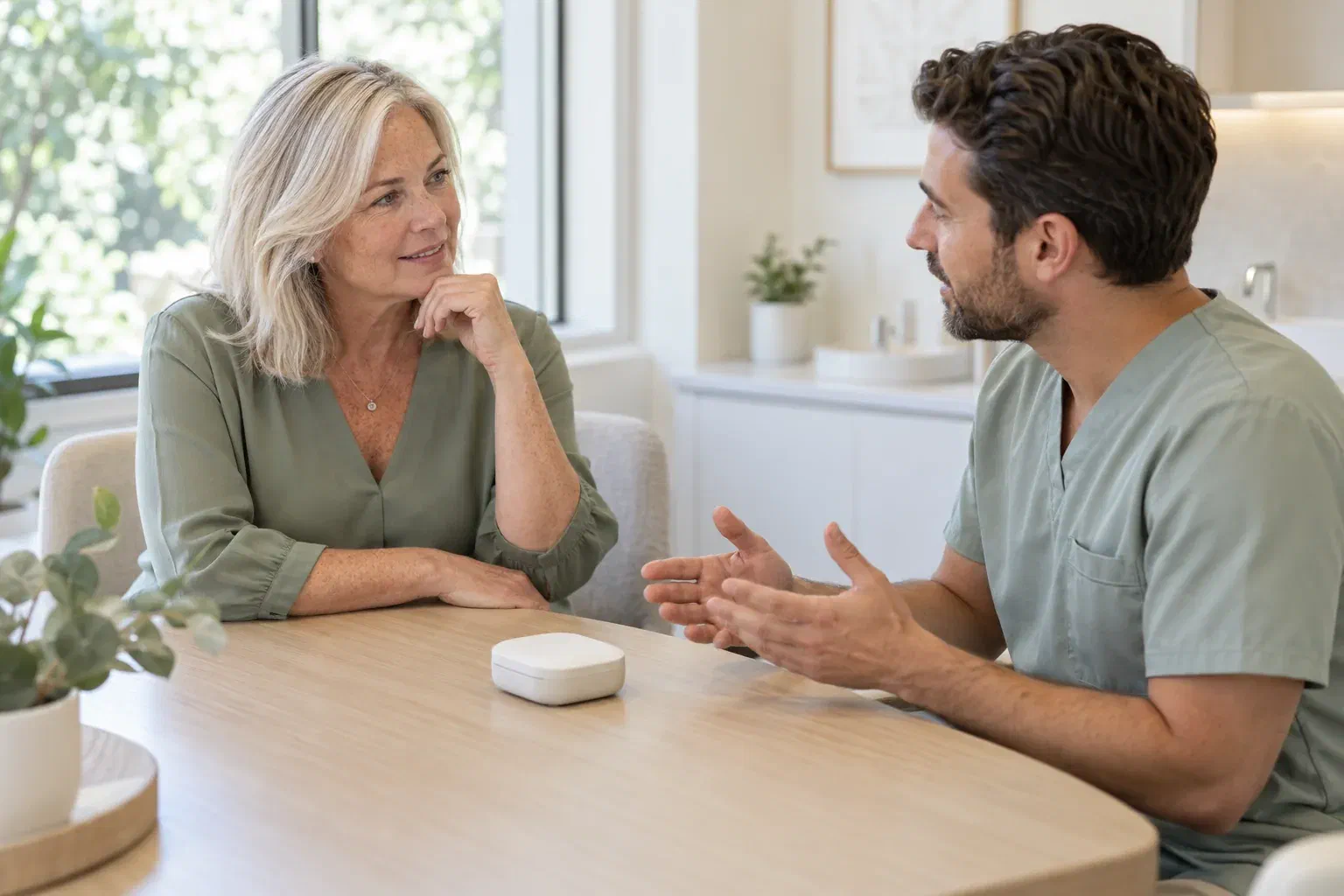
Illustrative consultation about replacing a custom oral sleep appliance
Specialized Care

Sleep Appliance Replacement in Caledon

When a sleep appliance fails, it is not always clear whether to call the dentist or the sleep doctor first. The honest answer is both. From Caledon, Bolton or the surrounding villages, we handle the dental side and keep your physician part of the plan.

Two sides of the same treatment

Your dentist and your sleep doctor each hold half the answer.

An oral sleep appliance sits at a crossroads. A physician diagnosed the sleep condition and decided an appliance was a suitable treatment; a dentist designed, fitted and adjusted it. So when it is lost, cracks or stops seeming to help, both sides have a part in what happens next — and the order of phone calls matters less than making both.

The physician’s questions are medical: how to manage the nights without treatment, whether symptoms have changed, whether testing is needed. The dentist’s are about the mouth and the hardware: what has happened to the teeth and gums since the device was made, what failed and whether repair or a new appliance makes sense.

For households in Caledon, it can help to make both calls on the same day. Tell Milton Dental Clinic who supplied your appliance and who your sleep physician is, and bring the device if you still have it. The dentist will explain the assessment and how information will flow between offices. A new appliance is planned for your present mouth and current prescription.

Arrange the dental side of replacement
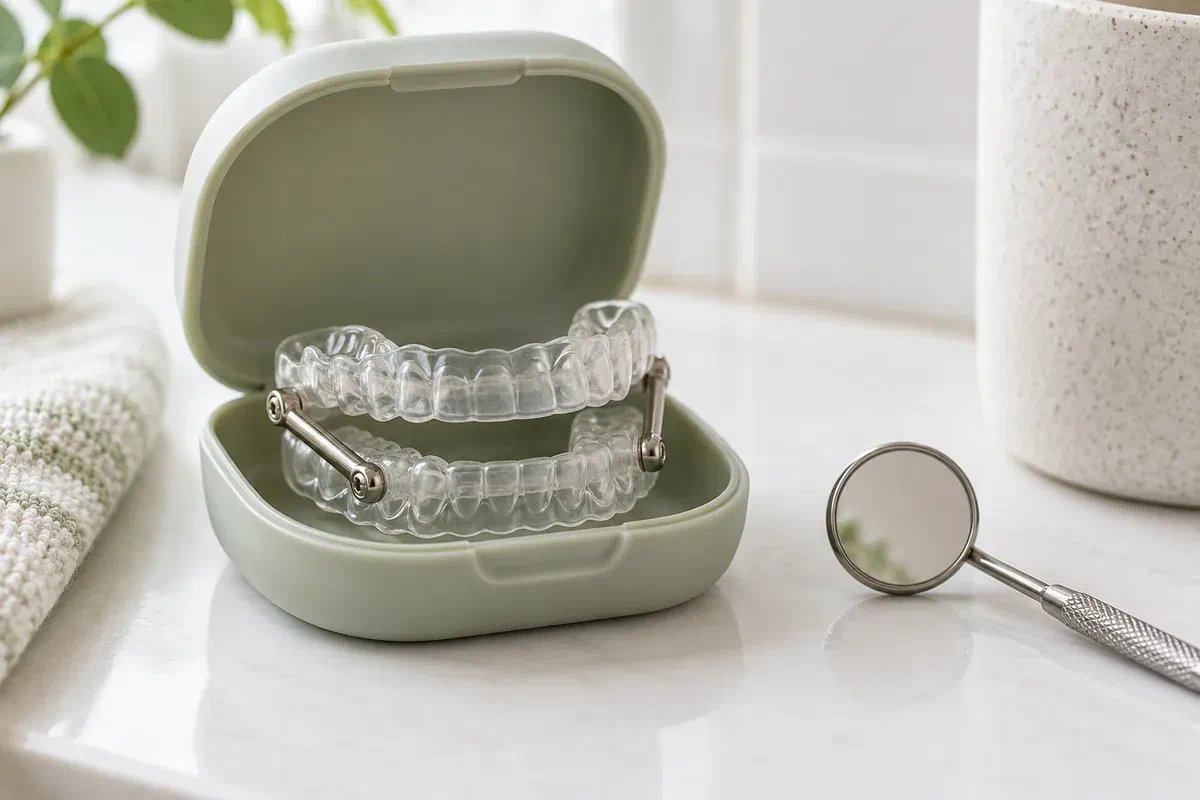
Illustrative connected oral sleep appliance inside an open protective case
Caledon · which situation are you in?

Lost, broken, changed — and who needs to hear about it.

Each reason for replacement involves the dentist and the physician a little differently. Being clear about which applies helps both of them help you.

The appliance is lost

This is a treatment interruption first. Call your sleep physician for interim advice, then contact the dental provider who made the device to ask about records. Note the date you last wore it so both offices can see how long the gap has been.

It is damaged or wearing out

Here the dental assessment leads. Bring the appliance and any broken pieces. Repair is sometimes worth looking at and sometimes not; the answer depends on the fault and on how the trays sit today, not on the device’s age. Let your physician know if you have had to stop wearing it.

Your teeth or your symptoms have changed

Dental changes — crowns, extractions, gum problems, a bite that feels different — are for the dentist. Returning snoring, unrefreshing sleep or daytime tiredness are for the physician. Often both apply. Neither should be lost in the rush to get a replacement made.

A cracked or loose device, or one that needs force to seat, should come out of use straight away. The dental office can advise on the device; your physician can advise on sleeping safely without it.

Why coordination pays off

When both offices know the plan, fewer things fall through the cracks.

The dentist learns a great deal from your physician’s side of the story: whether the appliance was ever confirmed to be working, whether your prescription has changed, and whether a new sleep assessment is planned. Combined with what you can say about comfort and wear, and a fresh dental examination, that makes the next decision far less of a guess.

Coordination also sorts out the order of events. A crown or filling might need finishing before new records, and your physician might want to review you before a new device is set. Agreeing who does what — and who confirms the replacement is working afterwards — keeps either side from acting on outdated information.

Patient information: AADSM — current assessment, appliance management, and coordinated follow-up

The dental examination

The dentist assesses the teeth and gums the appliance will rest on, existing dental work, the way you bite and how freely the jaw moves. You will hear if something should be treated first. A history of doing well with a device is welcome, but the mouth still has to be checked as it is.

Records from both directions

Dental records about the original design and its adjustments, plus physician letters or sleep-study summaries, help build the picture. Ask which can be shared and which need updating. Information held in one office is only useful once the other knows about it.

A named lead for each stage

Find out who you call during the wait, who fits the new device, and who checks that it is controlling your sleep condition. Writing those names down avoids the common situation where everyone assumes someone else is following up.

How the dental side unfolds

Our four steps, with your physician alongside.

Bring the appliance, any papers and your physician’s contact details. By the end of the first visit, you should know the reason a new appliance is on the table and which dental and medical questions must be answered before one is made.

  1. Bring both halves of the history

    Explain what happened to the device and how faithfully you wore it, and pass on what your physician has said — including any advice about the current gap. Name the dental provider who made it. The more of both stories the dentist hears, the clearer the plan.

  2. Examine and decide what comes first

    After looking at oral health, the supporting teeth and jaw function, the dentist explains whether dental treatment should come before new records. If findings suggest a medical question, such as changing symptoms, you will be encouraged to raise it with your physician.

  3. Agree a plan both offices can see

    If a new device is suitable, you will go over the suggested design, what records it needs, a cost estimate and the stages involved. Ask how the plan will be shared with your physician. Timelines come from the provider making the appliance and may shift.

  4. Fit, then close the loop

    The replacement is checked in your mouth and you are shown how to handle it, with a starting position prescribed for this device rather than borrowed from the last one. Ask when the dental review happens and how your physician will confirm the treatment is working.

Keeping both sides informed

Tell the right office about the right change.

What you do during the wait depends on why the appliance is being replaced and whether any older device is safe. Ask each provider what they want to hear about, and when.

To your physician: the gap and how you feel

Let them know if you are not wearing an appliance and follow their interim advice. Keep other prescribed treatment going and avoid improvised substitutes. Report daytime sleepiness to them, and do not drive while you feel drowsy.

To the dental office: changes in your mouth

A broken tooth, a new crown, toothache or a bite that suddenly feels different after records have been taken may change how the replacement fits. Call when it happens so the team can decide what to do.

To yourself: notes on the new device

Rehearse inserting and removing the device, and check how to clean and store it and whether any adjustment is yours to make. Keep a few notes on comfort and sleep in the first weeks; they are useful for both the dental review and your physician’s follow-up.

Where the plan may go

Device, repair or a fresh look at treatment.

Each option answers a different question. Ask what it would solve and what it would leave unresolved, especially if symptoms or discomfort started before the device failed.

When the dental and medical sides both support it

A new appliance

Once the dentist has examined you and your physician’s view is known, a new custom device may be the logical next step. You will discuss its design, the records it requires and the fitting, and how results will be checked by both offices afterwards. Your past experience should inform the choice.

When the device is still basically sound

Repairing the current one

For some faults, a repair can be assessed. Whether it is sensible turns on the type of damage, the materials and parts, and how well the device still fits. Ask what the repair would restore and how it would be tested. Some damage cannot be fixed reliably, and repair is not always good value.

When needs have changed on either side

Revisiting the treatment approach

Changes in oral health or in how the sleep condition responds may call for a different assessment or route of care. That decision is shared: the dentist may consult your physician or the original provider. Ask which question needs answering first before any new device is made.

Caledon questions

Sorting out who does what.

Bring questions about the appliance, the fit, costs and how the dental and medical sides connect. Your examination and records help the dentist answer them.

(905) 876-4488
Should I call my dentist or my sleep doctor first when my appliance breaks?
Call both, in whichever order is easiest. Your physician can advise about the nights without treatment; the dental office can assess the device and your teeth.
Will Milton Dental Clinic send updates to my sleep physician?
Ask the team how information will be shared. With your consent, relevant dental findings and plans can be communicated so your physician has the full picture.
Do I need a new prescription for a replacement appliance?
That depends on your physician and your circumstances. Tell them about the replacement; they can advise whether a new referral, review or testing is appropriate.
Can my previous adjustment instructions be reused with the new appliance?
Not without review. A replacement has its own instructions and starting position, chosen for the device and your current findings. Keep the old instructions for reference but follow the new ones.
What happens if my sleep physician wants a new sleep study?
The dental plan can be timed around it. Tell the dental team if testing is planned; it may affect when records or fitting are best scheduled.
Who checks whether the new appliance is actually working?
The dentist reviews fit and comfort, and your physician assesses whether the sleep condition is controlled. Ask both offices how and when they will check.
Arranging care from Caledon

Make two calls, and let us handle the dental half.

Get in touch with Milton Dental Clinic when your sleep appliance is lost, broken, worn out or no longer comfortable. Have your physician’s name handy, tell us who made the device and whether you have stopped wearing it, and the team will explain how the dental assessment works.

Replacement is planned from today’s dental examination, together with your physician’s sleep-care plan.

Visit Milton Dental Clinic
Unit 1, 342 Bronte St. S, Milton, ON L9T 5B7
Get directions Clinic hours
Monday–Thursday
11am–7pm
Friday–Sunday
By appointment only

Areas we serve

  • Milton
  • Oakville
  • Mississauga
  • Georgetown
  • Halton Hills
  • Acton
  • Campbellville
  • Brampton
  • Burlington
  • Puslinch
  • Rockwood
  • Erin
  • Caledon
  • Etobicoke
  • Old Milton
  • Bronte Meadows
  • Timberlea
  • Dorset Park
  • Dempsey
  • Clarke
  • Beaty
  • Coates
  • Harrison
  • Scott
  • Willmott
  • Ford
  • Bowes
  • Cobden
  • Walker
  • Mountain View
  • Milton Heights
  • Hawthorne Village
  • Valley View
  • Fallingbrook
  • Nassagaweya
  • Trafalgar
  • Esquesing
  • Nelson
  • Brookville
  • Moffat
  • Glen Williams
  • Norval
  • Limehouse
  • Stewarttown
  • Ashgrove
  • Hornby
  • Silver Creek
  • Speyside
  • Scotch Block
  • North Oakville
  • River Oaks
  • Glen Abbey
  • West Oak Trails
  • Palermo
  • Bronte Creek
  • College Park
  • Joshua Creek
  • Uptown Core
  • Preserve
  • Iroquois Ridge
  • Lisgar
  • Meadowvale
  • Meadowvale Village
  • Churchill Meadows
  • Erin Mills
  • Central Erin Mills
  • Streetsville
  • East Credit
  • Creditview
  • Heartland
  • Sheridan
  • Mount Pleasant
  • Credit Valley
  • Huttonville
  • Churchville
  • Springbrook
  • Northwest Brampton
  • Bram West
  • Fletcher's Meadow
  • Fletcher's Creek South
  • Alton Village
  • Orchard
  • Millcroft
  • Headon Forest
  • Tansley
  • Brant Hills
  • Tyandaga
  • Kilbride
  • Lowville
  • Aberfoyle
  • Morriston
  • Arkell
  • Hillsburgh
  • Freelton
  • Carlisle
  • Waterdown
  • Flamborough
  • Mountsberg

How can we help?

Milton Dental Clinic

Have a question about your smile? Choose the option that works best for you.

For urgent dental concerns, please call.
Messages are reviewed during clinic hours.