
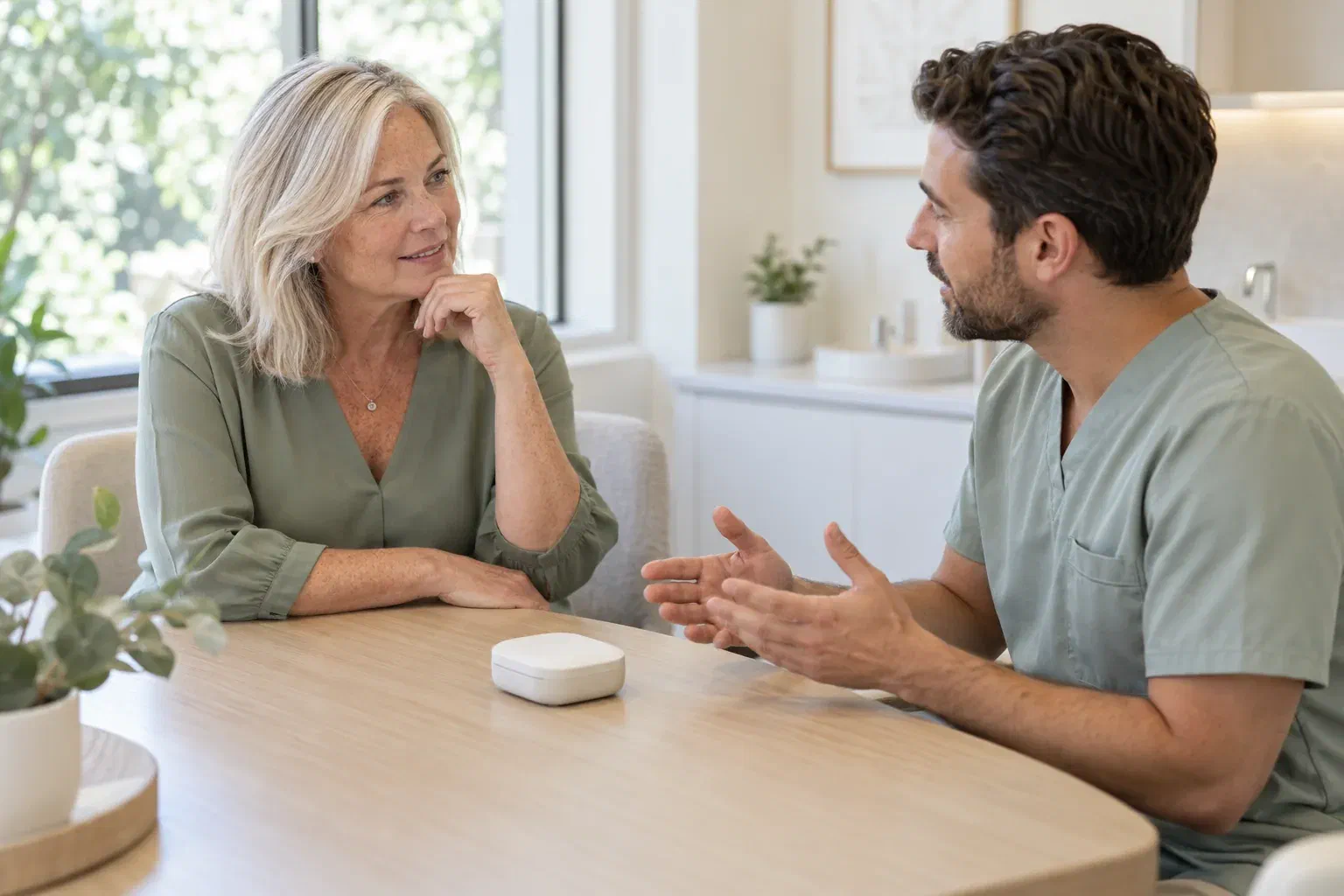
Illustrative consultation about replacing a custom oral sleep appliance
Specialized Care

Sleep Appliance Replacement in Campbellville

The hardest part of replacing a sleep appliance is often the stretch without one. In Campbellville, where most errands mean a drive, plan those nights with your physician while we review your teeth, the old device and what a new one should do.

Campbellville, and the nights in between

A gap in treatment deserves a plan of its own.

When an oral sleep appliance breaks or goes missing, most people think first about getting another. Just as important is what happens tonight, and next week. The device was treating a sleep condition; without it, symptoms such as daytime sleepiness may return. In a rural hamlet where nearly every trip means getting behind the wheel, that matters.

So two conversations run side by side. One is with the physician who manages your sleep condition, about how to cope safely until a replacement is decided. The other is with a dentist, about your teeth, the old appliance and whether a new device, a repair or something else is the right next step.

For the dental side, bring the appliance if you still have it and tell Milton Dental Clinic who made it and who your physician is. The team can talk through an assessment and how information will be shared. A replacement has to suit your mouth today, so rushing a copy of the old one is not the shortcut it might seem.

Plan the dental side of replacement
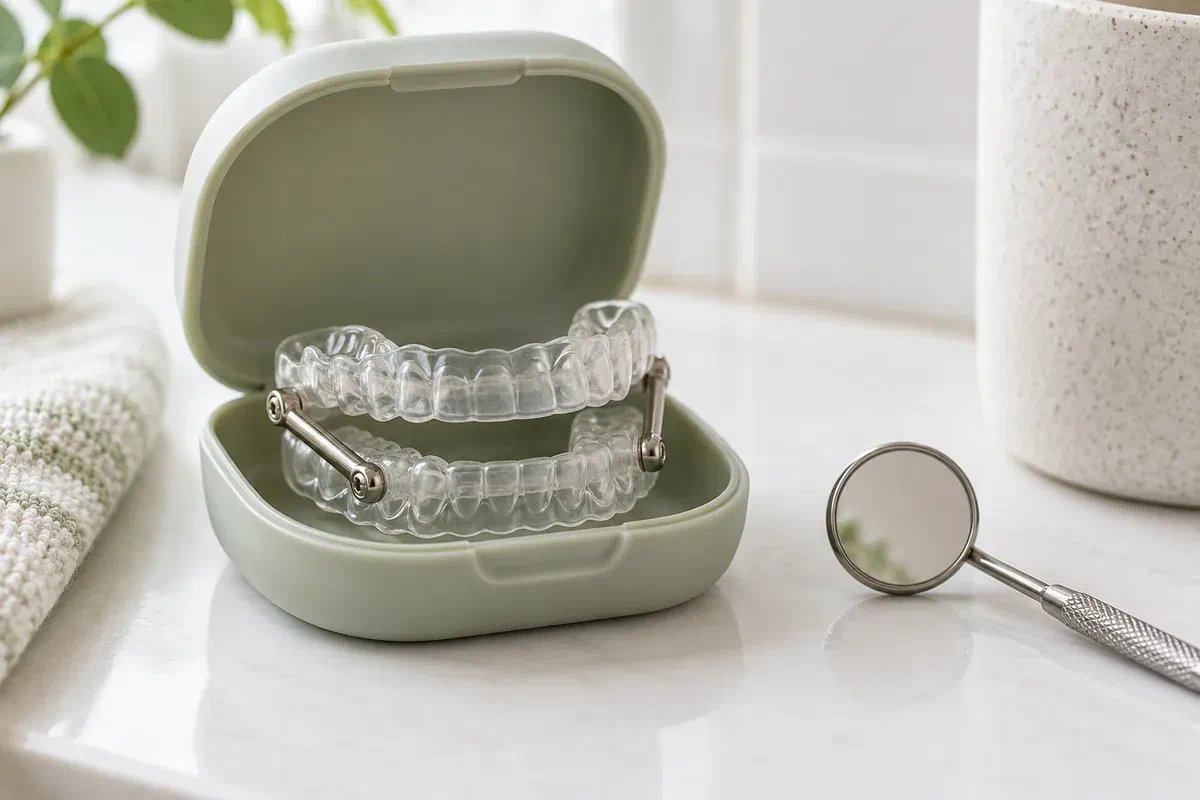
Illustrative connected oral sleep appliance inside an open protective case
What has happened to the device

Gone, broken or no longer suited?

Losing an appliance, damaging it, and outgrowing it are separate problems, and the waiting period can look different for each. Say clearly which you are facing.

It is lost for good

Note the date of last use and ask the maker which records they keep. Then, before anything else, call your sleep physician. They need to know treatment has stopped and can advise on interim care. Waiting quietly for a new device to appear is the option to avoid.

It is damaged or worn

Bring it and any pieces to an assessment. Some faults can be considered for repair, which may shorten the gap, but that depends on the defect, design, parts and present fit. Neither the device’s age nor the size of the crack decides it alone.

Your mouth or results have changed

Mention new fillings or crowns, missing teeth, gum soreness or a different bite, and tell your sleep-care provider if symptoms have returned even while wearing the device. A replacement may help, but an underlying dental or treatment problem needs addressing as well.

Do not keep using an appliance that is cracked, forced or has loose parts just to avoid a gap. Call the treating provider, and ask your physician what interim plan is safest for you.

How the dental review helps

The faster you understand the problem, the clearer the wait becomes.

An early assessment tells you what kind of gap you are facing. If repair is worth considering, that is one path; if a new appliance is needed, records and fitting take time; if a dental problem has to come first, that adds a step. Your account of how the old device worked, and whether your physician confirmed it was effective, helps the dentist decide quickly.

It also shows what else needs doing. Planned fillings or crowns may need to happen before records, and your sleep clinic may want to see you. Knowing the order, and whose job the fitting and later checks will be, lets you and your physician plan interim care for a realistic length of time.

Patient information: AADSM — current assessment, appliance management, and coordinated follow-up

An examination focused on the next device

The dentist checks the teeth and gums that will carry the trays, any crowns or fillings, how you bite and how your jaw moves. Ask whether anything needs treatment before records. A good history with the old device is helpful, but it does not take the place of a current look.

Records that can save a step

Original device details, recent dental records, adjustment notes and sleep reports may be useful. Ask which can be obtained quickly and which need to be retaken. A stored scan may not be suitable if your teeth have changed.

A realistic picture of the wait

Ask roughly how long each stage may take, knowing that timing is confirmed by the provider making the device. Share that with your physician so interim care can be planned. Confirm who to contact if things are delayed and how the new device will be reviewed.

The dental steps

Four appointments’ worth of decisions, in order.

Arrive with the appliance or tell us it is gone. The first visit works out why you need a replacement and what has to be settled before one can be offered — which also tells you how long the gap might be.

  1. Explain the loss or damage

    Describe what happened, how faithfully you wore the device and when your sleep care was last reviewed. Give the original provider’s name. Say how long you have been without treatment and what your physician has advised so far, so the dentist understands the urgency.

  2. Assess what the mouth needs

    Oral health and the teeth and tissues that would support an appliance are examined. Dental work that is recent or still planned may need to fit into the sequence. You will hear which findings affect the options and whether anything has to happen before records.

  3. Agree on the device and its timeline

    Where a new device is suitable, you will hear what design is planned, what impressions or scans it calls for, a rough cost and the steps still to come. Ask which steps could be combined and pass the expected sequence to your physician. Firm dates come from the provider making the device.

  4. Fit it, then confirm it works

    The new device is checked in your mouth, and you get handling instructions and a prescribed starting position. Old settings are not simply copied. Ask how dental follow-up and your physician’s check on effectiveness will be arranged, since ending the gap is not the same as confirming treatment works.

Staying safe in the meantime

Sleep, driving and your teeth while you wait.

The right interim steps hinge on why the device failed and whether anything you own can safely be worn. Ask both providers to spell out what the waiting weeks should look like, and how to begin once the replacement arrives.

Follow your physician’s interim plan

Your doctor sets the plan for nights without the appliance, so make sure they know it is out of use. Carry on with any other therapy they have prescribed; a store-bought guard is no stand-in. Should you notice yourself nodding off in the daytime, get medical advice and line up a lift for the school run or the grocery trip.

Report dental changes quickly

Once scans or impressions are done, a chipped tooth, a fresh filling, a new ache or teeth that close differently can undo the fit of the device being made — and lengthen the gap. One phone call early can save a remake later.

Learn the new device before relying on it

Try the replacement in and out a few times on the evening you get it, and check the cleaning steps, the storage case and whether any adjustment is left to you. Its look may be familiar while its handling is not. Keep the leaflet by the bed, and ring the practice if those first nights go badly.

Ways to close the gap

Quickest is not always right; right is not always slowest.

Ask what each option would solve, what it would not, and how long it is likely to take. A new appliance will not fix discomfort or returning symptoms whose cause has not been found.

When the assessment supports a new device

A replacement custom appliance

When your mouth checks out and your physician agrees, a newly made appliance is often how the gap gets closed for good. Go over the design, the scans or impressions it takes, and the fitting date, and share that schedule with your doctor. What you liked and disliked about the old device should feed into the new one, and a review visit should follow.

When it may still be serviceable

Repairing the existing device

A device with limited damage can sometimes be assessed for repair, and that may bring treatment back sooner. It hinges on where it broke, its materials, available parts and how it seats on your teeth. Ask what the repair restores and how it will be tested afterwards. Some breaks cannot be fixed reliably, and some fixes are poor value.

When something else needs attention

Dental or medical care first

A tooth that needs treatment, sore gums, jaw discomfort or a sleep condition that now responds differently can all mean the appliance is not the first job. Your dentist and physician may need to talk, and the clinic that made the old device may be asked for details. Find out which problem leads, so the next appliance is not built on shaky ground.

Campbellville questions

About the time between appliances.

Bring questions about the gap, the old device, fit and costs. Your examination and records help the dentist answer them specifically.

(905) 876-4488
What should I do on the first night without my sleep appliance?
Contact your sleep physician as soon as you can and follow their advice. Do not substitute a generic mouthguard. If you feel unusually sleepy the next day, avoid driving and seek medical guidance.
Is it safe to drive while I am waiting for a replacement?
That depends on how you feel and on your physician’s advice. Do not drive if you are drowsy. Your physician can discuss your situation and what precautions make sense.
Can I speed up the replacement process?
Bringing the old device, your provider details and any records helps. Some steps depend on lab work and clinical findings, so ask which parts can be combined; timing is confirmed by the provider making the device.
Is a repair quicker than a new appliance?
Sometimes, but not always, and repair is only appropriate if the damage and fit allow it. The dentist will explain whether it is a reasonable option for your device.
Will my sleep physician want to see me once the new device arrives?
Your physician decides on follow-up. Many want to confirm that a new or replacement appliance is working, so ask about the plan when you tell them about the change.
Should a new crown be finished before records for my replacement are taken?
Often that is sensible, since a crown changes the tooth surface the appliance depends on. Discuss the sequence with the providers involved; the dentist can explain the options and how they affect the gap.
From Campbellville

Call us, call your physician, and we will plan the rest.

Once your appliance is lost, cracked, worn thin or no longer right, phone Milton Dental Clinic. Say whether it is still in your hands, which clinic made it and how many nights you have gone without it, and the assessment can be booked with the gap in mind.

A replacement is planned around current dental findings and the interim and long-term plan from your sleep physician.

Visit Milton Dental Clinic
Unit 1, 342 Bronte St. S, Milton, ON L9T 5B7
Get directions Clinic hours
Monday–Thursday
11am–7pm
Friday–Sunday
By appointment only

Areas we serve

  • Milton
  • Oakville
  • Mississauga
  • Georgetown
  • Halton Hills
  • Acton
  • Campbellville
  • Brampton
  • Burlington
  • Puslinch
  • Rockwood
  • Erin
  • Caledon
  • Etobicoke
  • Old Milton
  • Bronte Meadows
  • Timberlea
  • Dorset Park
  • Dempsey
  • Clarke
  • Beaty
  • Coates
  • Harrison
  • Scott
  • Willmott
  • Ford
  • Bowes
  • Cobden
  • Walker
  • Mountain View
  • Milton Heights
  • Hawthorne Village
  • Valley View
  • Fallingbrook
  • Nassagaweya
  • Trafalgar
  • Esquesing
  • Nelson
  • Brookville
  • Moffat
  • Glen Williams
  • Norval
  • Limehouse
  • Stewarttown
  • Ashgrove
  • Hornby
  • Silver Creek
  • Speyside
  • Scotch Block
  • North Oakville
  • River Oaks
  • Glen Abbey
  • West Oak Trails
  • Palermo
  • Bronte Creek
  • College Park
  • Joshua Creek
  • Uptown Core
  • Preserve
  • Iroquois Ridge
  • Lisgar
  • Meadowvale
  • Meadowvale Village
  • Churchill Meadows
  • Erin Mills
  • Central Erin Mills
  • Streetsville
  • East Credit
  • Creditview
  • Heartland
  • Sheridan
  • Mount Pleasant
  • Credit Valley
  • Huttonville
  • Churchville
  • Springbrook
  • Northwest Brampton
  • Bram West
  • Fletcher's Meadow
  • Fletcher's Creek South
  • Alton Village
  • Orchard
  • Millcroft
  • Headon Forest
  • Tansley
  • Brant Hills
  • Tyandaga
  • Kilbride
  • Lowville
  • Aberfoyle
  • Morriston
  • Arkell
  • Hillsburgh
  • Freelton
  • Carlisle
  • Waterdown
  • Flamborough
  • Mountsberg

How can we help?

Milton Dental Clinic

Have a question about your smile? Choose the option that works best for you.

For urgent dental concerns, please call.
Messages are reviewed during clinic hours.