
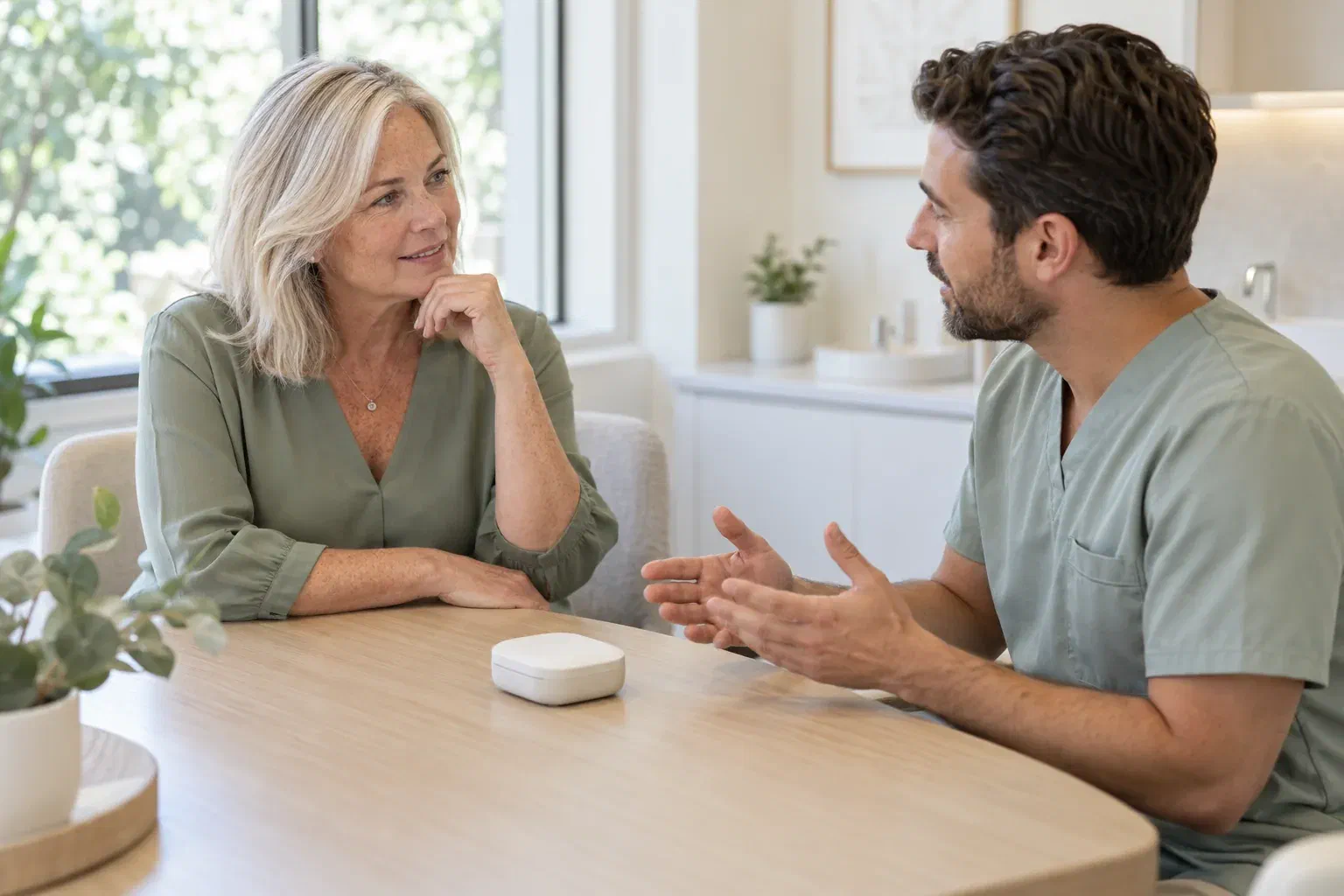
Illustrative consultation about replacing a custom oral sleep appliance
Specialized Care

Sleep Appliance Replacement in Georgetown

Your main sleep appliance has failed, and an older one is sitting in a drawer. Before reaching for it, have it checked. From Georgetown, book a review of both devices, your current teeth and your sleep plan so the next step is a safe one.

Two devices, one decision

The spare in the drawer

Plenty of long-term appliance users keep their previous device after getting a new one. When the current appliance cracks or goes missing, that older one looks like an easy fix. It may go in. It may even feel familiar. But fitting into the mouth is not the same as being safe, holding the right position or still treating the sleep condition.

So bring both, if you have both. The newer device shows what your most recent treatment looked like; the older one shows where you started and how your mouth has changed since. Tell the dentist which you were using, how well it worked and what went wrong with it.

Our Bronte Street practice will also want to know who made each device and which physician manages your sleep care now. With that, the team can discuss an assessment and how to involve your physician. Whether the next step is a repair, a new appliance or a temporary role for the spare, it should follow a fresh look at today’s mouth.

Ask whether your spare is safe to use
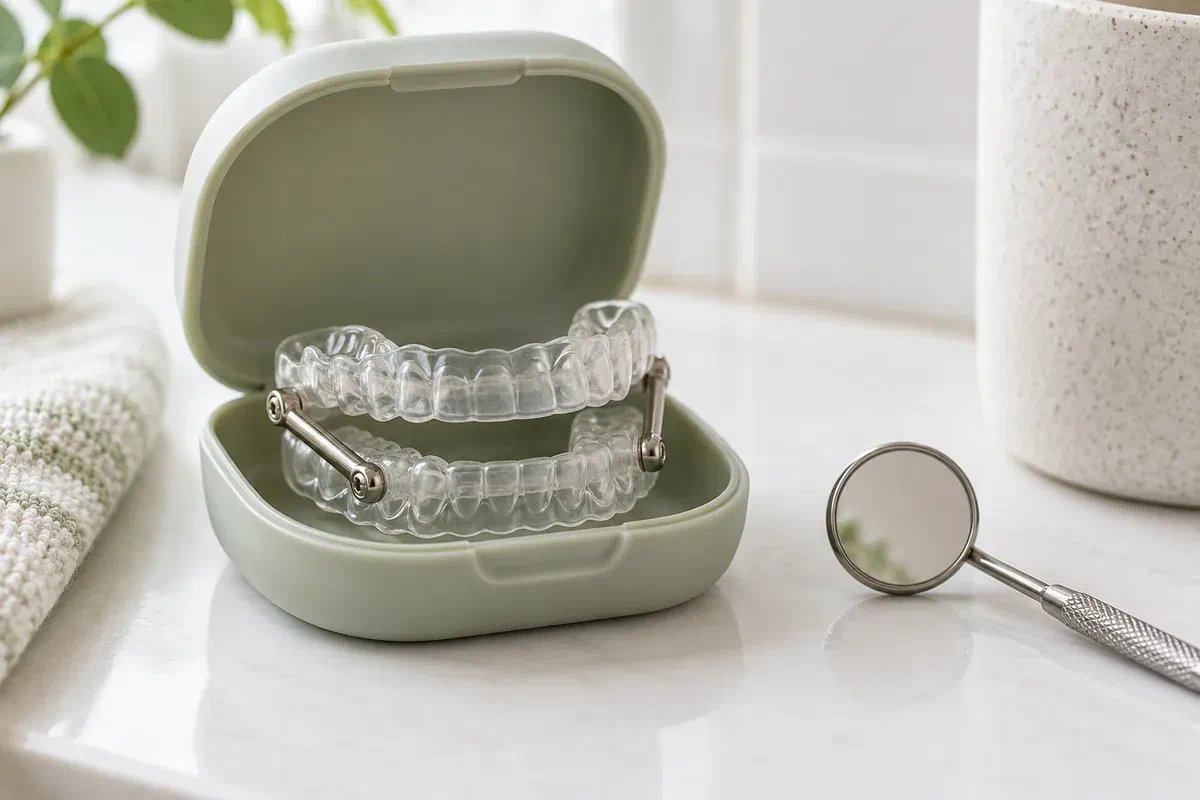
Illustrative connected oral sleep appliance inside an open protective case
What has happened

Each reason for replacement asks a different question.

Loss, damage, a changing mouth and a treatment that seems less effective are distinct situations. Tell the dentist which ones apply — including what state the spare device is in.

The current appliance has gone missing

Note when you last wore it and ask its provider what records are available. Call your sleep physician as well, and mention the older device: they can advise on interim care, and the dentist can assess whether the spare has any safe role in the meantime.

It has broken, warped or worn loose

Bring the damaged device and any fragments. Whether a repair is worth assessing depends on the defect, design, parts and current fit. The fact that a spare exists does not make repair unnecessary, and the main device’s age alone does not decide replacement.

Your teeth or treatment have moved on

If you have had crowns, fillings or extractions since the older device was made, it may no longer fit correctly. Mention gum concerns, bite changes or returning symptoms too. A spare made for a previous version of your mouth can cause problems of its own.

Do not wear any appliance — main or spare — that has to be forced in, is cracked or has loose parts. Contact the treating provider, and speak with your physician about how to manage sleep care until a decision is made.

What a review sorts out

Clarity about every device you own.

Comparing two appliances can be revealing. The dentist can see how the design changed between them, how each sits on your teeth now, and how your mouth has shifted in between. Add your account of what each was like to wear, and whether your physician confirmed either was effective, and the next decision is far better informed.

The visit is also the moment to check what else is pending. If a crown or filling is planned, that may need to come first. If your sleep clinic has not reviewed you since the newer device was made, they may want to. Agreeing the sequence, and naming who fits the device and who reviews it, avoids building around a changing mouth.

Patient information: AADSM — current assessment, appliance management, and coordinated follow-up

An examination of the teeth both devices depend on

Both appliances grip the same teeth, so those teeth, the gums around them, existing crowns and fillings, your bite and jaw movement are all reviewed. Ask whether anything needs treatment before records are taken. A device that once fitted is not proof that it fits now — this applies to the spare even more than the main appliance.

Records from one provider or two

If the devices came from different places, records may be split between them. Ask which details, scans and adjustment notes can be obtained and which need updating. Old files are useful history but may not reflect your teeth today.

A defined role for the spare, if any

Ask directly whether the older appliance can be used while a replacement is arranged, or should be retired. Confirm who to contact if the wait runs longer than expected, and how a new device will be fitted and reviewed.

The replacement pathway

Sorting the devices, then planning the next one.

Put every appliance you own into a bag, along with any letters or instruction sheets, or jot down what has gone missing. By the end of the first appointment you should understand why a replacement is on the table and what has to be done before one can be made.

  1. Explain the history of each device

    Describe which appliance you were using, what happened to it and how often you wore it. Mention when and why the older one was set aside. Share the providers’ details and your physician’s, and say whether you are currently without treatment.

  2. Try each appliance in place

    Each device is seated on your teeth in turn so the dentist can see how it grips, rocks or binds against the mouth you have now. Gums, restorations and jaw movement get checked too. Expect a straight answer on whether the spare could serve for a few weeks, and on any dental work that should be finished first.

  3. Decide on design, records and costs

    When a new appliance is the sensible route, you will hear which design is suggested and why, what scans or impressions it calls for, a cost estimate and how many stages to expect. Point out what each older device got right or wrong; it should shape the plan. Dates are set by whoever makes the appliance.

  4. Fit the new device and plan review

    On the day it arrives, the newest appliance is seated and checked, and you are shown how to handle it and where its prescribed starting point sits. Neither older device’s setting carries over unless the instructions say so. Before leaving, find out when the dentist sees you again and when your physician reassesses treatment.

While you wait

Use only what your provider has cleared.

What you should wear in the meantime — if anything — turns on why the main device failed and what the dentist made of the spare. Leave with clear direction for the waiting weeks and for your first nights with the replacement.

Tell your physician about the change

Your doctor should hear whether you have stopped treatment altogether or swapped to the older appliance, since both alter your therapy. They can suggest what to do in the interim. Keep up anything else they prescribed, and leave drugstore guards on the shelf. Feeling drowsy in daylight is a reason to call them and to let someone else drive.

Report dental changes before fitting

Once records are taken, a chipped tooth, a new filling, a toothache or teeth that suddenly meet differently can spoil the fit of what is being made. Phone the practice the same week rather than waiting for the fitting.

Learn the new appliance on its own

Having owned two devices does not mean the third will behave like either. Run through putting it in and taking it out, and check how it should be cleaned, where it should live and whether you are allowed to adjust it. Keep the newest instructions on top, and phone if the early nights are rough.

Where things may go

Repair, replace, or rethink the plan.

Ask what each option fixes and what it leaves. A new appliance will not explain discomfort or returning symptoms that started with the older device, and a spare will not solve them either.

When the assessment supports it

A newly made replacement

With your dental findings and your physician’s information both in view, a third custom appliance may turn out to be the right answer. Talk through the design, the scans it requires and how the fitting will be booked. Two earlier devices give you a head start on knowing what to keep and what to avoid, and a follow-up visit belongs in the plan.

When the newer appliance can be restored

Repair of the main device

Limited damage to the newer appliance can sometimes be looked at for repair. Much depends on where it failed, what it is made of, whether parts exist and how well it still seats. Ask what a fix would restore and how it gets rechecked; some faults cannot be mended well, and paying for a repair is not always the better value.

When more than the device has changed

A wider look at your care

Changes in your gums or teeth, in comfort, or in how well treatment controls your sleep condition may call for another kind of assessment entirely. That can mean conversations with the clinics that made your earlier devices or with your doctor. Settle what has to be dealt with first, so a new appliance starts with a clean slate.

Georgetown questions

Questions about spares, backups and replacements.

Note down what you want to ask about each appliance, about fit and cost, and about the stretch before a replacement arrives. Once both devices and your mouth have been examined, the dentist can answer in specifics.

(905) 876-4488
Can I wear my old appliance while the new one is being made?
Only if the treating provider agrees after checking it. An older device may no longer fit, may hold a different position and may not suit your current treatment. Bring it in rather than assuming it is safe.
Is it a good idea to have a backup sleep appliance?
Some people find a backup useful, but whether it is appropriate depends on your treatment and mouth. Ask the dentist and your physician whether a spare has a role and how it should be checked over time.
My two appliances came from different clinics. Is that a problem?
Not necessarily. It just means records may be in two places. Share both providers’ details, and the team can explain which information would be helpful to request.
Should I throw my old appliance away once I get a new one?
Ask your provider. They may advise keeping it as an agreed backup, or retiring it if it no longer fits or is worn. Either way, label it clearly so it is not used by mistake.
Does an existing scan mean the replacement can be made right away?
A recent scan may help, but the provider still needs to judge whether it matches your mouth and whether the plan remains suitable. New records may be needed, especially after dental work.
If the new appliance feels better than my old ones, do I still need a review?
Yes. Comfort helps you wear it, but it does not confirm that the sleep condition is controlled. Ask how and when your response will be assessed.
Georgetown bookings

Bring the broken one and the spare.

From Georgetown, call Milton Dental Clinic when your main appliance breaks, disappears or stops fitting, and especially before you start relying on an older one. Mention where each device came from, the doctor handling your sleep care and whether you have gone without treatment, so the visit can be planned properly.

Which device you wear next is decided by today’s examination and your physician’s plan, never by what happens to fit.

Visit Milton Dental Clinic
Unit 1, 342 Bronte St. S, Milton, ON L9T 5B7
Get directions Clinic hours
Monday–Thursday
11am–7pm
Friday–Sunday
By appointment only

Areas we serve

  • Milton
  • Oakville
  • Mississauga
  • Georgetown
  • Halton Hills
  • Acton
  • Campbellville
  • Brampton
  • Burlington
  • Puslinch
  • Rockwood
  • Erin
  • Caledon
  • Etobicoke
  • Old Milton
  • Bronte Meadows
  • Timberlea
  • Dorset Park
  • Dempsey
  • Clarke
  • Beaty
  • Coates
  • Harrison
  • Scott
  • Willmott
  • Ford
  • Bowes
  • Cobden
  • Walker
  • Mountain View
  • Milton Heights
  • Hawthorne Village
  • Valley View
  • Fallingbrook
  • Nassagaweya
  • Trafalgar
  • Esquesing
  • Nelson
  • Brookville
  • Moffat
  • Glen Williams
  • Norval
  • Limehouse
  • Stewarttown
  • Ashgrove
  • Hornby
  • Silver Creek
  • Speyside
  • Scotch Block
  • North Oakville
  • River Oaks
  • Glen Abbey
  • West Oak Trails
  • Palermo
  • Bronte Creek
  • College Park
  • Joshua Creek
  • Uptown Core
  • Preserve
  • Iroquois Ridge
  • Lisgar
  • Meadowvale
  • Meadowvale Village
  • Churchill Meadows
  • Erin Mills
  • Central Erin Mills
  • Streetsville
  • East Credit
  • Creditview
  • Heartland
  • Sheridan
  • Mount Pleasant
  • Credit Valley
  • Huttonville
  • Churchville
  • Springbrook
  • Northwest Brampton
  • Bram West
  • Fletcher's Meadow
  • Fletcher's Creek South
  • Alton Village
  • Orchard
  • Millcroft
  • Headon Forest
  • Tansley
  • Brant Hills
  • Tyandaga
  • Kilbride
  • Lowville
  • Aberfoyle
  • Morriston
  • Arkell
  • Hillsburgh
  • Freelton
  • Carlisle
  • Waterdown
  • Flamborough
  • Mountsberg

How can we help?

Milton Dental Clinic

Have a question about your smile? Choose the option that works best for you.

For urgent dental concerns, please call.
Messages are reviewed during clinic hours.