The whole appliance is missing
If you have lost it entirely, note roughly when you last wore it and ask its maker which records exist. Contact your sleep physician about the interruption too, so you have interim advice rather than an open-ended gap.


A snapped connector, a stretched strap or an adjustment piece that will not stay put can stop a sleep appliance in its tracks. From Puslinch, have the part and the whole device examined, along with your teeth, before deciding on repair or replacement.
Many oral sleep appliances are two trays joined by something — a hinge, a pair of bands, a rod or a screw mechanism. That linking part does a lot of work, night after night, and it is often what fails first. Once it goes, the device may no longer hold the lower jaw where it was meant to, even if both trays look perfect.
It is natural to hope that only the part needs swapping. Sometimes that is worth assessing. But the visit also looks at the trays, how they sit on your teeth now, and whether anything about your mouth or sleep has changed. A single broken piece can be the moment to discover a fit problem that had been building quietly.
Bring the appliance with every loose bit sealed in the case, and let Milton Dental Clinic know who made it and who manages your sleep condition. The dentist can then discuss an assessment and how to keep your physician informed. Whether the result is a repair or a new device, it should match your teeth and treatment plan as they stand.
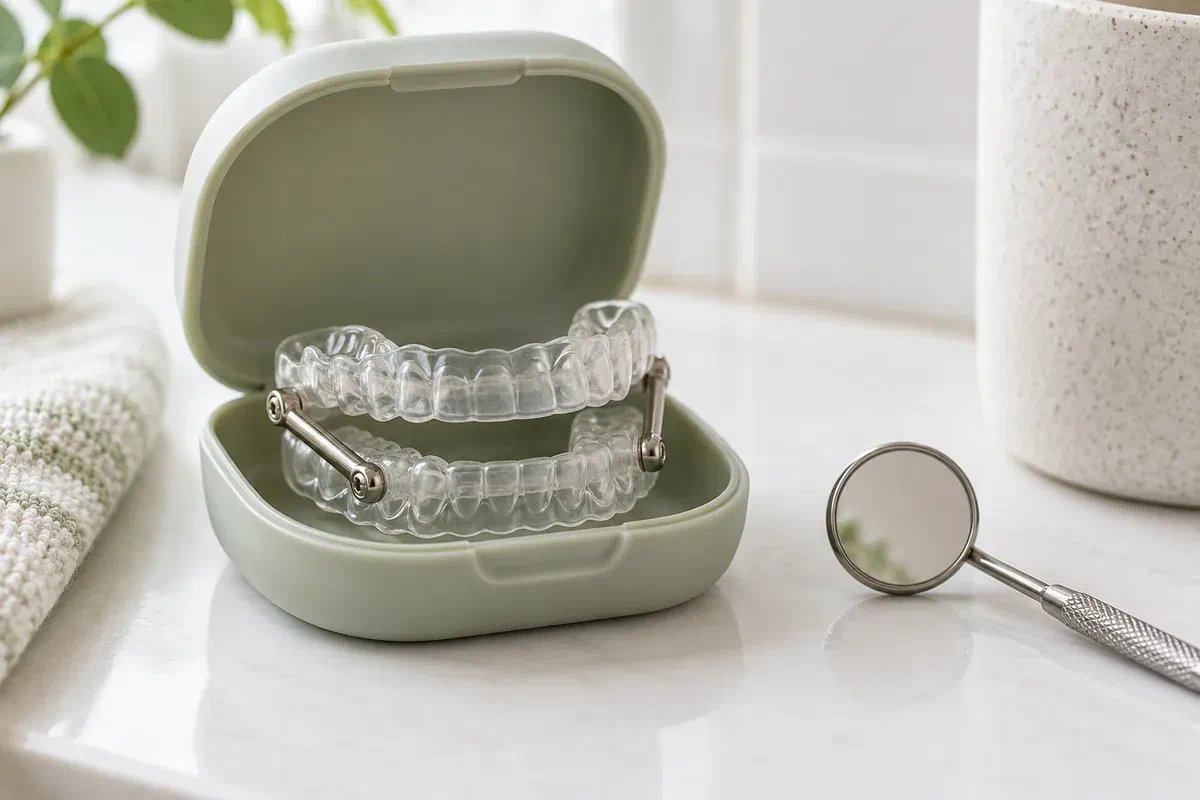
A failed component is usually what brings people in. It helps to say whether the whole device is lost, whether only part has failed, and whether anything else about fit or results has been changing.
If you have lost it entirely, note roughly when you last wore it and ask its maker which records exist. Contact your sleep physician about the interruption too, so you have interim advice rather than an open-ended gap.
Keep every piece. Do not glue, tape or improvise a replacement part. Whether repair is reasonable depends on the specific component, the design, whether parts can be sourced and how well the trays fit. A small part does not always mean a small fix.
Note any new fillings, crowns or missing teeth, gum soreness, a different bite or more discomfort than usual. If snoring or tiredness had been returning before the part broke, mention that to your sleep-care provider. Those changes affect the decision as much as the broken piece.
An appliance with a broken or loose connector may not hold its intended position and can come apart in the mouth. Stop wearing it, contact the treating provider, and ask your physician about sleep care until it is sorted.
A connector failure says something about how the appliance has been working. Was it adjusted frequently? Did one side always feel tighter? Was the device ever reviewed by your physician for effectiveness? Your answers, together with an examination of the trays and your teeth, tell the dentist whether repair makes sense or whether the device has reached its natural end.
It is also worth asking what else is coming up. A crown or filling that is planned might change the fit of the trays, and your sleep clinic may want to review you before anything is altered. Settling the order, and who is responsible for fitting and follow-up, avoids fixing one part only to remake the device a few months later.
Patient information: AADSM — current assessment, appliance management, and coordinated follow-up
Beyond the hinge, the dentist looks at how each tray seats, the health of the teeth and gums beneath it, your existing dental work, your bite and the way your jaw moves. Ask whether anything needs dental attention first. A device that fitted well when new may have drifted, and that would change the repair-or-replace answer.
The original maker’s details, the design name and any adjustment notes help identify the component. Ask what can be found out from the provider or lab. Older or discontinued parts may be hard to source, which can tip the balance.
Find out roughly what each route involves, who to call if it takes longer than expected, and how your response will be checked afterwards. Whether the device is repaired or replaced, a review once you are wearing it again is part of the job.
Households in a rural township often prefer fewer trips. Bring the device, the pieces and any paperwork, and the first appointment can cover the history, the examination and a clear view of what comes next.
Point to the failed part, explain when and how it went, and describe how often you adjusted or wore the appliance. Share who made it and when your sleep physician last saw you. Mention whether you are now without treatment and what advice you have had.
The dentist looks at how the trays fit, examines oral health and the supporting teeth, and assesses jaw function. If dental work is planned, it may need to come first. You will hear which findings point towards repair, replacement or something else.
If repair looks feasible, you will discuss what it would involve and how the device would be rechecked. If replacement is better, the dentist explains the design, records, estimated costs and stages. Ask about combining steps to save trips; timing is confirmed by the provider.
A repaired or new device is checked in the mouth, with handling instructions and a starting position for that device. Ask how follow-up and your physician’s assessment will be coordinated. Do not reset adjusters yourself unless the instructions say you may.
Guidance depends on whether the device is repaired, replaced or put aside. Ask for clear instructions for the time without it and for getting back to nightly use.
If the appliance is out of action, tell the provider managing your sleep condition and ask what interim care is appropriate. Do not drop other prescribed treatment or switch to a generic guard. If you are drowsy in the daytime, seek medical advice and avoid driving until you feel alert.
If records are taken for a replacement and a tooth then chips, a crown is placed, pain develops or your bite changes, let the team know. Fit may be affected, and it is far simpler to adjust the plan before the new trays are made than after they arrive.
When inserting and removing the device, follow the method you are shown rather than pulling on bands or hinges. Confirm cleaning, storage and any adjustment you are allowed to make. Report clicks, looseness or uneven pressure early, before another part fails.
Bring your questions about the component, the trays, costs and getting back to treatment. Your device and examination give the dentist what they need to answer.
Call Milton Dental Clinic when a hinge, band or adjuster gives way, or when the whole appliance is lost, worn or uncomfortable. Tell us who made it, who manages your sleep care and whether you have stopped wearing it, and we will discuss an assessment that keeps trips to a sensible number.
Repair or replacement depends on current dental findings and your coordinated sleep-care plan.
