

Illustrative consultation about replacing a custom oral sleep appliance
Specialized Care

Sleep Appliance Replacement in Rockwood

A sleep appliance that once felt fine can start leaving your jaw stiff over breakfast. Before replacing it, find out why. From Rockwood, book an exam of your jaw, bite and device, with your sleep physician kept informed.

Morning jaw discomfort

It used to be comfortable. What changed?

You may have worn the appliance for a long while without trouble. Lately, though, the first bite of toast feels odd, the jaw is stiff for an hour after waking, or your back teeth do not seem to meet the way they used to. People often blame an ageing device, and sometimes that is right — but not always.

Jaw discomfort can come from a worn or distorted appliance, from changes in your teeth or restorations, from clenching or grinding, or from other jaw-joint issues. Replacing the device without knowing which is involved risks carrying the same discomfort into the new one. That is why the assessment comes before any new records.

Bring the appliance and note when the stiffness started, how long it lasts and whether it is on one side. Tell Milton Dental Clinic who made the device and which physician manages your sleep condition. The dentist can discuss the right examination and how to keep everyone informed. Any replacement should fit the jaw and teeth you have now.

Have morning jaw discomfort assessed
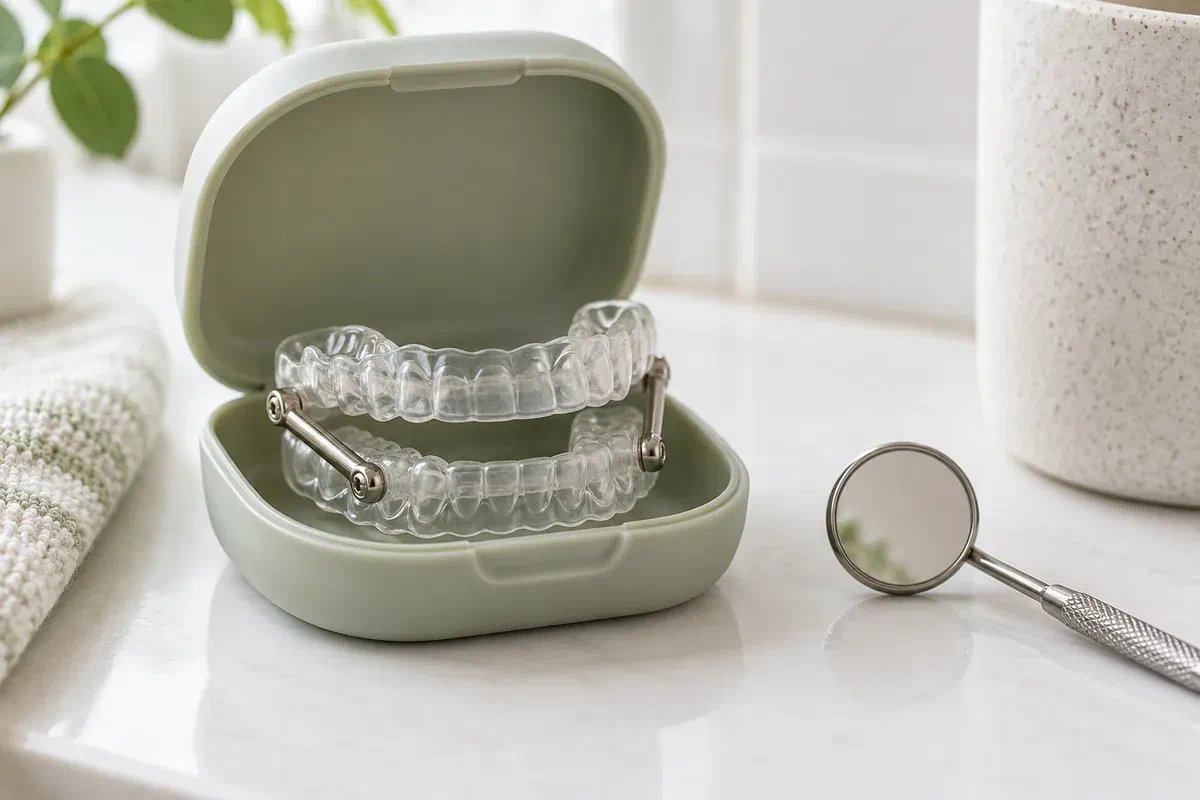
Illustrative connected oral sleep appliance inside an open protective case
Rockwood · reasons to take a closer look

Discomfort, damage and loss each need their own answer.

Most visits about jaw discomfort start with a device that is still in use. Others start with damage or loss. Mentioning everything that applies keeps the assessment focused.

The device is lost, and the jaw had been bothering you

Record when you last used it and contact the maker about records. Tell your sleep physician about the interruption and ask for interim advice. Mention the jaw discomfort as well, because it is relevant to what is planned next.

The appliance is worn, warped or loosening

A device that has thinned, cracked or shifted shape may no longer hold the jaw evenly. Bring it in. Age alone does not decide replacement, and a minor-looking flaw is not always repairable; the dentist considers the specific damage, design and fit.

Your jaw, bite or teeth have changed

Describe stiffness, clicking, limited opening, tooth tenderness or a bite that feels different, along with new dental work. If snoring or tiredness has returned, tell your sleep-care provider. These changes need attention in their own right, alongside any decision about the device.

If the appliance causes jaw pain that persists through the day, worsens or limits opening, stop wearing it and contact the treating provider. Your physician should also hear that treatment has paused, so the nights in between are covered.

What an assessment can uncover

Finding the source before choosing the fix.

The dentist wants to hear how the appliance felt when it was working well, when the jaw discomfort appeared, and whether a physician confirmed the device was effective. Paired with an examination of the jaw, bite and device, that history helps separate appliance wear from a dental or jaw-joint issue that needs different care.

A review also highlights timing. If a crown, filling or bite treatment is needed, it may come before new records. Your sleep clinic may want to see you if you have been skipping nights because of discomfort. Agreeing on the order, and on who handles fitting and follow-up, keeps a replacement from being built on an unresolved problem.

Patient information: AADSM — current assessment, appliance management, and coordinated follow-up

A careful look at jaw and bite

The dentist examines jaw movement, the joints and muscles, how the teeth meet, and the teeth, gums and restorations that support an appliance. Ask which findings point to the device and which point elsewhere. A comfortable past does not rule out a present problem.

Records that show how the device was set

Original design details, adjustment history and sleep-clinic reports can help explain the discomfort, especially if the device was advanced over time. Ask which are available and which need updating. A stored impression may no longer match your bite.

A plan that includes comfort checks

Ask how comfort will be monitored if a new device is made, who to contact during the wait, and how your sleep physician will review effectiveness. Fitting is followed by adjustment and review, and comfort is part of that.

What to expect

Listening to the jaw comes first.

Have the device with you, plus a few notes about your symptoms. The first visit sorts out what is behind the discomfort, whether a replacement would actually help, and what needs doing before one could be made.

  1. Describe the discomfort and the device

    Explain when stiffness or soreness started, which side it favours and whether it fades by lunchtime. Tell the dentist about nightly wear, any adjustments made over the years, the clinic that supplied the device and your most recent sleep review. Say whether you have stopped wearing it.

  2. Examine jaw, teeth and appliance

    The dentist checks jaw movement and the surrounding muscles, how the teeth meet, oral health, and how the device fits and has worn. Dental work that is recent or planned may affect the order. Ask what each finding suggests and whether other care should come first.

  3. Discuss what would help

    If replacement is suitable, the dentist explains the proposed design and why it may suit your jaw, the records needed, estimated costs and the expected stages. Ask how discomfort will be monitored. Timing is confirmed by the treating provider.

  4. Fit gently and follow up

    A replacement has its own fit check, instructions and prescribed starting position, which may differ from where the old device ended up. Ask how comfort and effectiveness will be reviewed with your physician. Do not advance or adjust it on your own unless your instructions explicitly allow it.

Looking after your jaw

Report discomfort early; do not push through it.

Keeping the current appliance in use for now, or not, hinges on what the dentist finds in your jaw and in the device. Leave the appointment knowing what to do until a decision is made, and how to break in a replacement without straining the joint.

Involve your physician if you stop wearing it

Putting the device aside because your jaw aches is understandable, but your sleep condition then goes untreated, so let your doctor know. They can suggest an interim approach. Stay with whatever else they have prescribed, and do not swap in a sports guard. If daytime sleepiness creeps in, call them and hand over the driving.

Tell us about bite or tooth changes

Teeth that suddenly meet unevenly, a chipped cusp, a new filling or fresh tenderness after scans are taken can affect how the new appliance sits and how your jaw copes with it. A quick call lets the team reassess before anything is finalised.

Ease into the new device

Spend the first evenings getting used to inserting and removing it, and confirm how it is cleaned and stored. If you are given a morning routine to help the jaw settle, keep to it. Jot down how the joint feels each morning for the first few weeks; persistent stiffness is worth a call, not a wait.

Possible next steps

Device, bite, or something else.

Every route has limits, so ask what it would relieve and what it would not touch. A new appliance will not relieve discomfort caused by a dental or jaw-joint problem, and it will not explain returning symptoms on its own.

When wear or fit explains the discomfort

A new appliance planned with your jaw in mind

If the device itself is the likely cause, a replacement may be suggested after dental and medical review. Ask which design and starting position are proposed, how records will be taken and how comfort will be monitored. Follow-up is part of the plan.

When a specific defect is responsible

A repair or refit

Sometimes an uneven, worn surface or a slack component is what tips the jaw out of balance, and that defect can be assessed for repair. The answer depends on the material, the parts involved and how well the trays still seat. Find out what the repair would correct and how your jaw comfort would be rechecked afterwards; not every fault can be put right, and some repairs are poor value.

When the problem lies outside the device

Care for the jaw or bite first

Jaw-joint, muscle or bite issues, or a change in treatment response, may need assessment before any device is made. The dentist may coordinate with your physician or a specialist. Ask which concern should be addressed first.

Questions we hear from Rockwood

Jaw comfort and your sleep appliance.

Jaw discomfort raises plenty of questions about the appliance, about adjustments and about what a replacement would cost. These are some of the common ones; the dentist can answer yours once your jaw has been examined.

(905) 876-4488
Why has my jaw started feeling stiff after years with the same appliance?
Possible reasons include device wear, changes in your teeth or bite, clenching or grinding, or jaw-joint changes. An examination can help narrow it down before deciding whether replacement is the answer.
Are morning jaw exercises useful with a sleep appliance?
Some providers recommend a morning routine to help the jaw settle after wearing an appliance. Ask whether one is appropriate for you and follow the instructions you are given.
Can my bite change because of my sleep appliance?
Bite changes can occur with long-term use of some oral appliances. If your teeth meet differently, mention it. The dentist can examine your bite and discuss it alongside replacement planning.
Should I loosen my appliance setting if my jaw hurts?
Do not change the setting unless your instructions allow it and you know the limits. Contact the treating provider instead; they can advise on adjustment or interim steps.
Will a new appliance start at the same position as my old one?
Not necessarily. The starting position for a replacement is chosen based on current findings, your previous response and your prescribed plan, and may differ from where the old device ended up.
When should jaw pain be checked urgently?
Seek prompt advice if pain is severe, worsening, accompanied by swelling, or if your jaw locks or you cannot open or close normally. Stop wearing the appliance and contact the treating provider.
Booking from Rockwood

Tell us how your jaw feels in the morning.

Phone Milton Dental Clinic if mornings with your sleep appliance have turned stiff or sore, or if the device is lost, damaged or worn out. A few details help us prepare: which clinic made it, the doctor treating your sleep condition, and whether you have had to stop using it.

Next steps depend on your current dental and jaw findings and the coordinated sleep-care plan.

Visit Milton Dental Clinic
Unit 1, 342 Bronte St. S, Milton, ON L9T 5B7
Get directions Clinic hours
Monday–Thursday
11am–7pm
Friday–Sunday
By appointment only

Areas we serve

  • Milton
  • Oakville
  • Mississauga
  • Georgetown
  • Halton Hills
  • Acton
  • Campbellville
  • Brampton
  • Burlington
  • Puslinch
  • Rockwood
  • Erin
  • Caledon
  • Etobicoke
  • Old Milton
  • Bronte Meadows
  • Timberlea
  • Dorset Park
  • Dempsey
  • Clarke
  • Beaty
  • Coates
  • Harrison
  • Scott
  • Willmott
  • Ford
  • Bowes
  • Cobden
  • Walker
  • Mountain View
  • Milton Heights
  • Hawthorne Village
  • Valley View
  • Fallingbrook
  • Nassagaweya
  • Trafalgar
  • Esquesing
  • Nelson
  • Brookville
  • Moffat
  • Glen Williams
  • Norval
  • Limehouse
  • Stewarttown
  • Ashgrove
  • Hornby
  • Silver Creek
  • Speyside
  • Scotch Block
  • North Oakville
  • River Oaks
  • Glen Abbey
  • West Oak Trails
  • Palermo
  • Bronte Creek
  • College Park
  • Joshua Creek
  • Uptown Core
  • Preserve
  • Iroquois Ridge
  • Lisgar
  • Meadowvale
  • Meadowvale Village
  • Churchill Meadows
  • Erin Mills
  • Central Erin Mills
  • Streetsville
  • East Credit
  • Creditview
  • Heartland
  • Sheridan
  • Mount Pleasant
  • Credit Valley
  • Huttonville
  • Churchville
  • Springbrook
  • Northwest Brampton
  • Bram West
  • Fletcher's Meadow
  • Fletcher's Creek South
  • Alton Village
  • Orchard
  • Millcroft
  • Headon Forest
  • Tansley
  • Brant Hills
  • Tyandaga
  • Kilbride
  • Lowville
  • Aberfoyle
  • Morriston
  • Arkell
  • Hillsburgh
  • Freelton
  • Carlisle
  • Waterdown
  • Flamborough
  • Mountsberg

How can we help?

Milton Dental Clinic

Have a question about your smile? Choose the option that works best for you.

For urgent dental concerns, please call.
Messages are reviewed during clinic hours.