

Illustrative conversation about snoring and oral-appliance suitability
Specialized Care

Snoring Appliances in Brampton

Loud nights and heavy afternoons can be connected. For Brampton adults, a dental snoring appliance is something to consider only after a medical check, and our exam then looks at whether your teeth and jaw can support one.

Snoring and the day that follows

Tired at the wheel after a noisy night? Start there.

Plenty of people come in asking about snoring for someone else’s sake. The more telling detail is often how the snorer feels the next day. Nodding off in meetings, struggling to stay alert on the road, or needing a nap after a full night in bed can all be signs worth raising with a physician.

Those clues matter because snoring can be part of obstructive sleep apnea, a condition that needs medical diagnosis and treatment. A dentist cannot rule it out by listening or by looking in your mouth. Once a physician has assessed the problem, a custom oral appliance that eases the lower jaw forward may become one possible option for some adults.

From Brampton, the first visit with us is mostly a conversation. Tell us about the nights, the days, and anything a doctor has said so far. We can explain how medical and dental assessment fit together, and examine whether your teeth and jaw could carry a device if one is recommended.

Talk about snoring and daytime tiredness
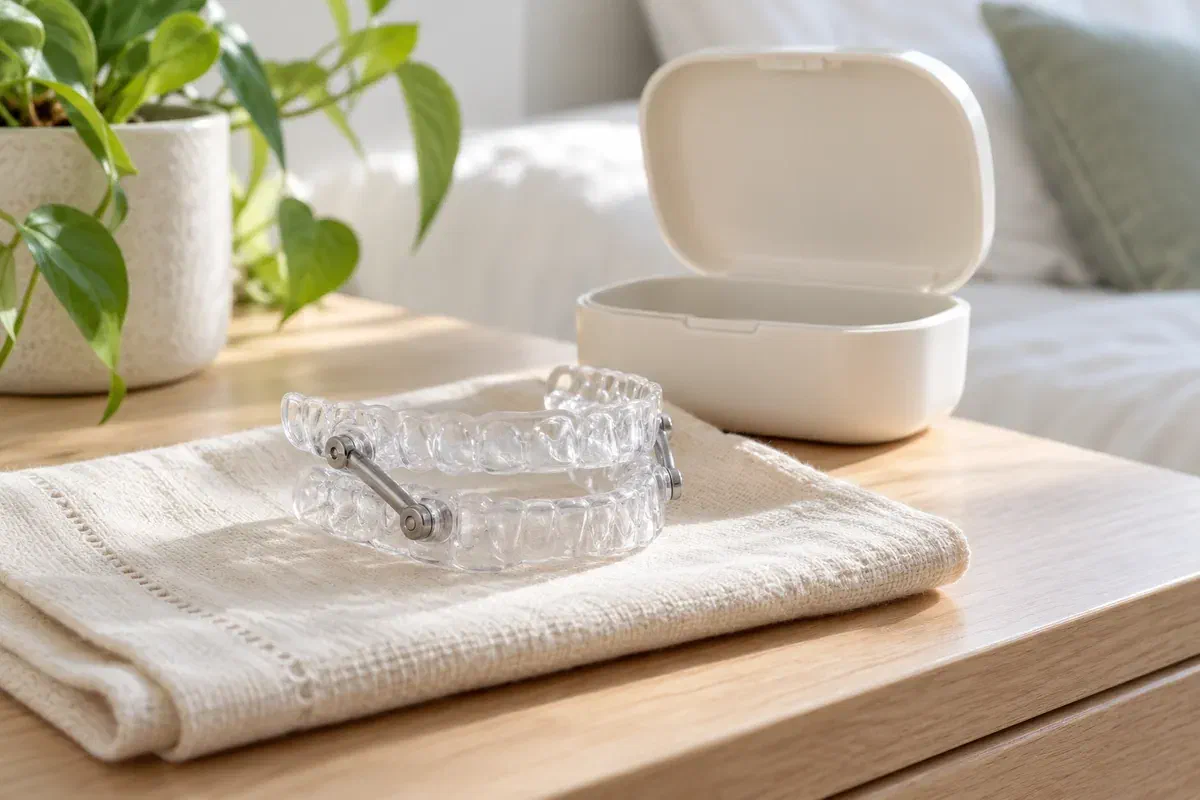
Illustrative custom mandibular advancement appliance beside its protective case
Signs that change the order of things

Some symptoms need a physician before a dentist.

You do not have to work out the cause on your own. A few honest details about your sleep and your days help us see whether a medical evaluation should come before any talk of a mouthpiece.

Drowsiness while driving, gasping, or pauses in breathing

Contact your doctor about these symptoms and ask about a sleep evaluation. A mouthpiece is not a substitute. If sleepiness affects your driving or work that needs full alertness, say so plainly, and mention whether the problem is new or has been building over time.

Dental or jaw conditions that limit what is possible

Let us know about loose, sore, or missing teeth, gum problems, recent restorations, and jaw pain or clicking. These may affect the design, delay an appliance, or mean other care is needed first. A guard that fits over your teeth is not necessarily good for them.

An earlier device that let you down

Bring any mouthpiece you have tried and tell us where it came from, how long you used it, and why you stopped. That background is useful. It does not mean every appliance will disappoint, nor that a different one is certain to work.

This page is about adults. A child who snores should be assessed medically, and an adult anti-snoring device is not a substitute for that evaluation.

Why individual planning matters

The right device has a reason, a fit, and a follow-up date.

If an appliance turns out to be appropriate, the plan should cover more than its shape. You should understand why a given design suits your teeth, what effect it is meant to have, and where it falls short. Comfort, handling, possible side effects, and continuing reviews are part of that picture.

Your schedule counts too. Shift work, early starts, a household with small children, or concern about removing the device quickly in the night all affect how usable it will be. Mention these at the planning stage so they are weighed with the diagnosis and exam findings, rather than discovered later.

Patient information: AADSM — assessment, appliance management, and ongoing care

Purpose stated at the outset

Ask whether the device is aimed at diagnosed primary snoring or is part of a sleep-apnea plan. The answer affects testing and follow-up. A custom appliance may help, but it should never be pitched as a cure for every cause of snoring.

A hands-on fitting

When the appliance is ready, the clinician checks it in your mouth and teaches you to insert, remove, and clean it. Ask what you may adjust yourself. Your starting plan is written for your device, not copied from a coworker or a video.

Ongoing attention to comfort and results

Find out how jaw tenderness, tooth pressure, and changes in your bite will be tracked, and how the effect on your sleep will be assessed. Ask when your physician should be involved again. Reviews still matter after the appliance becomes routine.

What to expect over several visits

Listen, examine, compare, fit

Sleep reports, a list of medicines, and any previous mouthpiece are all useful to bring. If you have none of those, a description of your nights and days is enough to begin.

  1. Hear the whole sleep story

    We ask about snoring, daytime sleepiness, other symptoms, and any testing so far. The team explains where a medical evaluation fits and which records help. A screening chat can raise flags, but it cannot replace a diagnosis or testing arranged by a sleep-care provider.

  2. Check dental and jaw suitability

    The clinician reviews your teeth, gums, restorations, bite, and jaw movement. Ask what each finding means. Some situations need treatment first, more assessment, or coordination with another provider before an appliance is a sensible next step.

  3. Compare the appliance with other choices

    Discuss what a device could do, its limits, and the alternatives that suit your diagnosis, along with what nightly use involves. Ask about costs, appointments, and follow-up. If you go ahead, the records and stages are explained; delivery at the first consultation is not typical.

  4. Fit the device and set up reviews

    We seat the finished appliance, check the fit, and go through cleaning and how to wear it during your first weeks. You leave knowing whom to call about soreness or trouble. Before you go, we agree on review dates and on how your physician will look at whether your sleep and alertness have improved.

Making the device part of your routine

Follow the plan you were given and report what you notice.

The first weeks should come with clear written instructions and a way to reach us. Discomfort is a reason to call, and moving the jaw further than planned will not necessarily give a better result.

Wear and remove it as shown

Practise handling the appliance at the fitting and keep the instructions close to the bed. Adjust it only as your plan allows. If it remains tricky, ask for help rather than biting down to seat it, bending a wire, or changing a setting yourself.

Raise any lasting discomfort promptly

Describe where it hurts, when it begins, and whether it stops you using the device. We can check the appliance and your mouth together. Please do not trim or reshape it at home, and stop wearing one that is broken or fits poorly.

Notice how your days feel

Tell us whether the snoring has changed and whether daytime sleepiness or other symptoms remain. Keep your dental and medical follow-ups, and say so if you have missed nights. A partner’s report helps, but it does not replace proper evaluation of sleep-apnea treatment.

Brampton snoring options

Pick the approach after the cause is known.

Ask what may be contributing to your snoring and which treatments suit you. The recommendation should take account of the assessment, your preferences, and any sleep condition requiring its own care.

When the diagnosis and dental exam support it

A custom oral appliance after assessment

For some adults, a fitted device with scheduled check-ins is a reasonable choice. You deserve to know why this design was picked for your mouth and which warning signs mean an earlier visit. Nobody can promise it will end the snoring, and people differ in how well they get on with any one appliance.

When health or lifestyle factors need attention

Medical care for contributing factors

Snoring and tiredness can be influenced by the nose, by general health, by medicines, or by habits around sleep. A physician is best placed to sort through those and suggest care. Keep taking what you were prescribed unless told otherwise. If the answer lies there, we will happily step back.

When snoring comes with a confirmed sleep disorder

Coordinated treatment for diagnosed sleep apnea

Here the physician leads. Depending on testing, care might mean PAP, an oral device made for you, or another treatment they direct. We contribute the dental findings that affect which of those is workable. Since feeling alert during the day matters as much as the quiet, medical follow-up continues throughout.

Patient information: NHLBI — medical treatment options for sleep apnea

Questions we hear from Brampton

Snoring, sleepiness, and the mouthpiece question

Appliances that look alike may be made for very different purposes. Ask about the specific device being suggested and how it fits within your assessment and care plan.

(905) 876-4488
Should I worry about daytime sleepiness if I only snore a little?
It is worth mentioning to a physician regardless of how loud the snoring is. Sleepiness, especially while driving, can have several causes, including sleep apnea. A medical evaluation is the way to find out, not a mouthpiece.
I work night shifts. Can I still use a snoring appliance?
Possibly, if your assessment supports it. Tell your physician and us about your schedule, since it may affect your sleep evaluation and how you build a routine around the device. The plan should fit the hours you actually sleep.
Can my grinding guard double as a snoring device?
Not reliably. A guard for grinding is made to protect tooth surfaces, while a snoring appliance is designed to hold the jaw in a planned position. Bring the guard you have so the clinician can explain what it does.
What if my nose is often blocked at night?
Mention it to your physician, who can assess nasal factors that may contribute to snoring. A dental device does not treat nasal problems. Let us know about congestion too, so it is considered when discussing whether an appliance is practical.
Is a sleep study needed before you make an appliance?
A medical evaluation should establish the diagnosis first, and your physician decides what testing is appropriate. Snoring can go with obstructive sleep apnea, and dental findings or recordings cannot rule it out. We can explain how the process usually works.
If I feel more awake with the appliance, is that proof it works?
It is encouraging, but not proof on its own. Your physician may want testing to confirm the response, especially if sleep apnea was diagnosed. Dental reviews also continue to check the fit, your teeth, and your jaw.
Plan a visit from Brampton

Start with how your nights and days really feel.

Contact Milton Dental Clinic to talk through your snoring and the dental assessment for an appliance. Mention any sleep testing, current treatment, or mouthpiece you have tried, so the first appointment focuses on the details that matter.

Appliance suitability depends on medical evaluation and a personal dental assessment.

Visit Milton Dental Clinic
Unit 1, 342 Bronte St. S, Milton, ON L9T 5B7
Get directions Clinic hours
Monday–Thursday
11am–7pm
Friday–Sunday
By appointment only

Areas we serve

  • Milton
  • Oakville
  • Mississauga
  • Georgetown
  • Halton Hills
  • Acton
  • Campbellville
  • Brampton
  • Burlington
  • Puslinch
  • Rockwood
  • Erin
  • Caledon
  • Etobicoke
  • Old Milton
  • Bronte Meadows
  • Timberlea
  • Dorset Park
  • Dempsey
  • Clarke
  • Beaty
  • Coates
  • Harrison
  • Scott
  • Willmott
  • Ford
  • Bowes
  • Cobden
  • Walker
  • Mountain View
  • Milton Heights
  • Hawthorne Village
  • Valley View
  • Fallingbrook
  • Nassagaweya
  • Trafalgar
  • Esquesing
  • Nelson
  • Brookville
  • Moffat
  • Glen Williams
  • Norval
  • Limehouse
  • Stewarttown
  • Ashgrove
  • Hornby
  • Silver Creek
  • Speyside
  • Scotch Block
  • North Oakville
  • River Oaks
  • Glen Abbey
  • West Oak Trails
  • Palermo
  • Bronte Creek
  • College Park
  • Joshua Creek
  • Uptown Core
  • Preserve
  • Iroquois Ridge
  • Lisgar
  • Meadowvale
  • Meadowvale Village
  • Churchill Meadows
  • Erin Mills
  • Central Erin Mills
  • Streetsville
  • East Credit
  • Creditview
  • Heartland
  • Sheridan
  • Mount Pleasant
  • Credit Valley
  • Huttonville
  • Churchville
  • Springbrook
  • Northwest Brampton
  • Bram West
  • Fletcher's Meadow
  • Fletcher's Creek South
  • Alton Village
  • Orchard
  • Millcroft
  • Headon Forest
  • Tansley
  • Brant Hills
  • Tyandaga
  • Kilbride
  • Lowville
  • Aberfoyle
  • Morriston
  • Arkell
  • Hillsburgh
  • Freelton
  • Carlisle
  • Waterdown
  • Flamborough
  • Mountsberg

How can we help?

Milton Dental Clinic

Have a question about your smile? Choose the option that works best for you.

For urgent dental concerns, please call.
Messages are reviewed during clinic hours.