

Illustrative conversation about snoring and oral-appliance suitability
Specialized Care

Snoring Appliances in Georgetown

Tried an online anti-snoring mouthpiece that hurt, slipped, or did nothing? From Georgetown, you can bring it in, find out why it may not have suited you, and learn what a properly assessed, custom-fitted appliance involves instead.

After a mouthpiece that did not work out

The online guard failed. The snoring did not.

A boil-and-bite device ordered online is a common first attempt. Some people find it pinches, falls out by two in the morning, or leaves their jaw aching. Others wear it faithfully and hear from their partner that nothing much has changed. Either way, the experience tells us something useful, and it is worth bringing along.

What it cannot tell us is why you snore. Snoring sometimes travels with obstructive sleep apnea, a medical condition in which breathing is interrupted during sleep, and that needs a physician’s evaluation. A generic product skips that question entirely. A custom appliance, considered after the medical step, is planned around your diagnosis and your mouth.

In Georgetown and the rest of Halton Hills, people tend to come to us with that drawer-bound mouthpiece in hand. We look at what it was, compare it with a fitted design that holds the lower jaw slightly forward, check your teeth and jaw, and explain whether a properly made device is worth considering.

Find out why the last mouthpiece fell short
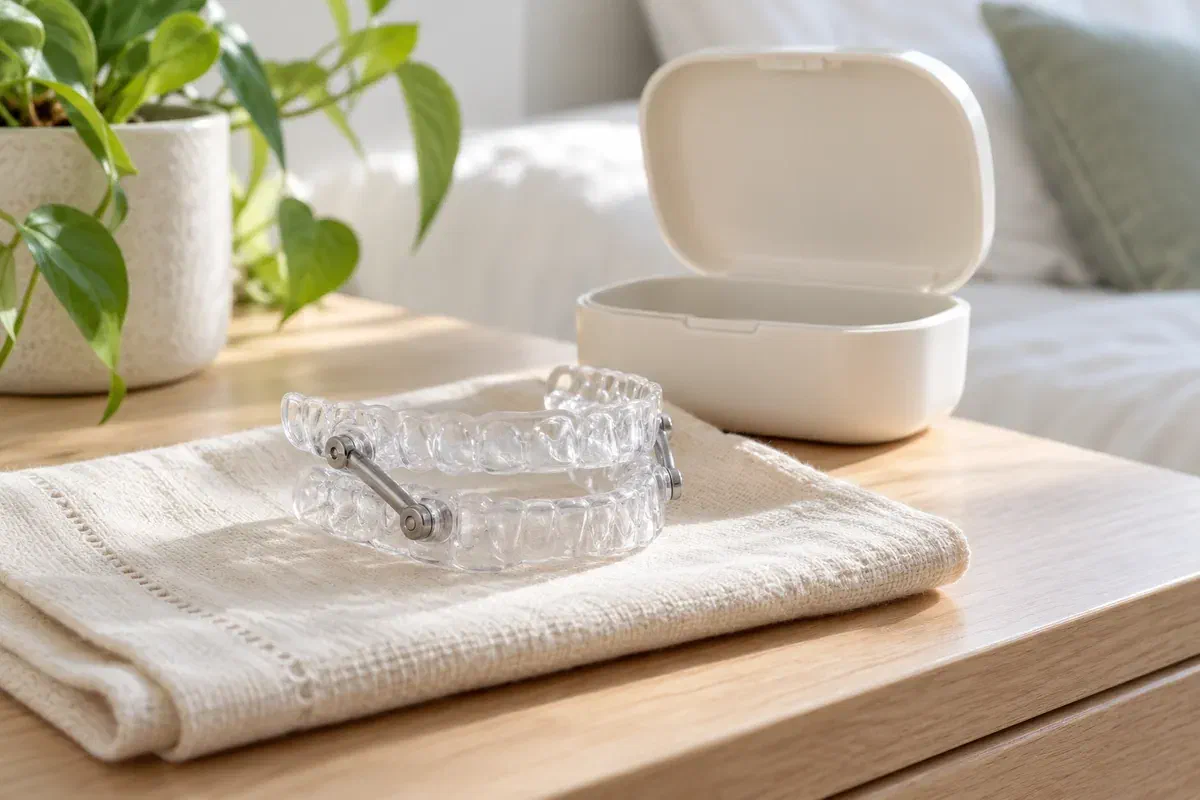
Illustrative custom mandibular advancement appliance beside its protective case
Questions worth answering early

What went wrong, and what else is going on?

You do not need to know the cause of your snoring. Telling us how the earlier device behaved, and what your nights and days are like, helps us decide whether a physician should be involved first.

Pauses, choking, or sleepiness that never improved

If any of these were present before or during your use of the store-bought guard, they are reasons to see your doctor about a sleep evaluation. A different mouthpiece is not a way around that step. Note whether drowsiness ever affects your driving or work that needs close attention.

Sore teeth, a tender jaw, or loose fillings

A poorly fitting device can press on teeth, irritate gums, or strain the jaw joints. Tell us about these symptoms, along with gum disease, recent crowns, missing teeth, or clicking. They may need care before any appliance, and they influence which designs are possible.

The device itself and how you used it

Bring the mouthpiece, its packaging if you still have it, and an idea of how long you wore it. Knowing why it failed is helpful, but one bad experience does not show that every appliance will fail or that a custom one is bound to succeed.

This applies to adults. If a child snores, a medical evaluation is the right first step, and an adult anti-snoring mouthpiece should not be used instead.

How a custom plan differs

Built from your records instead of a pot of hot water

A generic guard is moulded in a kitchen to a rough shape. A custom appliance is designed after an examination, and you should be told why that particular design was chosen for your mouth, what effect it should have, and what its limits are. Comfort, handling, possible side effects, and a schedule of reviews are part of the plan.

Your earlier frustrations are useful here. If the last device felt bulky, fell out, or was hard to clean, say so. Those details guide the choice of design and the conversation about expectations, alongside your diagnosis and our dental findings, so the same problems are less likely to catch you by surprise.

Patient information: AADSM — assessment, appliance management, and ongoing care

A reason that goes beyond the noise

Ask whether the appliance is meant for diagnosed primary snoring or forms part of sleep-apnea care. That affects how it is followed up and who is involved. A custom device can help some people, but it should not be described as a cure for every cause of snoring.

A fit checked by a clinician

At your fitting, the clinician checks how the appliance sits on your teeth and teaches you to put it in, remove it, and clean it. Ask what, if anything, you are allowed to adjust. Your routine comes from your plan, not from the leaflet that came with the old guard.

Follow-up the online version never offered

Find out how comfort, the health of your teeth, and the way they come together will be monitored, and how the effect on your sleep will be judged. Ask when your physician should be involved again. Reviews continue even once the device feels routine.

What happens from here

Starting over, this time in the right order

Bring the old mouthpiece, any sleep reports, and a list of medicines. If all you have is the story of what went wrong, that is plenty to begin with; you do not need to have a new device in mind.

  1. Review the snoring, the old device, and any testing

    We ask how often you snore, how the earlier guard performed, and about other symptoms or tests. Where a medical sleep evaluation has not happened, we explain why it comes first. Our questions can identify concerns, but diagnosis rests with your physician or sleep-care provider.

  2. Examine the mouth the old guard sat on

    We look for anything the earlier guard may have left behind, such as tender gums or a sore joint, then assess the teeth that would anchor a new device, their fillings and crowns, and how your jaw opens and slides. You will hear what each finding means. Treatment or another opinion sometimes comes first.

  3. Decide whether a custom appliance is worth it

    Discuss the likely benefit, limits, and alternatives in light of your diagnosis, and what nightly wear will involve. Cost, the number of visits, and the review schedule are fair questions too. If you go ahead, we explain the records and stages; a device is not usually handed over at the first visit.

  4. Fit it, learn it, and book the reviews

    Unlike the mail-order version, this one is seated and checked by a clinician before you take it home. You learn to handle and clean it and get a written plan for the first weeks. We also set review dates and agree how your physician will look at whether sleep has genuinely improved.

Getting used to a fitted appliance

This time, problems get looked at instead of tolerated.

Expect written instructions and a clear way to reach us during the first weeks. If something hurts, call; and resist moving the jaw further than prescribed in the hope of a quicker result.

Practise until handling is easy

Rehearse putting the appliance in and taking it out at your fitting, and keep the written instructions nearby. Adjust only what your plan allows. If it is awkward, ask us rather than biting it into position, bending part of it, or changing a setting yourself.

Speak up about pressure or a changed bite

Tell us which teeth or which side of the jaw is affected and when symptoms start. We can check the appliance and your mouth together. Please do not reshape it at home, and stop wearing it if it cracks or no longer fits safely.

Judge the results with us

Share how your nights sound now and how you feel during the day. Keep dental and medical follow-ups, and tell us honestly about nights you skipped. A partner’s view is welcome, but it is not a substitute for proper evaluation of sleep-apnea treatment.

Next steps from Georgetown

Not another gadget. A plan.

The goal now is to understand the snoring rather than buy a better product. Any advice you receive should draw on your assessment, what you learned from the last attempt, and any sleep condition that calls for treatment of its own.

If diagnosis and the dental exam support it

A custom oral appliance

Made from your own records, fitted in the chair, and followed up on a schedule, this is a different thing from a mail-order guard. Ask why the design suits your mouth better than the one you tried, and which problems should bring you back sooner. It should be explained without promising silence or a perfect fit for everyone.

If the cause or your general health needs a look

Medical review of contributing factors

Your doctor may find that a stuffy nose, a medication, weight changes, or sleep habits are part of the story, and suggest care for those. Keep taking anything prescribed unless advised otherwise. Sometimes the best outcome of a dental visit is learning that a device is not the answer.

If a sleep disorder is diagnosed

Coordinated care for sleep apnea

Treatment may include PAP, a suitable oral device, or other physician-directed care, depending on your assessment. We provide the dental findings that affect those choices. Quieter nights are only one aim, so your physician remains involved in judging the response.

Patient information: NHLBI — medical treatment options for sleep apnea

Georgetown questions after a failed mouthpiece

Why the last device may not have worked, and what to ask now

Mouthpieces that look similar can be made for different purposes. Ask about the exact appliance being considered for you and how it fits into your assessment and wider plan.

(905) 876-4488
Why did my store-bought mouthpiece hurt my teeth?
Generic devices are not designed around your teeth, gums, or restorations, so pressure can fall in the wrong places. Bring it to your exam, and tell us where it hurt. We can check for any effects and explain how a custom appliance is planned differently.
Is a custom appliance worth it if the cheap one did nothing?
That depends on your diagnosis and dental findings, not on how the generic device performed. A medical evaluation comes first, then a dental exam. If an appliance is appropriate, a custom design is made and reviewed for your mouth, though results still vary.
Could the online device have hidden a sleep problem?
It is possible for any mouthpiece to reduce noise while a sleep condition continues. That is why a physician’s evaluation matters before and during treatment. Mention any pauses, gasping, or daytime sleepiness to your doctor.
How is a custom snoring appliance made?
After the medical and dental assessments, records such as impressions or scans are taken and the device is made to a planned design. It is then fitted, checked, and adjusted only as prescribed. Ask about the stages before you start.
Should I keep wearing the old mouthpiece until the new one arrives?
Ask us at your first visit. If the old device is causing pain, loosening teeth, or jaw strain, it is usually better to stop. Your physician can advise on sleep treatment in the meantime if needed.
Can a snoring appliance change the way I bite?
Yes, over time some people notice differences in how their teeth meet, and tooth or jaw soreness can also occur. We discuss this before treatment and look for it at reviews. Report a lasting change rather than trying to correct it yourself.
Book from Georgetown

Bring what did not work. We will start from there.

Contact Milton Dental Clinic to discuss your snoring and arrange a dental assessment for a custom appliance. Bring any mouthpiece you have tried and mention earlier sleep tests or treatment, so the first visit focuses on what matters.

We consider an appliance after a medical evaluation and a careful dental exam.

Visit Milton Dental Clinic
Unit 1, 342 Bronte St. S, Milton, ON L9T 5B7
Get directions Clinic hours
Monday–Thursday
11am–7pm
Friday–Sunday
By appointment only

Areas we serve

  • Milton
  • Oakville
  • Mississauga
  • Georgetown
  • Halton Hills
  • Acton
  • Campbellville
  • Brampton
  • Burlington
  • Puslinch
  • Rockwood
  • Erin
  • Caledon
  • Etobicoke
  • Old Milton
  • Bronte Meadows
  • Timberlea
  • Dorset Park
  • Dempsey
  • Clarke
  • Beaty
  • Coates
  • Harrison
  • Scott
  • Willmott
  • Ford
  • Bowes
  • Cobden
  • Walker
  • Mountain View
  • Milton Heights
  • Hawthorne Village
  • Valley View
  • Fallingbrook
  • Nassagaweya
  • Trafalgar
  • Esquesing
  • Nelson
  • Brookville
  • Moffat
  • Glen Williams
  • Norval
  • Limehouse
  • Stewarttown
  • Ashgrove
  • Hornby
  • Silver Creek
  • Speyside
  • Scotch Block
  • North Oakville
  • River Oaks
  • Glen Abbey
  • West Oak Trails
  • Palermo
  • Bronte Creek
  • College Park
  • Joshua Creek
  • Uptown Core
  • Preserve
  • Iroquois Ridge
  • Lisgar
  • Meadowvale
  • Meadowvale Village
  • Churchill Meadows
  • Erin Mills
  • Central Erin Mills
  • Streetsville
  • East Credit
  • Creditview
  • Heartland
  • Sheridan
  • Mount Pleasant
  • Credit Valley
  • Huttonville
  • Churchville
  • Springbrook
  • Northwest Brampton
  • Bram West
  • Fletcher's Meadow
  • Fletcher's Creek South
  • Alton Village
  • Orchard
  • Millcroft
  • Headon Forest
  • Tansley
  • Brant Hills
  • Tyandaga
  • Kilbride
  • Lowville
  • Aberfoyle
  • Morriston
  • Arkell
  • Hillsburgh
  • Freelton
  • Carlisle
  • Waterdown
  • Flamborough
  • Mountsberg

How can we help?

Milton Dental Clinic

Have a question about your smile? Choose the option that works best for you.

For urgent dental concerns, please call.
Messages are reviewed during clinic hours.