

Illustrative conversation about snoring and oral-appliance suitability
Specialized Care

Snoring Appliances in Halton Hills

Already wear a night guard for grinding and wondering if it covers snoring too? For adults across Halton Hills, we can explain how the two devices differ, why a medical sleep check matters, and whether a snoring appliance suits you.

Two devices that look alike

Does the guard in your bathroom cabinet do anything for snoring?

Many adults already own a clear plastic guard, made years ago to protect their teeth from clenching or grinding. When snoring becomes a problem, it is natural to wonder whether that guard helps, or whether a slightly different one would. The answer depends on what each device is designed to do.

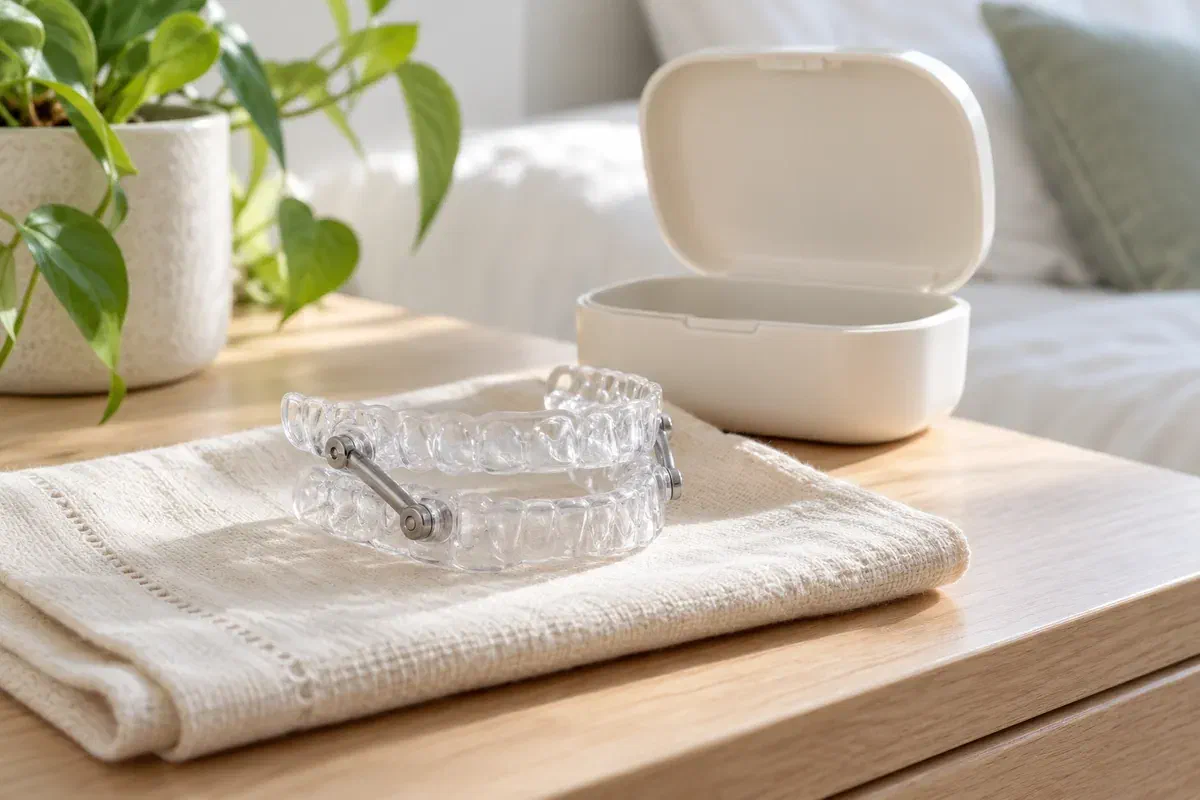
A grinding guard covers the biting surfaces so the teeth do not wear against each other. A snoring appliance, in its most common form, is built in two parts that hold the lower jaw a little forward through the night. They can look similar on a shelf, yet they work in different ways and are fitted for different reasons.

Before either is discussed, the snoring itself needs context. It can occur alongside obstructive sleep apnea, which a physician must assess. For adults from Georgetown, Acton, Glen Williams, and the rest of Halton Hills, we can explain that order, examine your teeth and jaw, and talk through whether a snoring device makes sense.

Compare your guard with a snoring appliance
Illustrative custom mandibular advancement appliance beside its protective case
What we need to know first

Grinding, snoring, or both

Some people have one problem, some have the other, and some have both. Sharing what happens at night, and how you feel during the day, helps decide whether a medical sleep assessment comes first.

Signs of disturbed breathing during sleep

Gasping, pauses noticed by a partner, waking unrefreshed, or fighting sleep during the day are reasons to talk to your doctor about an evaluation. No mouthpiece, grinding or snoring, should be used to sidestep that. Mention whether drowsiness ever affects your driving or other tasks that require you to be fully alert.

Worn teeth, jaw soreness, or dental work

Grinding often leaves its marks: flattened teeth, chipped edges, a tired jaw in the morning. Tell us about these, plus loose teeth, gum problems, crowns, and missing teeth. They can affect which snoring design, if any, is suitable, and some may need attention before a device is made.

Your current guard and how it is working

Bring the guard you wear now and any snoring device you have tried. Tell us where each came from and how they have worked for you. That history guides the discussion, though it does not decide on its own whether a new appliance will help or fail.

Our snoring-appliance assessments are for adults. A child who snores needs a medical evaluation, and an adult mouthpiece is not a replacement for that.

Planning for one mouth, two concerns

When grinding and snoring overlap, the design has to account for both.

If an appliance is appropriate, the plan should explain why a particular design suits your teeth and bite, what it is meant to accomplish, and its limits. For someone who also grinds, that includes how the device will handle clenching forces. Comfort, cleaning, side effects, and review appointments belong in the same conversation.

Day-to-day concerns deserve airtime too. You may wonder whether you would need two devices, how to keep them clean, or what to do on nights away. Bring these up while the plan is taking shape. They should be weighed alongside the diagnosis and exam findings, not left for after the appliance is delivered.

Patient information: AADSM — assessment, appliance management, and ongoing care

A clear reason for the device

Ask whether the proposed appliance is for diagnosed primary snoring, part of a sleep-apnea plan, or meant to serve another purpose. That determines the follow-up. A custom snoring device may help, but it is not a fix for every reason people snore, and it is not the same as a grinding guard.

A fitting that sorts out the routine

At the fitting, the clinician checks how the appliance sits and shows you how to put it in, take it out, and look after it. Ask whether your old guard should still be worn, and when. Your instructions should be specific to your device and your situation.

Reviews that keep an eye on teeth and jaw

Ask how wear on the teeth, jaw muscle soreness, and any shift in how the teeth meet will be checked, and how the effect on snoring will be judged. Find out when your physician should be involved again. Ongoing reviews still matter when the device feels familiar.

Step by step

From a guard question to a clear decision

Bring your current guard, any sleep reports, and a list of medicines. If you have none of those, just come prepared to describe your nights; you do not need to know which device you want.

  1. Sort out what is happening at night

    We ask about snoring, grinding, daytime tiredness, and any testing so far. Where a medical sleep evaluation has not been done, we explain why it should come first and what records help. Our questions screen for concerns but do not diagnose a sleep disorder.

  2. Examine teeth, wear patterns, and jaw function

    The clinician looks at tooth wear, gum health, restorations, how your teeth meet, and how the jaw moves and feels. Ask what the findings mean for a snoring device. Some cases need treatment, further assessment, or input from another provider first.

  3. Discuss which device, if any, is right

    Compare a snoring appliance with your current guard and with other approaches suited to your diagnosis. Talk about costs, appointments, and follow-up before you decide. If you choose an appliance, we explain the records and stages; it is rarely ready on day one.

  4. Fit the appliance and plan its reviews

    You receive the device with a fit check and instructions on handling, cleaning, and your starting plan, including how it relates to any grinding guard. Ask how to report discomfort. We confirm how the response will be assessed and how your physician stays involved.

After you start wearing it

Pay attention to your jaw, and let us know what you notice.

The first weeks should come with written guidance and a clear contact route. Soreness is something to report rather than tough out, and advancing the jaw beyond your plan is not a way to get faster results.

Follow the handling routine

Practise placing and removing the appliance at the fitting, and keep the written instructions handy. Make only the adjustments your plan permits. If it remains awkward, ask us rather than clenching it into place, bending a part, or changing a setting.

Report jaw ache, tooth soreness, or bite changes

Tell us where the discomfort is and when it appears, especially if you also grind. We can examine the appliance and your mouth together. Do not trim or reshape the device yourself, and stop using one that is cracked or fits poorly.

Keep reviewing whether it helps

At each review, describe how loud the nights are now, how you feel by mid-afternoon, and how your teeth and jaw are coping. Attend dental and medical follow-ups, and mention nights you did not wear it. What a partner hears is useful, but it cannot replace evaluation of sleep-apnea treatment where needed.

Choosing a route in Halton Hills

The answer may be a device, a doctor, or both.

Ask what is likely driving the snoring and whether grinding needs separate attention. The recommendation should reflect your assessment, your preferences, and any sleep condition that requires its own care.

When diagnosis and dental findings support it

A custom snoring appliance

An appliance may be made with an individual fitting and planned follow-up. Ask why the design suits your teeth, how it handles grinding, and which problems should bring you back. It should be explained honestly, without promising silence or assuming everyone tolerates the same design.

When other factors may be contributing

Medical review of the wider picture

A physician can look at nasal, sleep, health, or lifestyle factors and suggest care. Mention your medicines and treatments, and stop nothing without advice. The dental conversation should allow for a different approach if those findings point elsewhere.

When sleep apnea has been diagnosed

Treatment led by a sleep physician

Care may involve PAP, a suitable oral appliance, or other physician-directed treatment. We share the dental findings, including grinding and tooth wear, that affect those choices. The goal is healthy sleep, not only less noise, so medical follow-up continues.

Patient information: NHLBI — medical treatment options for sleep apnea

Guards and snoring: common questions

What adults in Halton Hills ask about these devices

Devices that look alike can do very different jobs. Ask about the specific appliance being proposed, how it relates to any guard you already wear, and where it fits in your plan.

(905) 876-4488
Can one device treat both grinding and snoring?
Sometimes a snoring appliance also covers the teeth, but that does not make it suitable for everyone who grinds. The clinician considers your wear pattern, jaw comfort, and diagnosis before recommending a design. Ask how your chosen device handles both concerns.
Should I keep wearing my grinding guard after getting a snoring appliance?
Follow the instructions given for your situation. Wearing two devices at once is not usually the plan, but the answer depends on the appliance and your dental findings. Ask at fitting so you are not guessing.
Does grinding mean I have sleep apnea?
Not necessarily. Grinding has many possible causes. If you also snore, wake unrefreshed, or a partner notices pauses, mention it to your physician, who can decide whether a sleep evaluation is appropriate.
Will a snoring device make my jaw sore?
Some people notice jaw or tooth tenderness, particularly when starting. Tell us if it lingers or interferes with wearing the appliance. The clinician can review the fit and plan rather than you pushing through discomfort.
Are missing back teeth a problem for a snoring appliance?
They can affect the design, but they are not an automatic barrier. The number and position of remaining teeth, their support, and any restorations all need assessment. Ask what your findings mean for the options.
If my partner says I snore less, is my sleep apnea under control?
Not necessarily. Reduced snoring is encouraging but does not confirm control. Your physician may recommend testing to check the response, and dental reviews continue to monitor your teeth and jaw.
Arrange a visit from Halton Hills

One appointment can clear up which device does what.

Contact Milton Dental Clinic to discuss snoring, grinding, and whether a custom appliance fits your situation. Tell us about previous sleep tests, current treatment, and any guards you use, so the first visit covers what matters most.

A snoring device is considered only once a physician’s evaluation and our dental exam both support it.

Visit Milton Dental Clinic
Unit 1, 342 Bronte St. S, Milton, ON L9T 5B7
Get directions Clinic hours
Monday–Thursday
11am–7pm
Friday–Sunday
By appointment only

Areas we serve

  • Milton
  • Oakville
  • Mississauga
  • Georgetown
  • Halton Hills
  • Acton
  • Campbellville
  • Brampton
  • Burlington
  • Puslinch
  • Rockwood
  • Erin
  • Caledon
  • Etobicoke
  • Old Milton
  • Bronte Meadows
  • Timberlea
  • Dorset Park
  • Dempsey
  • Clarke
  • Beaty
  • Coates
  • Harrison
  • Scott
  • Willmott
  • Ford
  • Bowes
  • Cobden
  • Walker
  • Mountain View
  • Milton Heights
  • Hawthorne Village
  • Valley View
  • Fallingbrook
  • Nassagaweya
  • Trafalgar
  • Esquesing
  • Nelson
  • Brookville
  • Moffat
  • Glen Williams
  • Norval
  • Limehouse
  • Stewarttown
  • Ashgrove
  • Hornby
  • Silver Creek
  • Speyside
  • Scotch Block
  • North Oakville
  • River Oaks
  • Glen Abbey
  • West Oak Trails
  • Palermo
  • Bronte Creek
  • College Park
  • Joshua Creek
  • Uptown Core
  • Preserve
  • Iroquois Ridge
  • Lisgar
  • Meadowvale
  • Meadowvale Village
  • Churchill Meadows
  • Erin Mills
  • Central Erin Mills
  • Streetsville
  • East Credit
  • Creditview
  • Heartland
  • Sheridan
  • Mount Pleasant
  • Credit Valley
  • Huttonville
  • Churchville
  • Springbrook
  • Northwest Brampton
  • Bram West
  • Fletcher's Meadow
  • Fletcher's Creek South
  • Alton Village
  • Orchard
  • Millcroft
  • Headon Forest
  • Tansley
  • Brant Hills
  • Tyandaga
  • Kilbride
  • Lowville
  • Aberfoyle
  • Morriston
  • Arkell
  • Hillsburgh
  • Freelton
  • Carlisle
  • Waterdown
  • Flamborough
  • Mountsberg

How can we help?

Milton Dental Clinic

Have a question about your smile? Choose the option that works best for you.

For urgent dental concerns, please call.
Messages are reviewed during clinic hours.