

Illustrative conversation about snoring and oral-appliance suitability
Specialized Care

Snoring Appliances in Milton

Before buying a mouthpiece from a shelf, find out what the snoring means. In Milton, our team can talk through your symptoms, the medical check that may come first, and whether your teeth and jaw suit a custom device.

Snoring care close to home in Milton

When someone has moved to the spare room, it is time to ask why.

Snoring often becomes a dental question at an odd moment: a partner sleeping down the hall, a joke at breakfast, a cheap boil-and-bite guard bought on impulse. A custom oral appliance can be one option for some adults. The usual design rests on both arches and holds the lower jaw slightly forward while you sleep.

That device is different from a sports guard or a grinding guard, even if the plastic looks alike. More importantly, loud breathing at night can travel with obstructive sleep apnea, and nobody can tell the two apart by sound. A medical evaluation sorts out the diagnosis, and a dental exam then looks at whether your mouth can carry the appliance.

Here in Milton, you can start by simply describing the nights. Mention what your household has noticed, any pauses or gasps, and any advice a doctor has already given. We can then explain the order of steps and what our examination adds, so a product is never chosen ahead of the answers it depends on.

Talk through snoring before picking a device
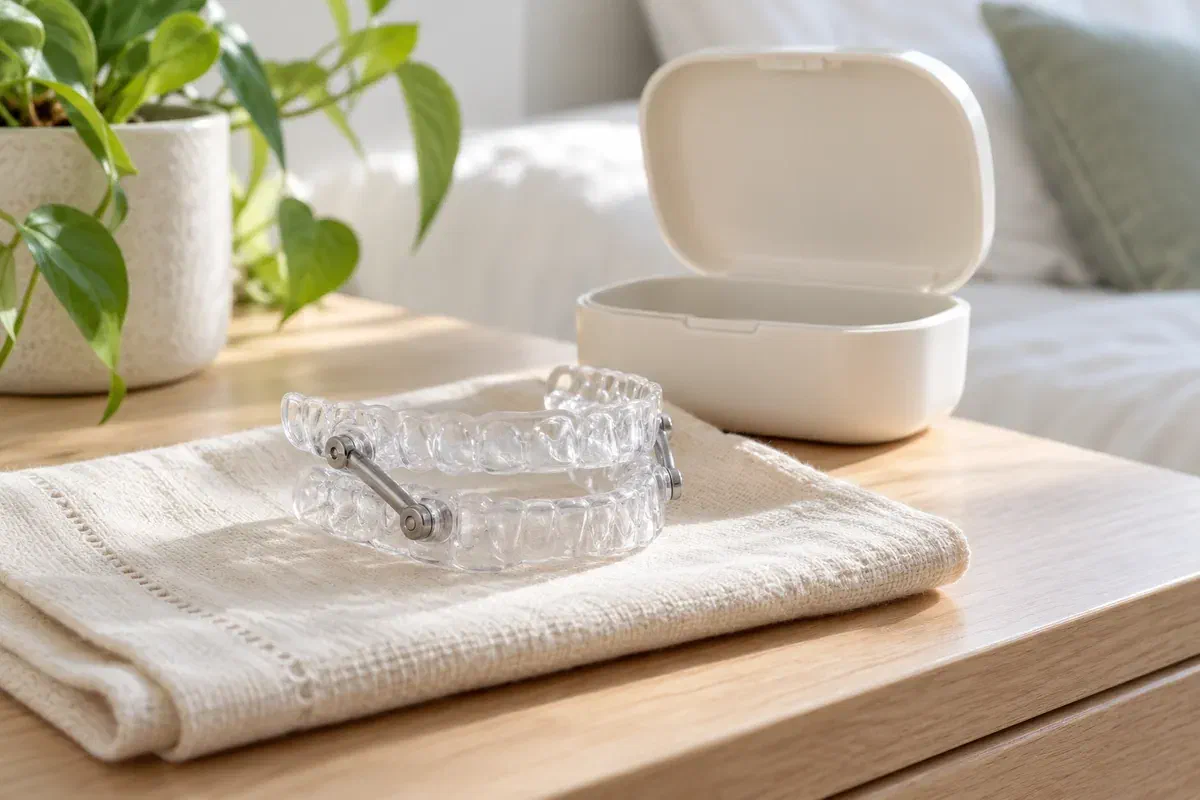
Illustrative custom mandibular advancement appliance beside its protective case
What to tell us first

Some details change the plan before a device is even discussed.

You are not expected to know what is causing the snoring. Telling us what has been happening helps separate a conversation about noise from one that also involves a sleep condition needing medical care.

Pauses in breathing, choking sounds, or heavy daytime tiredness

These are reasons to speak with your family doctor or another medical provider about a sleep evaluation. An oral device is not a way around that step. Say whether the pattern is recent or getting worse, and whether drowsiness ever affects driving or other tasks where alertness matters.

Teeth, gums, or a jaw that may not tolerate an appliance

Loose or sore teeth, gum disease, fresh fillings or crowns, gaps, and clicking or aching jaw joints are all worth mentioning. Any of these may shape the design, rule a device out for now, or mean that other dental care should come first. Fitting over the teeth is not the same as suiting them.

A guard you tried before that hurt or did nothing

Bring it along, and tell us where it came from and why you stopped wearing it. That history is useful, though it does not prove every appliance will fail or that a new one will succeed. The clinician needs to see what was used and understand the circumstances around it.

Everything here is about adults. When a child snores, a medical assessment is the right starting point, and an adult anti-snoring mouthpiece is not a stand-in for it.

Why a custom plan matters

A device built around your findings, with a clear plan for review

A shelf mouthpiece is shaped for an average mouth. A planned appliance starts with your own examination and diagnosis. You should hear why a particular design fits your teeth and bite, what it is meant to do, and where its limits sit, including comfort, handling, side effects, and how often it will be checked.

Daily life counts too. If cleaning, a stiff jaw in the morning, nights away from home, or getting the device out quickly worry you, raise that early. Those concerns belong in the planning conversation alongside the medical and dental findings, not as surprises that turn up once the appliance is already in your hands.

Patient information: AADSM — assessment, appliance management, and ongoing care

A stated reason for the appliance

Confirm whether the device is being considered for diagnosed simple snoring or as part of sleep-apnea treatment. That distinction shapes the wider follow-up. A custom appliance can have a place, but it is not a cure for every cause of snoring and should not be presented as one.

An in-person fit and a starting routine

At fitting, the clinician checks the device in your mouth and shows you how to put it in, take it out, and care for it. Ask which adjustments, if any, are yours to make. Your starting schedule should come from your own plan, not from a friend or a website.

Ongoing checks of comfort, bite, and response

Find out how jaw soreness, tooth pressure, and bite changes will be watched, and how the result will be judged. Ask when medical input comes back in. Regular review still matters once the appliance feels routine, since a quiet bedroom does not settle every question.

How the steps usually unfold

History, examination, options, then a fitted device with follow-up

Bring any sleep study results or notes about earlier devices if you have them. It is fine to arrive with nothing more than a description of the problem; you do not need a device name or a decision in mind.

  1. Talk about the snoring and the medical side

    Describe how often it happens, how it affects the household, and any other symptoms or tests so far. We can explain where medical evaluation fits and which records would help. A screening chat can flag concerns, but it cannot diagnose a sleep condition or replace testing arranged by a sleep-care provider.

  2. Check the mouth for suitability

    The clinician examines teeth, gums, existing dental work, the bite, and how the jaw moves. You can ask what each finding means for your choices. Sometimes treatment, a further assessment, or a conversation with another provider is sensible before any appliance goes ahead.

  3. Weigh the appliance against other approaches

    Go over the expected benefit, the limits, the alternatives, and what wearing a device each night involves, all in light of the diagnosis. Ask about costs, appointments, and follow-up before you decide. If you go ahead, the records and stages are explained; delivery at the first visit should not be expected.

  4. Receive the device and book its reviews

    The finished appliance is checked clinically, and you receive guidance on handling, cleaning, and your prescribed starting plan. Ask how to report soreness or trouble wearing it. Confirm how the response will be measured and how your medical sleep provider stays involved where that applies.

Living with a new appliance

Stick to your own instructions, and call when anything feels off.

The early weeks should come with written guidance and a clear way to reach us. Discomfort is not something to push through, and moving the jaw further forward than prescribed is not a shortcut to better results.

Handle it the way you were shown

Practise putting the device in and taking it out during the fitting visit, and keep the instructions somewhere handy. Only make adjustments your plan specifically allows. If it is still awkward, ask for help instead of forcing it into place, bending a part, or changing a setting on your own.

Tell us about lasting soreness or a bite that feels different

Let us know where it hurts, when it starts, and whether it stops you from wearing the device. We can look at the appliance and your mouth together. Avoid trimming or reshaping it yourself, and stop using one that has cracked or no longer fits safely.

Keep checking whether it is working

Share whether the snoring has changed and whether any other symptoms are still there. Go to the dental and medical follow-ups you agreed to, and be honest if you have skipped nights. What a partner hears is helpful, but it is not a substitute for proper evaluation of sleep-apnea treatment.

Choosing a path for snoring

The device is one possibility, chosen after the diagnosis.

Ask what seems to be driving the snoring and which approaches fit your situation. A good recommendation reflects the assessment, your own preferences, and any medical sleep condition that needs treatment of its own.

When diagnosis and dental findings point this way

A custom oral appliance once assessment supports it

An appliance may be offered with an individual fitting and a follow-up schedule. Ask why the chosen design suits you and which changes should bring you back early. Its role should be explained honestly, without promising silence or assuming everyone tolerates the same device.

When the cause or overall health needs a closer look

Medical review of what may be contributing

A medical provider can look at nasal, sleep, general health, or lifestyle factors and suggest suitable care. Tell them about your medicines and any treatment you already use, and do not stop anything on your own. The appliance conversation should allow for another route if the findings lead there.

When snoring comes with a confirmed sleep condition

Coordinated care for diagnosed sleep apnea

Depending on the assessment, treatment may involve PAP, a suitable oral device, or other medically directed care. Ask how effectiveness will be checked and how your dental findings affect the choices. The goal is more than less noise, so the medical provider stays part of the plan.

Patient information: NHLBI — medical treatment options for sleep apnea

Common questions in Milton

What people ask before committing to a snoring device

Mouthpieces that look alike can do very different jobs. Ask about the exact device being suggested and where it sits within the assessment and care plan for your snoring.

(905) 876-4488
Is a drugstore boil-and-bite guard a reasonable first try?
It is better to find out what the snoring means first. A generic guard is not fitted or reviewed by a clinician, and quieter nights could hide a sleep condition that needs care. Bring any guard you already own so we can discuss it during the assessment.
Will my teeth-grinding night guard also stop snoring?
Not reliably. A grinding guard protects tooth surfaces, while a snoring appliance is designed around a planned jaw position during sleep. Their purposes differ. Bring your current guard and the clinician can explain what it does and whether a different approach makes sense.
Do I need a doctor involved before a dental appliance is made?
Yes, a medical evaluation should come first to establish the diagnosis, because snoring can accompany obstructive sleep apnea. A dental exam or a phone recording cannot rule that out. We can explain how that assessment is usually arranged and what records would help.
How many appointments does a custom snoring appliance usually take?
It depends on your findings and the device chosen. Expect at least a consultation and examination, a records stage, a fitting, and follow-up reviews. Some people need dental treatment or medical input in between, so ask for the likely sequence before you start.
Is morning jaw stiffness normal when starting an appliance?
Some people notice jaw or tooth tenderness early on, but it should be reported rather than ignored. Tell us where it is felt and how long it lasts. The clinician can review the fit and your plan instead of you adjusting the device yourself.
If the snoring stops, can I skip the follow-up visits?
Please keep them. Less noise is encouraging, but it does not confirm that sleep apnea, if present, is controlled. Reviews also check your teeth, bite, and jaw over time, and your medical provider may want testing to assess the response.
Book a snoring conversation in Milton

Bring the questions, and we will start with the cause.

Call Milton Dental Clinic to talk about your snoring and the dental assessment that may help. Let us know about earlier sleep tests, current treatment, or any mouthpiece you have tried, so the first appointment begins with what is most useful.

Whether an appliance suits you depends on medical evaluation and an individual dental assessment.

Visit Milton Dental Clinic
Unit 1, 342 Bronte St. S, Milton, ON L9T 5B7
Get directions Clinic hours
Monday–Thursday
11am–7pm
Friday–Sunday
By appointment only

Areas we serve

  • Milton
  • Oakville
  • Mississauga
  • Georgetown
  • Halton Hills
  • Acton
  • Campbellville
  • Brampton
  • Burlington
  • Puslinch
  • Rockwood
  • Erin
  • Caledon
  • Etobicoke
  • Old Milton
  • Bronte Meadows
  • Timberlea
  • Dorset Park
  • Dempsey
  • Clarke
  • Beaty
  • Coates
  • Harrison
  • Scott
  • Willmott
  • Ford
  • Bowes
  • Cobden
  • Walker
  • Mountain View
  • Milton Heights
  • Hawthorne Village
  • Valley View
  • Fallingbrook
  • Nassagaweya
  • Trafalgar
  • Esquesing
  • Nelson
  • Brookville
  • Moffat
  • Glen Williams
  • Norval
  • Limehouse
  • Stewarttown
  • Ashgrove
  • Hornby
  • Silver Creek
  • Speyside
  • Scotch Block
  • North Oakville
  • River Oaks
  • Glen Abbey
  • West Oak Trails
  • Palermo
  • Bronte Creek
  • College Park
  • Joshua Creek
  • Uptown Core
  • Preserve
  • Iroquois Ridge
  • Lisgar
  • Meadowvale
  • Meadowvale Village
  • Churchill Meadows
  • Erin Mills
  • Central Erin Mills
  • Streetsville
  • East Credit
  • Creditview
  • Heartland
  • Sheridan
  • Mount Pleasant
  • Credit Valley
  • Huttonville
  • Churchville
  • Springbrook
  • Northwest Brampton
  • Bram West
  • Fletcher's Meadow
  • Fletcher's Creek South
  • Alton Village
  • Orchard
  • Millcroft
  • Headon Forest
  • Tansley
  • Brant Hills
  • Tyandaga
  • Kilbride
  • Lowville
  • Aberfoyle
  • Morriston
  • Arkell
  • Hillsburgh
  • Freelton
  • Carlisle
  • Waterdown
  • Flamborough
  • Mountsberg

How can we help?

Milton Dental Clinic

Have a question about your smile? Choose the option that works best for you.

For urgent dental concerns, please call.
Messages are reviewed during clinic hours.