

Illustrative conversation about snoring and oral-appliance suitability
Specialized Care

Snoring Appliances in Old Milton

Snored for years and only now wondering about it? From Old Milton, a short trip to our Bronte Street practice can begin with what has changed, what a doctor may need to check, and whether a fitted appliance could suit you.

For snorers in Milton’s historic core

Years of snoring, and a new reason to look closer

Many people put up with snoring for decades. What usually prompts a visit is a change: afternoons that drag, a partner who now mentions silences in the middle of the night, or a new bridge that makes an old guard feel wrong. Each of those details matters more than the volume of the snoring itself.

For some adults, a custom oral appliance is a reasonable option once the groundwork is done. Most hold the lower jaw a little forward during sleep. Yet the same sound can come from simple snoring or from obstructive sleep apnea, so a medical provider needs to establish which applies before any device is selected.

Our part is the mouth. In Old Milton, plenty of people have years of crowns, fillings, and perhaps a partial denture, and all of it affects whether an appliance can be worn safely. We examine that history, explain what we see, and help you decide on next steps without pushing a product.

Start with what has changed in your sleep
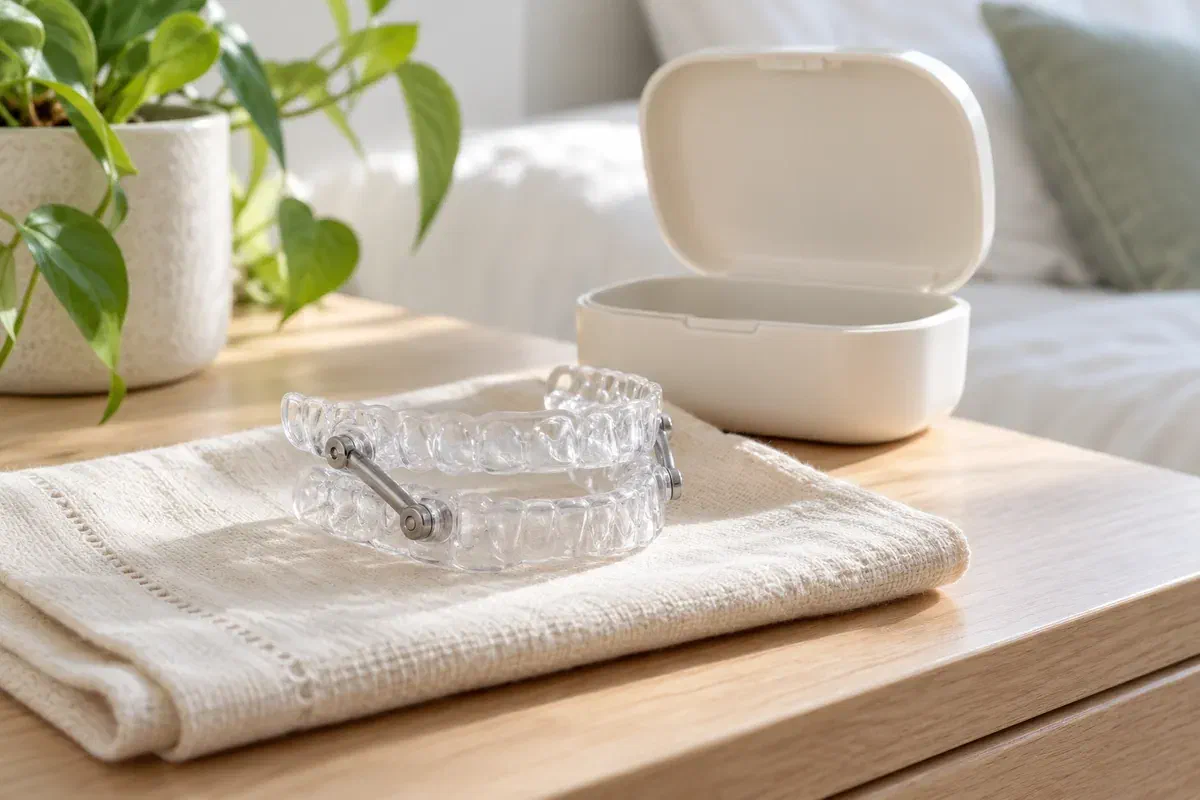
Illustrative custom mandibular advancement appliance beside its protective case
Changes worth mentioning

Is it the same old snoring, or something new?

A fresh symptom is not a reason to panic, but it is a reason to say something. The answers help us tell whether you need a dental conversation only, or a medical one as well.

New pauses, gasping, or tiredness that was not there before

Raise these with your doctor and ask whether a sleep evaluation makes sense. Using a mouthpiece instead of that step is not advisable. Describe when you first noticed the change and whether sleepiness has crept into driving or other tasks that need your full attention.

Older dental work, worn teeth, or a partial denture

Crowns, bridges, implants, gaps, receding gums, and aching jaw joints can all influence the type of appliance that might work, or whether one is sensible yet. Some of these call for treatment first. A device that clips over your teeth may still put strain where it should not.

A mouthpiece that sits in a drawer

If you once bought or were given a guard and gave up on it, bring it. Tell us how long you wore it and what went wrong. That experience guides the conversation, though it neither rules out every other design nor promises that a new one will be comfortable.

This information is for adults. If a grandchild or child in your home snores, the starting point is a medical evaluation, not an adult anti-snoring device.

The value of planning it properly

Your mouth has a history. The plan should reflect it.

An appliance planned around your own records takes account of the restorations, gum support, and bite you actually have. Ask what the proposed design is meant to achieve, why it suits your findings, and what it cannot do. A sound plan also covers comfort, care of the device, likely side effects, and how often it is reviewed.

Practical worries deserve the same attention. Stiff hands, a dry mouth, sharing a sink, or simply wanting to remove the device easily in the night are fair concerns. Bring them up while the plan is being shaped, so that the diagnosis, the dental findings, and your routine are considered together.

Patient information: AADSM — assessment, appliance management, and ongoing care

Clarity on what the device is for

Is it meant for diagnosed primary snoring, or is it part of treatment for sleep apnea? The answer changes who follows up and how. A custom appliance can help some people, but no device should be sold as a fix for every reason a person snores.

A fitting that teaches you the routine

The clinician seats the appliance, checks it against your teeth, and walks you through insertion, removal, and cleaning. Ask what you may adjust and what needs us. Your first weeks of use should follow your own written plan rather than advice from a neighbour.

Watching the teeth, the jaw, and the result

Ask how tenderness, pressure on particular teeth, and shifts in your bite will be tracked, and how success will be measured. Know when your doctor should be involved again. Reviews still matter after the device feels familiar, because comfort alone does not answer every question.

What a visit looks like

Four stages, each with room for your questions

Bring past sleep reports, a list of medicines, and any old mouthpiece. If all you have is a description of your nights, that is enough to begin; there is no need to know device names.

  1. Go over your sleep story and any medical testing

    Tell us how long you have snored, what has changed, and any tests you have had. The team can explain the medical evaluation and which reports would be useful. A screening discussion may raise concerns, but diagnosis belongs with your doctor or sleep-care provider.

  2. Examine the teeth, gums, and existing restorations

    The clinician looks at how your teeth meet, the health of the gums, the condition of crowns or bridges, and how the jaw opens and moves. Ask what each finding means. Treatment, more assessment, or a word with another provider may need to come first.

  3. Decide whether an appliance is the right fit

    Compare what a device could offer with its limits and with other approaches suited to your diagnosis. Ask about costs, the number of visits, and how follow-up works. If you choose to proceed, the records and steps are explained clearly; a same-day device is not the norm.

  4. Fit, learn the routine, and schedule the reviews

    The appliance is checked in your mouth and you go home with instructions on wearing and cleaning it, plus your prescribed start. Ask how to reach us if it hurts. Confirm how its effect will be judged and how your sleep physician stays informed where relevant.

The weeks after fitting

Small problems are easier to solve early.

You should leave with written guidance and know how to contact us. Soreness is a signal to report, not something to tolerate, and pushing the jaw further forward than planned is not likely to help.

Practise until it feels manageable

Work on placing and removing the appliance at the fitting, and keep the printed guidance by the bed. Adjust only what your plan permits. If your fingers or the clasps make it tricky, ask us to help rather than biting it into place or bending a piece.

Speak up about pain or a bite that feels off

Tell us which teeth or which side of the jaw is involved, and at what time of day. We can check the device and your mouth together. Please do not file it down yourself, and stop wearing an appliance that is cracked or fits poorly.

Review the results honestly

Let us know whether the snoring has eased and whether tiredness or other symptoms persist. Keep your dental and medical follow-ups, and mention it if you have not worn it most nights. A partner’s report is welcome, but it is not proper testing of sleep-apnea treatment.

Options to discuss in Old Milton

A device, a medical review, or a combined plan

Ask what may be behind the snoring and which approaches fit your health and preferences. A sensible recommendation weighs the assessment, what you want from care, and any sleep condition that needs its own treatment.

Where the diagnosis and your mouth support it

A custom appliance after the right checks

An appliance may be offered with a personal fitting and planned reviews. Ask why the design suits your teeth and restorations, and which changes should bring you back. You should hear its limits plainly, without any promise of silent nights or one design for everyone.

Where health, nose, or lifestyle may play a part

A doctor’s review of contributing factors

A medical provider can consider nasal, sleep, general health, or lifestyle factors and recommend care. Tell them about medicines and current treatments, and do not stop any yourself. The dental discussion should stay open to a different path if the findings suggest one.

Where snoring is part of a confirmed sleep condition

Shared care for diagnosed sleep apnea

Treatment may involve PAP, an oral device chosen for your situation, or other care led by a physician. Ask how effectiveness will be confirmed and how your dental findings shape the options. Reducing the sound is only part of the aim, so medical follow-up continues.

Patient information: NHLBI — medical treatment options for sleep apnea

Old Milton snoring questions

Answers for people who have snored a long time

Devices that look the same can serve different purposes. Ask about the specific appliance proposed for you and where it fits in your assessment and care.

(905) 876-4488
I have snored for thirty years. Why would a doctor need to see me now?
Long-standing snoring is common, but new daytime sleepiness, witnessed pauses, or gasping can point to obstructive sleep apnea. Sound alone cannot separate the two. A medical evaluation clarifies the diagnosis, and the dental assessment follows from there.
Can someone with a partial denture wear a snoring appliance?
Sometimes, but it needs individual assessment. The clinician looks at how many natural teeth remain, their support, and how the denture fits. Some designs need more anchorage than others. Ask what your findings mean before considering any particular product.
Does a snoring appliance work like the night guard I wear for clenching?
No. A clenching guard protects the teeth, while a snoring device is built to hold the jaw in a planned position during sleep. Do not assume your guard treats snoring or sleep apnea. Bring it in so we can explain what it is doing.
Will a new crown or filling affect an appliance I already have?
It can. Changes to the shape of a tooth may alter how the device seats. Mention your appliance whenever dental work is planned, and bring it to the appointment so the fit can be checked afterward rather than forced.
Could my teeth shift from wearing an appliance at night?
Bite and tooth-position changes can happen with oral-appliance use, and jaw or tooth soreness needs attention too. Talk this through before starting and keep your reviews. Report lasting changes rather than trying to correct your bite on your own.
Does quieter sleep mean the problem has been solved?
Not necessarily. Less snoring is good news, but it does not confirm that sleep apnea is under control. Your medical provider may recommend testing to check the response, and dental reviews continue to monitor your teeth and jaw.
Book from Old Milton

Tell us what is different about your nights.

Contact Milton Dental Clinic to arrange a conversation about snoring and the dental assessment for an appliance. Mention past sleep tests, any treatment you use, and any mouthpiece you have tried, so your first visit covers what matters most.

Suitability for an appliance depends on medical evaluation and a personal dental examination.

Visit Milton Dental Clinic
Unit 1, 342 Bronte St. S, Milton, ON L9T 5B7
Get directions Clinic hours
Monday–Thursday
11am–7pm
Friday–Sunday
By appointment only

Areas we serve

  • Milton
  • Oakville
  • Mississauga
  • Georgetown
  • Halton Hills
  • Acton
  • Campbellville
  • Brampton
  • Burlington
  • Puslinch
  • Rockwood
  • Erin
  • Caledon
  • Etobicoke
  • Old Milton
  • Bronte Meadows
  • Timberlea
  • Dorset Park
  • Dempsey
  • Clarke
  • Beaty
  • Coates
  • Harrison
  • Scott
  • Willmott
  • Ford
  • Bowes
  • Cobden
  • Walker
  • Mountain View
  • Milton Heights
  • Hawthorne Village
  • Valley View
  • Fallingbrook
  • Nassagaweya
  • Trafalgar
  • Esquesing
  • Nelson
  • Brookville
  • Moffat
  • Glen Williams
  • Norval
  • Limehouse
  • Stewarttown
  • Ashgrove
  • Hornby
  • Silver Creek
  • Speyside
  • Scotch Block
  • North Oakville
  • River Oaks
  • Glen Abbey
  • West Oak Trails
  • Palermo
  • Bronte Creek
  • College Park
  • Joshua Creek
  • Uptown Core
  • Preserve
  • Iroquois Ridge
  • Lisgar
  • Meadowvale
  • Meadowvale Village
  • Churchill Meadows
  • Erin Mills
  • Central Erin Mills
  • Streetsville
  • East Credit
  • Creditview
  • Heartland
  • Sheridan
  • Mount Pleasant
  • Credit Valley
  • Huttonville
  • Churchville
  • Springbrook
  • Northwest Brampton
  • Bram West
  • Fletcher's Meadow
  • Fletcher's Creek South
  • Alton Village
  • Orchard
  • Millcroft
  • Headon Forest
  • Tansley
  • Brant Hills
  • Tyandaga
  • Kilbride
  • Lowville
  • Aberfoyle
  • Morriston
  • Arkell
  • Hillsburgh
  • Freelton
  • Carlisle
  • Waterdown
  • Flamborough
  • Mountsberg

How can we help?

Milton Dental Clinic

Have a question about your smile? Choose the option that works best for you.

For urgent dental concerns, please call.
Messages are reviewed during clinic hours.