

Illustrative consultation about an injury to the mouth's soft tissues
Specialized Care

Soft-Tissue Dental Injury Treatment in Burlington

A cheek chewed while still numb, a tongue caught between the teeth, or a gum torn by a sharp chip can all look worse than you expect. Call us from Burlington to explain what happened, talk about dental care, and learn which signs mean medical help comes first.

Bites, tears and cuts inside the mouth

Sometimes the injury comes from your own teeth.

Not every mouth wound involves a fall. People bite down hard on the tongue during a sneeze, chew the inside of a numb cheek after a filling, or catch the gum on a jagged tooth that broke last week. Others come from bumps, collisions or a slip on ice. In each case the cut sits next to teeth that may have been affected as well.

How it should be treated depends on a handful of facts. Where is it, and how deep? Is it bleeding now? Could anything dirty have entered it? Was a tooth or the jaw hurt too? A minor bite mark often heals with simple care. A gaping or contaminated wound can need cleaning, stitches, or care from a medical service instead.

You can start with a phone call to (905) 876-4488. Describe the moment it happened and what you see now: active bleeding, a cracked or wobbly tooth, or a bite that feels wrong. We will talk about timing and the next step. Anything that needs emergency medical attention should be handled there without waiting for us.

Get advice about a bitten or cut mouth
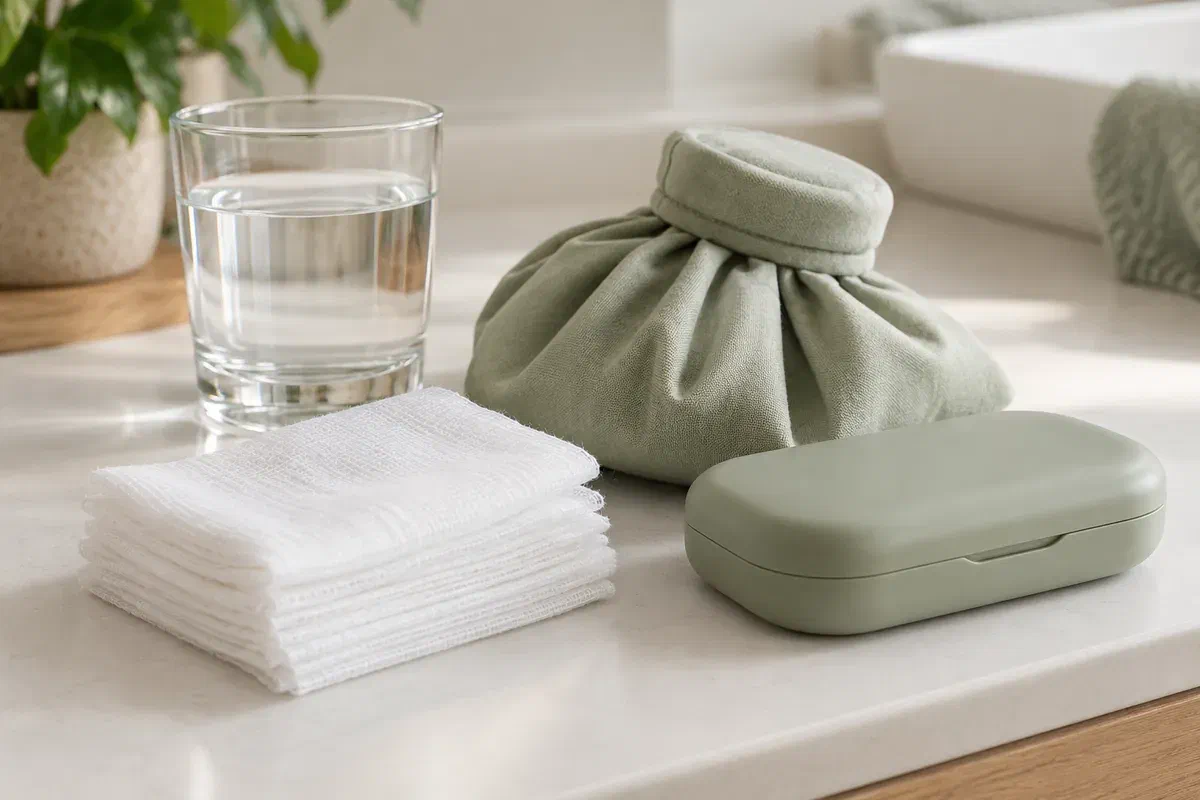
Illustrative clean gauze and a wrapped cold pack prepared for first aid
Burlington callers often ask what matters most

Is it still bleeding? Is anything inside it? Did anything else get hurt?

From the outside, a deep tongue cut and a shallow one can look alike. Explain the cause and anything you feel beyond the wound so the team can suggest the appropriate kind of examination.

Ongoing bleeding or an edge that pulls apart

Put a clean cloth or gauze over the area you can reach and press lightly but continuously while you get help organized. Each time you lift it to check, the clot has to start again. A cut that keeps bleeding heavily, looks deep, or fills the mouth with blood quickly needs urgent assessment.

A tooth fragment or foreign material in the tissue

If a tooth broke when the injury happened, mention it, and say whether gravel, glass or food debris could be in the cut. Fragments sometimes hide inside the lip or cheek. Please avoid probing, picking at the area, or trying to hold the edges closed with anything.

Symptoms that suggest more than a mouth wound

Tell us if your teeth suddenly meet differently, if it is hard to open your mouth, or if there was a heavy blow, dizziness, vomiting, or a blackout. Medical assessment may be needed as well as dental care. A sore tongue can distract from a jaw or head injury.

Call 911 for breathing trouble, loss of consciousness, or severe bleeding that will not stop. Serious facial injuries or worrying symptoms after a head knock need urgent medical care first; dental follow-up can come afterward.

Why an examination is worth it

A clear picture of the wound, the teeth and the plan.

Once the area is examined in person, the clinician can tell you whether straightforward local care is enough or whether a different route makes more sense. Ask what they looked at and what they cannot yet be sure of. A wound should be cleaned, watched, closed or referred because of what it actually is, and how it affects you, rather than how frightening it first appeared.

The assessment points forward too. A cheek bite may calm down within days, while a tooth knocked in the same moment can take weeks to show its response. Ask whether a dental check is still advised once the wound improves, and what warning signs should bring you back early.

Patient information: Alder Hey — assessment and treatment of mouth soft-tissue injuries

Judge how clean the wound is and what it needs

Share where the injury happened and what caused it, especially if the mouth touched the ground, a tool or anything grimy. The clinician can weigh cleaning, more investigation or medical input, including questions about tetanus immunization where it applies. Harsh chemicals and homemade instruments do more harm than good.

Review the nearby teeth and your bite

Point out tenderness, any tooth that feels loose, a sharp edge your tongue keeps finding, or a change in how you close. Soft-tissue injuries regularly come with dental damage. Even if the cut fades quickly, a tooth may still need repair or a later check.

Settle where treatment happens and when you return

Ask whether this wound can be cared for during the dental visit or should be seen by a medical or surgical team. When a referral is made, confirm the place and how quickly you should go. Clarity about the next move is better than assuming any office can treat any mouth wound.

What to expect when you come in

We listen, we look, and then we decide on care with you.

Mention first aid you have already tried, pain relief or other medicine taken, and any care from another clinic. Bring discharge notes and tooth fragments if they can be carried safely, but never hold up urgent care to collect them.

  1. Talk through the injury and what is most pressing

    You explain when and how it happened, how much it bled, and what else you have noticed. The clinician decides whether a dental exam is the right first step or whether medical care should take precedence. Tell us about health conditions, blood thinners and allergies, and keep prescribed medicines going unless your prescriber advises a change.

  2. Check the wound, the teeth around it and the bite

    The injured tissue, neighbouring teeth and the way your jaw closes are examined as appropriate. Mention any missing fragment or anything you suspect is stuck in the wound. Sometimes imaging or a referral is useful, but a minor bite does not automatically need the same workup as a deep laceration.

  3. Decide between cleaning, closure and referral

    Ask why a particular approach suits this wound and how you will be kept comfortable. Some injuries need gentle local treatment, others need stitching, and some belong in another setting. You should hear the options and their limits before any non-emergency treatment begins.

  4. Leave with home instructions and a follow-up owner

    Find out what to eat, how to brush near the area and how to handle soreness without disturbing the wound. Ask whether stitches will dissolve or need removal and who will check them. Injured teeth deserve their own follow-up, separate from the soft tissue.

Healing well after a bite or cut

Small habits help a mouth wound settle.

Instructions differ for a closed wound, an open one, and one next to a damaged tooth. Follow what the treating clinician gave you, not advice meant for an extraction site or a product designed for another purpose.

Stop testing it with your tongue or fingers

Running your tongue over the spot or tugging the cheek to look can reopen it. Eat soft, comfortable foods and chew slowly, especially while the area is swollen or still numb. A rough tooth or appliance that keeps scraping the same place should be reviewed by the dentist.

Keep it clean without scrubbing

Ask where you can brush normally and whether any rinse is suitable for you or your child. Avoid scrubbing, household disinfectants, and the old trick of placing aspirin on the sore. Medicine and mouthwash advice should fit the person, not a blanket rule found online.

Notice whether it is getting better or worse

Ask for advice if bleeding restarts or if swelling, pain, discharge or fever increases, or if the wound simply stops improving. Mention new tooth sensitivity, looseness or a darkening tooth too. Those changes merit attention even when the bite seemed trivial.

Which kind of care fits

Different wounds, different routes.

Ask what each recommended treatment is for and what follow-up it brings. Stitching, a dental repair and a medical check each handle one aspect of an injury, and occasionally all of them apply.

When the wound, once examined, can heal on its own

Monitored local care

Many smaller bites and cuts heal well with careful cleaning, protection and a review if needed. Ask what normal healing looks like and when to call. Leaving a wound unstitched should be a clinical decision, not a home estimate based on its size.

When depth, contamination or shape calls for more

Closure or referral for a complex wound

A deep, open, dirty or irregular wound may need stitching or treatment from a hospital or surgical service. Find out who will provide it and how soon. Household glue and trimming loose tissue at home are never safe substitutes.

When the same moment damaged teeth or their support

A separate plan for an injured tooth

A tooth that chipped, moved or was struck hard may need its own treatment beside the wound care. Ask what the exam showed and whether more treatment or checks are planned. A healed cheek does not confirm that the tooth’s nerve and inner tissues are healthy.

Patient information: AAE — dental trauma and the importance of follow-up

Mouth-wound questions from Burlington

Straight answers about bites, cuts and healing.

These answers cannot replace an examination of your own injury. For urgent symptoms, call or seek emergency care instead of waiting on an online form.

(905) 876-4488
I bit my cheek while it was still frozen after a filling. Is that serious?
Many of these bites heal with gentle care, but call if the area is bleeding steadily, very swollen or getting more painful. Avoid chewing on that side until feeling returns. Children are especially prone to this, so keep an eye on them while numbness lasts.
Why does a tongue cut bleed so much?
The tongue has a rich blood supply, so even moderate cuts can bleed heavily at first. Apply gentle, steady pressure with clean gauze. Call to describe the wound, and seek emergency help if bleeding is heavy or will not slow.
Is a white patch over the cut normal while it heals?
Healing mouth wounds often look pale or yellowish for a few days. Contact the dentist if the area becomes increasingly painful, swollen, produces discharge, or comes with fever, or if it is not improving as expected.
Can I use mouthwash on a cut in my mouth?
Ask the clinician first. Some rinses may suit the situation and others may sting or not be appropriate for the person’s age. Do not use household disinfectant in the mouth, and follow the instructions given for your injury.
Do I need a dentist if the cut happened without hitting a tooth?
It depends. A bite or graze with no impact may need only simple care, but call if it is deep, bleeding, or not healing. If there was any impact, mention tooth soreness or a changed bite so the teeth can be checked.
Should I let the dentist know about stitches put in at urgent care?
Yes. Share where the stitches were placed, what type you were told they are, and any follow-up instructions. That helps the dentist plan care for nearby teeth without disturbing the wound.
Planning a visit from Burlington

Start with a call, and we will take it from there.

Call (905) 876-4488 about a cut, bite or bruise on the lips, gums, cheek or tongue and to ask when we can see you. Mention continued bleeding, damaged teeth and any other symptoms. Online enquiries suit non-urgent questions; urgent medical concerns belong with emergency services.

Phone first before setting out. If you need immediate care and we are not available, go to another emergency provider.

Visit Milton Dental Clinic
Unit 1, 342 Bronte St. S, Milton, ON L9T 5B7
Get directions Clinic hours
Monday–Thursday
11am–7pm
Friday–Sunday
By appointment only

Areas we serve

  • Milton
  • Oakville
  • Mississauga
  • Georgetown
  • Halton Hills
  • Acton
  • Campbellville
  • Brampton
  • Burlington
  • Puslinch
  • Rockwood
  • Erin
  • Caledon
  • Etobicoke
  • Old Milton
  • Bronte Meadows
  • Timberlea
  • Dorset Park
  • Dempsey
  • Clarke
  • Beaty
  • Coates
  • Harrison
  • Scott
  • Willmott
  • Ford
  • Bowes
  • Cobden
  • Walker
  • Mountain View
  • Milton Heights
  • Hawthorne Village
  • Valley View
  • Fallingbrook
  • Nassagaweya
  • Trafalgar
  • Esquesing
  • Nelson
  • Brookville
  • Moffat
  • Glen Williams
  • Norval
  • Limehouse
  • Stewarttown
  • Ashgrove
  • Hornby
  • Silver Creek
  • Speyside
  • Scotch Block
  • North Oakville
  • River Oaks
  • Glen Abbey
  • West Oak Trails
  • Palermo
  • Bronte Creek
  • College Park
  • Joshua Creek
  • Uptown Core
  • Preserve
  • Iroquois Ridge
  • Lisgar
  • Meadowvale
  • Meadowvale Village
  • Churchill Meadows
  • Erin Mills
  • Central Erin Mills
  • Streetsville
  • East Credit
  • Creditview
  • Heartland
  • Sheridan
  • Mount Pleasant
  • Credit Valley
  • Huttonville
  • Churchville
  • Springbrook
  • Northwest Brampton
  • Bram West
  • Fletcher's Meadow
  • Fletcher's Creek South
  • Alton Village
  • Orchard
  • Millcroft
  • Headon Forest
  • Tansley
  • Brant Hills
  • Tyandaga
  • Kilbride
  • Lowville
  • Aberfoyle
  • Morriston
  • Arkell
  • Hillsburgh
  • Freelton
  • Carlisle
  • Waterdown
  • Flamborough
  • Mountsberg

How can we help?

Milton Dental Clinic

Have a question about your smile? Choose the option that works best for you.

For urgent dental concerns, please call.
Messages are reviewed during clinic hours.