Illustrative consultation about an injury to the mouth's soft tissues
Specialized Care

Soft-Tissue Dental Injury Treatment in Campbellville

A fall from a horse, a slip on a rocky trail or a tumble down the porch steps can cut the lip and jolt the head in one moment. Call us to talk through the mouth injury and the dental follow-up, and to recognize the symptoms that mean medical care comes first.

Falls, knocks and mouth wounds in rural Milton

Check the head before you worry about the lip.

Out in Campbellville, an injury to the mouth often comes from a real fall: off a horse, from a ladder in the barn, down an icy lane, or on uneven ground while hiking. The bleeding lip, gum or tongue is easy to see. A knock to the head, a jaw that took the impact, or a cracked tooth may be less obvious but more important.

So the first priority is the whole person. After that, the mouth wound is judged on its own terms: its depth and location, whether it is still bleeding, whether soil or gravel got in, and what happened to the teeth and bite. Some small cuts heal with simple care. Others need professional cleaning, stitches, or treatment in a hospital.

When it is safe to do so, ring (905) 876-4488 and tell us what happened and when. Say whether bleeding continues, whether a tooth is chipped or loose, and whether the bite feels different. We can talk about timing and next steps. If there are any signs of a head injury or the bleeding is severe, get emergency medical care first.

Ask about a mouth wound after a fall
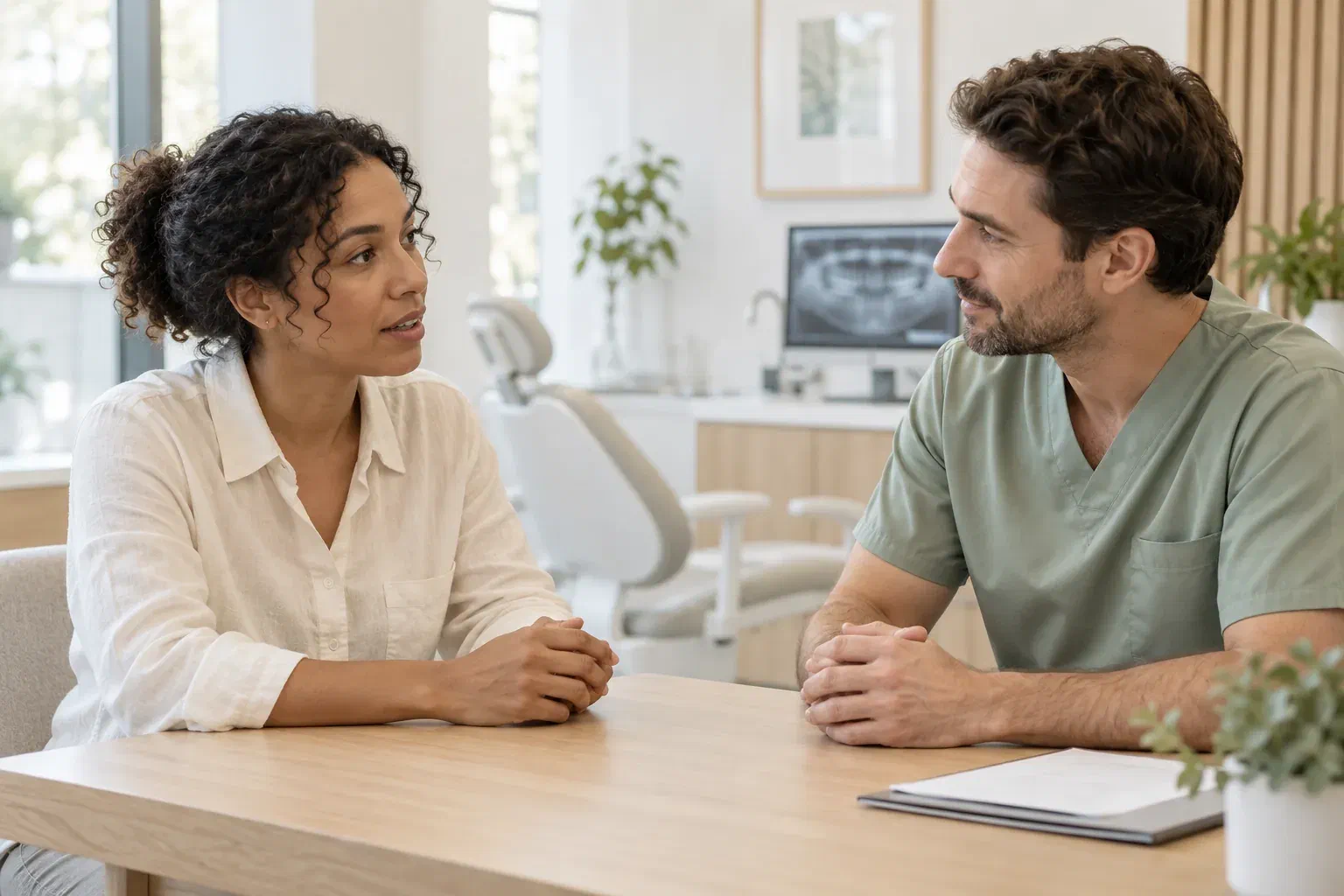
Illustrative clean gauze and a wrapped cold pack prepared for first aid
Red flags after a fall

Some symptoms outrank the cut.

A rural fall can involve more force than an everyday bump. Tell the team how you fell and everything you are feeling, not just what you see in the mirror, so they can help you decide where the injury should be seen.

Bleeding that pressure is not controlling

Press a clean cloth or gauze lightly and continuously on the bleeding spot you can reach while help is organized. Do not keep peeling it back to look. If bleeding stays heavy, the wound looks deep or gaping, or blood is collecting faster than you can clear it, this needs urgent care rather than a dental booking.

A broken tooth, or grit and gravel in the wound

Mention a tooth that cracked or a fragment that is missing, and whether dirt, stone or plant material may be in the cut. Debris and tooth pieces can hide in the lip or cheek. Do not dig into the wound or try to close it with tape or glue.

Headache, confusion or a jaw that will not close normally

A fall that cuts the lip can also injure the head or jaw. Tell someone right away about drowsiness, confusion, repeated vomiting, a severe headache, blacking out, or teeth that suddenly do not meet properly. These signs need medical assessment, and they matter more than the mouth wound.

Call 911 if the person is struggling to breathe, was knocked unconscious, or is losing a lot of blood. Serious facial injuries and concerning signs after a blow to the head need urgent medical care; dental treatment can be arranged once that has been handled.

Why a dental review still matters

After the urgent part, make sure the teeth were not forgotten.

When the injury is examined in person, the clinician can judge whether local wound care is enough or whether a different approach is needed, and can look at the teeth that took the impact. Ask what was checked and what is still unclear. The decision to clean, watch, close or refer should depend on what the wound actually shows and on you, not on the drama of the fall.

A plan for the following weeks is part of the value. Lips and gums tend to heal quickly, while a bumped tooth may not reveal its condition for some time. Ask whether a dental check is still advised once the cut settles, and what new symptoms would justify an earlier visit.

Patient information: Alder Hey — assessment and treatment of mouth soft-tissue injuries

Judge contamination after an outdoor fall

Barn floors, trails and gravel are not clean surfaces. Explain where you fell so the clinician can decide how thoroughly the wound should be washed out, whether it needs a closer look or a doctor’s view, and whether a tetanus booster is worth raising with your physician. Avoid strong chemicals and homemade instruments.

Look at the teeth and the way they meet

Report any tooth that aches, feels loose, has a new sharp corner, or makes the bite feel uneven. A heavy fall can injure teeth and their support alongside the lip. A cut that is healing nicely does not rule out a tooth that needs care.

Agree on the right setting

Ask whether the wound can be treated at the dental visit or should go to a hospital or surgical clinic. If referral is suggested, find out where and how soon. A clear next step is better than assuming one practice can handle every injury.

What happens when you come in

Safety first, then the mouth, then the plan.

Tell us what first aid was given, whether you were seen at a hospital, and what medicine has been taken since. Bring any discharge instructions and a tooth fragment if it was found and can be carried safely, without delaying urgent care to look for it.

  1. Confirm the history and screen for urgent problems

    We ask how you fell, when, how much the mouth bled and what other symptoms you have. If anything suggests a head or jaw injury that has not been assessed, medical care comes first. Mention health conditions, any blood thinner and allergies, and do not stop a prescribed medication on your own.

  2. Examine the wound, teeth and bite

    The injured tissue, nearby teeth and how they close are examined as needed. Point out any missing piece of tooth or an area that feels as though something is lodged inside. X-rays or another provider may be needed, but not every small cut calls for them.

  3. Explain cleaning, closure or referral

    Ask why the suggested treatment fits this wound and how discomfort will be managed. Some wounds need careful local care, some need stitches, and some need a different setting. Options and limitations are explained before non-emergency treatment begins.

  4. Plan home care and follow-up visits

    Ask what you can eat, how to clean the area and how to manage soreness without disturbing healing. Confirm whether stitches need review or removal and who will do it. Rural households often like to group visits, so ask which dental follow-ups are needed for any injured teeth and when.

Recovering in Campbellville

Quiet days for the wound, and an eye on the head and teeth.

Aftercare depends on the wound, any stitches and any tooth damage. Follow the treating clinician’s advice rather than a routine for a tooth extraction or a product meant for something else.

Let the area rest

Avoid stretching the lip to inspect it, and keep teeth off swollen or numb tissue. Choose comfortable foods. If a broken tooth or appliance keeps catching the wound, contact the dentist so the source can be reviewed.

Clean gently as advised

Check which teeth can be brushed normally and whether a rinse is sensible for this person. Barn and household disinfectants, firm scrubbing and an aspirin tucked against the gum can all damage healing tissue. Medicine and mouthwash advice should be individual.

Watch the wound and the person

Seek advice for returning bleeding, increasing swelling, worsening pain, discharge, fever or a wound that is not improving. Report new tooth sensitivity, looseness or colour change. Any new confusion, drowsiness or vomiting after a fall needs urgent medical care.

Care choices once you are assessed

Local care, closure, or a plan for the teeth.

Ask what each treatment is intended to do and what follow-up it needs. Stitches, dental treatment and a medical assessment each deal with different parts of a fall, and more than one may be needed.

When the assessed cut can heal without closure

Local wound care with review

Many smaller wounds heal well once cleaned and protected, with a check when indicated. Ask how healing should progress and when to call. Choosing not to stitch should follow examination rather than a guess at home.

When the wound is deep, dirty or irregular

Stitches or specialist wound treatment

A deep, gaping, contaminated or complex wound may need closure in a medical or surgical setting. Find out which service will treat it and how quickly to go. Tape, glue and kitchen scissors have no place in caring for a wound like this.

When the fall also affected teeth or gums

Treatment for teeth that took the impact

A tooth that broke, shifted or was struck may need repair and monitoring. Ask what was found and what future visits are planned. A healed lip does not confirm the tooth’s inner tissues are healthy.

Patient information: AAE — dental trauma and the importance of follow-up

Campbellville questions after a fall

When to worry, when to wait, and when to call.

These answers are general and cannot replace an examination. If something feels urgent, phone 911 or get emergency care rather than sending an online request.

(905) 876-4488
Should a head injury be checked before a mouth injury?
Yes. Signs such as confusion, drowsiness, repeated vomiting, severe headache or loss of consciousness need urgent medical assessment first. Once that has been addressed, call us about the mouth and teeth.
I fell off my horse and my jaw feels stiff. Is that a dental problem?
It could involve the jaw joint, the teeth or other structures. If the bite feels different, you cannot open your mouth normally, or pain is severe, seek medical assessment. We can help with dental follow-up afterward.
How long should a lip stay swollen after a fall?
Some swelling in the first couple of days is common, and a wrapped cold pack on the outside of the lip may help. Call if it keeps increasing, is very painful or comes with discharge or fever.
We are a farm household. What should we keep on hand for mouth injuries?
Clean gauze, a wrapped cold pack and a list of emergency numbers are useful. Keep a small clean container for any tooth fragment. Above all, know when to call 911 rather than managing at home.
Could gravel still be in my cheek after it was rinsed?
It is possible. If an area feels gritty, lumpy or keeps hurting, tell the clinician what you fell on. Do not try to dig anything out yourself.
Can the dentist see the rest of the family on the same day as the injury follow-up?
Ask when you call and we can discuss availability. The injury may need to be seen sooner, though, so do not wait for a combined appointment if it is urgent.
Calling from Campbellville

Once the urgent part is handled, call us about the mouth.

Phone (905) 876-4488 to describe a cut, bruise or bite injury to your mouth and check availability. Mention ongoing bleeding, damaged teeth and any head or jaw symptoms. Online requests are for non-urgent questions only; immediate concerns need emergency services.

Please call before you drive in. When the injury cannot wait and we are not reachable, go to another available emergency provider.

Visit Milton Dental Clinic
Unit 1, 342 Bronte St. S, Milton, ON L9T 5B7
Get directions Clinic hours
Monday–Thursday
11am–7pm
Friday–Sunday
By appointment only

Areas we serve

  • Milton
  • Oakville
  • Mississauga
  • Georgetown
  • Halton Hills
  • Acton
  • Campbellville
  • Brampton
  • Burlington
  • Puslinch
  • Rockwood
  • Erin
  • Caledon
  • Etobicoke
  • Old Milton
  • Bronte Meadows
  • Timberlea
  • Dorset Park
  • Dempsey
  • Clarke
  • Beaty
  • Coates
  • Harrison
  • Scott
  • Willmott
  • Ford
  • Bowes
  • Cobden
  • Walker
  • Mountain View
  • Milton Heights
  • Hawthorne Village
  • Valley View
  • Fallingbrook
  • Nassagaweya
  • Trafalgar
  • Esquesing
  • Nelson
  • Brookville
  • Moffat
  • Glen Williams
  • Norval
  • Limehouse
  • Stewarttown
  • Ashgrove
  • Hornby
  • Silver Creek
  • Speyside
  • Scotch Block
  • North Oakville
  • River Oaks
  • Glen Abbey
  • West Oak Trails
  • Palermo
  • Bronte Creek
  • College Park
  • Joshua Creek
  • Uptown Core
  • Preserve
  • Iroquois Ridge
  • Lisgar
  • Meadowvale
  • Meadowvale Village
  • Churchill Meadows
  • Erin Mills
  • Central Erin Mills
  • Streetsville
  • East Credit
  • Creditview
  • Heartland
  • Sheridan
  • Mount Pleasant
  • Credit Valley
  • Huttonville
  • Churchville
  • Springbrook
  • Northwest Brampton
  • Bram West
  • Fletcher's Meadow
  • Fletcher's Creek South
  • Alton Village
  • Orchard
  • Millcroft
  • Headon Forest
  • Tansley
  • Brant Hills
  • Tyandaga
  • Kilbride
  • Lowville
  • Aberfoyle
  • Morriston
  • Arkell
  • Hillsburgh
  • Freelton
  • Carlisle
  • Waterdown
  • Flamborough
  • Mountsberg

How can we help?

Milton Dental Clinic

Have a question about your smile? Choose the option that works best for you.

For urgent dental concerns, please call.
Messages are reviewed during clinic hours.