
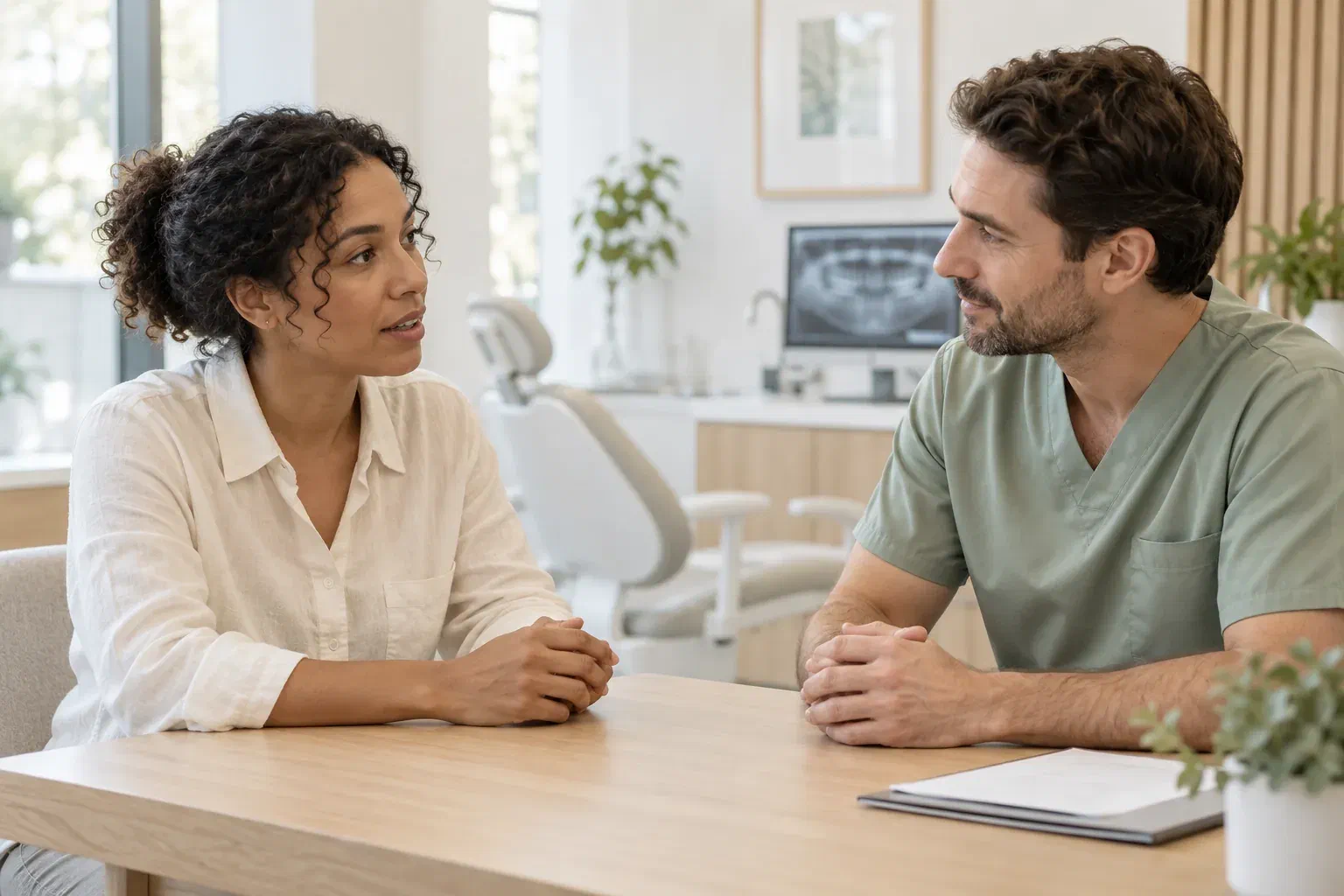
Illustrative consultation about an injury to the mouth's soft tissues
Specialized Care

Soft-Tissue Dental Injury Treatment in Etobicoke

When a lip, gum or tongue is injured and you are coming from the west end of Toronto, the first decision is where to go. Call us before you travel so we can talk through the injury, plan dental follow-up, and help you judge when nearer urgent care is wiser.

Mouth injuries when you are coming from Etobicoke

Decide where to go before you get in the car.

A cut to the lip, gum, tongue or cheek can come from almost anything: a fall on a wet step, an elbow during a pickup game, a hard bite on the tongue, or the sharp edge of a broken tooth. With a longer trip involved, the useful question is not only how bad it looks, but whether this needs care right now, nearer home, or a planned dental visit.

Several things decide that. A wound’s depth and position matter, as do active bleeding, possible dirt or debris, and injuries to the teeth, jaw or head. Some small cuts heal with sensible care at home. Others need cleaning, stitches, or a medical setting. You do not need to sort that out alone; that is what the first call is for.

Phone (905) 876-4488 before you set out. Give us the when and the how, say whether there is still blood, and mention a chipped tooth or a bite that no longer lines up. We can talk about availability and whether coming in makes sense. If emergency medical care is needed, go to the closest appropriate service instead of making the drive.

Plan follow-up for a mouth injury
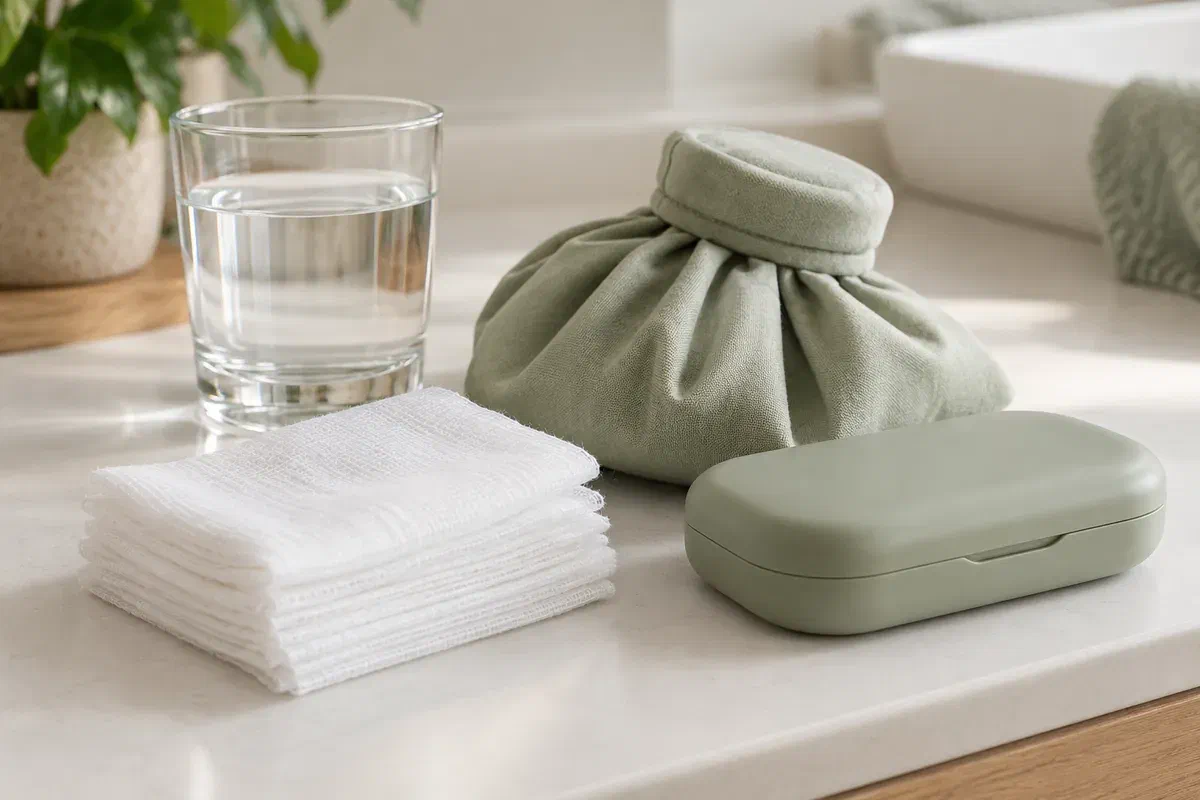
Illustrative clean gauze and a wrapped cold pack prepared for first aid
Signs that point to closer, faster care

Some injuries should not wait for a longer drive.

A mirror cannot show how deep a wound goes or whether something is trapped inside. Share the cause and anything you are feeling apart from the cut itself, and the team can help you decide where it should be seen.

Bleeding that does not ease, or a deep, open wound

Press gauze or a freshly washed cloth against the area you can reach, lightly and without letting up, while someone sorts out help. Try not to lift it repeatedly. Heavy or persistent bleeding, a wound that gapes, or blood you cannot manage in the mouth needs urgent care close by, not a long journey or an online request.

A chipped tooth, a missing piece, or dirt in the cut

If a tooth cracked, say so, and mention the chance of sand, glass or anything else ending up in the wound. A fragment can sit inside the lip unnoticed. Avoid probing the area, digging for the piece, or trying to close the cut on your own.

Head, jaw or bite symptoms

Speak up about teeth that now close in a new way, a jaw that will not open fully, a forceful hit to the face, light-headedness, throwing up, or blacking out. These can call for medical care before anything dental. Do not let a long drive delay that assessment.

Call 911 if breathing is laboured, the person is unresponsive, or heavy bleeding continues despite pressure. Serious facial trauma or a worrying change after a knock to the head should be seen at the nearest appropriate medical service, and dental follow-up can be planned afterward.

Making each visit count

One thorough assessment, and a follow-up plan that fits your schedule.

In person, the clinician can tell whether simple care at the visit will do or whether the injury belongs somewhere else. Ask what they examined and what they cannot be sure of yet. Cleaning, waiting, stitching or sending you on should all follow from the wound’s real features and your situation, not from how alarming it seemed in the first few minutes.

For anyone travelling a longer way, the plan after that first visit matters just as much. A lip often heals on its own schedule while a knocked tooth keeps its own. Ask whether a later dental review is needed, whether checks could be bundled into a single appointment, and what changes should bring you back sooner.

Patient information: Alder Hey — assessment and treatment of mouth soft-tissue injuries

Assess contamination and wound-care needs

Describe the surface or object involved, such as a sidewalk, a playground frame or a piece of sports equipment. From there the clinician can weigh washing the wound out, further tests or a medical opinion, including whether a tetanus booster should be considered. Leave strong cleaners and homemade tools out of it.

Check neighbouring teeth and how they meet

Point out a tooth that aches, shifts, has a new rough corner, or makes the bite feel strange. Lip and gum injuries regularly arrive together with dental trauma. A cut that is closing well can still sit beside a tooth that needs treatment or watching.

Agree on where follow-up happens

Ask whether this wound can be looked after at the dental visit or should go to a hospital or surgical clinic, and whether some follow-up could happen closer to home. If you are referred, get the destination and the timeframe in writing. Clear next steps save unnecessary trips.

What the appointment covers

A well-organized visit, from history to home care.

Tell us what first aid you gave, any pain relief or other medicine since, and whether a hospital or walk-in clinic has already seen you. Bring their paperwork and any piece of tooth you can carry without risk, but never let the search hold up urgent help.

  1. Review the history and confirm priorities

    We start with the basics: when it happened, what caused it, how much it bled and what else hurts. From that, the clinician judges whether a dental exam is the right next move or medical care should lead. Have your medication list and allergies ready, flag any blood thinner, and keep taking prescribed medicine unless your prescriber advises otherwise.

  2. Examine the wound, teeth and bite

    The injured area, nearby teeth and the way they close are checked to the extent the injury calls for. Mention any lost fragment or a spot that feels as though something is trapped. X-rays or another provider’s opinion may be part of the plan, although a minor cut rarely needs the full range of tests.

  3. Discuss cleaning, closure or referral

    You should understand why a given treatment suits this wound and what will keep you comfortable during it. Gentle local care, stitches and referral elsewhere are all possible depending on what is found. Any non-emergency treatment should only begin once the choices and their limits have been explained.

  4. Leave with clear home care and follow-up dates

    Before you head home, ask what you can eat, how to keep the area clean and what to do about soreness. Find out whether stitches dissolve or need taking out, and whether that can be done nearer home. If teeth were injured, set their review dates now so nothing is missed.

Caring for the wound between visits

Simple care at home, and a clear idea of when to call.

The routine you need depends on whether the wound was stitched, left open, or sits beside a damaged tooth. Go by the instructions from whoever treated it, not by general extraction advice or a product designed for something else.

Leave it alone to heal

Every look under the lip stretches tissue that is trying to knit. Eat what feels comfortable and keep your teeth off any swollen or still-numb area. If a jagged tooth or a dental appliance keeps grazing the same place, phone so it can be dealt with before it sets healing back.

Clean gently, as instructed

Find out which teeth you can brush as usual and whether a rinse is sensible for this person and this injury. Scrubbing, household disinfectants and aspirin held against the gum can all damage tissue. Advice on medicines and mouthwash should be tailored to the individual.

Know which changes need a call, and which need closer care

Phone for advice if the bleeding starts again, swelling or pain builds, pus appears, a fever develops, or the wound seems stuck. A tooth that turns sensitive, loose or dusky is worth reporting too. If a change is urgent, nearer emergency care may be the right first step.

Choosing the right care for an Etobicoke household

Match the care to the wound, and the plan to your travel.

Find out what each recommended step is meant to fix and how it will be checked. Closing a cut, repairing a tooth and ruling out a head or jaw injury are different tasks, and one accident can involve all of them.

When the wound, once examined, can close on its own

Local care and monitoring

Many smaller cuts heal well with careful cleaning, protection and a recheck if one is advised. Ask how the area should look as it improves and what would justify a call. Skipping stitches should follow examination, not a guess at home.

For deep, contaminated or complicated wounds

Closure or specialist wound care

Some wounds need stitching or care from a hospital or surgical team, sometimes closer to where you live. Ask which service is recommended and how soon you should go. Household glue and trimming loose tissue at home are not safe alternatives.

When the blow also reached the teeth or gums

Care for teeth injured in the same accident

A tooth that broke, was pushed out of line or simply took the knock may need treatment and monitoring of its own. Ask what the dentist saw and how many further visits to expect. A lip that has healed says little about the nerve inside a struck tooth.

Patient information: AAE — dental trauma and the importance of follow-up

Travelling from Etobicoke with a mouth injury

Planning care when the clinic is a longer trip away.

Use these as general guidance only, since every injury is different. If something feels urgent, phone or get emergency care close to you instead of waiting on an online request.

(905) 876-4488
Should I drive to Milton for a mouth injury or go to a closer emergency department?
If there is heavy bleeding, a deep wound, breathing trouble or signs of a head injury, go to the nearest emergency care. For a less severe injury, call us to describe it and we can discuss whether a dental visit makes sense and when. Many people find it helpful to have the dental side reviewed once the urgent part is handled.
Can stitches from a Toronto hospital be checked at a dental visit?
Ask the hospital team whether the stitches dissolve or need removal and who should check them. Let us know about them too, so dental follow-up for nearby teeth can be planned around the wound. Keep any discharge notes to bring along.
Is it safe to travel with a cut lip that has stopped bleeding?
Often, yes, but bring clean gauze in case it restarts, and have someone else drive if you feel unwell. If bleeding resumes heavily or new symptoms develop on the way, such as dizziness or trouble swallowing, seek closer care rather than continuing.
How can I reduce the number of follow-up trips?
Ask at the first visit which checks are needed and whether any can be combined. The timing of reviews depends on the wound and any tooth injury, so some appointments may still need to be separate. Booking them before you leave can make planning easier.
What should I bring if I am coming from further away?
Bring a list of medicines, any discharge notes, and tooth fragments that can travel safely. A short written note of when the injury happened and what has changed since can also help. Do not delay urgent care to gather any of it.
Can a cheek bite wait a few days for an appointment?
Many small bites heal well with gentle care. Call if it bleeds steadily, keeps getting more painful or swollen, or is not improving, and seek urgent care for fever, spreading swelling or trouble swallowing.
Before you make the trip from Etobicoke

Call first, so the visit is worth the drive.

Ring (905) 876-4488 before leaving home so we can hear what happened to the lip, gum, cheek or tongue and check when you could be seen. Tell us about bleeding, damaged teeth and anything else you have noticed. Booking forms suit routine questions; anything urgent needs emergency services near you.

Please call before travelling. When we cannot be reached and the injury will not wait, use the nearest emergency provider.

Visit Milton Dental Clinic
Unit 1, 342 Bronte St. S, Milton, ON L9T 5B7
Get directions Clinic hours
Monday–Thursday
11am–7pm
Friday–Sunday
By appointment only

Areas we serve

  • Milton
  • Oakville
  • Mississauga
  • Georgetown
  • Halton Hills
  • Acton
  • Campbellville
  • Brampton
  • Burlington
  • Puslinch
  • Rockwood
  • Erin
  • Caledon
  • Etobicoke
  • Old Milton
  • Bronte Meadows
  • Timberlea
  • Dorset Park
  • Dempsey
  • Clarke
  • Beaty
  • Coates
  • Harrison
  • Scott
  • Willmott
  • Ford
  • Bowes
  • Cobden
  • Walker
  • Mountain View
  • Milton Heights
  • Hawthorne Village
  • Valley View
  • Fallingbrook
  • Nassagaweya
  • Trafalgar
  • Esquesing
  • Nelson
  • Brookville
  • Moffat
  • Glen Williams
  • Norval
  • Limehouse
  • Stewarttown
  • Ashgrove
  • Hornby
  • Silver Creek
  • Speyside
  • Scotch Block
  • North Oakville
  • River Oaks
  • Glen Abbey
  • West Oak Trails
  • Palermo
  • Bronte Creek
  • College Park
  • Joshua Creek
  • Uptown Core
  • Preserve
  • Iroquois Ridge
  • Lisgar
  • Meadowvale
  • Meadowvale Village
  • Churchill Meadows
  • Erin Mills
  • Central Erin Mills
  • Streetsville
  • East Credit
  • Creditview
  • Heartland
  • Sheridan
  • Mount Pleasant
  • Credit Valley
  • Huttonville
  • Churchville
  • Springbrook
  • Northwest Brampton
  • Bram West
  • Fletcher's Meadow
  • Fletcher's Creek South
  • Alton Village
  • Orchard
  • Millcroft
  • Headon Forest
  • Tansley
  • Brant Hills
  • Tyandaga
  • Kilbride
  • Lowville
  • Aberfoyle
  • Morriston
  • Arkell
  • Hillsburgh
  • Freelton
  • Carlisle
  • Waterdown
  • Flamborough
  • Mountsberg

How can we help?

Milton Dental Clinic

Have a question about your smile? Choose the option that works best for you.

For urgent dental concerns, please call.
Messages are reviewed during clinic hours.