
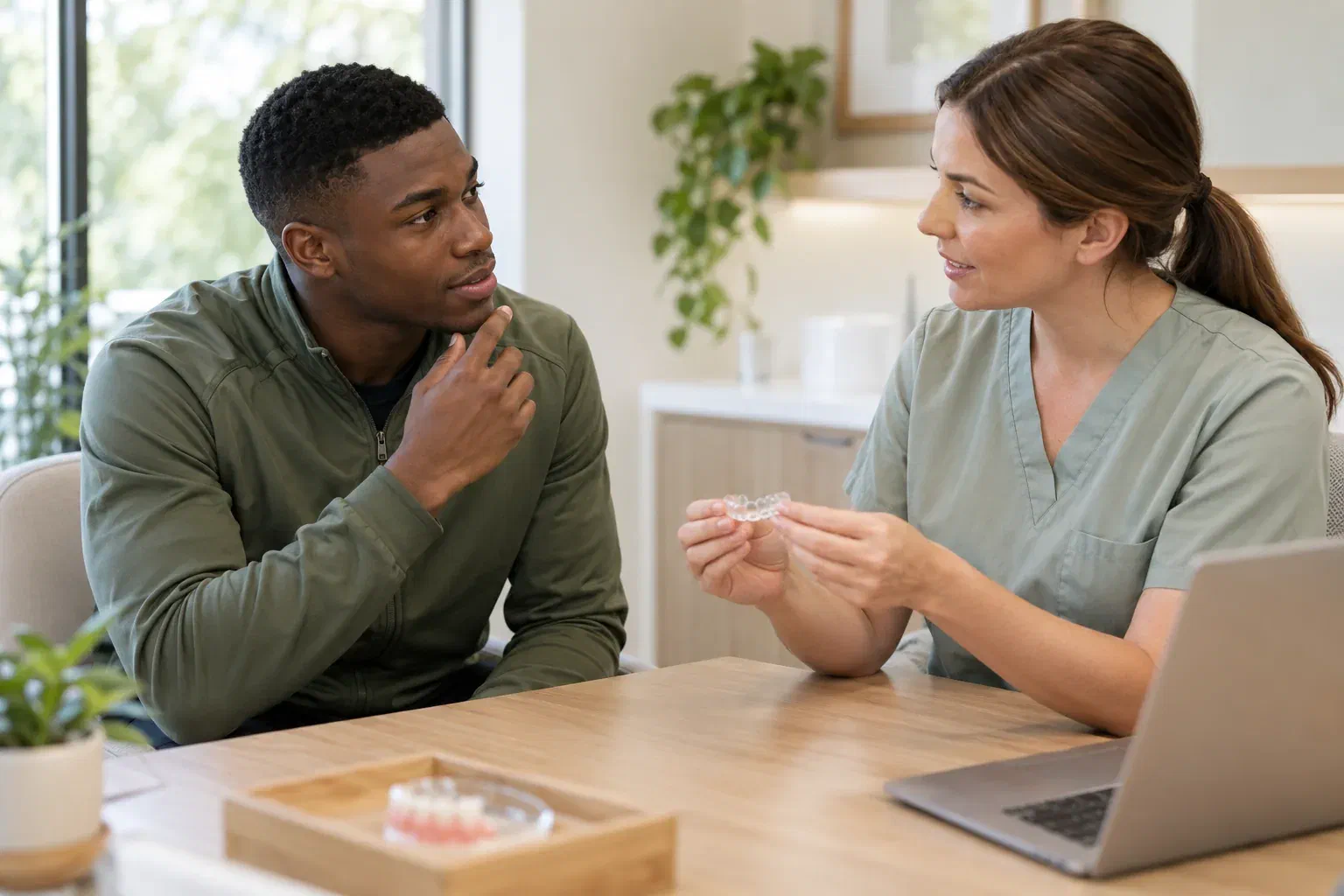
Illustrative consultation with an adult athlete about a dental injury
Specialized Care

Sports-Related Dental Injury Treatment

A collision on the field, court, or ice can affect more than the tooth you can see. Call our Milton team promptly after a sports-related dental injury to discuss assessment, immediate priorities, and the follow-up your recovery may need.

A closer look at dental injuries during sport

Stop play. Check the person. Then assess the injured teeth.

A ball, stick, fall, or collision can chip a tooth, move it from its position, or knock it out. The same impact may injure the lips, gums, jaw, or head. After an incident, stop participating and assess the person's immediate safety rather than using the appearance of the teeth to decide that continuing the game is safe.

Prompt dental assessment helps identify the type of injury and the treatment it needs. A tooth that looks only slightly changed may have damage that is not obvious from the outside, and neighbouring teeth can also be affected. The initial visit and later reviews both matter; one reassuring observation immediately after impact does not settle every question.

Call Milton Dental Clinic at (905) 876-4488, describe the injury, and tell us when it happened. Mention a missing or displaced tooth, ongoing bleeding, and any head-injury symptoms. We can discuss current availability and the appropriate next step. Serious medical concerns take priority over travelling to a routine dental appointment.

Discuss follow-up after a sports dental injury
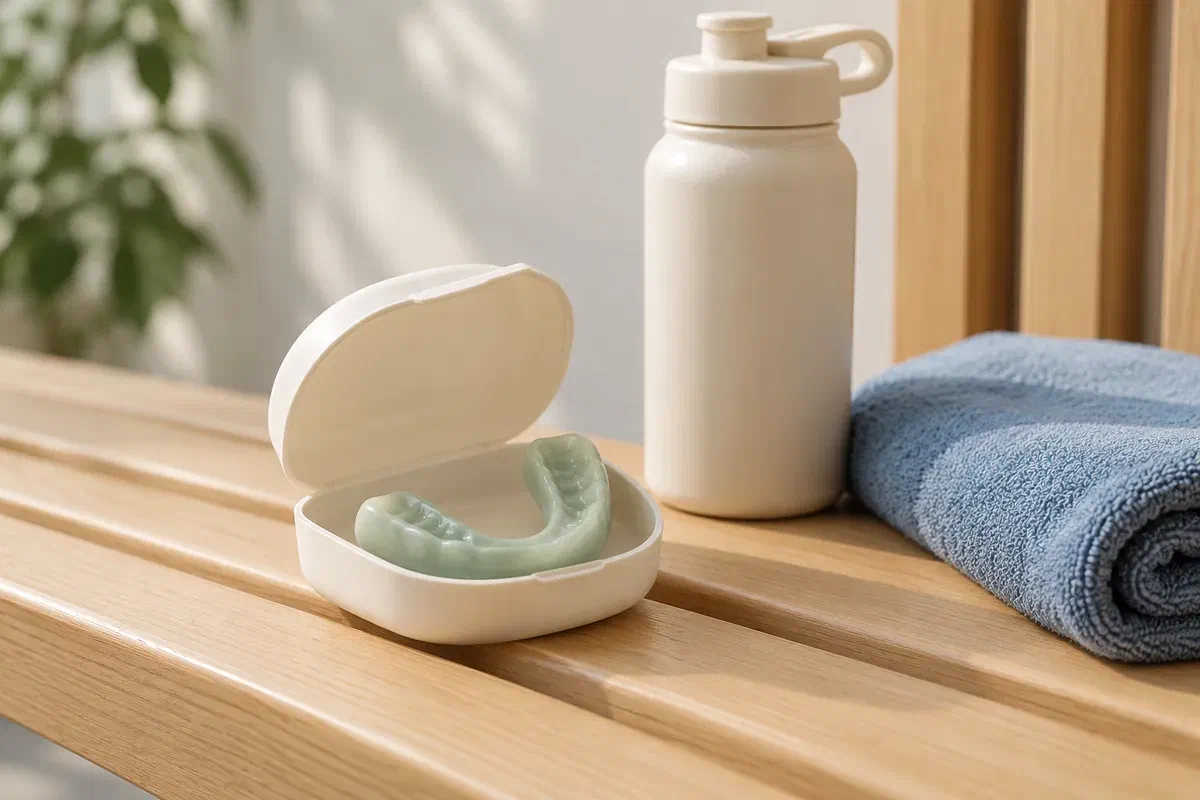
Illustrative sports mouthguard in a protective case beside a water bottle and towel
What needs attention after the impact

The urgency depends on the injury, not how much time remains in the game.

Ask someone to help arrange care when needed. Do not repeatedly test a loose tooth, force the bite together, or wait for an online enquiry to be answered when urgent treatment is required.

A tooth has come completely out

A knocked-out permanent tooth needs immediate dental care. Hold it by the crown, not the root. If dirty, rinse gently in milk or saline without scrubbing. If safe and easily possible in an alert, cooperative person, replace it gently; otherwise keep it in milk and seek care immediately. Never replant a baby tooth.

A tooth has moved, broken, or changed the bite

Seek prompt dental assessment, even if discomfort is limited. Do not push a displaced tooth around or keep biting to see whether it moves. Bring a broken fragment in milk if available, without delaying care to search for it. Tell the clinician about any piece that is missing.

The collision may have injured the head or face

Loss of consciousness, unusual drowsiness, confusion, vomiting, or other concerning symptoms after a head impact need medical assessment. A changed bite or difficulty opening the mouth may also signal a wider injury. Do not return to play because the tooth pain has settled or a mouthguard can still be inserted.

Call 911 for loss of consciousness, seizure, breathing difficulty, or severe uncontrolled bleeding. If you are unsure whether a knocked-out tooth is permanent, keep it in milk and seek immediate professional advice rather than attempting replantation.

What early assessment and continued review provide

Address the immediate damage and keep the longer-term tooth response in view.

The first assessment identifies what can be treated now and what needs monitoring or specialist input. Ask which teeth and tissues were affected and whether the treatment is temporary, definitive, or part of a longer sequence. The answer should reflect the injury rather than a promise that every damaged tooth can be saved.

Follow-up allows the clinician to reassess healing and the response of the tooth's internal and supporting tissues. Some decisions depend on changes over time. Keep the review plan even if eating becomes comfortable, and tell the team about any new symptom instead of assuming that recovery is complete because the visible chip has been repaired.

Patient information: AAE — assessment and continuing care after traumatic dental injuries

Look for injuries beyond the most obvious tooth

The dentist can assess adjacent teeth, soft tissues, bite, and supporting structures as appropriate. Explain the direction and force of the impact if known. The examination may include images or other tests, with findings recorded so later visits can be compared with the initial assessment.

Stabilize or protect the injured area when indicated

The appropriate initial care may involve protecting a broken surface, repositioning or stabilizing a tooth, or treating a wound. Ask what each step is intended to achieve and what restrictions follow. Not every injury needs a splint, and a splint does not eliminate the need for follow-up.

Plan later care and safer participation

Discuss further dental treatment, review dates, and when the injured area can tolerate activity. Ask whether an existing mouthguard still fits after treatment. Dental recovery advice and medical return-to-sport advice may both apply; one should not be assumed to replace the other.

How the dental injury is assessed

Understand the impact, identify the damage, and explain the treatment sequence.

Bring any recovered tooth or fragment, details of first aid, and information about medical assessment already received. Do not delay urgent care while collecting equipment, insurance paperwork, or a perfect account of the incident.

  1. Review the event and immediate safety concerns

    Explain the timing, sport, mechanism, and symptoms, including any loss of consciousness or missing tooth. If a tooth was out of the mouth, describe how long and how it was stored. The clinician considers whether medical assessment is needed before or alongside dental care.

  2. Examine the injured and neighbouring structures

    The dentist assesses the teeth, surrounding tissues, and bite, with investigations selected for the findings. Tell the clinician which teeth feel different, even if they look intact. Early test results may need later comparison, so an initial examination does not always provide a final answer about every tooth.

  3. Discuss the immediate treatment and its limits

    Options depend on the injury, tooth development, condition, and time since impact. Ask about the intended treatment, comfort measures, alternatives, and any need for referral. Initial care may protect or stabilize the area while a longer-term restorative or specialist plan is arranged.

  4. Confirm reviews and instructions for activity

    Ask when to return, what to avoid eating or doing, and whom to contact for a loose splint or new symptom. Discuss future sports protection and the need for medical clearance where head injury is involved. Keep a copy of the care instructions so coaches and caregivers can support the agreed plan.

Recovering after the dental treatment

Protect the injured area while keeping the planned reviews.

Instructions differ for a small repair, a repositioned tooth, a replanted tooth, or a wound. Follow the advice given for the actual injury and ask before returning to activities that may expose the area to another impact.

Follow eating and cleaning advice for the treated teeth

Ask how to keep the area clean and which foods or biting forces to avoid. Do not test an injured tooth repeatedly or chew on a stabilizing splint. If the instructions are difficult to follow, contact the team rather than replacing them with a routine intended for a different dental procedure.

Report changes that need reassessment

Contact the dentist about increasing pain, swelling, tooth movement, colour change, a new bite problem, or a damaged splint. An injured tooth can need further care after the initial symptoms improve. The appropriate response depends on examination, rather than assuming every colour change automatically means the same treatment.

Review protection before returning to the sport

Bring the mouthguard for a fit check when advised, particularly after a repair, splint, or tooth movement. A guard should not be forced over the treated area. Follow the dental restrictions and any separate medical return-to-sport plan; protective equipment does not make an incompletely assessed injury safe to ignore.

Patient information: NHS — medical assessment after head injury and concussion

Choosing care after a sports impact

A chip, a displaced tooth, and a deeper injury need different decisions.

Ask why the proposed treatment suits the findings and what may be needed later. The amount of visible damage alone does not determine the prognosis or the complete treatment plan.

When the tooth can be assessed for restoration

Repair or protection of a fractured tooth

Depending on the fracture, care may include protecting the exposed surface, reattaching a suitable fragment, or another restoration. Deeper injuries need additional assessment. Ask whether the proposed repair is temporary and how the tooth will be reviewed before assuming that restoring its shape resolves every consequence of the impact.

When a tooth has moved or been knocked out

Repositioning, stabilization, and trauma follow-up

These injuries need prompt assessment and an injury-specific plan. A splint or further treatment may be indicated, with review of healing over time. The tooth type, stage of development, storage history, and supporting-tissue injury affect the decisions; there is no guarantee that every tooth can be retained.

When the findings extend beyond a straightforward dental repair

Specialist or medical assessment for more extensive injury

The clinician may recommend specialist dental care, jaw or facial assessment, or urgent medical evaluation. Ask which concern is driving the referral and how quickly it is needed. A referral is part of choosing appropriate care, not a reason to delay management of an urgent problem.

Questions after a sports dental injury

Make the next decision about the injury, not the match schedule.

Call with urgent injuries and explain when they happened. The team can discuss the appropriate assessment without assuming that a visible chip tells the whole story.

(905) 876-4488
Should I finish the game before getting a tooth checked after a collision?
Stop participating and assess the injury promptly. A displaced or knocked-out permanent tooth needs urgent dental attention, and head-injury symptoms may require medical care. Do not use reduced pain or the ability to bite as proof that it is safe to continue playing.
What should I do if I cannot tell whether a knocked-out tooth is a baby tooth?
Keep it in milk, handle it by the crown, and seek immediate professional advice. Do not attempt replantation when you are unsure. Baby teeth should not be replanted, while permanent-tooth injuries are time-sensitive and require urgent dental care.
Does wearing a mouthguard mean my teeth cannot be injured in sport?
No. A suitable mouthguard is protective equipment, but an impact still needs assessment when there are symptoms or visible changes. Tell the dentist whether the guard was worn and bring it if available. Do not assume it prevented every dental or head injury.
Can a sports injury affect a tooth that was not visibly chipped?
Yes. Teeth and supporting tissues can be affected without an obvious broken edge. Mention tenderness, movement, a changed bite, or other symptoms in neighbouring teeth. The dentist may need to assess and follow these areas as well as the tooth with the visible damage.
Can I wear my old sports mouthguard over a new dental trauma splint?
Do not force it into place. Ask the treating dentist whether the guard is appropriate and when participation can resume. A splint, repair, or changed tooth position may affect fit, and a separate medical return-to-sport plan may also apply after a head injury.
Why are review appointments needed after my sports-injured tooth feels normal again?
Some changes in an injured tooth or its supporting tissues become apparent later. Reviews allow the clinician to compare findings and consider further care when indicated. Comfortable eating and an improved appearance do not by themselves confirm that every part of the injury has healed.
Call about a sports dental injury in Milton

Tell us what happened, when it happened, and what has changed.

Call (905) 876-4488 before travelling to discuss the injury and current availability. Mention a knocked-out or displaced tooth and any medical concerns immediately. Use online booking for non-urgent follow-up, not for a time-sensitive injury.

If urgent care is needed and we cannot be reached, seek another available emergency provider.

Visit Milton Dental Clinic
Unit 1, 342 Bronte St. S, Milton, ON L9T 5B7
Get directions Clinic hours
Monday–Thursday
11am–7pm
Friday–Sunday
By appointment only

How can we help?

Milton Dental Clinic

Have a question about your smile? Choose the option that works best for you.

For urgent dental concerns, please call.
Messages are reviewed during clinic hours.