
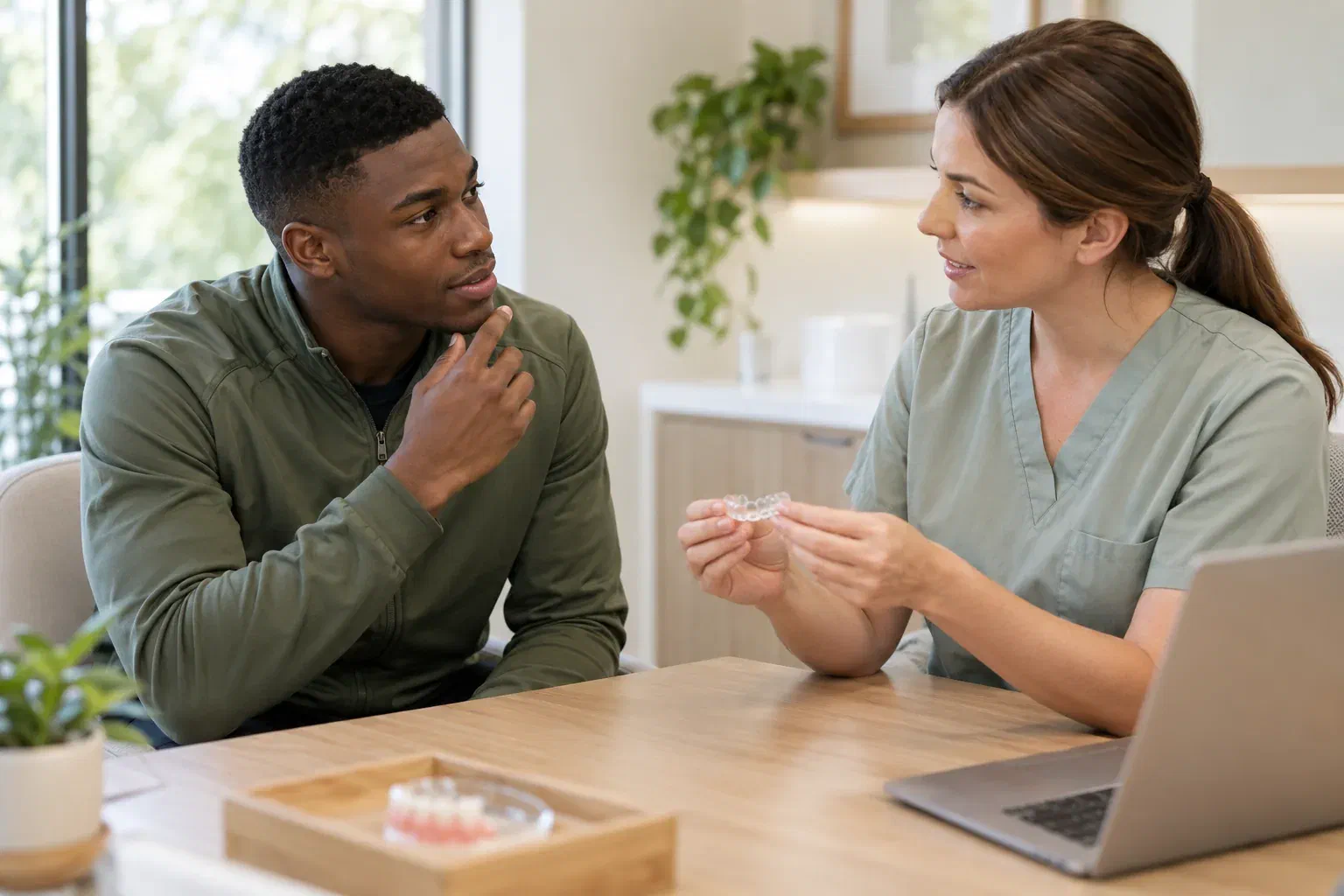
Illustrative consultation with an adult athlete about a dental injury
Specialized Care

Sports-Related Dental Injury Treatment in Acton

The phone call is the first real step after a sports injury to the teeth. From Acton, ring us before getting in the car, have a few details ready, and we can talk about first aid, how soon the injury needs to be seen and what follow-up may look like.

What to say when you call

Five facts that make the first phone call count

Before dialling, take a breath and look after the person who was hurt. They come off the field, and someone checks them over, because a stick, ball or fall can injure the lips, gums, jaw or head as well as a tooth. When you do pick up the phone, five things help most: the time of the injury, the sport, what hit them, what happened to the tooth, and how the person seems now.

That last point matters because teeth can look better than they are. A tooth may be loosened, nudged out of line or cracked where it cannot be seen, and a neighbouring tooth may be involved. A dental assessment identifies the kind of injury and the care it needs, and follow-up visits later on catch changes a single examination cannot.

Ring (905) 876-4488. If a tooth is out or has shifted, bleeding has not slowed, or there are signs of a head injury, say that before anything else. We will be clear about current availability and what makes sense next. A medical emergency is always handled before any dental visit.

Call about a sports tooth injury
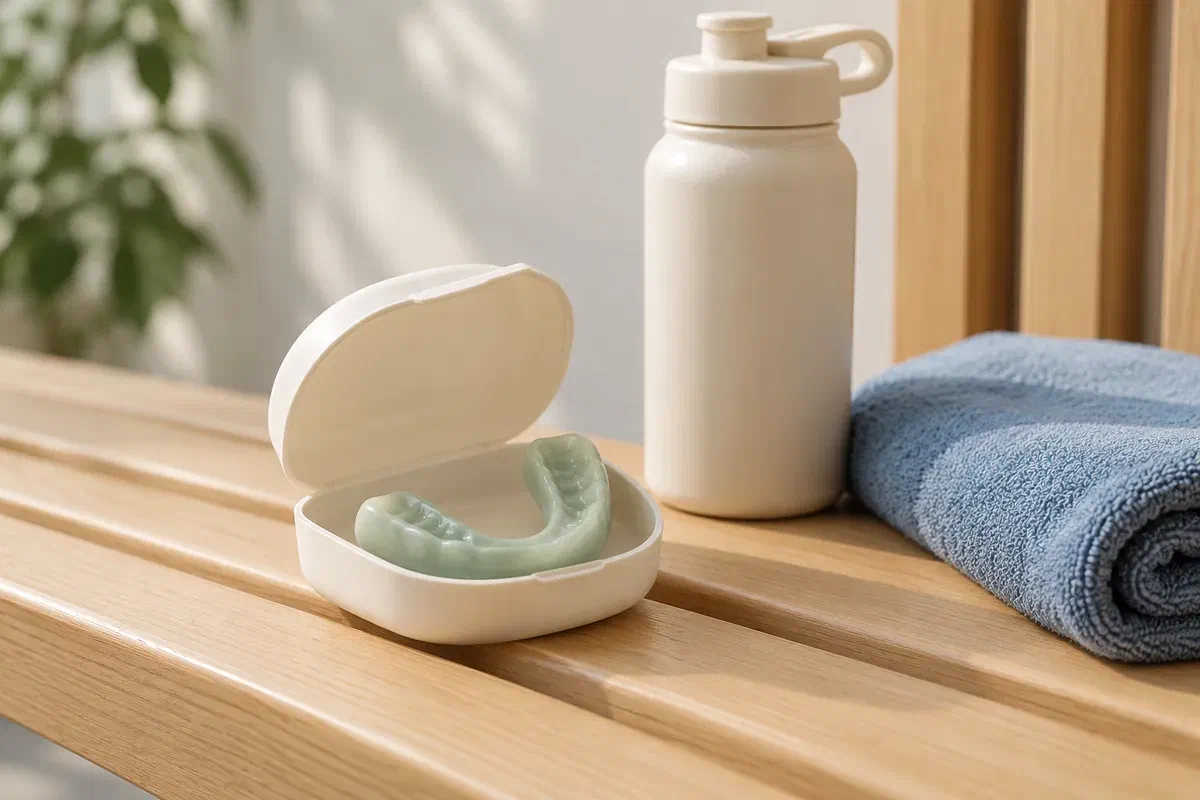
Illustrative sports mouthguard in a protective case beside a water bottle and towel
The details that change the advice

Out, moved or chipped: tell us which in the first sentence.

Have someone else make the call or drive if you are needed with the injured person. Meanwhile, nobody should be wiggling the tooth or clamping the jaw to test the bite, and an urgent injury should not sit waiting in an email inbox.

“The tooth is out.”

A permanent tooth outside its socket needs emergency dental care. Handle it by the chewing end, not the root. Dirt can be rinsed off briefly in milk or saline without scrubbing. If the person is alert, calm and it goes in without effort, it can be eased back into place; otherwise keep it in milk and head for care now. A baby tooth is left out.

“It is broken, crooked or the bite feels off.”

Ask for a prompt assessment even when it hardly hurts. A tooth that has moved should be left alone, and chewing on it to test is a bad idea. Bring a broken piece in milk if it is easy to find, but leaving promptly matters more than the search. Mention any missing fragment.

“They hit their head, and something seems wrong.”

Fainting, confusion, unusual drowsiness, vomiting or any other alarming change following a head impact needs medical assessment before dental care. A jaw that will not open or teeth that suddenly meet differently may point to injury beyond the teeth. A calmer tooth is not a reason to go back in.

Dial 911 if the person is unresponsive, has a seizure, struggles to breathe or keeps bleeding heavily. If nobody can say whether the lost tooth was a baby tooth, keep it in milk, leave it out of the socket, and get professional advice right away.

What you get from coming in

An answer for today and a plan for the months ahead

At the appointment the dentist sorts out what needs treatment now and what needs to be monitored or referred. Ask which teeth and tissues were injured, and whether the work done is temporary, final or the first stage of more. You should get an honest account of the injury rather than reassurance that every damaged tooth will survive.

Reviews show how the tooth’s nerve and the tissues around the root are healing, and some choices wait on those findings. Keep the visits even after eating is easy again. Between them, call if anything new appears rather than assuming the job is done because the chipped edge has been smoothed or rebuilt.

Patient information: AAE — assessment and continuing care after traumatic dental injuries

A check of the whole area

Beyond the obvious tooth, the dentist may assess the teeth beside it, the soft tissue inside the lip, how the jaw closes and the bone around the roots. Share the direction of the blow if you saw it. Imaging or other tests may be used, and recording the results gives later reviews something to measure against.

Short-term stabilizing

Initial care may involve covering a broken surface, guiding a tooth back and holding it with a splint, or treating a cut. Ask what each measure is for and what it means for eating and activity. Not every injury needs a splint, and a splint still comes with follow-up.

A realistic plan for follow-up and sport

Go over later treatment, review timing and when the area can face activity again. Ask whether the existing guard still fits. Dental advice and medical return-to-sport advice after a head injury are separate and both may apply.

When you arrive

Where the conversation picks up in person

Pack whatever was recovered from the field, tooth or broken piece, along with a note of the first aid given and any doctor’s advice so far. If anything is missing, come anyway; urgent care should not wait on equipment, forms or perfect recall.

  1. Pick up from the call

    The clinician reviews when and how the injury happened, the sport, and symptoms since, including any blackout. If a tooth was out, they will confirm the minutes outside the mouth and the storage. They decide whether a medical assessment should come first or run alongside dental care.

  2. Examine closely

    Teeth, gums and bite are checked, and tests are chosen according to the findings. Mention any tooth that feels different, even one that looks fine. Some early tests are repeated at reviews, so not every question gets an answer on day one.

  3. Explain today’s treatment

    The approach depends on the injury, the tooth’s development and condition, and how long ago it happened. Ask about the plan, comfort, other options and referral. Sometimes the first visit protects or steadies the area while a longer restorative or specialist plan is put together.

  4. Book the next steps

    Leave with a review date, a list of foods and activities to skip, and a contact for a loose splint or new symptom. Discuss future mouth protection and whether medical clearance is needed after a head knock. Keep the written instructions where coaches and family can see them.

At home in the weeks that follow

Protect the tooth and keep the follow-ups on the calendar.

Care after a minor repair differs from care after a tooth was moved or replanted, or after a lip or gum wound. Follow the advice for your injury, and ask before returning to activity where another impact could land.

Eat and clean carefully

Ask how to clean the area and which foods or hard bites to avoid. Leave the tooth alone instead of pressing it, and do not chew on a splint. If the instructions are hard to follow, phone the team instead of using a routine meant for something else.

Phone about anything new

Call about pain that increases, swelling, renewed looseness, a change in colour, a bite that shifts or a damaged splint. Injured teeth can need more treatment after early symptoms settle. The next step depends on examination, and darkening does not always mean the same treatment.

Check protection before the next game

Bring the guard in when asked, especially after bonding, splinting or a change in tooth position. Never force it over a healing area. Follow the dental restrictions and any medical return-to-play plan; a guard cannot make an unassessed injury safe.

Patient information: NHS — medical assessment after head injury and concussion

What treatment might involve

The injury decides the plan.

Ask why a treatment suits what was found and what may follow. Visible damage on its own does not set the outlook or the full course of care.

When the fracture can be assessed for restoration

Repair or protection for a broken tooth

Care may cover the exposed area, bond a saved fragment back on, or rebuild the tooth with another material. Deeper fractures need more assessment. Ask if the repair is temporary and when it will be reviewed, because a tooth can still be reacting after it looks whole.

When a tooth has shifted or come out

Repositioning, splinting and trauma follow-up

These need prompt assessment and a plan designed for the injury, sometimes with a splint and further treatment, and reviews over time. Tooth type, root development, storage and damage to supporting tissue all shape the decisions. Not every tooth can be saved.

When the findings reach beyond the teeth

Specialist or medical involvement

The dentist may suggest a dental specialist, an assessment of the jaw or face, or urgent medical care. Ask what prompted it and how quickly it should happen. A referral helps you reach the right care and should not delay treatment of anything urgent.

Acton phone-call questions

Before, during and after the call

If the injury is urgent, phone now and tell us when it happened. These answers are for the minutes around that call.

(905) 876-4488
What should I have ready before I phone about a sports injury?
The time of the injury, the sport, what struck the person, what happened to the tooth, any bleeding or head-injury symptoms, and whether a tooth or piece was recovered and how it is being stored.
What if the injury happens after 7 p.m. on a weekday?
Call anyway in case someone can advise you. If you cannot reach us and the injury is time-sensitive, such as a knocked-out adult tooth, seek another available emergency dental or medical provider.
Would a photo of the tooth help?
Ask on the call whether a photo would be useful. Do not delay care to take one, and remember a photo cannot show damage below the gum or inside the tooth.
How do I handle bleeding from the mouth while we wait?
Gentle pressure with clean gauze or cloth can help. Heavy bleeding, or bleeding that will not slow, needs urgent medical care; call 911 if it cannot be controlled.
Should the injured person eat or drink before the appointment?
Avoid chewing on the injured side, and skip anything hard, very hot or very cold that could set off pain. If there are signs of a head injury, follow medical advice about eating and drinking, and ask us on the call if you are unsure.
Is it worth calling from Acton for something that looks small?
Yes. A short call lets us help you judge urgency, so you do not drive in for nothing or wait too long. Some injuries look minor and still need assessment.
Phoning from Acton

One call before the drive

Phone (905) 876-4488 first. Give us the time, the sport and what happened to the tooth, and we will check availability and advise on timing. Online booking is for routine follow-up visits, not for an injury that cannot wait.

If you need urgent care and we cannot be reached, contact another emergency provider who is available.

Visit Milton Dental Clinic
Unit 1, 342 Bronte St. S, Milton, ON L9T 5B7
Get directions Clinic hours
Monday–Thursday
11am–7pm
Friday–Sunday
By appointment only

Areas we serve

  • Milton
  • Oakville
  • Mississauga
  • Georgetown
  • Halton Hills
  • Acton
  • Campbellville
  • Brampton
  • Burlington
  • Puslinch
  • Rockwood
  • Erin
  • Caledon
  • Etobicoke
  • Old Milton
  • Bronte Meadows
  • Timberlea
  • Dorset Park
  • Dempsey
  • Clarke
  • Beaty
  • Coates
  • Harrison
  • Scott
  • Willmott
  • Ford
  • Bowes
  • Cobden
  • Walker
  • Mountain View
  • Milton Heights
  • Hawthorne Village
  • Valley View
  • Fallingbrook
  • Nassagaweya
  • Trafalgar
  • Esquesing
  • Nelson
  • Brookville
  • Moffat
  • Glen Williams
  • Norval
  • Limehouse
  • Stewarttown
  • Ashgrove
  • Hornby
  • Silver Creek
  • Speyside
  • Scotch Block
  • North Oakville
  • River Oaks
  • Glen Abbey
  • West Oak Trails
  • Palermo
  • Bronte Creek
  • College Park
  • Joshua Creek
  • Uptown Core
  • Preserve
  • Iroquois Ridge
  • Lisgar
  • Meadowvale
  • Meadowvale Village
  • Churchill Meadows
  • Erin Mills
  • Central Erin Mills
  • Streetsville
  • East Credit
  • Creditview
  • Heartland
  • Sheridan
  • Mount Pleasant
  • Credit Valley
  • Huttonville
  • Churchville
  • Springbrook
  • Northwest Brampton
  • Bram West
  • Fletcher's Meadow
  • Fletcher's Creek South
  • Alton Village
  • Orchard
  • Millcroft
  • Headon Forest
  • Tansley
  • Brant Hills
  • Tyandaga
  • Kilbride
  • Lowville
  • Aberfoyle
  • Morriston
  • Arkell
  • Hillsburgh
  • Freelton
  • Carlisle
  • Waterdown
  • Flamborough
  • Mountsberg

How can we help?

Milton Dental Clinic

Have a question about your smile? Choose the option that works best for you.

For urgent dental concerns, please call.
Messages are reviewed during clinic hours.