
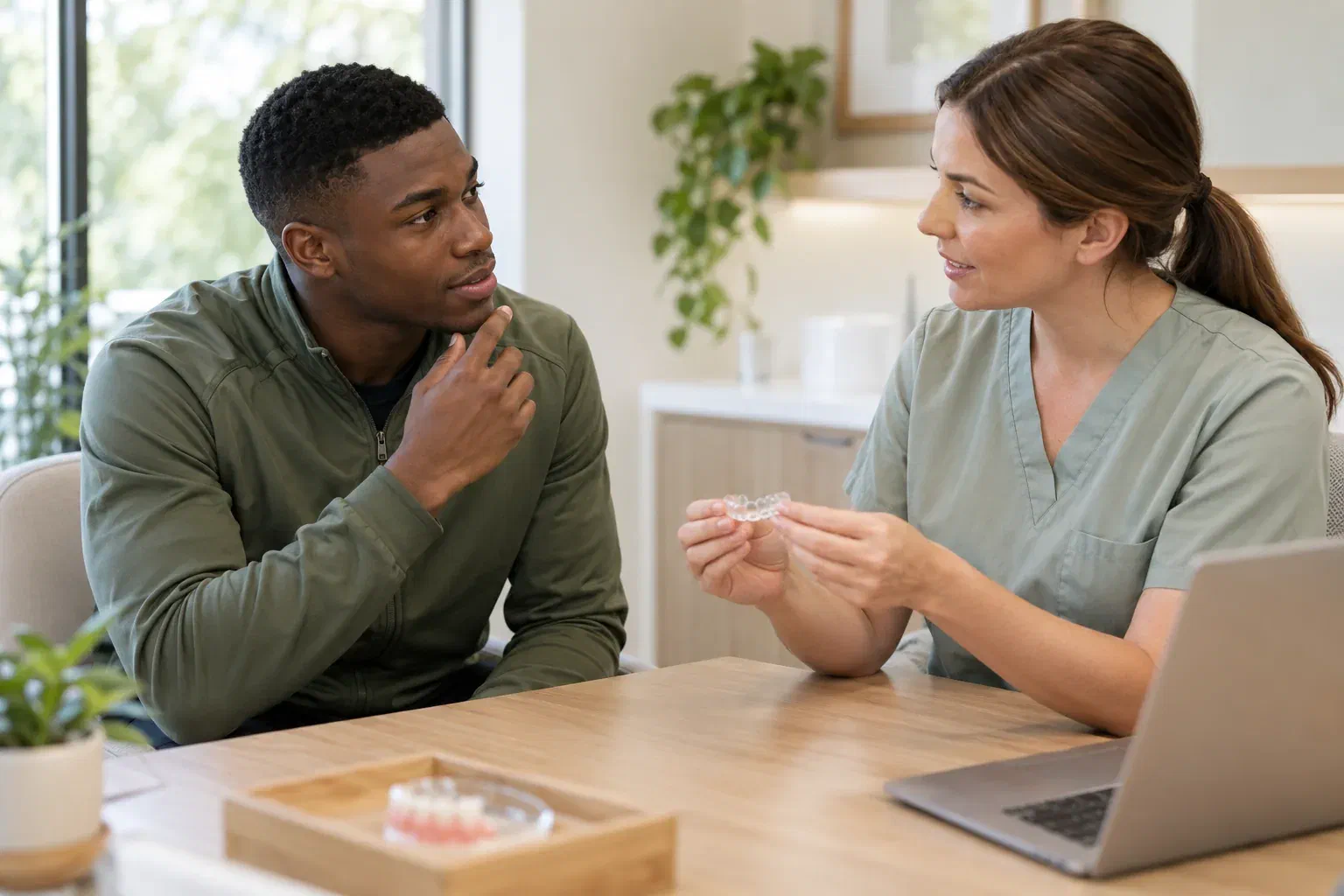
Illustrative consultation with an adult athlete about a dental injury
Specialized Care

Sports-Related Dental Injury Treatment in Brampton

Between cricket, basketball and hockey, a busy household can face a mouth injury on any night of the week. If a tooth is chipped, loose or knocked out, call us from Brampton, tell us what happened and when, and we will help you plan both the first visit and the reviews after it.

For households with more than one athlete

Three kids, four practices, one injured tooth

In a family where everyone plays something, a dental injury rarely arrives at a convenient time. One child is at the gym, another needs a ride home, and the one holding their mouth wants to get back on the court. Pause the schedule. A bat, ball or collision can hurt the lips, gums, jaw or head along with the teeth, and the injured player should stay off until an adult has checked on them.

What you see in the mirror is only a first impression. A tooth can be cracked below the gumline, nudged slightly forward or loosened in its socket, and the teeth beside it can take some of the force. An assessment soon after the injury establishes what happened and what it needs. Reviews in the following weeks and months then catch changes that do not show on the first day.

Phone (905) 876-4488, say when the injury happened and describe what you notice. Put the urgent details first: a missing or shifted tooth, bleeding that will not stop, or any hint of a concussion. We can go over current availability and the next step. When a medical problem is in play, it takes priority over a dental appointment.

Plan care after a child’s sports injury
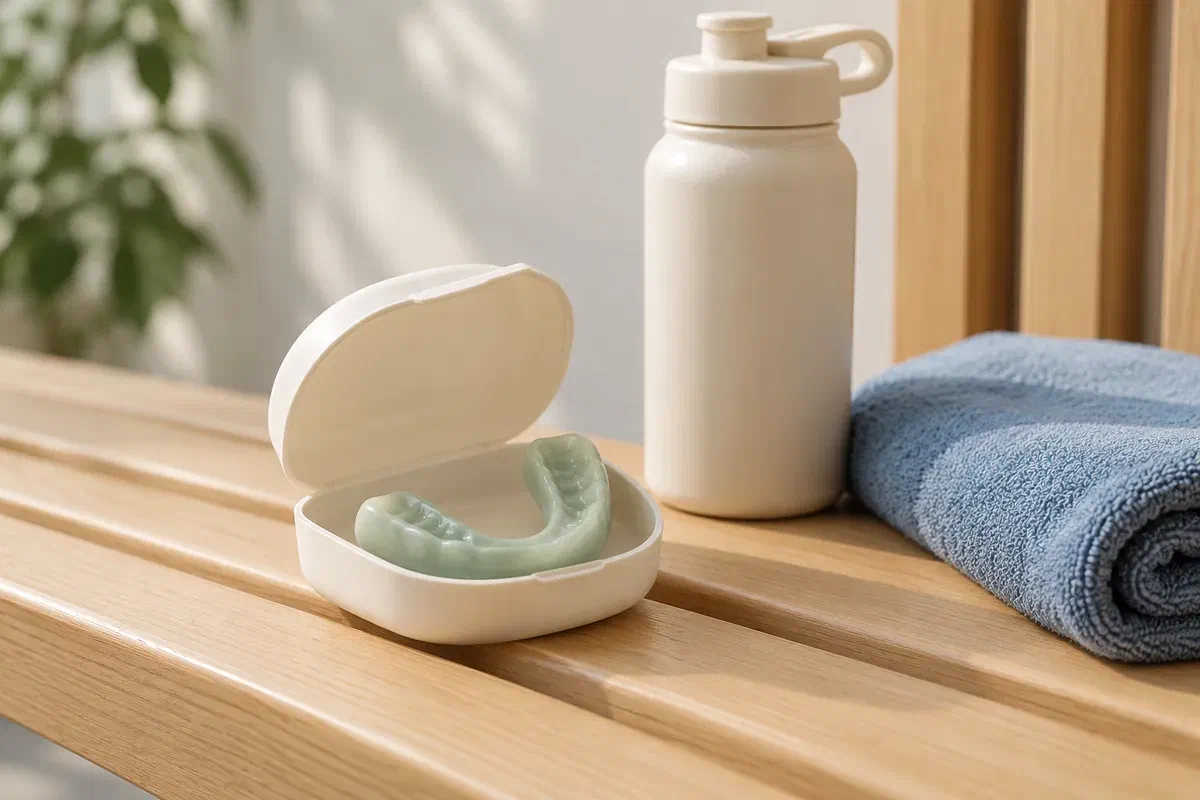
Illustrative sports mouthguard in a protective case beside a water bottle and towel
Triage at the kitchen table or the rink

Is this an emergency, or a call for first thing tomorrow?

Ask another adult to take the other kids or make the call while you stay with the injured one. Discourage wiggling a loose tooth or biting down to test it, and do not leave something urgent to a website message.

An adult tooth has been knocked out

Treat this as a dental emergency. Hold the tooth by its top, the part you normally see, and not by the root. Swish it briefly in milk or saline if it is dirty, without scrubbing. An older child or adult who is calm and alert may be able to have it eased gently back in; if that is not simple, put it in milk and leave now. Do not replant baby teeth.

A tooth is chipped, pushed in or out, or the bite is off

Book a prompt assessment, even when your child says it is fine. Leave a moved tooth where it sits and avoid chewing on that side. Bring any broken piece in milk if it is easy to grab, but do not search the field instead of leaving. Let the dentist know about any fragment that was not found.

The hit may have involved the head

Fainting, confusion, unusual sleepiness, vomiting, headache that worsens or other unsettling changes after a blow to the head need medical assessment. A jaw that will not open or teeth that now meet differently can mean a broader injury. A child who says the tooth feels better, or who can still wear a guard, is not ready to return yet.

Call 911 for unconsciousness, seizure, breathing difficulty or bleeding you cannot control. With younger children, it can be hard to tell a first tooth from an adult one; if in doubt, do not put it back. Keep it in milk and get professional advice right away.

What you gain from assessment and reviews

A clear picture now, and fewer surprises later

A first visit tells you which problems can be dealt with straight away and which need time, monitoring or a specialist. Ask which teeth and tissues were hurt, and whether today’s work is temporary, final or the first stage of something longer. Expect a straightforward account of the injury instead of a promise that every tooth will recover.

For a busy family, reviews can feel like one more thing to schedule. They are where the dentist sees how the tooth’s nerve and the tissues around its root are coping, and some decisions only become possible then. Keep them even after your child is eating normally, and call about new symptoms instead of assuming a repaired chip means it is over.

Patient information: AAE — assessment and continuing care after traumatic dental injuries

A thorough look, not a quick glance

The dentist may examine the teeth on either side, the lips and gums, the bite and the bone, depending on what turns up. Tell them how the hit happened if anyone saw it. X-rays or tooth tests may be used, and the findings are noted so the next visit has something to compare against.

Short-term protection when needed

Some children need a broken surface covered, a tooth guided back and held with a splint, or a cut treated. Ask what each measure is meant to do and what changes at home because of it. Many injuries need no splint; those that do still need reviews.

A schedule you can actually keep

Ask about later treatment and when reviews will fall so you can plan around games and school. Check whether your child’s guard still fits once treatment is done. A dentist’s okay and a doctor’s return-to-sport advice after a head knock are separate, and both may apply.

During the appointment

What the dentist asks, checks and explains

Bring the tooth or a broken piece if you have one, and a quick summary of first aid and any doctor’s advice. Do not hold up urgent care to collect the hockey bag, a health card or every detail of the play.

  1. The story of the injury

    Expect questions about the time, the game, what struck your child and how they have been since, such as any fainting spell. A tooth that spent time outside the mouth raises two more: roughly how many minutes, and stored in what? The answers help decide whether a doctor should see your child first or at the same time.

  2. A close examination

    Teeth, gums and bite are checked, and tests are chosen according to the findings. Encourage your child to point to any tooth that feels strange, even if it looks normal. Some readings change over the following weeks, so a first examination cannot always settle the outlook for each tooth.

  3. Options for today

    A growing child’s tooth may have a root that is still forming, and that, along with the type of injury and the hours since it happened, steers the choices. Ask what is proposed, how your child will be kept comfortable, what the alternatives are and whether a specialist is needed. Day one may be about protection; the full repair can come later.

  4. A plan for home, school and sport

    Write down the review date, what your child should not eat or do, and who to call if a splint loosens or a new symptom appears. Talk about better protection for the future and any medical clearance needed after a head injury. Share the instructions with coaches and anyone else who drives your child.

Back home after treatment

A few weeks of care, a few months of check-ins

A bonded chip heals differently from a tooth pushed back into place, a replanted tooth or a split lip. Stick with the instructions for your child’s actual injury, and check with us before they rejoin practice or any game where they could be hit again.

Meals and brushing

Pack softer lunches if advised and help younger children brush gently around the sore spot. Remind them that the splint is not for chewing and the tooth is not for testing. When the routine clashes with school or sports nights, phone us to adjust it instead of copying advice from a sibling’s different treatment.

Signs to call about

Ring us if pain builds, the face swells, the tooth loosens or shifts, it turns grey or darker, the bite changes or the splint breaks. Trouble can surface weeks after the first symptoms have faded. The dentist decides what a change means after examining it; darkening, for one, can lead to different next steps.

The guard, before the next game

Kids outgrow guards, and treated teeth can change the fit too. Bring it along if the dentist asks, and do not let your child jam it over a splint or repair. The dental go-ahead and any doctor’s plan after a head knock both need to be in place before they suit up.

Patient information: NHS — medical assessment after head injury and concussion

Choosing the right kind of care

Small chip or serious injury, the plan follows the findings.

Ask why a treatment suits the injury and what may come later. How bad it looks from outside does not decide the outlook or the complete plan.

When the fracture can be assessed for restoration

Rebuilding or covering a broken tooth

Depending on the break, the dentist may protect the exposed part, bond a saved piece back on or rebuild the edge in tooth-coloured material. Deeper fractures need more investigation. Ask whether the fix is a temporary one and when it will be rechecked, since a tooth that looks whole again may still be responding to the hit.

When a tooth has moved or come out

Repositioning, splinting and trauma reviews

These need quick assessment and a plan built around the specific injury. A splint or more treatment may be advised, with healing followed over time. Whether it is a baby or adult tooth, its stage of growth, how it was stored and damage to nearby tissue all matter, and no one can promise every tooth will be kept.

When the injury goes beyond a simple dental repair

Specialist or medical assessment

Some injuries are better handled by a paediatric dentist, an endodontist, an oral surgeon or a hospital team. Find out what worry prompted the referral and how quickly your child should be seen. Being sent onward is about matching the injury to the right skills, and it should never leave an urgent problem waiting.

Questions from Brampton parents

Practical answers for families juggling sports and school

Quick answers for parents managing more than one schedule. If a tooth is out or badly moved, phone now and read later.

(905) 876-4488
My child has a sports injury and I have two other kids at practice. Can someone else bring them?
Another trusted adult can help with the first call and with transport. A parent or guardian normally needs to be involved in treatment decisions for a minor, so make sure you can be reached and share what happened.
Can my child go to school the day after a dental injury?
Often yes, depending on the injury and how your child feels, but follow the specific advice given. Mention any head-injury symptoms, because school and activity plans after a concussion follow medical guidance.
How many review visits does a sports dental injury usually need?
It varies with the type of injury. Some need only a check or two; displaced or knocked-out teeth may be followed for longer. Ask for the expected schedule at the first visit so you can plan around the family calendar.
My younger child chipped a baby tooth. Does that still need a dentist?
Yes, it is worth an assessment. Injuries to baby teeth can affect the gum and, sometimes, the adult tooth developing underneath. Never try to put a knocked-out baby tooth back, but do call for advice.
Should each of my kids have their own mouthguard?
Yes. Guards should not be shared, and each one should fit the person wearing it. As children grow or teeth change, a guard may stop fitting, so check them from season to season.
Is it realistic to come from Brampton for the follow-up visits?
Many families make it work by asking for the review timetable up front and booking weekday evenings, since we are open until 7 p.m. Monday through Thursday, with weekend times by appointment. If something urgent flares up and we cannot be reached, use closer emergency care.
Brampton families, phone first

Tell us the time, the sport and what has changed.

Ring (905) 876-4488 before driving over to talk through the injury and check availability. A tooth that is out or out of place, and any medical concern, should be mentioned straight away. Online booking works for non-urgent follow-up, but a time-sensitive injury needs a call.

Cannot get through to us while your child needs urgent care? Contact another emergency provider that is open.

Visit Milton Dental Clinic
Unit 1, 342 Bronte St. S, Milton, ON L9T 5B7
Get directions Clinic hours
Monday–Thursday
11am–7pm
Friday–Sunday
By appointment only

Areas we serve

  • Milton
  • Oakville
  • Mississauga
  • Georgetown
  • Halton Hills
  • Acton
  • Campbellville
  • Brampton
  • Burlington
  • Puslinch
  • Rockwood
  • Erin
  • Caledon
  • Etobicoke
  • Old Milton
  • Bronte Meadows
  • Timberlea
  • Dorset Park
  • Dempsey
  • Clarke
  • Beaty
  • Coates
  • Harrison
  • Scott
  • Willmott
  • Ford
  • Bowes
  • Cobden
  • Walker
  • Mountain View
  • Milton Heights
  • Hawthorne Village
  • Valley View
  • Fallingbrook
  • Nassagaweya
  • Trafalgar
  • Esquesing
  • Nelson
  • Brookville
  • Moffat
  • Glen Williams
  • Norval
  • Limehouse
  • Stewarttown
  • Ashgrove
  • Hornby
  • Silver Creek
  • Speyside
  • Scotch Block
  • North Oakville
  • River Oaks
  • Glen Abbey
  • West Oak Trails
  • Palermo
  • Bronte Creek
  • College Park
  • Joshua Creek
  • Uptown Core
  • Preserve
  • Iroquois Ridge
  • Lisgar
  • Meadowvale
  • Meadowvale Village
  • Churchill Meadows
  • Erin Mills
  • Central Erin Mills
  • Streetsville
  • East Credit
  • Creditview
  • Heartland
  • Sheridan
  • Mount Pleasant
  • Credit Valley
  • Huttonville
  • Churchville
  • Springbrook
  • Northwest Brampton
  • Bram West
  • Fletcher's Meadow
  • Fletcher's Creek South
  • Alton Village
  • Orchard
  • Millcroft
  • Headon Forest
  • Tansley
  • Brant Hills
  • Tyandaga
  • Kilbride
  • Lowville
  • Aberfoyle
  • Morriston
  • Arkell
  • Hillsburgh
  • Freelton
  • Carlisle
  • Waterdown
  • Flamborough
  • Mountsberg

How can we help?

Milton Dental Clinic

Have a question about your smile? Choose the option that works best for you.

For urgent dental concerns, please call.
Messages are reviewed during clinic hours.