
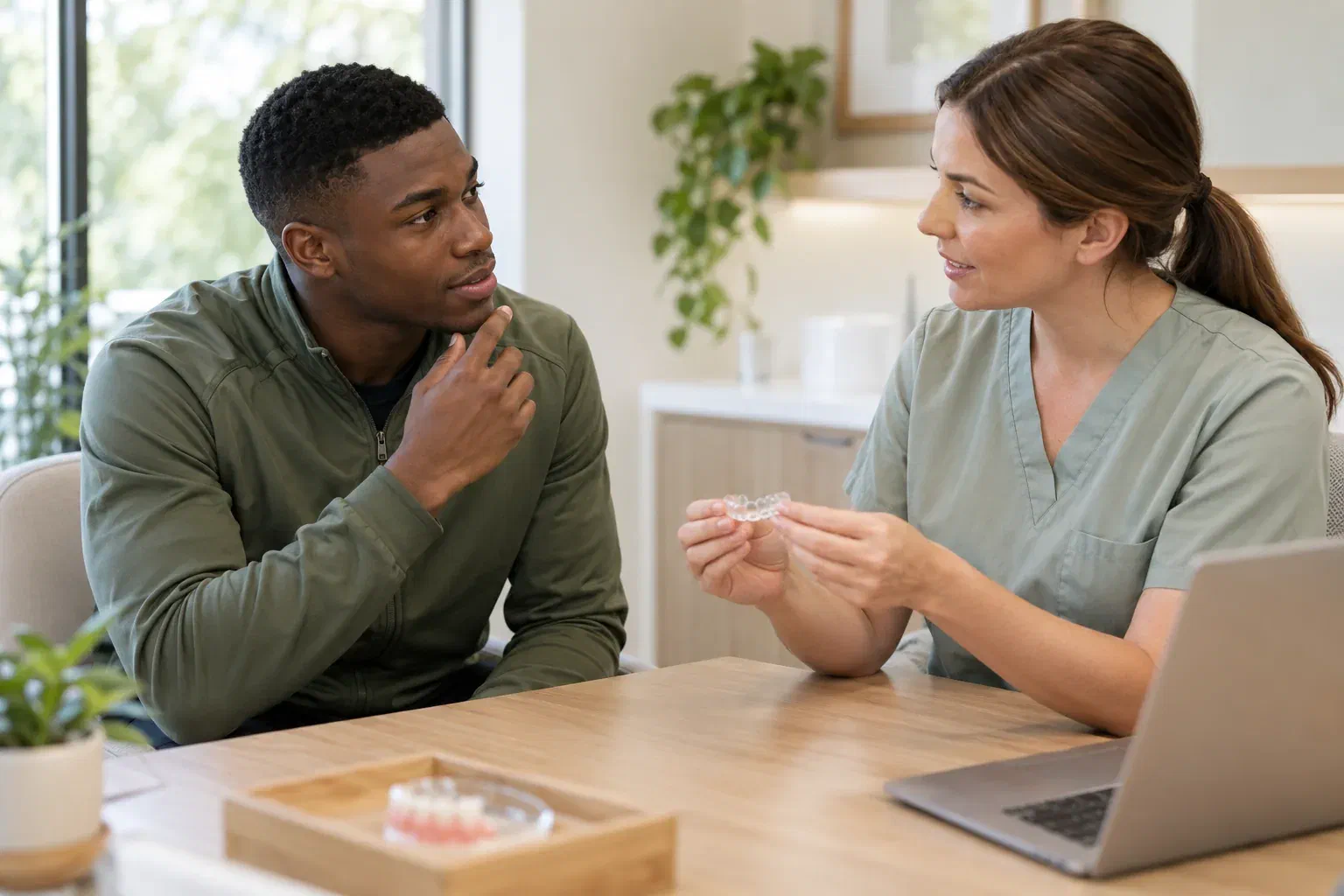
Illustrative consultation with an adult athlete about a dental injury
Specialized Care

Sports-Related Dental Injury Treatment in Burlington

Not every sports injury leaves a gap or a jagged edge. A tooth can look perfectly normal after a hit and still be bruised, cracked or shifted slightly. Call us from Burlington, describe the knock and how the tooth feels, and we will help you work out the right assessment.

When nothing looks broken

Why does a tooth hurt if it looks fine?

You take a shoulder to the jaw during a volleyball dive or a basketball rebound. No blood, no chip, but one tooth feels tender, slightly taller than the rest, or oddly loose when you bite. That is a common pattern. The force of a hit travels through the tooth into the ligament and bone holding it, and the damage can sit below the gumline where nobody can see it.

Sit out the rest of play first and think about the whole body. A blow that bruised a tooth may also have hurt the lip, jaw or head. Once you are safe, an assessment helps identify what kind of injury has occurred, whether neighbouring teeth were affected, and what to watch for. Because some changes take weeks to show, follow-up is part of the care rather than an extra.

Ring (905) 876-4488 and say when the hit happened and how the tooth now feels. Mention straight away any tooth that has come out or moved, bleeding that will not ease, or symptoms such as confusion or drowsiness. We will talk through availability and a sensible next step. Medical problems must be handled before a trip to the dentist.

Get a hidden tooth injury checked
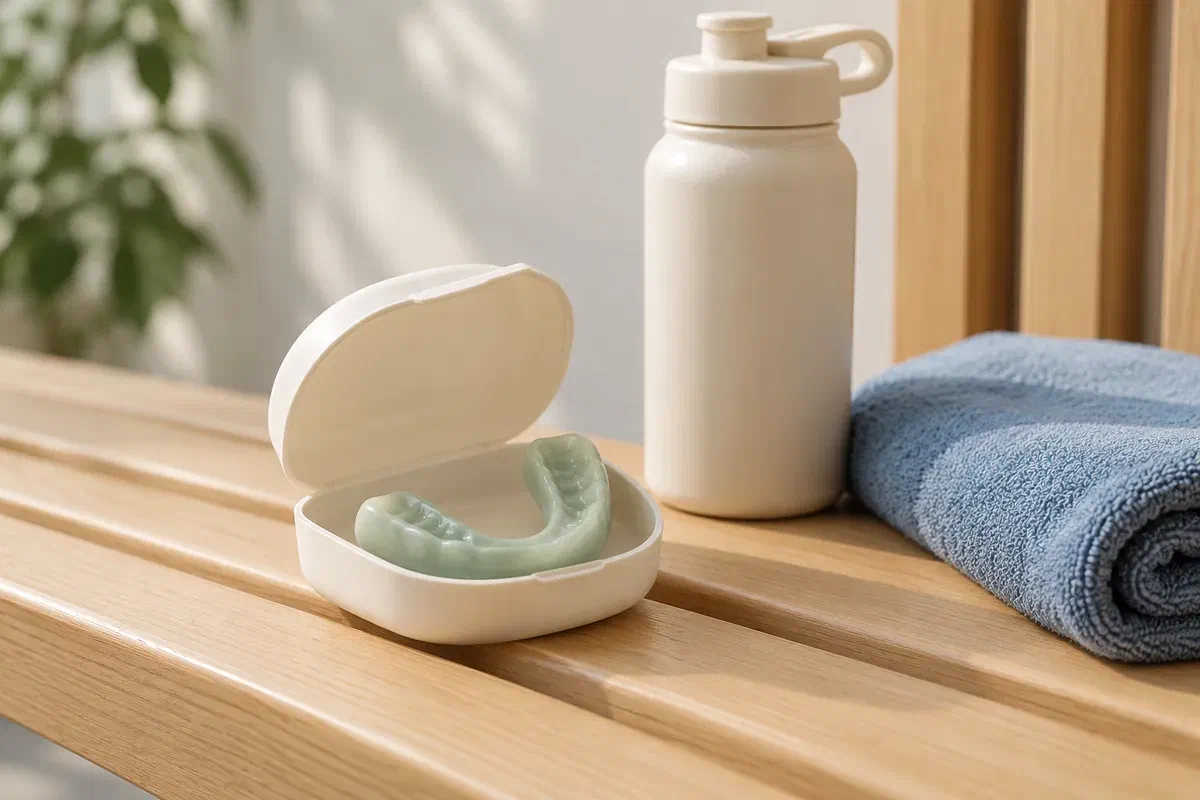
Illustrative sports mouthguard in a protective case beside a water bottle and towel
Clues worth taking seriously

Some signs mean call now; others mean book soon.

Ask a friend to help with phoning or driving if you feel shaken. Try not to tap, rock or bite on the sore tooth to see how it responds, and do not leave an urgent situation sitting in an inbox.

There is an empty socket

A permanent tooth that has been knocked clean out is an emergency. Lift it by the crown and avoid touching the root. A quick rinse in milk or saline is fine if it is dirty; do not scrub. In an alert person who can cooperate, it can go gently back into place if that is easy. If not, put it in milk and get care right away. Baby teeth stay out.

The tooth is tender, loose, out of line or chipped

These need a prompt look, even if the discomfort is mild. Do not nudge a tooth that has moved or keep chewing to test it. If a broken piece is easy to collect, keep it in milk and bring it, but do not spend time searching. Let the dentist know if a piece is still unaccounted for.

The head, jaw or face might be hurt too

Blacking out, confusion, unusual drowsiness, vomiting or other concerning symptoms after a blow to the head call for medical assessment. A sudden change in how the teeth meet, or difficulty opening wide, may point to injury beyond the tooth. Feeling better or fitting a guard back in is not permission to keep playing.

Phone 911 for unconsciousness, seizures, trouble breathing or bleeding that will not stop. Unsure if the lost tooth was a first tooth or an adult one? Store it in milk and seek urgent professional advice instead of putting it back.

What an examination can uncover

Find the injury you cannot see, then keep an eye on it.

An examination separates what needs treatment today from what needs time, monitoring or a specialist. Ask the dentist to name the teeth and tissues involved and to explain whether a step is temporary, final, or part of a longer course of care. A frank explanation of the injury is more useful than reassurance that every tooth will pull through.

With a tooth that looks normal, reviews are often where the real information appears. The clinician can see how the pulp and the ligament around the root respond over the coming weeks and months. Return for those visits even when chewing is comfortable, and call about anything new rather than deciding the injury was minor.

Patient information: AAE — assessment and continuing care after traumatic dental injuries

Test more than the sore spot

The dentist may check the teeth on either side, the gums and lips, the bite and the bone around the roots. Describe how the hit landed if you can. Imaging and tooth tests may be used, and recording the findings gives later visits a fair comparison.

Steady or shield a tooth that needs it

Some injuries benefit from a protective covering, a gentle repositioning with a splint, or care for a cut. Ask what each measure does and what it means for eating and activity. Plenty of injuries need no splint at all, and those that do still need reviews.

Plan the reviews and the return to play

Discuss any later treatment, the follow-up calendar and when the area can handle sport again. Ask whether your mouthguard still fits after treatment. Guidance from the dentist and guidance from a doctor about returning after a head injury are both important and answer different questions.

Step by step

From a sore tooth to a clear diagnosis

Bring any tooth or fragment you recovered, a quick note on first aid, and what any doctor has said so far. None of that should delay urgent care; an approximate account is enough.

  1. Describe the impact and how you have felt since

    Share when and how you were hit, the sport, and any symptoms such as blacking out, nausea or a missing tooth. If a tooth was out, explain how long and where it was kept. The clinician decides whether you should be seen medically first or at the same time.

  2. Assess the sore tooth and the ones around it

    The dentist looks at the teeth, gums and bite, adding tests that suit the findings. Tell them which teeth feel wrong, tall or loose, even if they look normal. Early tests can be inconclusive and are often repeated, so the first visit may not answer everything.

  3. Agree on first steps and what they cover

    Treatment depends on the injury, how developed the tooth is, its condition and the time since the hit. Ask about the plan, comfort, other options and whether a referral is needed. The first stage may just protect or stabilize the tooth while a longer repair or specialist plan takes shape.

  4. Book reviews and know your limits

    Leave with a return date, a list of foods and activities to avoid, and a contact for a loose splint or new symptom. Talk through future mouth protection and medical clearance if your head took part of the blow. Keep the instructions so a coach or family member can help you follow them.

Looking after a bruised or treated tooth

Light chewing, clean teeth and reviews on the calendar

A tender tooth left as it is, a small repair, a repositioned tooth and a replanted one each need different care. Follow the advice that matches your injury, and ask before going back to any sport where another knock is possible.

Eat and brush as advised

Ask how to clean the area gently and which foods or bites to hold off on. Leave the tooth alone instead of pressing it to check, and never bite on a splint. If the routine is hard to stick to, call the team rather than switching to tips meant for another procedure.

Notice and report changes

Get in touch about worsening pain, swelling, new movement, a tooth that turns grey or darker, a bite that changes or a damaged splint. A tooth that looked unharmed can still need treatment later. The next step depends on examination, and a colour change does not always mean the same thing.

Check your guard fits before going back

Bring the mouthguard to be checked if asked, especially after a repair, splint or tooth movement. It should not be pushed over the healing area. Follow both the dental limits and any medical return-to-sport plan; protection does not make an unassessed injury safe.

Patient information: NHS — medical assessment after head injury and concussion

Where treatment may go from here

Bruised, broken, or more than a tooth?

Ask why a treatment matches what was found and what might follow. The outlook is not set by how damaged the tooth looks from the outside.

When the break can be assessed for restoration

Repair or cover for a fractured tooth

Care might include sealing an exposed surface, reattaching a suitable fragment or rebuilding the tooth another way, depending on the fracture. Deeper fractures need further checks. Ask whether the repair is interim and how the tooth will be followed, because restoring the shape does not answer every question the hit raised.

When the tooth has shifted or come out

Repositioning, splinting and monitoring

These injuries call for prompt assessment and a plan for that specific injury. A splint or further care may be advised, with healing tracked over time. The tooth type, its maturity, how it was stored and any damage around the root all influence the decisions, and saving every tooth is not guaranteed.

When findings go further than a straightforward repair

Referral for injuries beyond the teeth

You may be pointed toward a dental specialist, an assessment of the jaw or face, or urgent medical care. Ask which concern is behind the referral and how urgent it is. A referral is a way to reach the right care, never a reason to hold off on an urgent problem.

Burlington questions about hidden tooth injuries

When a tooth feels wrong but looks right

Call about urgent injuries and tell us when they happened. The team can suggest the right assessment without assuming that no visible damage means no injury.

(905) 876-4488
Why does my tooth feel taller or hit first when I bite after a sports injury?
A knock can inflame the ligament around the root or move the tooth very slightly, which can make it feel high or tender. This deserves a prompt assessment. Avoid biting hard on it in the meantime, and mention any change in how your teeth meet.
What does it mean if the dentist calls my tooth bruised or concussed?
Dentists sometimes use these terms for a tooth that is tender after an impact without being broken or visibly moved. It still needs monitoring, because the nerve and supporting tissues can respond over time.
Could an X-ray miss a sports injury to a tooth?
Early images do not always show every change, which is one reason reviews are scheduled. Findings from the first visit are recorded so later images and tests can be compared. Report new symptoms between visits.
My tooth stopped hurting after a day. Do I still need to come back?
Yes, if a review was recommended. Comfort returning is encouraging but does not confirm that the inside of the tooth and the tissues around it have healed. Some changes show up only later.
Can cold drinks or ice help a sore tooth after a hit?
A cold compress on the outside of the face can ease swelling for some people. Very cold drinks may make a sensitive tooth hurt more. Comfort measures do not replace assessment, so arrange a visit regardless.
Is it worth the trip from Burlington for an injury that looks minor?
Call first and describe what happened. The team can help you judge how soon you need to be seen and what to watch for. If the injury is urgent and we are not available, seek another emergency provider closer to you.
From Burlington, call ahead

Tell us how the tooth feels, not just how it looks.

Phone (905) 876-4488 before setting out to describe the injury and check current availability. Mention a missing or displaced tooth and any medical concern early in the call. Use online booking for routine follow-up, not for an injury that needs prompt attention.

If you need urgent care and cannot get through to us, contact another available emergency provider.

Visit Milton Dental Clinic
Unit 1, 342 Bronte St. S, Milton, ON L9T 5B7
Get directions Clinic hours
Monday–Thursday
11am–7pm
Friday–Sunday
By appointment only

Areas we serve

  • Milton
  • Oakville
  • Mississauga
  • Georgetown
  • Halton Hills
  • Acton
  • Campbellville
  • Brampton
  • Burlington
  • Puslinch
  • Rockwood
  • Erin
  • Caledon
  • Etobicoke
  • Old Milton
  • Bronte Meadows
  • Timberlea
  • Dorset Park
  • Dempsey
  • Clarke
  • Beaty
  • Coates
  • Harrison
  • Scott
  • Willmott
  • Ford
  • Bowes
  • Cobden
  • Walker
  • Mountain View
  • Milton Heights
  • Hawthorne Village
  • Valley View
  • Fallingbrook
  • Nassagaweya
  • Trafalgar
  • Esquesing
  • Nelson
  • Brookville
  • Moffat
  • Glen Williams
  • Norval
  • Limehouse
  • Stewarttown
  • Ashgrove
  • Hornby
  • Silver Creek
  • Speyside
  • Scotch Block
  • North Oakville
  • River Oaks
  • Glen Abbey
  • West Oak Trails
  • Palermo
  • Bronte Creek
  • College Park
  • Joshua Creek
  • Uptown Core
  • Preserve
  • Iroquois Ridge
  • Lisgar
  • Meadowvale
  • Meadowvale Village
  • Churchill Meadows
  • Erin Mills
  • Central Erin Mills
  • Streetsville
  • East Credit
  • Creditview
  • Heartland
  • Sheridan
  • Mount Pleasant
  • Credit Valley
  • Huttonville
  • Churchville
  • Springbrook
  • Northwest Brampton
  • Bram West
  • Fletcher's Meadow
  • Fletcher's Creek South
  • Alton Village
  • Orchard
  • Millcroft
  • Headon Forest
  • Tansley
  • Brant Hills
  • Tyandaga
  • Kilbride
  • Lowville
  • Aberfoyle
  • Morriston
  • Arkell
  • Hillsburgh
  • Freelton
  • Carlisle
  • Waterdown
  • Flamborough
  • Mountsberg

How can we help?

Milton Dental Clinic

Have a question about your smile? Choose the option that works best for you.

For urgent dental concerns, please call.
Messages are reviewed during clinic hours.