
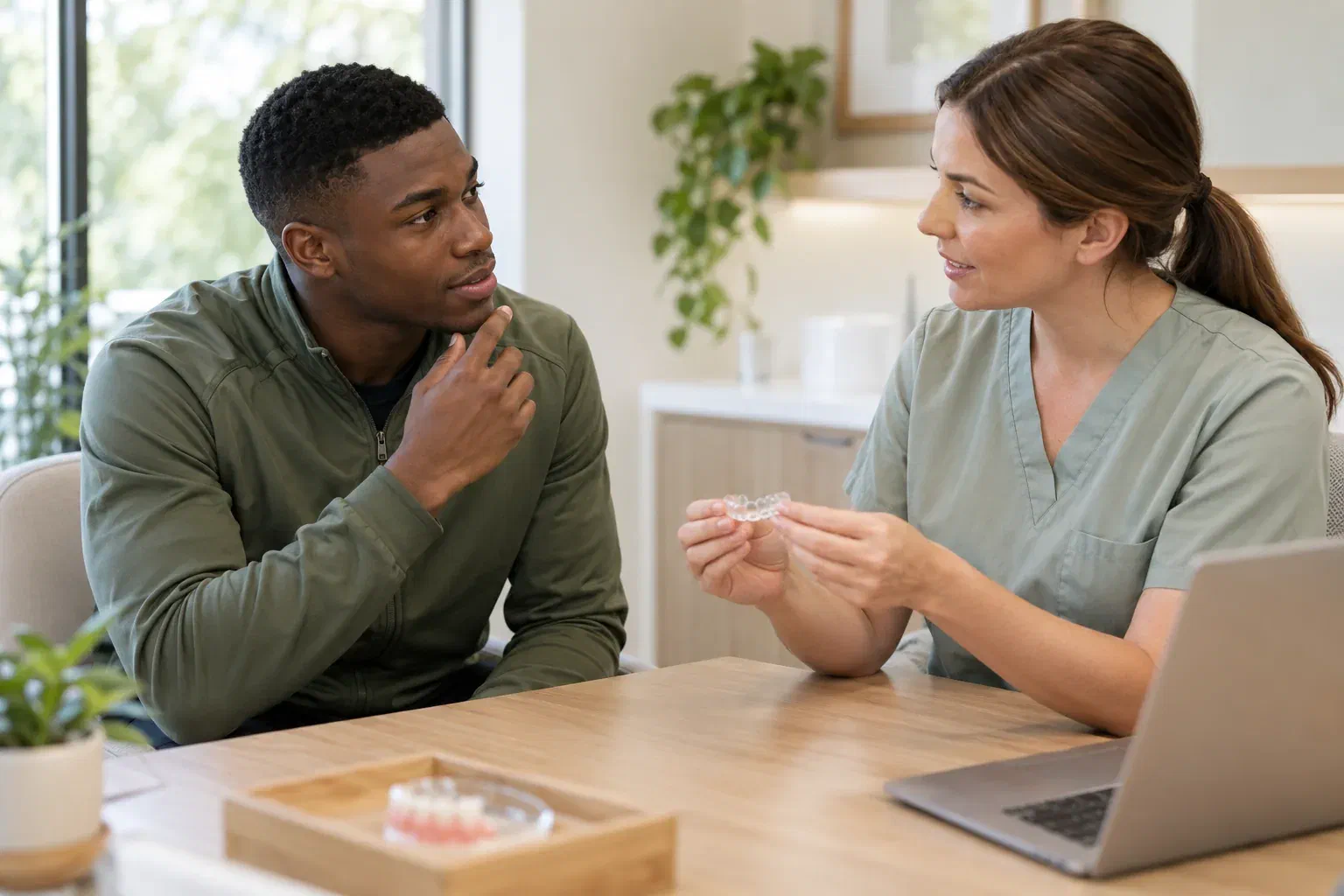
Illustrative consultation with an adult athlete about a dental injury
Specialized Care

Sports-Related Dental Injury Treatment in Caledon

A sports injury to a tooth does not always end when the soreness fades. Some teeth change weeks or months later, which is why follow-up matters. From Bolton or elsewhere in Caledon, call us after the injury, and again if anything changes, so the tooth is checked when it counts.

The long view of a sports injury

Months after the game, the tooth may still be healing.

Most attention goes to the moment of impact: the collision, the blood, the scramble for ice. That part matters, and it starts with taking the player out of the game and checking them over, because a blow to the mouth can injure the lips, jaw or head along with the teeth. But for the tooth itself, the story often continues long after everyone has forgotten the score.

A tooth that was bumped, loosened, pushed out of line or repaired can respond slowly. The nerve inside may recover, or it may not; the tissues holding the root may heal normally, or need attention. Some of those changes cannot be seen in the first days. Prompt assessment sets the baseline, and reviews spaced over the following months show which way things are heading.

After an injury, phone (905) 876-4488 and tell us when it happened. Begin with anything urgent: a tooth out of its socket or out of position, continuing bleeding, or symptoms of a head injury. We will explain availability and the right next step. If a medical problem needs attention, take care of that before a dental visit.

Arrange assessment and follow-up for an injured tooth
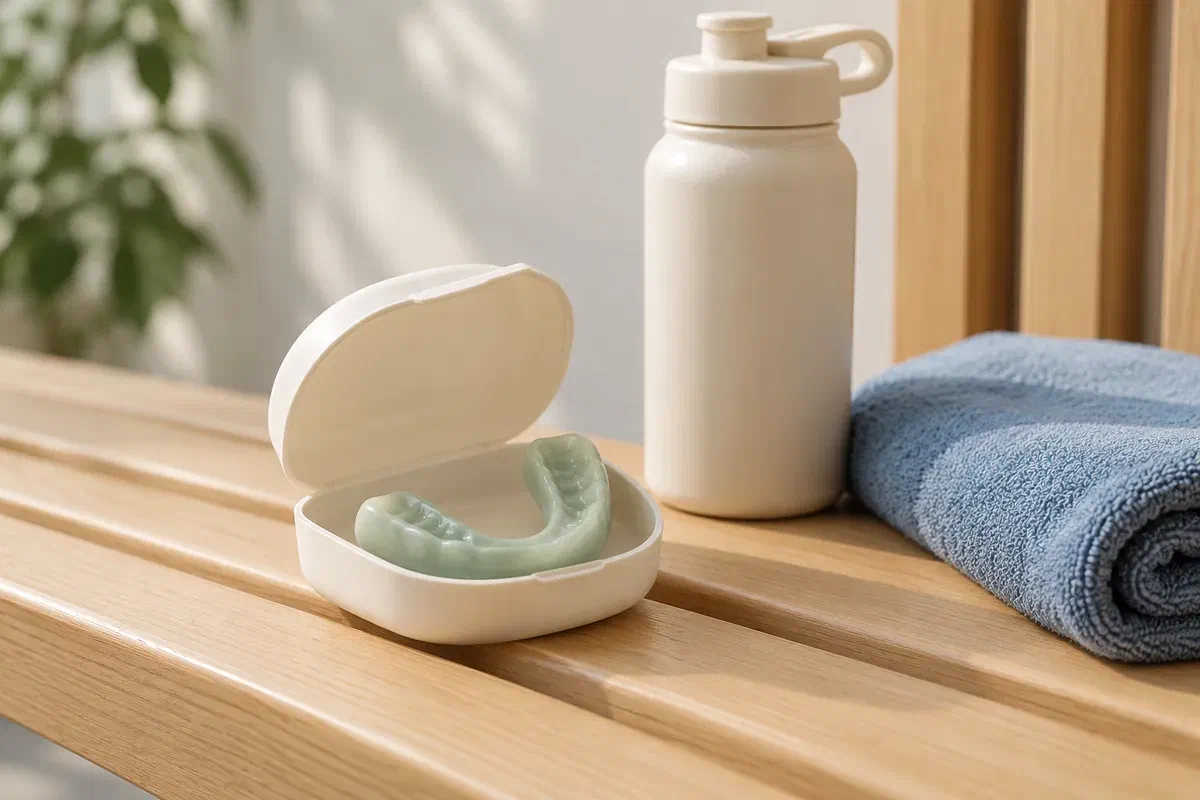
Illustrative sports mouthguard in a protective case beside a water bottle and towel
Right after the impact

Get the urgent part right, and the long-term care has a better start.

Let another adult drive or handle the phone if you are caring for the injured person. Do not let them wiggle the tooth or test the bite, and do not wait on a web message when the injury is urgent.

There is a gap where a tooth was

An adult tooth that has been knocked out needs dental care right away. Handle it by the crown, never the root. A quick rinse in milk or saline removes dirt; do not scrub it. In an alert, cooperative person it can be eased back into the socket if that is easy; otherwise keep it in milk and go now. Never replant a baby tooth.

Chipped, wobbly or sitting differently

Book a prompt assessment, even if pain is mild, because these are the injuries most likely to change quietly later. Avoid pushing a displaced tooth or chewing on it. A snapped-off corner that is lying in plain sight can travel in milk; one lost in the grass is not worth the delay. Mention any piece still missing.

The player may have hit their head

Blacking out, confusion, unusual drowsiness, vomiting or other worrying symptoms need medical assessment. A jaw that will not open properly or a sudden change in the bite may also point to a wider injury. Do not let a player return because the tooth has stopped hurting.

Phone 911 if someone is unconscious, has a seizure, cannot breathe properly or is bleeding heavily without stopping. Where it is unclear whether a lost tooth was a baby tooth, leave it out, keep it in milk, and get professional advice without delay.

Why reviews are part of the treatment

The first visit answers some questions; reviews answer the rest.

The initial examination establishes what needs treatment now and what needs watching or specialist care. Ask what was injured, and whether each step is temporary, final or one part of a longer plan. A clear, honest account of the injury is the most useful thing to leave with, rather than a guarantee that every tooth will recover.

Over the following months, the clinician checks how the nerve and the supporting ligament are responding, comparing each visit with the last. Some decisions can only be made this way. Keep the reviews even when the tooth feels completely normal, and get in touch about any change in between rather than waiting for the next booked visit.

Patient information: AAE — assessment and continuing care after traumatic dental injuries

A thorough baseline

Neighbouring teeth, lips and gums, the way the jaw closes and the bone around the roots may all be looked at. Share what you remember about how the hit landed. Radiographs and nerve-response checks taken now become the yardstick, so that a review in three or six months can show real change rather than guesswork.

Stabilizing care when required

A fractured edge may be sealed, a shifted tooth eased back and held with a slim splint, or a lip wound treated. Find out the purpose of each measure and what it rules out for the coming weeks. Plenty of injuries need no splint at all, and even when one is removed, the follow-up continues.

A review schedule you can keep

Ask for the likely review months up front, along with any treatment that may come later and when sport is reasonable again. Bring the old guard to check its fit over treated teeth. A head knock adds a doctor’s return plan, which runs alongside the dental timeline rather than inside it.

From first visit to final review

How an injured tooth is followed over time

For the first visit, bring any recovered tooth or fragment, a note on first aid and any medical advice. For reviews, bring a note of any changes you have noticed. Urgent care should never wait on paperwork or equipment.

  1. Establish what happened

    Expect questions about the clock time, the sport, what made contact and how the player has been since, blackouts included. A tooth that came out prompts two more: roughly how many minutes, and what it was carried in. With that, the clinician judges whether a doctor should be involved first or in parallel.

  2. Examine and set the baseline

    Teeth, gums and the way they meet are examined, and tests are matched to what turns up. Any tooth that aches, feels high or seems slightly loose is worth naming. These first readings are written down precisely, because the meaning of some results only emerges when a later visit can be set beside them.

  3. Treat what needs treating now

    What is possible on day one depends on the kind of injury, how far the root has developed, the tooth’s earlier health and the hours since the game. Ask what is proposed, how comfort is managed, what else could be done and whether a specialist should join in. Often the first job is simply to make the tooth secure.

  4. Review over the following months

    You will leave with dates for the first checks, a short list of foods and activities to skip, and a number for a loosened splint or a fresh symptom. At each review the dentist lines up the new findings against the old and decides whether more care is needed. Copies of the plan help coaches and relatives.

Between reviews

Quiet weeks still count.

The weeks between appointments are when most healing happens. Instructions depend on whether you had a bonded chip, a tooth put back in line or replanted, or a lip wound, so keep to yours and ask before rejoining any game where the area could be struck.

Look after the tooth day to day

Keep to the softer diet and gentle brushing you were shown for as long as advised. Resist pressing or tapping the tooth to see how it is doing, and keep the splint out of your chewing. When the routine is hard to fit into daily life, phone us so it can be adjusted properly.

Know the late signs

Darkening, a pimple-like bump on the gum, renewed tenderness, swelling, looseness or a changed bite can appear weeks or months after the injury. Call if you notice any of them. The next step depends on examination, not on any one sign alone.

Keep protection up to date

Treated or shifted teeth can leave a guard sitting loosely or pinching, so bring it to a review when asked. Do not squeeze it over teeth that are still healing. Full contact waits until the dentist is satisfied and, after any head knock, the doctor is too.

Patient information: NHS — medical assessment after head injury and concussion

Treatment now and later

What care can look like across the months

Ask why a treatment fits what was found and what might be needed down the line. The visible damage does not on its own predict how the tooth will do.

When a broken tooth is suitable for restoration

Repairing a fractured tooth

Care may include covering an exposed surface, reattaching a suitable fragment or rebuilding the tooth. Deeper fractures need more assessment. A first repair is sometimes interim, and the tooth is still reviewed afterwards, because restoring its shape does not show what is happening inside.

When a tooth has moved or been knocked out

Repositioning, splinting and long-term follow-up

These need prompt assessment and an injury-specific plan, often with a splint and reviews over months. Later treatment, such as root canal care, may be considered if reviews show the nerve has not recovered. Root maturity, storage and supporting-tissue damage all play a part, and some teeth cannot be kept.

When the findings go further than the teeth

Specialist or medical input

A referral can come at the start, for a suspected jaw fracture or complex root injury, or months later if a review raises a new question. Find out what triggered it and how soon you should be seen. Waiting for a specialist should never mean an urgent problem goes untreated.

Caledon questions about the months after

When an old sports injury starts acting up

For a fresh, urgent injury, phone rather than read. These answers deal with what can surface later in recovery.

(905) 876-4488
My tooth was hit last season and now it looks darker. Should I worry?
Call to arrange a review. Colour change after an injury can mean different things, and the dentist needs to examine the tooth before suggesting any treatment.
What is the bump on my gum above an injured tooth?
A small bump or pimple on the gum near an injured tooth can be a sign that needs assessment. Call for an appointment rather than waiting for your next scheduled review.
How long are injured teeth usually followed?
It depends on the injury. A minor chip may need little follow-up, while displaced or knocked-out teeth can be reviewed for a longer period. Ask for your expected schedule.
I missed a review. Is it too late to go back?
No. Call to rebook. Late reviews are still useful, especially if you bring your original records or tell us where you were first treated.
Can an old injury affect a tooth that never hurt?
Yes. Some injured teeth change without causing much pain. That is one reason reviews are recommended even when the tooth feels normal.
Can several family members’ appointments from Caledon be booked together?
Ask when booking. Grouping a review with other household appointments can reduce trips, as long as the review is not delayed past when it is needed.
From Caledon

Call after the injury, and call again if it changes.

Phone (905) 876-4488 before travelling so we can talk through the injury and current availability. Mention a knocked-out or displaced tooth and any medical concern first. Online booking works for routine reviews, not for an injury that needs prompt care.

If urgent care is needed and we cannot be reached, contact another available emergency provider.

Visit Milton Dental Clinic
Unit 1, 342 Bronte St. S, Milton, ON L9T 5B7
Get directions Clinic hours
Monday–Thursday
11am–7pm
Friday–Sunday
By appointment only

Areas we serve

  • Milton
  • Oakville
  • Mississauga
  • Georgetown
  • Halton Hills
  • Acton
  • Campbellville
  • Brampton
  • Burlington
  • Puslinch
  • Rockwood
  • Erin
  • Caledon
  • Etobicoke
  • Old Milton
  • Bronte Meadows
  • Timberlea
  • Dorset Park
  • Dempsey
  • Clarke
  • Beaty
  • Coates
  • Harrison
  • Scott
  • Willmott
  • Ford
  • Bowes
  • Cobden
  • Walker
  • Mountain View
  • Milton Heights
  • Hawthorne Village
  • Valley View
  • Fallingbrook
  • Nassagaweya
  • Trafalgar
  • Esquesing
  • Nelson
  • Brookville
  • Moffat
  • Glen Williams
  • Norval
  • Limehouse
  • Stewarttown
  • Ashgrove
  • Hornby
  • Silver Creek
  • Speyside
  • Scotch Block
  • North Oakville
  • River Oaks
  • Glen Abbey
  • West Oak Trails
  • Palermo
  • Bronte Creek
  • College Park
  • Joshua Creek
  • Uptown Core
  • Preserve
  • Iroquois Ridge
  • Lisgar
  • Meadowvale
  • Meadowvale Village
  • Churchill Meadows
  • Erin Mills
  • Central Erin Mills
  • Streetsville
  • East Credit
  • Creditview
  • Heartland
  • Sheridan
  • Mount Pleasant
  • Credit Valley
  • Huttonville
  • Churchville
  • Springbrook
  • Northwest Brampton
  • Bram West
  • Fletcher's Meadow
  • Fletcher's Creek South
  • Alton Village
  • Orchard
  • Millcroft
  • Headon Forest
  • Tansley
  • Brant Hills
  • Tyandaga
  • Kilbride
  • Lowville
  • Aberfoyle
  • Morriston
  • Arkell
  • Hillsburgh
  • Freelton
  • Carlisle
  • Waterdown
  • Flamborough
  • Mountsberg

How can we help?

Milton Dental Clinic

Have a question about your smile? Choose the option that works best for you.

For urgent dental concerns, please call.
Messages are reviewed during clinic hours.