
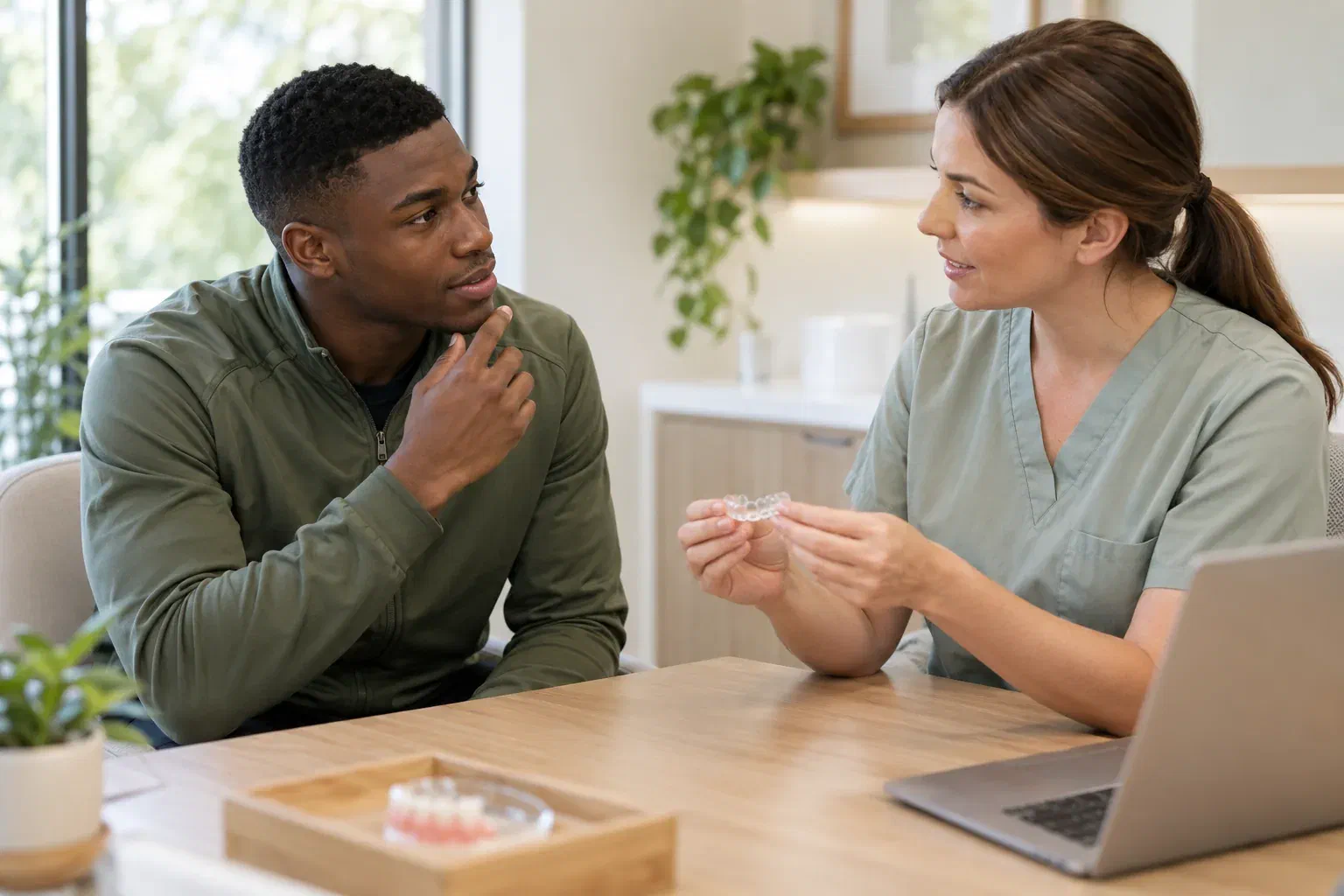
Illustrative consultation with an adult athlete about a dental injury
Specialized Care

Sports-Related Dental Injury Treatment in Erin

A sports injury to the teeth is easier to treat when the details are clear. From Erin or Hillsburgh, jot down the time, the sport and what happened to the tooth, then phone us. We can talk about first aid, how soon to come in and the follow-up the injury may need.

A simple record, started on the sideline

Write it down while the details are fresh.

In the confusion after a collision, important details slip away fast. What time was it? Did they lose consciousness, even briefly? How long was the tooth out, and what was it kept in? A quick note on your phone, made once the injured person is safe and off the field, can be surprisingly useful. The same impact that hurt a tooth may also have injured the lips, jaw or head, so start by watching the person, then the clock.

That record helps beyond the first visit. A tooth can be loosened, cracked below the gum or shifted slightly with little to see, and neighbouring teeth may be involved. Early assessment identifies the type of injury. Over the next weeks and months, changes such as darkening or new tenderness are easier to judge when you know exactly when the injury happened and how things looked at the start.

Ring (905) 876-4488 with your notes in hand. Say first if a tooth is out or out of place, if bleeding continues, or if the person seems dazed or unwell. From there we will tell you what openings we have and which step makes sense, whether that is coming in, waiting for a planned visit or going somewhere closer. Medical concerns are dealt with before any dental appointment.

Call with the details of a sports injury
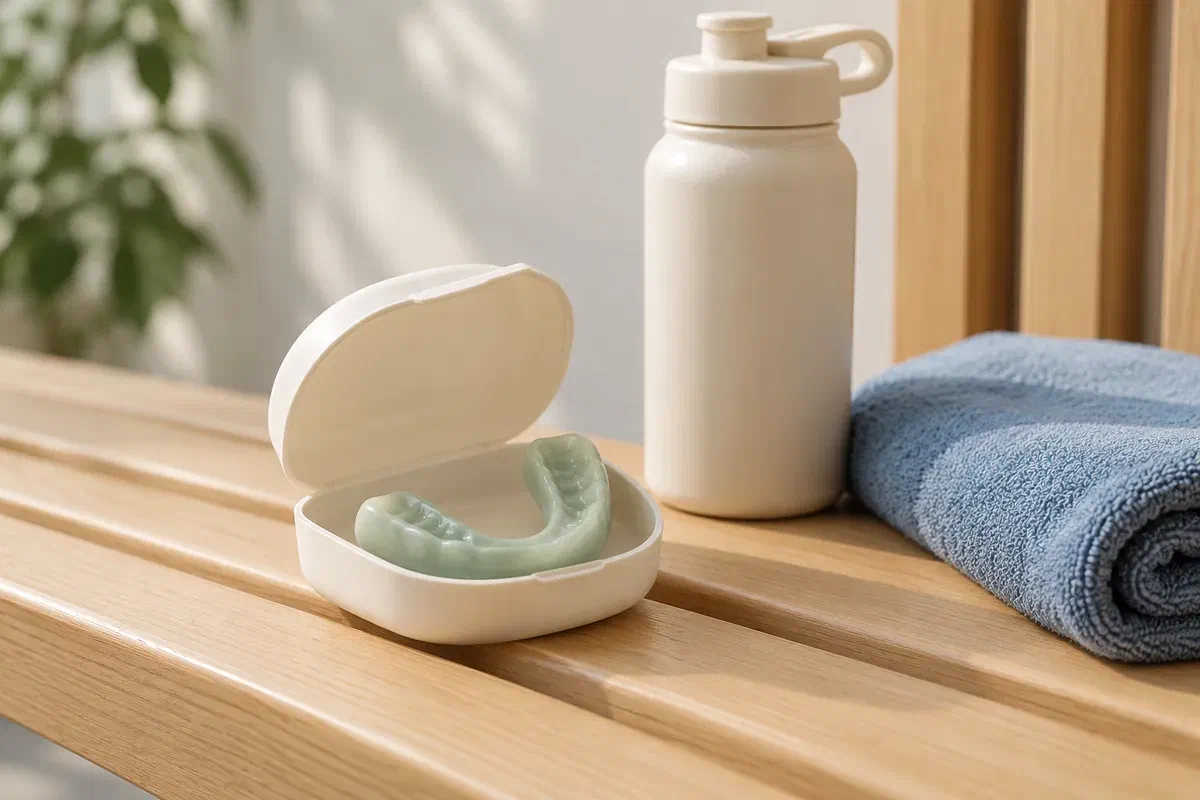
Illustrative sports mouthguard in a protective case beside a water bottle and towel
What to note and what to do

Three situations, each with its own first move

If you are looking after the injured person, let someone else take notes or drive. In the meantime, do not let anyone wiggle the tooth or bite down hard on it, and do not rely on an online message for an urgent injury.

Tooth knocked out: note the time it came out

A permanent tooth outside the mouth needs immediate dental care. Touch only the crown. If it is dirty, a brief rinse in milk or saline is enough; never scrub. In an alert, cooperative person, ease it back into the socket if it goes easily; if not, drop it in milk and leave now. Baby teeth are not replanted.

Tooth broken or moved: note how it looks and feels

Arrange a prompt assessment even if the pain is mild. Leave a shifted tooth where it is and avoid chewing on it. If a broken piece is easy to find, bring it in milk, but do not hold up care searching. Note any fragment that could not be found.

Head or jaw hit: note every symptom

Blacking out, confusion, drowsiness, vomiting, headache or other concerning signs after a head impact need medical assessment. Write down when each symptom started. A changed bite or difficulty opening the mouth may suggest a jaw injury. An easing toothache is not a reason to return to play.

For unconsciousness, a seizure, breathing difficulty or bleeding that will not stop, call 911 first and take notes later. If you cannot tell whether a knocked-out tooth was a baby tooth, do not replant it; store it in milk and seek professional advice right away.

What assessment and review give you

A baseline today makes every later visit more useful.

The first appointment shows what should be treated now and what is better watched or passed to a specialist. Find out which structures were hurt, and whether a given treatment is meant to be temporary, final or one stage in a sequence. A realistic description of the injury is more valuable than a promise that every tooth will survive.

At each review, the clinician compares the tooth with how it was before, checking how the nerve and the ligament around the root are responding. Some decisions depend on those comparisons. Keep the appointments even after eating is comfortable, and bring a note of any new symptom and when it began.

Patient information: AAE — assessment and continuing care after traumatic dental injuries

A record of more than one tooth

The dentist may assess adjacent teeth, the soft tissues, the bite and the bone. Your notes on the direction and force of the hit help. Radiographs and simple sensitivity checks may be taken on the day, and those readings become the reference point that every later visit is compared against.

Protection where it helps

First care might mean sealing a broken surface, guiding a tooth back and splinting it, or treating a cut. Ask what each step is meant to achieve and what limits follow. Many injuries need no splint; when one is placed, note the date so reviews can be planned.

A timeline for treatment and activity

Discuss further dental care, review dates and when the area can handle sport again. Ask whether the current guard still fits. Keep any medical return-to-activity plan alongside the dental one; they cover different questions.

At the appointment

Your notes, our examination, a shared plan

Bring the tooth or fragment if recovered, your notes, and any advice from a doctor. If you could not write anything down, come anyway; urgent care matters more than a perfect record.

  1. Go through the timeline

    The clinician asks when and how the injury happened, the sport and every symptom since, including blackouts. For a tooth that was out, they need the time out of the mouth and how it was stored. They decide whether medical assessment should come first or alongside.

  2. Examine and record

    Teeth, gums and bite are checked, with tests chosen to suit the findings. Mention any tooth that feels unusual even if it looks fine. Results are recorded carefully because they may need to be compared at later reviews.

  3. Agree on initial care

    The type of injury, how far the root has formed, the tooth’s earlier health and the hours since the game all shape the options. Ask what is planned, how comfort is handled, what alternatives exist and whether a specialist is needed. Sometimes day one is only about making the tooth secure, with the lasting repair to follow.

  4. Write down the next steps

    Note the review date, foods and activities to avoid, and who to call about a splint problem or new symptom. Ask about better mouth protection and whether a doctor needs to clear the player after a head knock. A copy of the plan for coaches and family keeps everyone working from one page.

Tracking recovery at home

Notice small changes and keep them on record.

Keep the aftercare sheet with your notes, because a bonded chip, a tooth eased back into line, a replanted tooth and a healing lip each come with different rules. Check with us before returning to any activity where another knock could land.

Follow the eating and cleaning plan

Ask which foods to avoid and how to keep the area clean, and add the answers to your notes. Try not to prod the tooth to see how it is doing, and keep the splint away from your chewing. If the plan is hard to stick to, call us rather than switching to advice meant for a different procedure.

Log anything new

Note and report increasing pain, swelling, renewed looseness, colour change, a bite that feels different or a damaged splint, with the date each began. Injured teeth can need further care after early symptoms ease, and the next step depends on examination.

Check the guard before returning

Bonding, a splint or a tooth that has shifted can all change how a guard sits, so pack it for the review if the dentist asks. Never press it down over teeth that are still healing. Write down the date the dentist clears you, and wait for any doctor’s sign-off too, before getting back to your sport.

Patient information: NHS — medical assessment after head injury and concussion

How treatment is chosen

The findings, not the first impression, set the plan.

Ask why a particular treatment suits the injury and what might follow. A tooth that looks only slightly damaged can still need ongoing care.

When a fracture can be assessed for restoration

Repair of a broken tooth

A fragment you saved in milk may be bonded back on; otherwise the exposed surface can be sealed and the edge rebuilt in tooth-coloured material. Breaks that run toward the nerve need more investigation. Note whether the dentist calls the repair interim, and the date it is due to be rechecked, because a tooth can keep reacting after it looks whole.

When a tooth has moved or been knocked out

Repositioning, splinting and trauma follow-up

Quick treatment comes first, often a light splint for a set number of weeks, followed by reviews that can stretch over months. Your notes on minutes out of the mouth and storage feed directly into the decisions, alongside root development and gum and bone damage. Some teeth are lost despite good early care.

When findings go beyond the teeth

Specialist or medical assessment

A complicated root injury, a suspected jaw fracture or a deep facial wound may need an endodontist, an oral surgeon or a hospital team. Ask what prompted the referral and how quickly to go, and take copies of your notes with you. Urgent treatment should carry on while the referral is arranged.

Erin and Hillsburgh questions

Keeping track of an injured tooth

Call about urgent injuries and tell us when they happened. These answers cover the practical side of recording and following an injury.

(905) 876-4488
What should I write down right after a sports dental injury?
The time, the sport, what struck the person, whether they lost consciousness, which teeth were affected, and for a knocked-out tooth, when it came out and how it was stored.
Should I take photos of the injured tooth over the following weeks?
Photos in consistent lighting can help you notice changes, such as darkening, and describe them when you call. They do not replace reviews, because many changes are only visible on examination or X-ray.
My tooth turned slightly grey a month after the game. What does that mean?
Colour change after an injury can have several causes. Call to arrange a review. The dentist will assess the tooth before recommending anything, since darkening does not always mean the same treatment.
Will I need to fill out an injury report for my league?
Check with your league or school. Your own notes and the dental instructions you receive may help with any paperwork they require.
Can I bring notes from a doctor or athletic therapist?
Yes, please do. Information about head-injury assessment or first aid helps the dentist understand the whole picture and plan around any medical restrictions.
How should we plan review visits from Erin?
Ask for the expected review schedule at the first visit, and group appointments for the household where that helps. Call between visits if anything changes.
Calling from Erin

Have your notes ready and dial first.

Phone (905) 876-4488 before setting out so we can discuss the injury and check availability. Start with anything urgent, such as a knocked-out or displaced tooth or a head-injury concern. Online booking is for routine follow-up, not a time-sensitive injury.

Unable to get through while the injury is urgent? Go to another emergency provider who is open.

Visit Milton Dental Clinic
Unit 1, 342 Bronte St. S, Milton, ON L9T 5B7
Get directions Clinic hours
Monday–Thursday
11am–7pm
Friday–Sunday
By appointment only

Areas we serve

  • Milton
  • Oakville
  • Mississauga
  • Georgetown
  • Halton Hills
  • Acton
  • Campbellville
  • Brampton
  • Burlington
  • Puslinch
  • Rockwood
  • Erin
  • Caledon
  • Etobicoke
  • Old Milton
  • Bronte Meadows
  • Timberlea
  • Dorset Park
  • Dempsey
  • Clarke
  • Beaty
  • Coates
  • Harrison
  • Scott
  • Willmott
  • Ford
  • Bowes
  • Cobden
  • Walker
  • Mountain View
  • Milton Heights
  • Hawthorne Village
  • Valley View
  • Fallingbrook
  • Nassagaweya
  • Trafalgar
  • Esquesing
  • Nelson
  • Brookville
  • Moffat
  • Glen Williams
  • Norval
  • Limehouse
  • Stewarttown
  • Ashgrove
  • Hornby
  • Silver Creek
  • Speyside
  • Scotch Block
  • North Oakville
  • River Oaks
  • Glen Abbey
  • West Oak Trails
  • Palermo
  • Bronte Creek
  • College Park
  • Joshua Creek
  • Uptown Core
  • Preserve
  • Iroquois Ridge
  • Lisgar
  • Meadowvale
  • Meadowvale Village
  • Churchill Meadows
  • Erin Mills
  • Central Erin Mills
  • Streetsville
  • East Credit
  • Creditview
  • Heartland
  • Sheridan
  • Mount Pleasant
  • Credit Valley
  • Huttonville
  • Churchville
  • Springbrook
  • Northwest Brampton
  • Bram West
  • Fletcher's Meadow
  • Fletcher's Creek South
  • Alton Village
  • Orchard
  • Millcroft
  • Headon Forest
  • Tansley
  • Brant Hills
  • Tyandaga
  • Kilbride
  • Lowville
  • Aberfoyle
  • Morriston
  • Arkell
  • Hillsburgh
  • Freelton
  • Carlisle
  • Waterdown
  • Flamborough
  • Mountsberg

How can we help?

Milton Dental Clinic

Have a question about your smile? Choose the option that works best for you.

For urgent dental concerns, please call.
Messages are reviewed during clinic hours.