
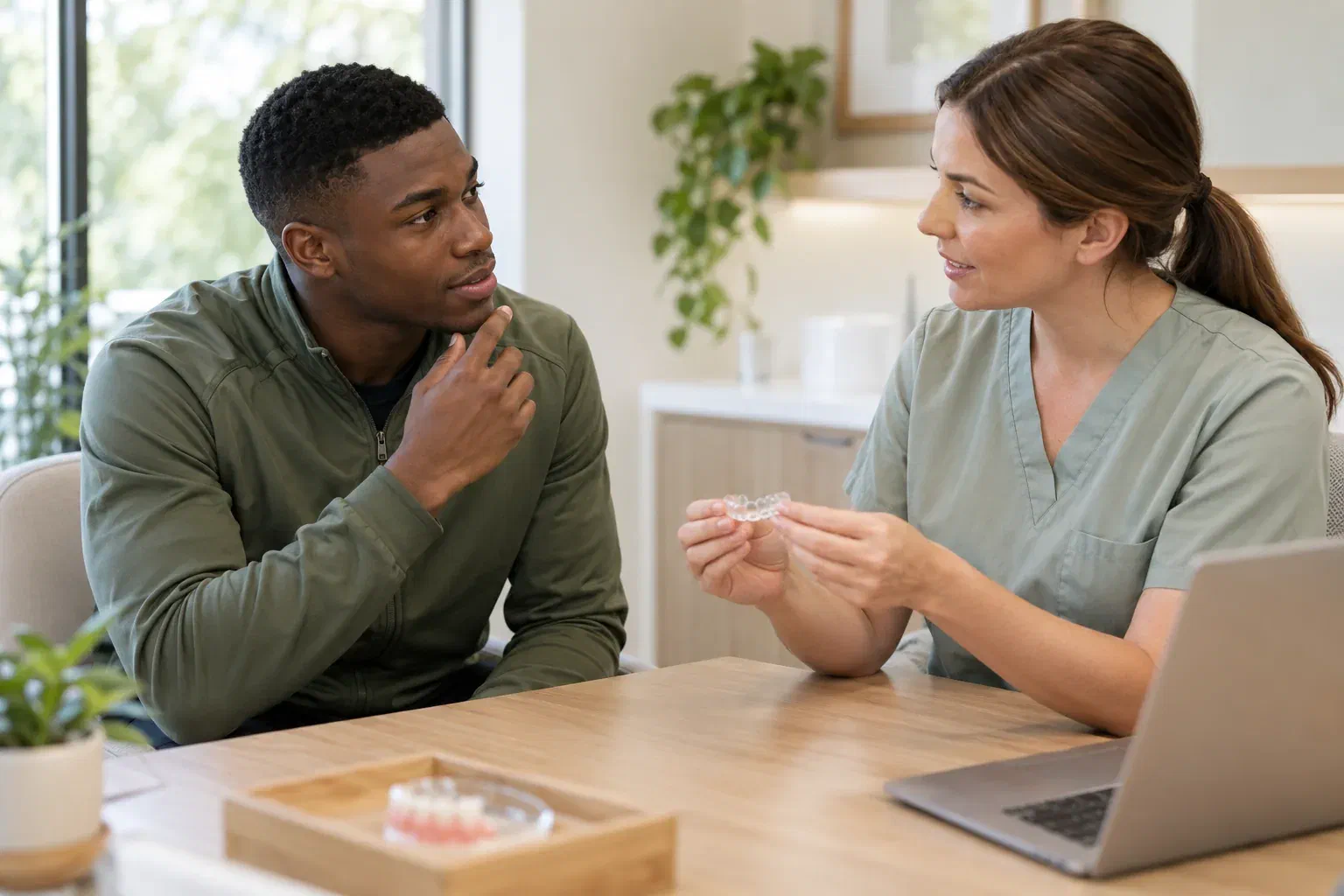
Illustrative consultation with an adult athlete about a dental injury
Specialized Care

Sports-Related Dental Injury Treatment in Georgetown

A hit hard enough to break a tooth is often hard enough to shake the head. After a sports injury in Georgetown, check the person first, get medical help for concussion warning signs, then call us about the chipped, loosened or knocked-out tooth and the care it needs.

Teeth and heads take the same hits

A cracked tooth, and a player who seems a little off

A broken front tooth gets everyone’s attention. It is visible, it may bleed, and it is easy to focus on. Yet the same knee, elbow or puck that caused it has delivered force to the jaw and skull as well. Before anyone looks closely at the tooth, watch the person: are they confused, unusually sleepy, sick to their stomach, or not quite themselves? Those signs need a medical assessment, and nobody returns to the game while they are present.

Once the person is safe, the tooth deserves a careful look too. An impact can crack enamel, loosen a tooth in its socket or push it out of line, and teeth beside it can be hurt without showing it. Early assessment identifies the type of injury and what it needs, and reviews in the weeks that follow catch what a first visit cannot.

When the dental side can be dealt with, ring (905) 876-4488 and say when the injury happened. Tell us first about a tooth that is out or has moved, steady bleeding, and whether a doctor has already seen the person. We can explain what appointments are open and what to do next. A head injury that needs medical care always goes ahead of a dental visit.

Arrange dental care after a sports impact
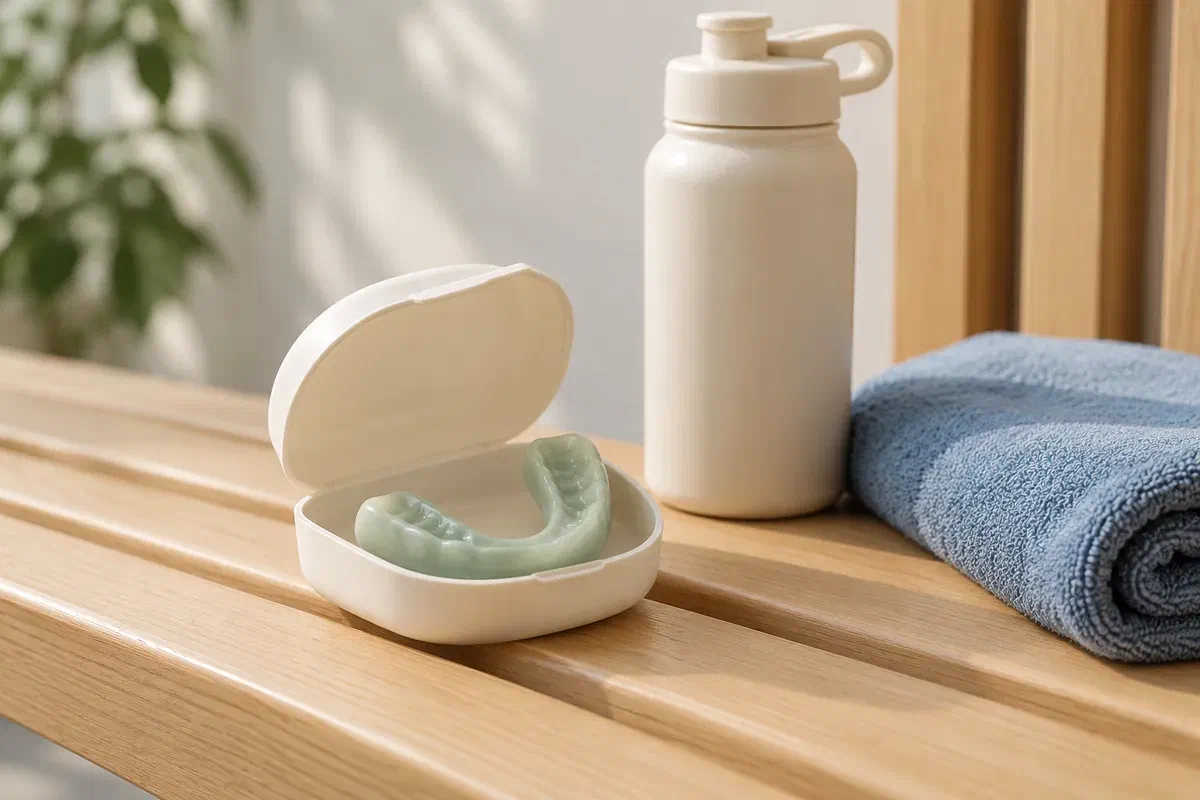
Illustrative sports mouthguard in a protective case beside a water bottle and towel
Sorting priorities after the hit

Head first, then the tooth, and both quickly

If someone else can stay with the injured player while you phone, let them. Avoid rocking a loose tooth or pushing the teeth together to check the bite, and do not rely on an online message for anything time-sensitive.

An adult tooth has been knocked out

This needs dental care straight away, provided the person is otherwise safe. Pick the tooth up by the crown, away from the root. Rinse off grit with a splash of milk or saline, no scrubbing. If the person is fully alert, cooperative and it slides in easily, return it gently to its socket; if not, keep it in milk and get care immediately. Baby teeth are not replanted.

A tooth is broken, crooked or the bite has changed

Arrange a prompt dental assessment even if pain is mild. Leave a displaced tooth where it is and do not chew on it to test. A fragment that is easy to grab can be brought in milk, but nobody should spend time searching. Let the dentist know if a piece is missing.

Concussion warning signs or a jaw injury

Anyone who blacked out, or who now has confusion, drowsiness, vomiting, a worsening headache or other worrying changes, should be assessed medically. Teeth that suddenly meet differently or a mouth that will not open fully can also mean a jaw or facial injury. Improving tooth pain says nothing about the head.

Call 911 for unconsciousness, a seizure, breathing difficulty or heavy bleeding that will not stop. Unsure whether a knocked-out tooth is a first tooth or a permanent one? Do not reinsert it; keep it in milk and seek professional advice immediately.

What dental assessment adds to the medical picture

One injury, two kinds of care, both worth finishing

The dental examination tells you which problems can be fixed now and which need watching or a specialist. Ask which teeth and tissues were affected, and whether the treatment you receive is temporary, definitive or part of a longer sequence. Expect an honest description of the injury, not a promise that every damaged tooth will recover.

Follow-up visits show how the tooth’s pulp and the tissues around the root are responding over time. Some decisions have to wait for that. Keep the review dates even once eating is comfortable, and tell us about new symptoms rather than treating a repaired chip as a sign the injury is over. Medical follow-up for the head runs on its own schedule.

Patient information: AAE — assessment and continuing care after traumatic dental injuries

Look at the whole mouth, not just the broken tooth

The dentist may check adjoining teeth, the gums and lips, the bite and the bone, guided by what they find. Mention where the blow landed and how hard if you know. X-rays or other tests may be part of the visit, and the record becomes a reference for later appointments.

Stabilize what needs stabilizing

Initial care might be sealing a broken surface, easing a tooth back and splinting it, or caring for a cut lip. Ask what each measure accomplishes and how it affects eating. Splints are not always needed, and having one does not replace reviews.

Keep the two recovery plans separate

Talk through further dental care, review timing and when the area can take activity again, and ask whether your guard still fits. If a concussion was suspected, the doctor’s plan for gradual return governs activity. A finished dental repair is never a substitute for it.

How the dental visit works

We ask about the head before we look at the teeth.

Bring the tooth or fragment if you have it, a short note on first aid, and any discharge papers or advice from a doctor. Do not put off urgent care to gather equipment, forms or a polished account.

  1. Check on safety and medical care so far

    Tell us when and how the injury happened, the sport, and every symptom since, including blackouts, nausea or confusion. If a tooth was out, say how long and what it was kept in. If medical assessment has not happened and seems needed, the clinician will say so before or alongside dental care.

  2. Examine the injured teeth and surroundings

    The dentist looks at the teeth, gums and bite and picks investigations to match. Mention any tooth that feels different even if it looks normal. Some early results need repeating, so the first exam may not give a final answer about every tooth.

  3. Discuss first treatment and its purpose

    Options depend on the injury, tooth development and condition, and how long ago it happened. Ask about the proposed care, comfort, alternatives and any referral. The first treatment may only protect or steady the area while a longer plan is set up.

  4. Set reviews and coordinate with medical advice

    Confirm the next dental visit, foods and activities to avoid for now, and who to call about a splint problem or new symptom. Discuss mouth protection for the future, and remember that medical clearance after a head injury is a separate step. Keep written instructions for coaches and family.

Recovering on two fronts

Rest the head, protect the tooth.

Dental aftercare depends on whether you had a repaired chip, a repositioned or replanted tooth, or a wound. Follow the advice written for your injury, and do not return to contact activity without both dental and medical go-ahead.

Follow the eating and cleaning instructions

Ask how to clean the area gently and which foods to avoid for a while. Leave the tooth alone instead of testing it, and do not bite on a splint. If the plan does not work for you, call the team rather than switching to advice meant for another procedure.

Call about dental changes

Reach out if pain grows, the gum swells, the tooth moves, it darkens, the bite shifts or the splint breaks. Injured teeth sometimes need further care after symptoms first settle. The response depends on examination, and a colour change does not always lead to the same treatment.

Hold off on the guard and the game

When asked, bring your mouthguard along, because bonding, splinting or a tooth that has shifted can all change how it sits. Do not force it over a healing area. Protective equipment does not shorten concussion recovery, and it does not make an incompletely assessed tooth injury safe.

Patient information: NHS — medical assessment after head injury and concussion

Dental treatment paths

What the tooth may need once the head is looked after

Ask why a treatment fits what was found and what could follow. The amount of damage on show is not the whole story, and the outlook depends on more than appearance.

When a fractured tooth can be assessed for repair

Restoring or protecting a broken tooth

Depending on the fracture, care may cover the exposed area, bond a usable fragment back on, or rebuild the tooth another way. A deeper break needs further assessment. Ask if the repair is temporary and when the tooth will be rechecked, since a tooth that looks restored may still be responding to the blow.

When a tooth has moved or come out

Repositioning, splinting and trauma reviews

These need prompt assessment and a plan for the specific injury, which may include a splint and further treatment with healing checked over time. Tooth type, maturity, storage and damage to supporting tissue all shape decisions, and no one can guarantee every tooth will be kept.

When findings go further than the teeth

Specialist, jaw or medical assessment

A dental specialist, an oral surgeon for a suspected jaw injury, or urgent medical care may be recommended. Ask what is driving the referral and how quickly to go. Referral is part of appropriate care and should not delay treatment of anything urgent.

Georgetown questions about teeth and head injuries

When a dental injury and a concussion arrive together

Medical concerns come first. For the dental side, call and say when the injury happened, and we can discuss the right assessment.

(905) 876-4488
Should a possible concussion be checked before the broken tooth?
Yes. Head-injury warning signs need medical assessment first. The exception is a knocked-out permanent tooth in a person who is otherwise alert and well, where urgent dental care is also time-sensitive; call for advice while medical needs are being handled.
Can the dentist tell me whether I have a concussion?
No. A dentist can note symptoms and advise you to seek medical care, but concussion assessment and clearance belong with a medical professional.
Is it safe to have dental treatment while recovering from a concussion?
Tell the dentist about the head injury and any symptoms, such as headache or sensitivity to light. The plan can be adjusted, and some non-urgent treatment may be timed around your recovery on medical advice.
Does a mouthguard prevent concussions?
A mouthguard is designed to protect the teeth and mouth. It should not be relied on to prevent concussion, and a head impact needs medical attention whether or not a guard was worn.
Why did my jaw feel sore for days after a hit to the teeth?
Impacts can strain the jaw joint and muscles as well as the teeth. Mention jaw pain, clicking or difficulty opening at your visit. A bite that has changed or a jaw that will not open properly needs prompt assessment.
Can I book the dental follow-up around concussion appointments in Georgetown?
Yes. Ask for the expected review dates at your first visit so you can fit them around medical appointments. We are open Monday to Thursday, 11 a.m. to 7 p.m., and Friday to Sunday by appointment.
Georgetown, once the person is safe

Tell us about the tooth and about the head.

Call (905) 876-4488 before you travel. We want to hear what happened, when, whether medical care has been involved, and what the teeth look and feel like, so we can check availability. Online booking is fine for routine follow-up but not for an urgent dental injury.

If you need urgent dental care and cannot reach us, go to another available emergency provider.

Visit Milton Dental Clinic
Unit 1, 342 Bronte St. S, Milton, ON L9T 5B7
Get directions Clinic hours
Monday–Thursday
11am–7pm
Friday–Sunday
By appointment only

Areas we serve

  • Milton
  • Oakville
  • Mississauga
  • Georgetown
  • Halton Hills
  • Acton
  • Campbellville
  • Brampton
  • Burlington
  • Puslinch
  • Rockwood
  • Erin
  • Caledon
  • Etobicoke
  • Old Milton
  • Bronte Meadows
  • Timberlea
  • Dorset Park
  • Dempsey
  • Clarke
  • Beaty
  • Coates
  • Harrison
  • Scott
  • Willmott
  • Ford
  • Bowes
  • Cobden
  • Walker
  • Mountain View
  • Milton Heights
  • Hawthorne Village
  • Valley View
  • Fallingbrook
  • Nassagaweya
  • Trafalgar
  • Esquesing
  • Nelson
  • Brookville
  • Moffat
  • Glen Williams
  • Norval
  • Limehouse
  • Stewarttown
  • Ashgrove
  • Hornby
  • Silver Creek
  • Speyside
  • Scotch Block
  • North Oakville
  • River Oaks
  • Glen Abbey
  • West Oak Trails
  • Palermo
  • Bronte Creek
  • College Park
  • Joshua Creek
  • Uptown Core
  • Preserve
  • Iroquois Ridge
  • Lisgar
  • Meadowvale
  • Meadowvale Village
  • Churchill Meadows
  • Erin Mills
  • Central Erin Mills
  • Streetsville
  • East Credit
  • Creditview
  • Heartland
  • Sheridan
  • Mount Pleasant
  • Credit Valley
  • Huttonville
  • Churchville
  • Springbrook
  • Northwest Brampton
  • Bram West
  • Fletcher's Meadow
  • Fletcher's Creek South
  • Alton Village
  • Orchard
  • Millcroft
  • Headon Forest
  • Tansley
  • Brant Hills
  • Tyandaga
  • Kilbride
  • Lowville
  • Aberfoyle
  • Morriston
  • Arkell
  • Hillsburgh
  • Freelton
  • Carlisle
  • Waterdown
  • Flamborough
  • Mountsberg

How can we help?

Milton Dental Clinic

Have a question about your smile? Choose the option that works best for you.

For urgent dental concerns, please call.
Messages are reviewed during clinic hours.