
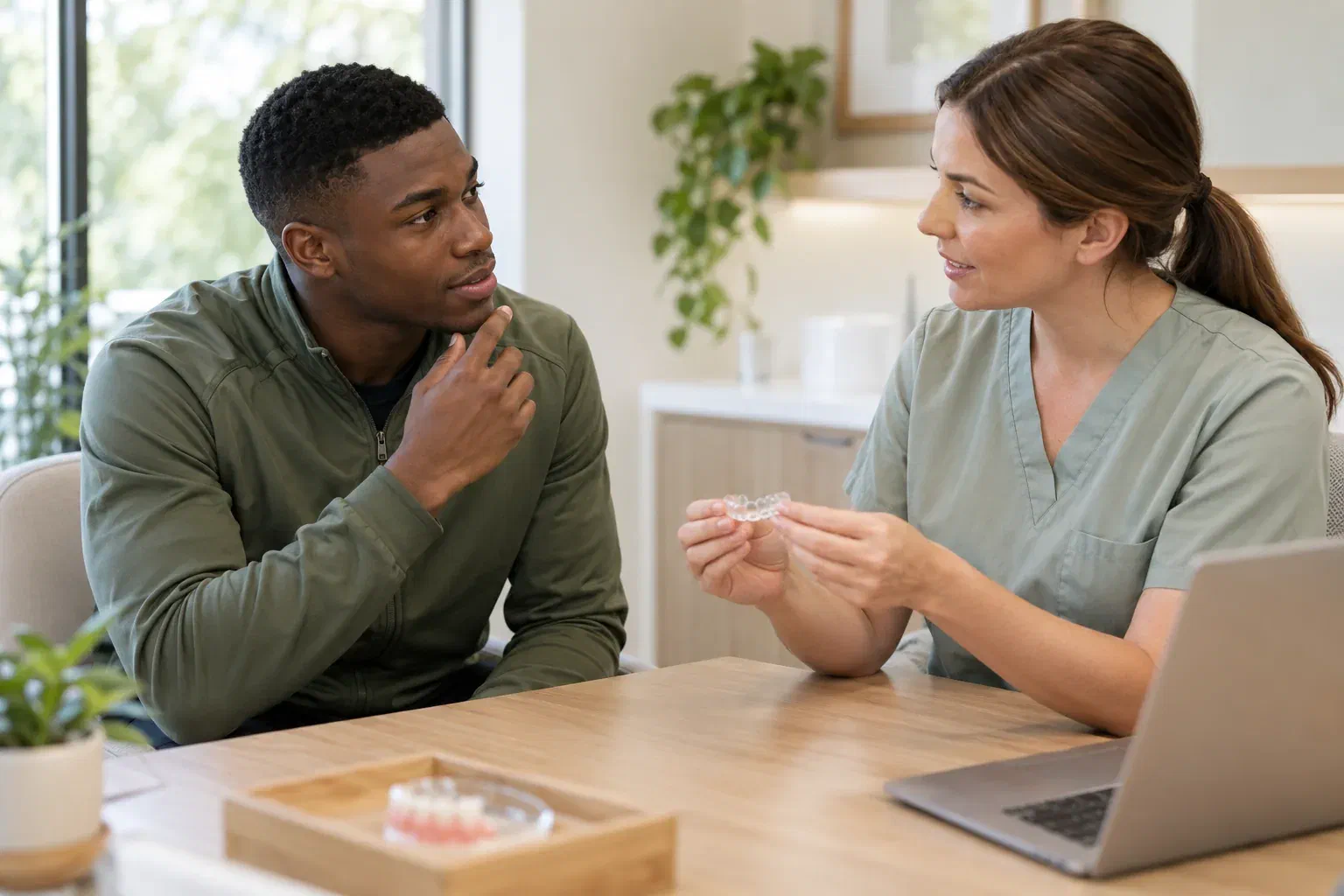
Illustrative consultation with an adult athlete about a dental injury
Specialized Care

Sports-Related Dental Injury Treatment in Halton Hills

The question most injured players ask is when they can get back out there. After a tooth is chipped, moved or knocked out, the answer depends on the injury, the treatment and any head knock. Call us from Halton Hills to arrange assessment and a return-to-play plan that fits.

Thinking about the next game

Back in the lineup, on the tooth’s timeline

Players in Georgetown, Acton and Glen Williams arenas and fields all want the same thing after a mouth injury: to know when they can play again. The honest answer starts with stopping now. A puck, a lacrosse stick or a fall can hurt the lips, jaw or head as well as a tooth, and returning on the same day because the tooth looks acceptable can turn one injury into two.

Getting back safely depends on knowing what was actually injured. A tooth may be cracked, loosened or shifted in ways that are not obvious, and teeth beside it may be affected. An early dental assessment identifies the type of injury and what it needs. Reviews afterwards track how the tooth heals, and those findings shape when it can take another hit.

Phone (905) 876-4488 and tell us when the injury happened. Lead with any tooth that has come out or moved, bleeding that continues, or symptoms of a head injury. We can explain current availability and what to do next. If medical care is needed, that comes before a dental appointment and before any talk of returning to sport.

Plan a safe return after a tooth injury
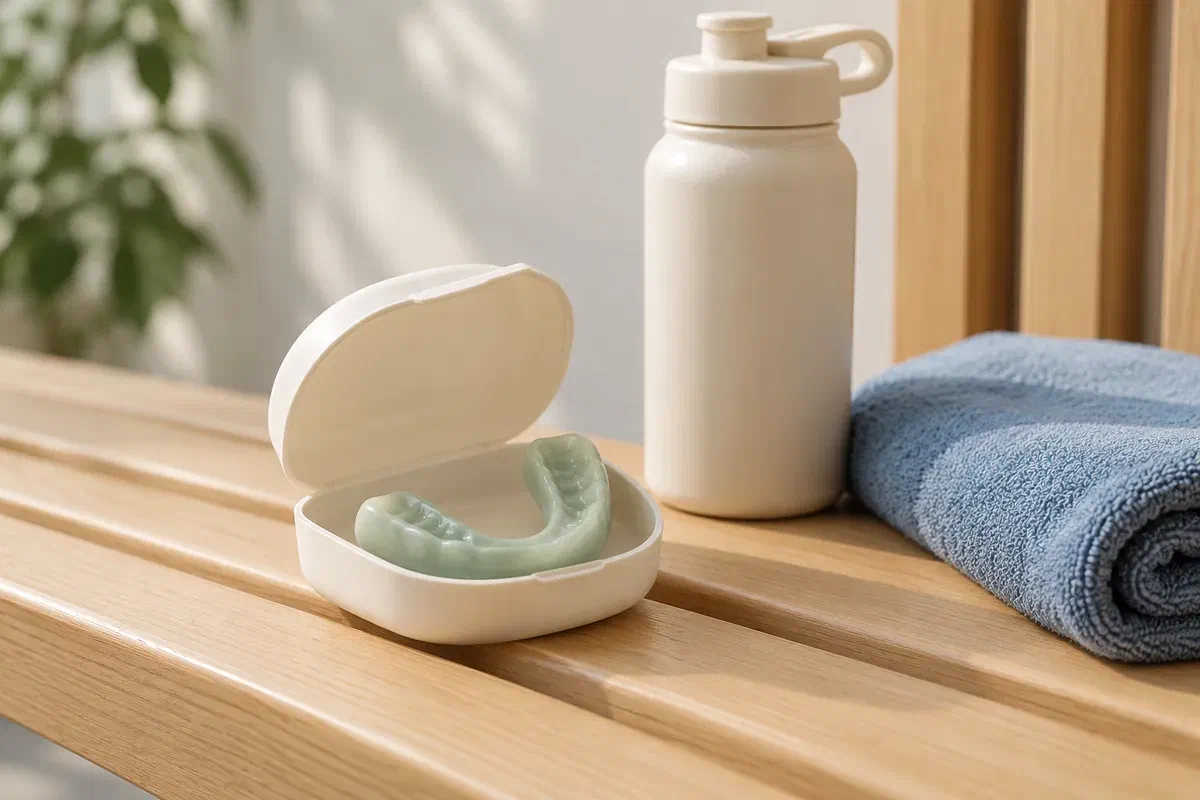
Illustrative sports mouthguard in a protective case beside a water bottle and towel
Before anyone talks about playing again

First, find out how serious it is.

Get a teammate, coach or family member to help with calls and driving. Do not let the player test a loose tooth, bite hard to check it, or wait for a message reply when the injury is urgent.

A permanent tooth is completely out

Urgent dental care is needed now. Handle the tooth by the crown only. Rinse away dirt with a short dip in milk or saline, without scrubbing. If the person is alert and cooperative and it is easy, guide it gently back into the socket; otherwise keep it in milk and get to care at once. A baby tooth should not be put back.

A tooth is chipped, crooked or the bite feels different

Have it assessed promptly, even if it barely aches. Leave a displaced tooth in place and avoid chewing on it. Carry a broken piece in milk if it is easy to find, without holding up care to look for it. Tell the dentist about any fragment that is still missing.

The head or face took part of the blow

Blacking out, confusion, unusual drowsiness, vomiting or other concerning signs after a hit to the head need medical assessment. Difficulty opening the mouth or a bite that has suddenly changed may also point to a wider injury. A guard that still fits and pain that has eased do not mean the player is ready to go back.

Call 911 for unconsciousness, a seizure, breathing problems or bleeding that cannot be controlled. With younger players it is not always obvious which kind of tooth came out; when in doubt, leave it out of the socket, put it in milk and phone for professional advice straight away.

How assessment shapes the return to sport

Treat the injury, then earn the green light.

The first examination sorts urgent work from things that can be watched or handed to a specialist. Find out exactly what was hurt, gums and bone included, and whether today’s treatment is a stopgap, a final repair or the first chapter of a longer plan. That answer also hints at how long the tooth will need shielding, though nobody can promise every injured tooth will be saved.

Reviews let the dentist see how the tooth’s nerve and supporting tissues are responding, and some decisions about activity depend on what they find. Keep them even after you are eating normally and feeling ready to play. Report new symptoms rather than assuming that a repaired chip means the tooth can take any knock.

Patient information: AAE — assessment and continuing care after traumatic dental injuries

An examination that looks beyond one tooth

The dentist may check neighbouring teeth, soft tissues, the bite and supporting bone. Was it a stick from the side or a fall straight onto the chin? That detail helps. X-rays or other tests may be used, and recording the findings lets later visits show whether things are improving.

Protection while the area heals

A tooth that moved may be eased back and held for a few weeks with a slim splint; a fractured edge may be covered; a lip wound may need attention. Ask what each measure protects and what it rules out for training. Plenty of injuries need no splint, and those that get one still come back for checks.

A return plan with dental and medical parts

Discuss further treatment, review dates and when the tooth can handle contact again. Ask whether your current guard still fits or needs to be replaced. If there was a head injury, a doctor’s return-to-sport plan applies as well, and the dental plan does not replace it.

What happens at your appointment

Assess, treat, review, then return

Bring the tooth or fragment if you have it, the mouthguard you were wearing, and notes on first aid and any medical advice. Do not let gathering any of this delay urgent care.

  1. Explain the incident

    Walk the clinician through the play: the time, the sport, what hit you and how you have felt since, including any blackout. A tooth that left the mouth brings two extra questions, minutes out and what it travelled in. From that, they judge whether a doctor needs to see you before or alongside dental care.

  2. Assess the damage

    The dentist examines the injured teeth, the teeth around them, the gums and the bite, using tests suited to the findings. Point out any tooth that feels wrong even if it looks fine. Some early tests are repeated at reviews, so the first visit may not settle every question.

  3. Agree on first treatment

    Options depend on the injury, how mature the tooth is, its condition and the time since impact. Ask about the planned treatment, comfort, alternatives and referral. The initial step may protect or stabilize the tooth while a longer plan is arranged.

  4. Map out reviews and the road back to play

    Before leaving, pin down the review date, the foods and drills to skip, and the number to call if a splint loosens or something new appears. Discuss a better-fitting or new guard and medical clearance where the head was involved. Share the written plan with your coach so expectations match.

The healing stretch

Patience off the field protects the tooth on it.

How you look after the area depends on whether you had a bonded chip, a tooth put back in line, a replanted tooth or a stitched lip. Use the instructions for your injury, and check in before training or games resume.

Go easy on the tooth

Softer food and gentle brushing are typical for a while, but your own instructions win. Resist the urge to wiggle or press the tooth, and keep the splint out of your chewing. If the routine clashes with training days, call us to adjust it instead of borrowing someone else’s aftercare sheet.

Watch for setbacks

Phone if the ache builds instead of fading, the gum swells, the tooth loosens again, it turns grey or yellow, your teeth meet differently or the splint cracks. These can surface after things seemed fine. The dentist interprets each change on examination; a darker tooth does not have one automatic fix.

Get the guard right before you go back

Bring your mouthguard in for a fit check when advised, especially after a repair, splint or change in tooth position. A guard that no longer fits may need replacing. Do not force it over a healing area, and wait for both dental and any medical clearance before returning.

Patient information: NHS — medical assessment after head injury and concussion

Possible treatments, and what they mean for play

Different injuries, different time on the bench

Each option comes with its own healing time and its own limits on contact. Ask how the plan affects training, and remember that how bad it looks says little about how it will heal.

When a broken tooth can be assessed for restoration

Repairing a fractured tooth

A saved fragment may be bonded back, or the edge sealed and rebuilt in tooth-coloured material. Breaks that reach toward the nerve need a closer look. Ask whether the repair is interim, when it will be rechecked and whether its shape changes how your guard sits.

When a tooth was pushed out of place or came out

Repositioning, splinting and trauma follow-up

Expect quick action and a plan built around the exact injury, often a splint for a set period and checks over months. Root maturity, storage, dry time and gum and bone damage all bear on the outlook and on when contact sport is reasonable. Some teeth are lost despite good early care.

When the injury goes beyond a straightforward repair

Specialist or medical assessment

An endodontist, an oral surgeon or a hospital team may be the right next stop for a complex root injury or a suspected jaw fracture. Ask what prompted the referral and how quickly to go. Urgent treatment should carry on while it is arranged.

Halton Hills return-to-play questions

Everything players want to know about getting back in the game

Common questions from players across Halton Hills about the weeks between injury and the next game. For an urgent problem, call rather than read.

(905) 876-4488
How soon can I play contact sports after a tooth is splinted?
It depends on the injury and the type of splint. Ask the dentist directly and follow their advice; contact before the area has healed can disturb the tooth. A head injury adds a separate medical timeline.
Do I need a new mouthguard after a dental injury?
Possibly. A repair, splint or change in tooth position can affect fit. Bring your guard to the follow-up so it can be checked, and replace it if it no longer sits properly.
Is a custom-fitted mouthguard better than a store-bought one?
A guard that fits well, stays in place and is comfortable enough to wear consistently offers better protection. Custom guards are made to your teeth; ask the dentist which option suits your sport and situation.
Can I train without contact while my tooth heals?
Often, light non-contact activity may be fine, but ask first. Follow the dental restrictions and any medical guidance after a head injury, and avoid drills where a ball, stick or another player could hit your face.
My coach wants a note before I return. Can the dentist provide one?
Ask at your appointment what the dentist can document about your dental injury and restrictions. Medical clearance after a concussion is a separate decision made by a medical professional.
What should I do if I get hit in the same spot again?
Stop playing and call us. A previously injured or splinted tooth may be more vulnerable, and a second impact needs its own assessment. Seek medical care for any head-injury symptoms.
From Halton Hills

Start the return with a phone call.

A call to (905) 876-4488 before you set off lets us hear what happened and check today’s openings. If a tooth is out or out of position, or you are worried about the head, say so first. Save online booking for routine reviews and fit checks.

If urgent care is needed and you cannot reach us, contact another available emergency provider.

Visit Milton Dental Clinic
Unit 1, 342 Bronte St. S, Milton, ON L9T 5B7
Get directions Clinic hours
Monday–Thursday
11am–7pm
Friday–Sunday
By appointment only

Areas we serve

  • Milton
  • Oakville
  • Mississauga
  • Georgetown
  • Halton Hills
  • Acton
  • Campbellville
  • Brampton
  • Burlington
  • Puslinch
  • Rockwood
  • Erin
  • Caledon
  • Etobicoke
  • Old Milton
  • Bronte Meadows
  • Timberlea
  • Dorset Park
  • Dempsey
  • Clarke
  • Beaty
  • Coates
  • Harrison
  • Scott
  • Willmott
  • Ford
  • Bowes
  • Cobden
  • Walker
  • Mountain View
  • Milton Heights
  • Hawthorne Village
  • Valley View
  • Fallingbrook
  • Nassagaweya
  • Trafalgar
  • Esquesing
  • Nelson
  • Brookville
  • Moffat
  • Glen Williams
  • Norval
  • Limehouse
  • Stewarttown
  • Ashgrove
  • Hornby
  • Silver Creek
  • Speyside
  • Scotch Block
  • North Oakville
  • River Oaks
  • Glen Abbey
  • West Oak Trails
  • Palermo
  • Bronte Creek
  • College Park
  • Joshua Creek
  • Uptown Core
  • Preserve
  • Iroquois Ridge
  • Lisgar
  • Meadowvale
  • Meadowvale Village
  • Churchill Meadows
  • Erin Mills
  • Central Erin Mills
  • Streetsville
  • East Credit
  • Creditview
  • Heartland
  • Sheridan
  • Mount Pleasant
  • Credit Valley
  • Huttonville
  • Churchville
  • Springbrook
  • Northwest Brampton
  • Bram West
  • Fletcher's Meadow
  • Fletcher's Creek South
  • Alton Village
  • Orchard
  • Millcroft
  • Headon Forest
  • Tansley
  • Brant Hills
  • Tyandaga
  • Kilbride
  • Lowville
  • Aberfoyle
  • Morriston
  • Arkell
  • Hillsburgh
  • Freelton
  • Carlisle
  • Waterdown
  • Flamborough
  • Mountsberg

How can we help?

Milton Dental Clinic

Have a question about your smile? Choose the option that works best for you.

For urgent dental concerns, please call.
Messages are reviewed during clinic hours.