
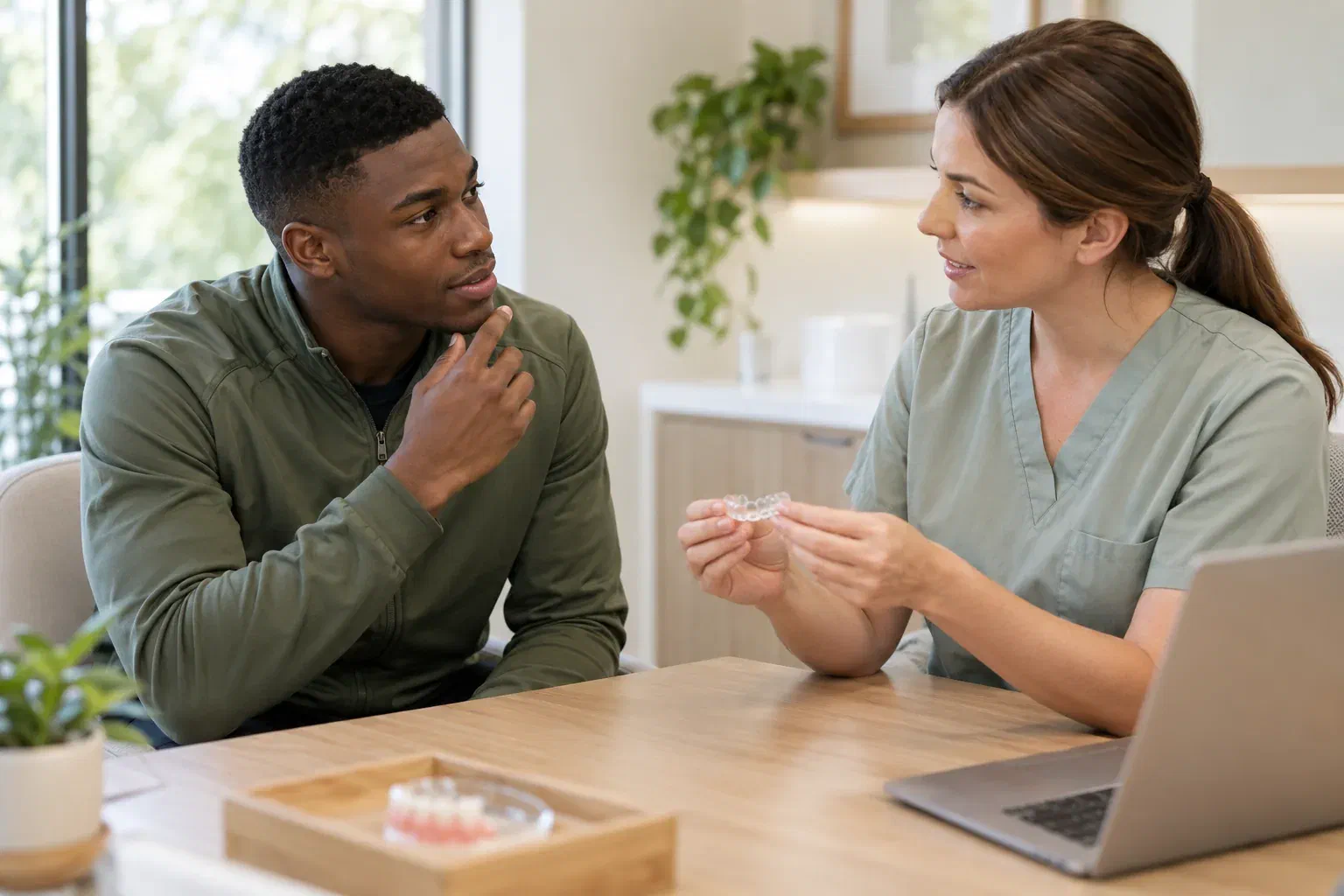
Illustrative consultation with an adult athlete about a dental injury
Specialized Care

Sports-Related Dental Injury Treatment in Milton

An elbow at soccer practice or a puck off the boards can leave a tooth chipped, shifted or missing. Phone our Milton team as soon as the player is safe, tell us what happened and when, and we can talk through first steps, assessment and the reviews that may follow.

From the bench to the phone call

The game can wait. The tooth, and the player, come first.

Picture a Saturday morning game in Milton. A player goes down after a collision, sits up holding their mouth, and someone asks whether they can go back on. That is the moment to pause. The hit that cracked or moved a tooth may also have hurt the lip, jaw or head.

Teeth can be hurt in ways a quick glance misses. A front tooth may sit a fraction out of line, a root may be damaged below the gum, or a neighbouring tooth may have taken part of the force. An early dental assessment sorts out what kind of injury it is. Later reviews matter too, because one good look right after the impact cannot answer every question.

Phone Milton Dental Clinic at (905) 876-4488 and tell us when the injury happened and what you can see. Let us know straight away about a tooth that has come out or shifted, bleeding that will not settle, or signs of a head injury. We can explain current availability and the next sensible step. A serious medical concern should be dealt with before any dental visit.

Talk to us about a sports tooth injury
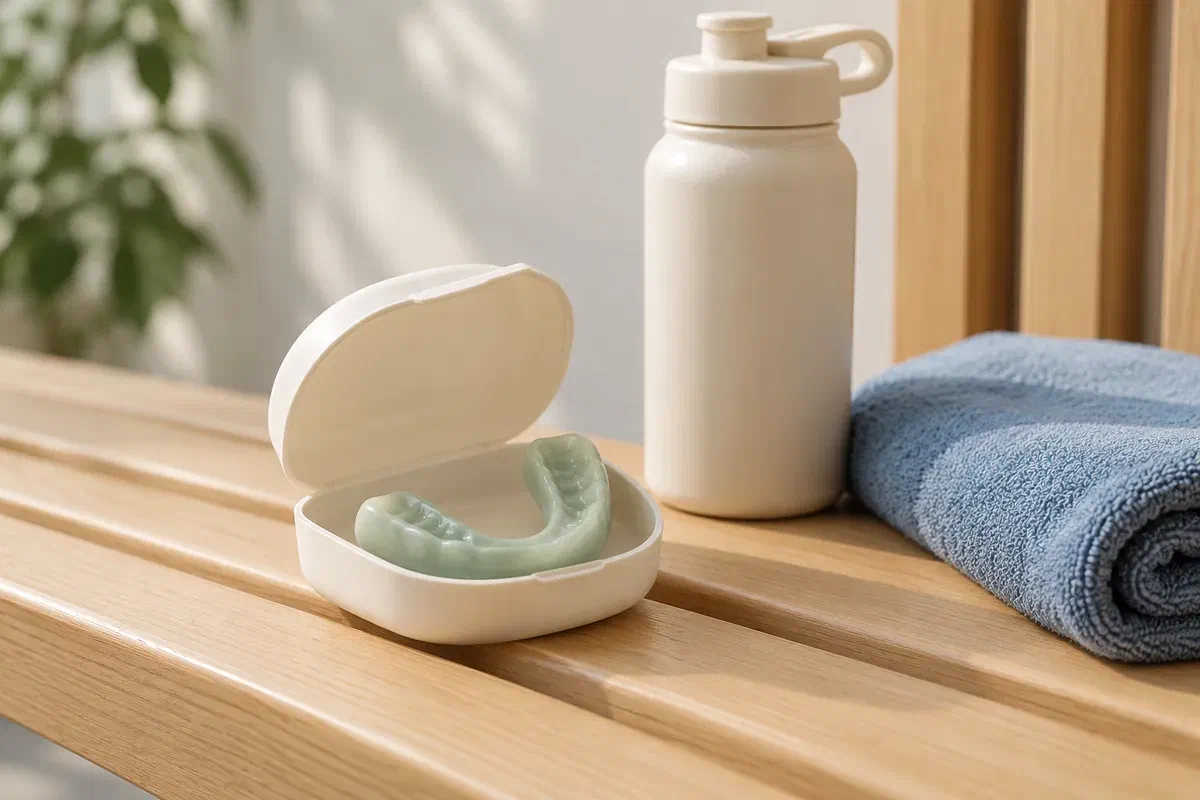
Illustrative sports mouthguard in a protective case beside a water bottle and towel
Sorting out how urgent it is

How soon to act depends on what the impact did.

Let another adult or teammate help with calls and transport if needed. Avoid wiggling a loose tooth, clamping the teeth together to test the bite, or sending an online message and waiting when the injury cannot wait.

The whole tooth has come out

An adult tooth that is knocked out needs dental care right away. Pick it up by the white crown and keep fingers off the root. If it is dirty, rinse it briefly in milk or saline without rubbing. When the person is alert and cooperative and it can be done easily, ease it back into place; if not, store it in milk and get care immediately. Baby teeth are never put back.

A tooth is broken, pushed out of line, or the bite feels off

Arrange a prompt assessment even when it hardly hurts. Leave a shifted tooth alone rather than pressing on it, and do not keep chewing to see what happens. If a broken piece is easy to find, carry it in milk, but do not hold up care hunting for it. Mention any fragment that could not be found.

The face or head may have been hurt as well

Fainting or blacking out, confusion, unusual sleepiness, vomiting or other worrying signs after a blow to the head need medical assessment. Trouble opening the mouth or a bite that suddenly feels wrong can point to a broader injury. Settled tooth pain, or a mouthguard that still fits, is not a reason to return to play.

Call 911 for unconsciousness, a seizure, trouble breathing, or heavy bleeding that will not stop. When it is unclear whether a knocked-out tooth is a baby tooth or an adult one, keep it in milk and get professional advice immediately instead of trying to put it back.

Why the first visit is only the start

Treat what needs care now, then watch how the tooth settles.

At the first visit, the dentist works out which problems can be handled straight away and which need monitoring or a specialist opinion. It helps to ask which teeth and tissues were involved, and whether today's treatment is temporary, final, or one stage of a longer plan. A good answer describes the injury honestly rather than promising that every damaged tooth will survive.

Review visits let the clinician see how the area is healing, including the nerve inside the tooth and the tissues holding it in place. Some choices only become clear with time. Keep those appointments even once chewing feels normal again, and call about any new symptom rather than assuming the job is finished because a chipped edge now looks right.

Patient information: AAE — assessment and continuing care after traumatic dental injuries

Check more than the tooth that looks damaged

Depending on the findings, the dentist may examine nearby teeth, the gums and lips, the bite and the supporting bone. Describe which way the hit came from and how hard, if you know. X-rays or other tests may be used, and the results are recorded so future visits can be compared with this starting point.

Protect or steady the area if it needs it

Early care might mean covering a broken surface, guiding a tooth back into position and holding it there, or treating a cut. Ask what each step is for and what you should avoid afterwards. Not every injury calls for a splint, and having one does not replace the follow-up visits.

Map out next steps and a safer return

Talk about any further dental work, when reviews are due, and when the area can handle activity again. Ask whether the current mouthguard still fits after treatment. Dental advice and medical return-to-sport advice can both apply, and neither one stands in for the other.

What happens at the assessment

Four steps from the story of the hit to a clear plan.

If you can, bring the tooth or any broken piece, a note of the first aid given, and details of any medical assessment so far. Do not hold up urgent care to gather equipment, insurance forms or a perfect timeline.

  1. Talk through the incident and any safety worries

    We start with the basics: the clock time, the sport, what made contact and how the player has seemed since. Did they black out, even for a second? Was a tooth out, and if so, for roughly how long and stored in what? Those answers tell the clinician whether a doctor needs to be involved first or in parallel.

  2. Look closely at the injured area and its neighbours

    The dentist checks the teeth, gums and bite, choosing tests that fit what they find. Any tooth that feels tender, loose or simply ‘off’ is worth mentioning, even one that looks untouched. Readings taken on the day are a starting line, and some only make sense once they can be set beside later ones.

  3. Go over the first treatment and what it can do

    The kind of injury, the maturity of the root, the tooth’s prior health and the hours since the hit all narrow the options. Ask what is planned, how comfort will be handled, what else is possible and whether a specialist may join in. The first visit is often about stabilizing things so a lasting repair can follow.

  4. Settle the review dates and activity rules

    Leave with three things on paper: when the next visit is, which foods and activities are off limits, and who to phone if the splint lets go or a new symptom appears. If the head took part of the blow, ask about medical clearance too. Give a copy to the coach so the bench knows the plan.

The days and weeks after treatment

Guard the healing area and show up for the check-ins.

A small repair, a repositioned tooth, a replanted tooth and a cut lip each come with their own instructions. Follow the advice for the injury you actually have, and ask before going back to any activity that could bring another knock.

Eat and clean the way you were shown

Softer meals for a while and a gentle toothbrush around the injured spot are typical, but your instructions come first. Tongues love to check a sore tooth; try to resist, and keep teeth off any splint. When the routine proves awkward, phone us rather than borrowing tips from a filling or extraction aftercare sheet.

Call if something changes

A tooth that aches more instead of less, gum swelling, fresh looseness, a grey or yellow tint, teeth meeting oddly or a cracked splint all warrant a call. Injured teeth can need treatment weeks after they seemed to settle. The dentist reads each change in context, so a darker shade is not automatically one fixed procedure.

Recheck the mouthguard before the next game

A guard made last season may not sit right over a repaired, splinted or repositioned tooth, so bring it in if asked. Never shove it into place over healing teeth. Wait for the dental go-ahead and, where the head was involved, the doctor’s plan as well; good gear cannot stand in for a full check.

Patient information: NHS — medical assessment after head injury and concussion

Matching care to the injury

Broken, shifted or more serious: each one leads somewhere different.

Every plan should come with a reason. A small chip can turn out to be the tricky one and a dramatic-looking injury can settle well, so appearance alone never sets the course.

When a fracture can be assessed for restoration

Repairing or covering a broken tooth

If the broken piece was saved, it can sometimes be bonded back; if not, the edge may be sealed or rebuilt with tooth-coloured material. Fractures close to the nerve need closer study. Find out whether today’s repair is meant to last and when the tooth will be rechecked, because the inside can still be reacting.

When a tooth has shifted or come out

Repositioning, splinting and trauma reviews

Moving a tooth back where it belongs, then holding it with a light splint, is a common approach, with follow-up over months. Root maturity, time out of the mouth, storage and gum and bone damage all weigh on the outlook. Some injured teeth still need root canal treatment later, and some cannot be kept.

When the findings go past a simple dental repair

Specialist or medical care for wider injuries

A suspected jaw fracture, a deep lip wound or a complicated root injury may need an oral surgeon, an endodontist or the hospital. Ask why the referral is being made and how quickly to act on it. Getting the right expert involved is part of good care, and anything urgent keeps moving in the meantime.

Milton sports injury questions

Answers for the sideline, the car ride and the week after.

Quick answers for parents and players. For anything urgent, phone instead.

(905) 876-4488
My child's tooth looks fine but they took a ball to the mouth. Should I still call?
Yes, if there is tenderness, bleeding, a tooth that feels loose or a bite that seems different. Damage below the gum or inside the tooth is not always visible. Describe what happened and when, and the team can help you judge how soon an assessment is needed.
Is milk really the best thing to keep a knocked-out tooth in?
Milk is a widely recommended storage option while you get to a dentist, and saline can be used for a gentle rinse. Avoid letting the tooth dry out, avoid scrubbing it, and handle it by the crown. Getting urgent dental care matters more than finding the perfect container.
Which sports are most likely to cause a dental injury?
Any activity with balls, sticks, falls or contact between players can injure teeth, from hockey and basketball to cycling and skateboarding. The risk is not limited to organised games. Ask about suitable mouth protection for the activities in your household.
Can a tooth injury change colour weeks after a game?
It can. An injured tooth sometimes darkens or changes shade later as the inside of the tooth responds. Let the dentist know if you notice it. The next step depends on examination, since colour change does not always mean the same treatment.
Should a coach or another parent call on my child's behalf?
Anyone helping can call to describe the injury and timing, especially if you are on your way. A parent or guardian will usually need to be involved in treatment decisions for a child. Make sure whoever calls knows about any head-injury signs.
How do reviews fit around a busy season in Milton?
Ask at the first visit when reviews are expected so you can plan around practices and games. Hours are Monday to Thursday, 11 a.m. to 7 p.m., with Friday to Sunday by appointment. Keeping the reviews matters even when the tooth feels normal.
Phone our Milton team about a sports injury

What happened, when, and what looks or feels different?

Phone (905) 876-4488 before heading over so we can discuss the injury and current availability. Tell us right away about a tooth that is out or out of position, and about any medical concern. Online booking is for non-urgent follow-up, not for an injury where time matters.

If you need urgent care and cannot reach us, contact another available emergency provider.

Visit Milton Dental Clinic
Unit 1, 342 Bronte St. S, Milton, ON L9T 5B7
Get directions Clinic hours
Monday–Thursday
11am–7pm
Friday–Sunday
By appointment only

Areas we serve

  • Milton
  • Oakville
  • Mississauga
  • Georgetown
  • Halton Hills
  • Acton
  • Campbellville
  • Brampton
  • Burlington
  • Puslinch
  • Rockwood
  • Erin
  • Caledon
  • Etobicoke
  • Old Milton
  • Bronte Meadows
  • Timberlea
  • Dorset Park
  • Dempsey
  • Clarke
  • Beaty
  • Coates
  • Harrison
  • Scott
  • Willmott
  • Ford
  • Bowes
  • Cobden
  • Walker
  • Mountain View
  • Milton Heights
  • Hawthorne Village
  • Valley View
  • Fallingbrook
  • Nassagaweya
  • Trafalgar
  • Esquesing
  • Nelson
  • Brookville
  • Moffat
  • Glen Williams
  • Norval
  • Limehouse
  • Stewarttown
  • Ashgrove
  • Hornby
  • Silver Creek
  • Speyside
  • Scotch Block
  • North Oakville
  • River Oaks
  • Glen Abbey
  • West Oak Trails
  • Palermo
  • Bronte Creek
  • College Park
  • Joshua Creek
  • Uptown Core
  • Preserve
  • Iroquois Ridge
  • Lisgar
  • Meadowvale
  • Meadowvale Village
  • Churchill Meadows
  • Erin Mills
  • Central Erin Mills
  • Streetsville
  • East Credit
  • Creditview
  • Heartland
  • Sheridan
  • Mount Pleasant
  • Credit Valley
  • Huttonville
  • Churchville
  • Springbrook
  • Northwest Brampton
  • Bram West
  • Fletcher's Meadow
  • Fletcher's Creek South
  • Alton Village
  • Orchard
  • Millcroft
  • Headon Forest
  • Tansley
  • Brant Hills
  • Tyandaga
  • Kilbride
  • Lowville
  • Aberfoyle
  • Morriston
  • Arkell
  • Hillsburgh
  • Freelton
  • Carlisle
  • Waterdown
  • Flamborough
  • Mountsberg

How can we help?

Milton Dental Clinic

Have a question about your smile? Choose the option that works best for you.

For urgent dental concerns, please call.
Messages are reviewed during clinic hours.