
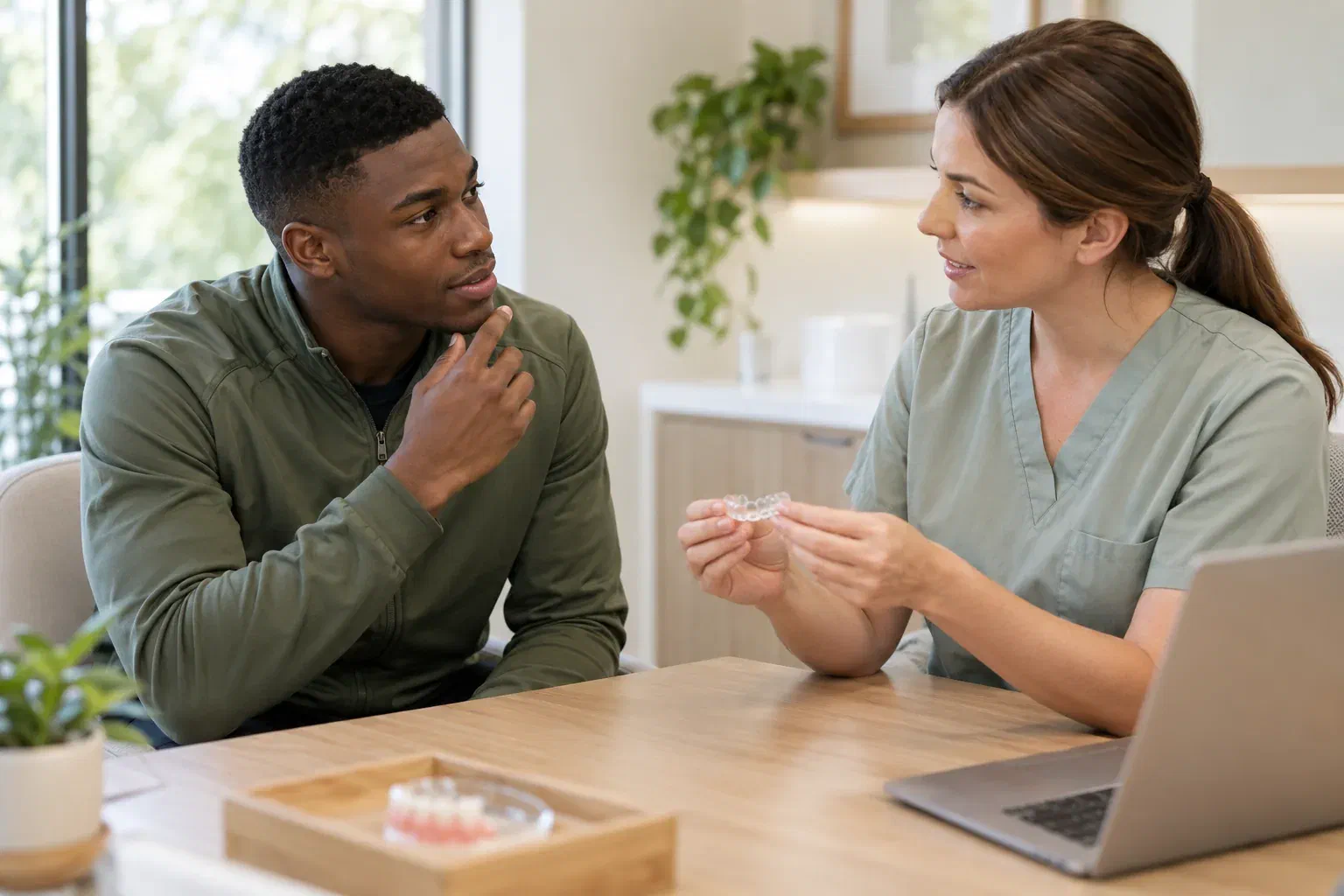
Illustrative consultation with an adult athlete about a dental injury
Specialized Care

Sports-Related Dental Injury Treatment in Oakville

Tournament weekends move fast, and a mouth injury can get lost in the rush to the next game. When a tooth is broken, loosened or knocked out, phone us from Oakville before you leave the field, so we can talk through first aid, timing and the follow-up the injury may need.

For whoever is holding the first-aid kit

A carton of milk, a phone, and a player on the bench

On a busy Oakville sideline, the person who responds to a mouth injury is often a coach, a team manager or a parent who happened to be nearby. Their first job is the player, not the tooth. A stick, a ball or a fall can injure the lips, gums, jaw or head along with the teeth, so the player sits out while someone checks how they are doing.

Next comes the call. What looks like a small chip may hide a crack or a root injury, and a tooth beside the obvious one may have been jolted too. An assessment soon after the impact helps sort out the type of injury and what it needs, and follow-up visits pick up changes that are not visible on the day.

Phone (905) 876-4488 with the time of the injury and a description of what you see. Lead with a tooth that is out or pushed out of position, steady bleeding, or any sign of a head injury. We can explain current availability and what to do next. When the player needs medical care, that takes priority over setting off for a dental visit.

Plan dental care after a sports injury
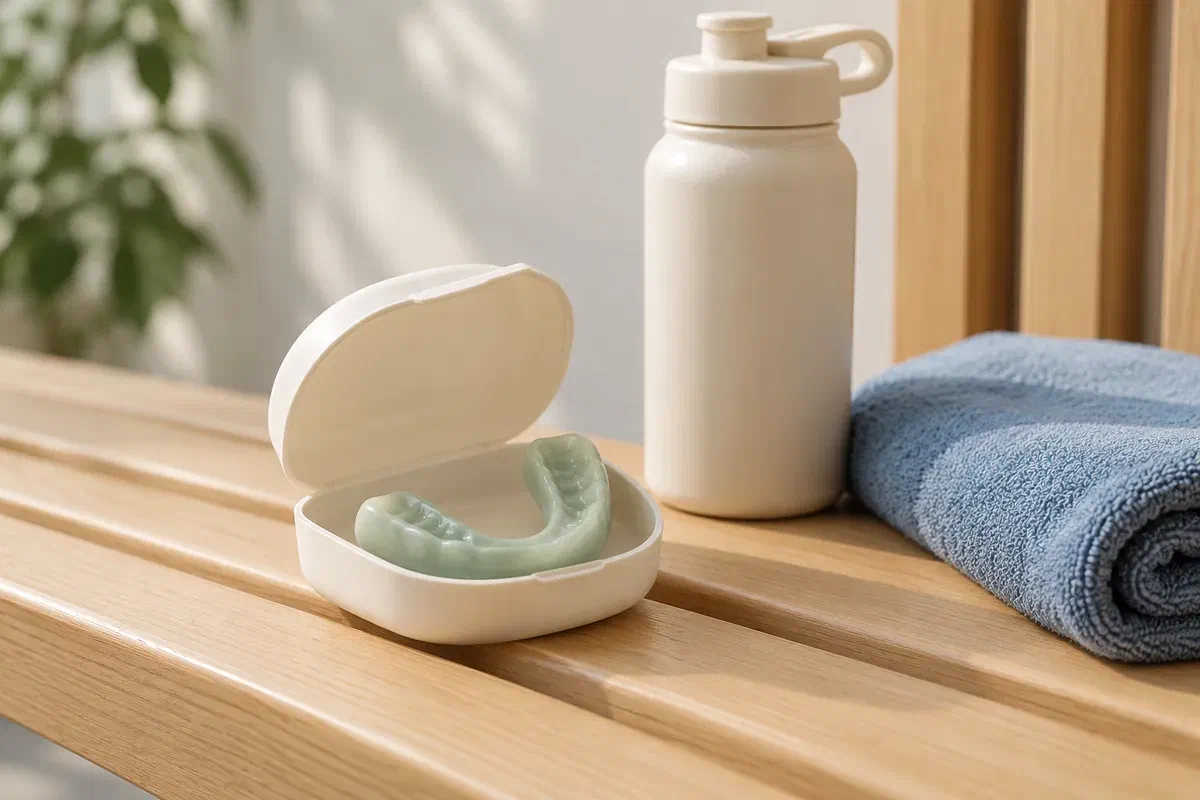
Illustrative sports mouthguard in a protective case beside a water bottle and towel
Quick triage on the sideline

Read the injury, not the scoreboard.

Hand off the phone or the driving to another adult if you are also managing the team. Do not let the player keep wiggling a loose tooth or snapping their teeth together, and do not rely on an email or web form for something urgent.

Knocked out completely

A permanent tooth out of its socket needs urgent dental care. Pick it up by the crown, never the root. Dirt can be rinsed off briefly with milk or saline, without scrubbing. If the player is alert, cooperative and it goes in easily, it can be gently pressed back into place; otherwise keep it in milk and go for care now. Do not replant a baby tooth.

Broken, shifted or biting differently

Book a prompt assessment, even if the player says it does not hurt much. Leave a displaced tooth where it is and discourage chewing to check it. A broken piece found quickly can be placed in milk and brought along, though nobody should delay care searching the grass. Tell the dentist if any piece is still missing.

Signs the head or face took the hit

A blackout, confusion, unusual tiredness, vomiting or other worrying changes after a head impact need medical assessment. A bite that has suddenly changed, or trouble opening the mouth, may also suggest a more extensive injury. The player should not return just because the tooth has calmed down or the mouthguard still goes in.

Call 911 for loss of consciousness, a seizure, difficulty breathing or bleeding that cannot be controlled. When the adults present disagree about whether a lost tooth is a first tooth or an adult one, leave it out of the socket, store it in milk and phone for professional guidance at once.

The value of a prompt check and steady follow-up

Today’s repair and next month’s review both count.

An early assessment shows what can be treated on the spot and what calls for monitoring or a specialist. It is fair to ask exactly what was hurt, gum and bone included, and whether a given step is a placeholder, a finished repair or the opening move in a sequence. Honest answers describe the actual injury rather than promise that every hurt tooth can be kept.

Reviews let the clinician see how the pulp inside the tooth and the tissues around its root are responding. Some treatment decisions depend on what happens over the following weeks and months. Keep the schedule even when eating is comfortable again, and report new symptoms rather than treating a neatly repaired chip as proof of full recovery.

Patient information: AAE — assessment and continuing care after traumatic dental injuries

Assess the whole area, not one tooth

The dentist may look at nearby teeth, the soft tissues, the bite and supporting bone as needed. Share the direction and force of the hit if anyone saw it. X-rays or similar checks can form part of the visit, and the record becomes a reference point for every review that follows.

Cover or steady the injury when it helps

First care might involve protecting an exposed surface, moving a tooth back and holding it in place, or treating a cut lip or gum. Ask the purpose of each step and any limits that follow. Many injuries do not need a splint, and a splint never removes the need for reviews.

Set up follow-up and a sensible return

Cover what treatment may still be ahead, when the player should be seen again and when the mouth can cope with practice. Check whether the old guard still sits properly over treated teeth. A dentist’s go-ahead and a doctor’s concussion advice answer different questions, so a player may need both.

What the visit involves

Story, examination, treatment, plan

If possible, bring the tooth or fragment, a note on first aid given at the field, and anything a doctor has already advised. Getting to urgent care matters more than finding the team’s equipment bag, insurance forms or a complete account of the play.

  1. Hear what happened and screen for safety

    Tell the clinician when and how the injury happened, which sport it was and what symptoms came after, including any blackout. For a tooth that left the mouth, mention roughly how many minutes it was out and whether it sat in milk, saline or nothing at all. They consider whether a doctor should see the player first or in parallel.

  2. Examine the teeth, soft tissue and bite

    The dentist checks the injured area and its neighbours, choosing investigations based on what they see. The player should mention a tooth that feels strange, sore or ‘high’ even when nothing looks wrong. Some early results need to be compared later, so the first examination may not give the final word on every tooth.

  3. Explain first treatment and its limits

    Choices depend on the injury, how mature the tooth is, its condition and how long ago the impact happened. Ask about the plan, comfort, alternatives and whether a referral may be needed. Sometimes the first visit simply makes the area safe and comfortable, and the lasting repair or specialist care comes later.

  4. Confirm reviews and activity guidance

    Leave knowing the next appointment date, the foods and drills to skip, and the number to ring if a splint comes loose or something new appears. Talk about mouth protection for next season and whether a doctor needs to clear the player first. Share the written plan with the coach so everyone works from the same page.

After the appointment

Rest the tooth, keep it clean, and come back as planned.

A bonded chip, a tooth nudged back into line, a replanted tooth and a stitched lip each heal on their own terms. Use the instructions written for this injury, and check with us before the player returns to drills or games where another knock could land.

Stick to the eating and cleaning plan

Find out how to keep the area clean and which foods are off the menu for a while. Discourage the player from poking the tooth with a tongue or finger, and keep teeth off any splint. If the routine proves awkward at home or between games, call the team instead of improvising with advice meant for another procedure.

Know which changes to report

Phone about pain that keeps building, puffiness, a tooth that starts to shift, darkening, teeth that no longer meet the way they did, or a splint that cracks. Teeth sometimes need more care after early symptoms settle. Only an examination can say what a change means, so no single shade change has one automatic fix.

Refit protection before the next tournament

If the dentist asks, bring the guard along so its fit can be checked, particularly once a tooth has been repaired, splinted or moved. It should never be squeezed over a healing area. Respect both the dental limits and any medical plan; wearing protection is no substitute for a complete assessment.

Patient information: NHS — medical assessment after head injury and concussion

Possible treatment routes

One impact, several possible plans.

A good plan explains why it suits this injury and what could come next. Two teeth that look equally damaged can have very different outlooks, so the visible chip is only one clue.

When a broken tooth can be assessed for repair

Restoring or protecting a fractured tooth

Depending on how it broke, care may include sealing the exposed surface, bonding a saved fragment back on or building the edge up with another material. Breaks that run deep need more investigation. A tooth that looks whole again can still be reacting inside, so find out whether the repair is interim and when it will be rechecked.

When a tooth has been displaced or knocked out

Repositioning, splinting and ongoing trauma care

These call for quick attention and a plan shaped around the specific injury. A splint or more treatment may be suggested, with healing checked over months. Whether the tooth is mature, how long it was out and in what, and how badly the gum and bone were hurt all steer the decisions; some teeth cannot be kept despite good care.

When findings go beyond a simple dental repair

Specialist or medical input for bigger injuries

Some injuries are best handled with help from an endodontist, an oral surgeon or a hospital team. Ask what worry prompted the referral and how soon the player should be seen. Being sent elsewhere is about getting the right hands on the problem, and urgent care should not stall while it is arranged.

Sideline questions from Oakville teams

What coaches and parents most often want to know

These answers cover common sideline worries. For anything urgent, call and say how long ago the hit happened, even if the damage looks minor.

(905) 876-4488
What should a team first-aid kit have for dental injuries?
Useful items include gauze, gloves, a small sealable container, and access to milk or saline for storing a knocked-out tooth. Keep the clinic’s phone number handy. The kit supports first aid but does not replace urgent dental or medical care.
Can someone other than a parent bring a child in after an injury?
A coach or another adult can help with the first call and with transport. Consent for a minor’s treatment normally rests with a parent or guardian, so reach them as early as you can and pass on what happened and when.
How do we know whether a knocked-out tooth is a baby tooth?
It is not always clear, especially in children around the age when teeth change. When in doubt, do not try to put it back. Keep it in milk, hold it by the crown, and get professional advice right away.
What if the injury happens on a Sunday tournament day?
Phone us first. Friday to Sunday appointments are by arrangement, so availability varies. If nobody answers and the injury is time-sensitive, go to another emergency dental or medical provider instead of waiting for a callback.
Does a cut lip need a dentist or a doctor?
The dentist can examine the lips and gums as part of a dental injury assessment. A deep, gaping or heavily bleeding cut, or one with dirt or debris in it, may need medical care. Mention any wound when you call.
Is it safe for a player to keep playing with a slightly loose tooth?
No. A tooth that has loosened after a hit should be assessed before the player returns. Continued contact or chewing on it can make things worse, and the same hit may have affected the head. A reduced level of pain is not a green light.
Calling from Oakville

Start with the phone, not the car keys.

Before anyone drives the player over, ring (905) 876-4488 so we can hear about the injury and check today’s openings. Say right away if a tooth is out or sitting in a new spot, or if there is a medical worry. The online form is meant for routine follow-up visits; time-sensitive injuries need a phone call.

Unable to reach us when the injury is urgent? Go to another emergency provider who is open.

Visit Milton Dental Clinic
Unit 1, 342 Bronte St. S, Milton, ON L9T 5B7
Get directions Clinic hours
Monday–Thursday
11am–7pm
Friday–Sunday
By appointment only

Areas we serve

  • Milton
  • Oakville
  • Mississauga
  • Georgetown
  • Halton Hills
  • Acton
  • Campbellville
  • Brampton
  • Burlington
  • Puslinch
  • Rockwood
  • Erin
  • Caledon
  • Etobicoke
  • Old Milton
  • Bronte Meadows
  • Timberlea
  • Dorset Park
  • Dempsey
  • Clarke
  • Beaty
  • Coates
  • Harrison
  • Scott
  • Willmott
  • Ford
  • Bowes
  • Cobden
  • Walker
  • Mountain View
  • Milton Heights
  • Hawthorne Village
  • Valley View
  • Fallingbrook
  • Nassagaweya
  • Trafalgar
  • Esquesing
  • Nelson
  • Brookville
  • Moffat
  • Glen Williams
  • Norval
  • Limehouse
  • Stewarttown
  • Ashgrove
  • Hornby
  • Silver Creek
  • Speyside
  • Scotch Block
  • North Oakville
  • River Oaks
  • Glen Abbey
  • West Oak Trails
  • Palermo
  • Bronte Creek
  • College Park
  • Joshua Creek
  • Uptown Core
  • Preserve
  • Iroquois Ridge
  • Lisgar
  • Meadowvale
  • Meadowvale Village
  • Churchill Meadows
  • Erin Mills
  • Central Erin Mills
  • Streetsville
  • East Credit
  • Creditview
  • Heartland
  • Sheridan
  • Mount Pleasant
  • Credit Valley
  • Huttonville
  • Churchville
  • Springbrook
  • Northwest Brampton
  • Bram West
  • Fletcher's Meadow
  • Fletcher's Creek South
  • Alton Village
  • Orchard
  • Millcroft
  • Headon Forest
  • Tansley
  • Brant Hills
  • Tyandaga
  • Kilbride
  • Lowville
  • Aberfoyle
  • Morriston
  • Arkell
  • Hillsburgh
  • Freelton
  • Carlisle
  • Waterdown
  • Flamborough
  • Mountsberg

How can we help?

Milton Dental Clinic

Have a question about your smile? Choose the option that works best for you.

For urgent dental concerns, please call.
Messages are reviewed during clinic hours.