
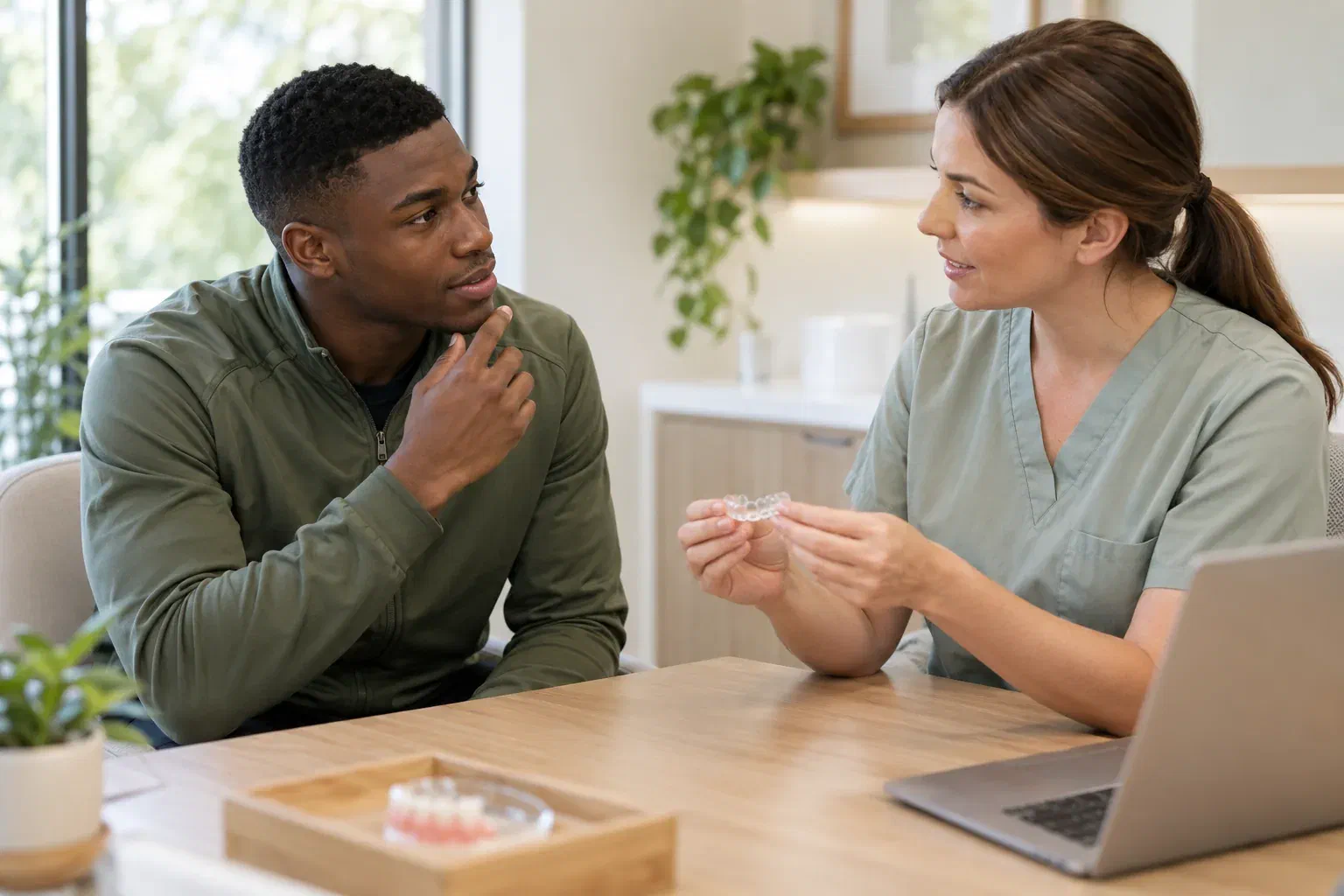
Illustrative consultation with an adult athlete about a dental injury
Specialized Care

Sports-Related Dental Injury Treatment in Puslinch

A broken front tooth from a high stick or a hard check is common in adult hockey and ball leagues. If you play out of Puslinch, keep any piece that broke off, call us to describe the injury, and we will talk through repair options and the checks a fractured tooth may need.

When the front tooth breaks

Pick up the piece. It might still be useful.

A stick catches you on the follow-through and a corner of your front tooth is suddenly on the ice. It is a familiar sight in adult leagues, and the reflex is to tape up and finish the shift. Sit out instead. The force that snapped the enamel can also have bruised the lip, loosened the tooth, strained the jaw or jolted the head, and those need checking before the tooth.

A broken tooth is not always just a cosmetic problem. A fracture may run close to the nerve, the root can be cracked below the gum, and the tooth may have shifted slightly in its socket. Teeth next door can be affected as well. Prompt assessment identifies the type of fracture and what it needs, and later reviews show how the tooth is responding inside.

Phone (905) 876-4488 with three facts: the time of the hit, what broke, and whether you rescued the piece. Mention a tooth that is loose, out of position or completely out, bleeding that will not settle, and any head-injury symptoms. We will explain current availability and what to do next. Medical concerns take priority over the dental appointment.

Discuss a broken tooth from sport
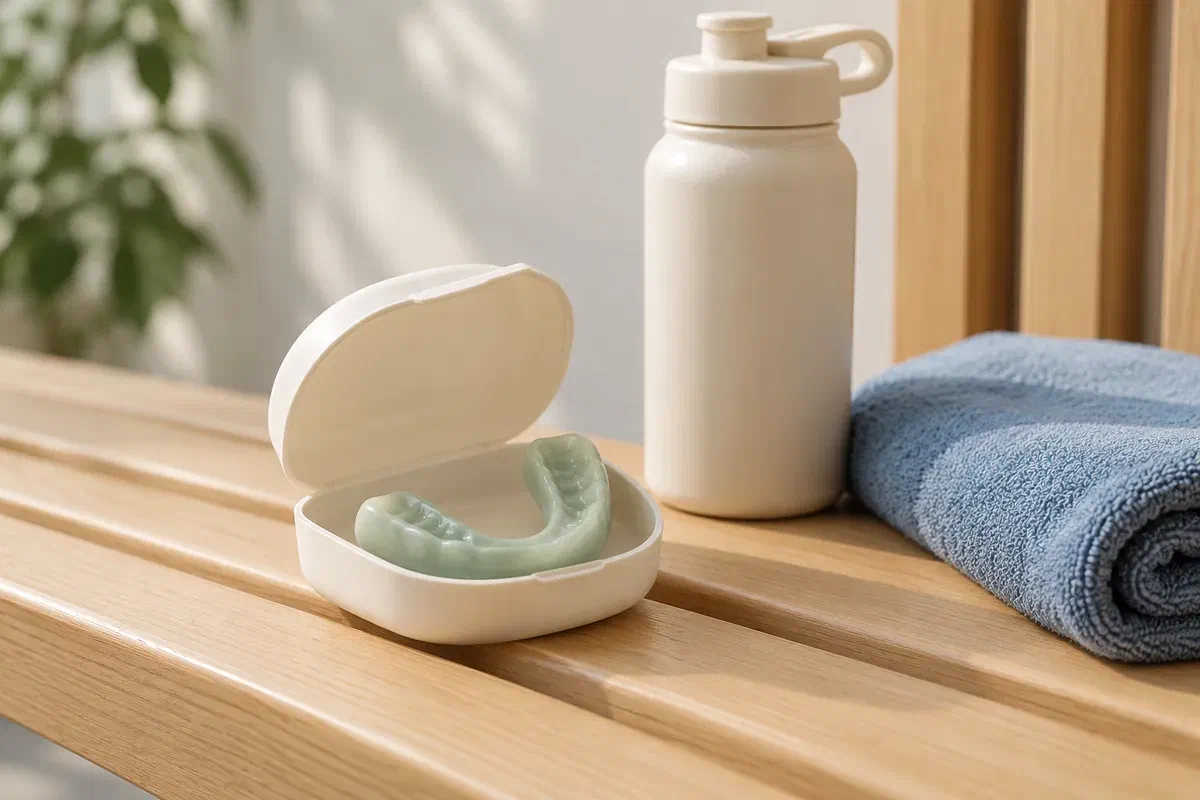
Illustrative sports mouthguard in a protective case beside a water bottle and towel
Fracture, displacement or worse

Is it just the edge, or more than that?

Get a teammate to drive if you are shaken. Do not run your tongue over the broken edge repeatedly, force your teeth together to test the bite, or wait on an online form when the injury needs prompt attention.

The whole tooth came out

A knocked-out permanent tooth needs emergency dental care. Hold it by the crown and keep off the root. Rinse it quickly in milk or saline if dirty, without scrubbing. If you are alert and it seats easily, ease it back into the socket; if not, keep it in milk and go straight for care. A baby tooth is never replanted.

A piece broke off, or the tooth moved

Arrange a prompt assessment, even if the pain is limited. Keep the fragment in milk if you have it, but do not delay to search for it. Do not push a shifted tooth back yourself or bite on it to check. A broken tooth that is sensitive to air or touch is worth mentioning when you call.

Head, jaw or face involvement

Loss of consciousness, confusion, drowsiness, vomiting or other worrying symptoms after a hit to the head need medical assessment. Difficulty opening the mouth or a sudden change in how the teeth meet may mean a wider injury. Do not return to play because the tooth feels better or your guard still goes in.

Call 911 for unconsciousness, seizure, breathing trouble or uncontrolled bleeding. When a child on the bench loses a tooth and nobody knows if it was a baby tooth, skip replanting; store it in milk and ask a dental professional at once.

Why a broken tooth needs more than a quick fix

Restore the shape, then keep checking what is underneath.

The first visit separates what can be repaired now from what needs monitoring or specialist input. Ask how deep the fracture goes, which teeth and tissues are involved, and whether the repair is temporary, definitive or the first stage of a longer plan. A clear explanation of the injury is more useful than a promise that the tooth will be as good as new.

A rebuilt edge can make a tooth look finished long before it is. Reviews let the clinician check how the nerve and the supporting tissues are coping, and some decisions only become possible later. Keep the appointments even when the tooth feels normal, and report any new sensitivity, pain or colour change.

Patient information: AAE — assessment and continuing care after traumatic dental injuries

Assess the fracture and its neighbours

The dentist examines the broken tooth, the teeth beside it, the soft tissues and the bite, and may take X-rays to see how far the break extends. Describe how the stick or ball made contact. Findings are recorded so later visits can be compared.

Protect exposed tooth structure

If inner layers of the tooth are exposed, early care may focus on covering and protecting them. A loosened tooth may need repositioning or a splint. Ask what each step is for and what to avoid while it settles.

Plan the final repair and your return

Discuss whether a more lasting restoration is needed later and when the tooth can handle contact again. Ask whether your guard fits over the repaired tooth. A dental plan does not replace medical return-to-play advice after a head injury.

What the appointment covers

History, examination, repair, review

Bring the broken fragment in milk if you have it, any first-aid notes and what a doctor has said. None of this should delay urgent care.

  1. Review the incident

    Explain when it happened, what struck the tooth and any symptoms since, including a blackout. If a whole tooth was out, say how long and how it was stored. The clinician considers whether medical assessment should come first or alongside.

  2. Examine the break

    The dentist checks the fracture, nearby teeth, gums and bite, with X-rays or tests as needed. A neighbour that aches or feels a touch loose is worth flagging, even if it looks intact. Early tests may need to be repeated, so the first visit may not answer everything.

  3. Discuss repair options

    Treatment depends on the type and depth of fracture, the tooth’s development and condition, and the time since injury. Ask whether the fragment can be reattached, what material might be used, and whether the first repair is temporary. Some injuries need a specialist.

  4. Book reviews and confirm restrictions

    Agree on review dates, foods to avoid and who to call if a repair breaks or a new symptom appears. Discuss a guard for future play and any medical clearance needed. Keep the written instructions for your reference.

Caring for a repaired tooth

Treat the repair gently while the tooth settles.

A bonded fragment, a temporary covering, a repositioned tooth and a splint each come with their own advice. Follow what you were told for your injury, and ask before playing again.

Bite with care

Ask which foods to avoid and how to clean around the repair. Cutting apples, crusty bread and similar foods into pieces saves the front tooth from direct biting for a while, and a splint is never for chewing. If the advice is hard to follow, call us rather than guessing.

Watch for sensitivity or colour change

Contact the dentist about increasing pain, lingering sensitivity, swelling, a darkening tooth, a loose repair or a bite problem. A fractured tooth can need further care after early symptoms settle. The next step depends on examination.

Guard check before the next game

Bring your mouthguard to be checked, since a repair or tooth movement can change the fit. Do not force it over the tooth. Follow both the dental and any medical return-to-play advice before getting back on the ice or field.

Patient information: NHS — medical assessment after head injury and concussion

Treatment choices for a sports fracture

From a bonded edge to specialist care

Ask why a treatment suits your fracture and what it might lead to. A small-looking break can be more involved than it seems, and the outlook depends on more than appearance.

When a fractured tooth can be repaired

Reattachment or restoration

If the fragment is intact and suitable, it may be bonded back. Otherwise, the tooth can be rebuilt with a restorative material, or the exposed area protected first and the cosmetic work done once things have calmed down. Deeper fractures need further assessment, and the first repair may be interim. Ask how the tooth will be monitored, because a restored outline does not show what is happening inside.

When the tooth also moved or came out

Repositioning and splinting

Sometimes a fracture is only half the story and the tooth has been jarred loose or pushed out of line as well. That combination needs prompt assessment and an injury-specific plan, often with a splint and reviews over months. Tooth maturity, storage and supporting-tissue damage affect the decisions, and not every tooth can be kept.

When the injury is more complex

Specialist or medical referral

A fracture extending into the root, a jaw injury or another complex finding may need a dental specialist or medical assessment. Ask why the referral is being made and how soon. It should not delay care for anything urgent.

Puslinch players ask about broken teeth

What happens to a tooth after a stick or puck

Call about urgent injuries and tell us when they happened. These answers focus on fractured teeth, the injury many adult players worry about most.

(905) 876-4488
Can my broken tooth fragment be glued back on?
Sometimes. If the piece is intact and kept moist, the dentist may be able to bond it back. Store it in milk or saline and bring it along, but do not delay care to look for it.
Why is my broken tooth so sensitive to cold air?
A fracture can expose inner layers of the tooth, which may react to air, cold or touch. That deserves prompt assessment. Avoid very cold drinks and breathing through your mouth until you are seen.
Will a repaired front tooth match my other teeth?
Dentists aim to match shade and shape, but results vary with the fracture and the material used. Ask what to expect, and whether a temporary repair will later be replaced.
Does a chipped tooth always need a root canal?
No. Many fractures do not. Whether further treatment is needed depends on how deep the break is and how the nerve responds over time, which is one reason reviews are scheduled.
Can I keep playing in my league with a temporary repair?
Ask the dentist. A temporary repair may be more fragile, and your guard may need adjusting. Follow the advice you are given, and seek medical clearance separately if you had a head injury.
Can follow-up visits from Puslinch be grouped together?
Ask at the first visit how many reviews are likely and whether any further restorative work can be scheduled alongside them to reduce trips.
From Puslinch, call ahead

What broke, when, and do you have the piece?

Call (905) 876-4488 before setting out so we can talk through the injury and check availability. Start with anything urgent, such as a knocked-out or loose tooth or a head-injury concern. Online booking is for non-urgent follow-up only.

When you need urgent care and cannot get through, contact another available emergency provider.

Visit Milton Dental Clinic
Unit 1, 342 Bronte St. S, Milton, ON L9T 5B7
Get directions Clinic hours
Monday–Thursday
11am–7pm
Friday–Sunday
By appointment only

Areas we serve

  • Milton
  • Oakville
  • Mississauga
  • Georgetown
  • Halton Hills
  • Acton
  • Campbellville
  • Brampton
  • Burlington
  • Puslinch
  • Rockwood
  • Erin
  • Caledon
  • Etobicoke
  • Old Milton
  • Bronte Meadows
  • Timberlea
  • Dorset Park
  • Dempsey
  • Clarke
  • Beaty
  • Coates
  • Harrison
  • Scott
  • Willmott
  • Ford
  • Bowes
  • Cobden
  • Walker
  • Mountain View
  • Milton Heights
  • Hawthorne Village
  • Valley View
  • Fallingbrook
  • Nassagaweya
  • Trafalgar
  • Esquesing
  • Nelson
  • Brookville
  • Moffat
  • Glen Williams
  • Norval
  • Limehouse
  • Stewarttown
  • Ashgrove
  • Hornby
  • Silver Creek
  • Speyside
  • Scotch Block
  • North Oakville
  • River Oaks
  • Glen Abbey
  • West Oak Trails
  • Palermo
  • Bronte Creek
  • College Park
  • Joshua Creek
  • Uptown Core
  • Preserve
  • Iroquois Ridge
  • Lisgar
  • Meadowvale
  • Meadowvale Village
  • Churchill Meadows
  • Erin Mills
  • Central Erin Mills
  • Streetsville
  • East Credit
  • Creditview
  • Heartland
  • Sheridan
  • Mount Pleasant
  • Credit Valley
  • Huttonville
  • Churchville
  • Springbrook
  • Northwest Brampton
  • Bram West
  • Fletcher's Meadow
  • Fletcher's Creek South
  • Alton Village
  • Orchard
  • Millcroft
  • Headon Forest
  • Tansley
  • Brant Hills
  • Tyandaga
  • Kilbride
  • Lowville
  • Aberfoyle
  • Morriston
  • Arkell
  • Hillsburgh
  • Freelton
  • Carlisle
  • Waterdown
  • Flamborough
  • Mountsberg

How can we help?

Milton Dental Clinic

Have a question about your smile? Choose the option that works best for you.

For urgent dental concerns, please call.
Messages are reviewed during clinic hours.