
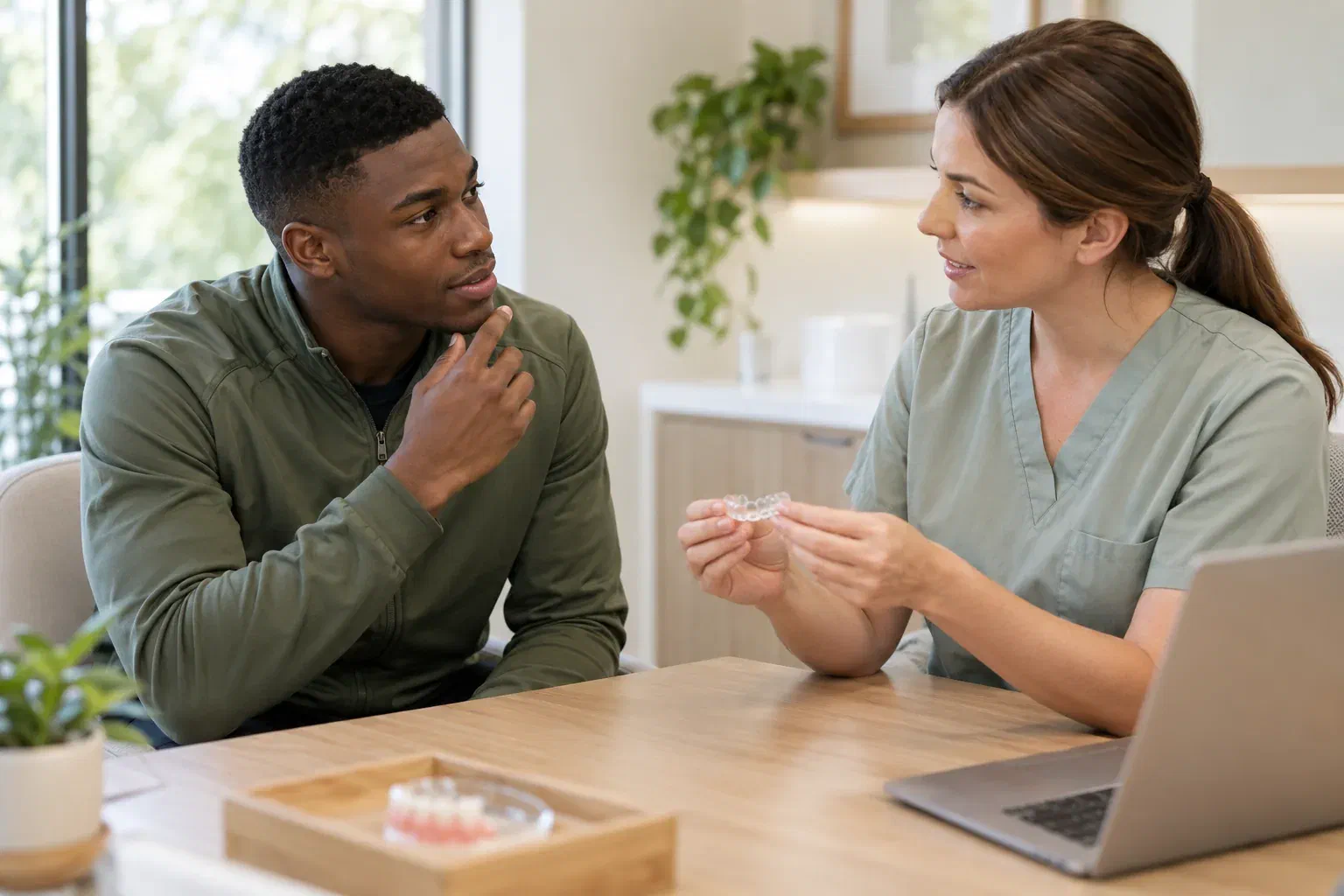
Illustrative consultation with an adult athlete about a dental injury
Specialized Care

Sports-Related Dental Injury Treatment in Rockwood

Teenagers often play through a mouth injury and mention it hours later, if at all. If your teen in Rockwood comes home with a chipped, tender or loose tooth after practice, call us and describe when it happened, so we can help you judge how soon it needs to be seen.

For parents of teenage athletes

The hit nobody mentioned until dinner

It often goes like this: your teenager eats dinner on one side, winces at a cold drink, and eventually admits they took an elbow at practice. Many young athletes keep playing after a mouth injury because they do not want to let the team down. Next time, the rule is simple: stop, tell an adult, and get checked, because the same blow can affect the lips, jaw or head as well as the teeth.

Teen teeth bring their own considerations. In younger teens, some permanent teeth may still be finishing root development, which can affect how an injury is managed. A tooth can be cracked, loosened or slightly displaced with little to see, and neighbours may be involved. A dental assessment identifies the injury, and follow-up visits pick up changes that are not visible on day one.

Phone (905) 876-4488 and give us the time of the injury, even if it was hours ago. Lead with a tooth that is missing or sitting in a new spot, oozing that has not stopped, or any sign of a head injury such as confusion, headache or vomiting. We can talk through current availability and the next step. Medical concerns come before a dental visit.

Get a teen’s sports injury checked
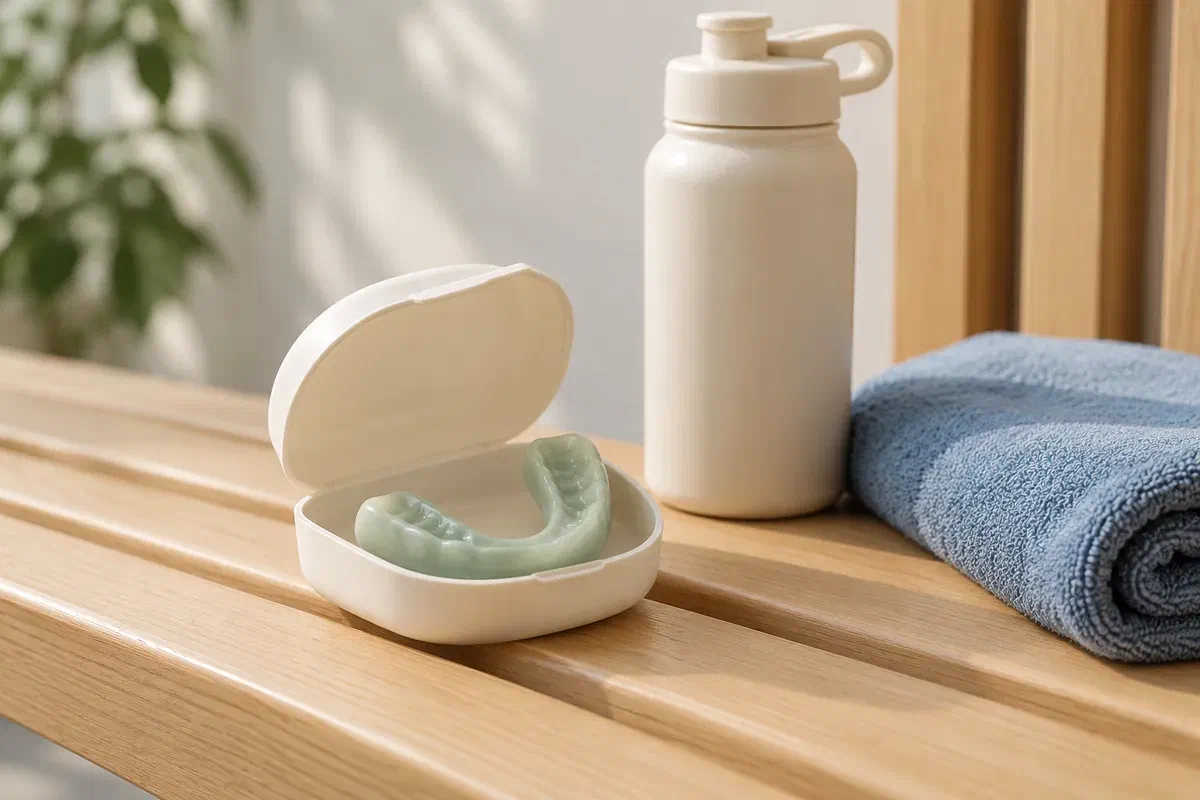
Illustrative sports mouthguard in a protective case beside a water bottle and towel
Questions to ask your teen

Out, loose, chipped, or did your head get hit too?

Ask direct questions, because teens may downplay symptoms. Discourage them from wiggling the tooth or biting hard to test it, and do not wait for an online reply when something is urgent.

“Did a tooth come all the way out?”

A knocked-out permanent tooth is a dental emergency. Lift it by the white part that shows, never the root. Mud or grass can come off with a short swish in milk or saline; no scrubbing. If your teen is alert, cooperative and it slides in easily, it can be gently placed back; otherwise keep it in milk and go for care immediately.

“Does any tooth feel loose, sore or different when you bite?”

Tenderness, looseness, a chip or a bite that feels off all deserve a prompt assessment, even if your teen says it is no big deal. Leave a displaced tooth alone and avoid chewing on it. Bring any broken piece in milk if it is at hand, but do not delay to find it.

“Did you hit your head or feel dizzy afterwards?”

Loss of consciousness, confusion, drowsiness, vomiting, headache or other concerning signs need medical assessment, even if they appeared hours after practice. Difficulty opening the mouth or a changed bite may suggest a jaw injury. A teen who says they feel fine is not automatically cleared to play.

Call 911 for unconsciousness, a seizure, breathing difficulty or bleeding you cannot stop. Younger siblings may still have baby teeth; if you are unsure what kind of tooth was knocked out, do not replant it. Put it in milk and phone for expert guidance straight away.

Why teens benefit from early assessment

Growing teeth deserve a careful look and a longer watch.

The examination shows what needs treatment now and what needs monitoring or a specialist. Ask which teeth and tissues were affected, and whether the work is temporary, definitive or part of a longer sequence. An honest explanation of the injury, including any uncertainty, is more helpful than reassurance that everything will be fine.

For a young person, follow-up can matter for years, not weeks. Reviews show how the nerve and supporting tissues respond and, where roots are still developing, how the tooth continues to mature. Keep those visits even if your teen is eating normally and wants to skip them, and call about new symptoms.

Patient information: AAE — assessment and continuing care after traumatic dental injuries

Check every tooth near the impact

The dentist may examine nearby teeth, gums, lips, bite and supporting bone. Ask your teen to describe the hit honestly. X-rays or other tests may be used, and recording the findings gives later visits a baseline.

Protect or stabilize when needed

Your teen might need an exposed surface covered, a tooth guided back and splinted, or a cut treated. Ask what each step does and what your teen should avoid. Not every injury needs a splint, and a splint does not replace reviews.

Plan a return your teen will follow

Discuss later treatment, review dates and when the area can handle sport again. Ask whether the current guard still fits or needs replacing as your teen grows. Medical return-to-sport advice after a head injury is separate and still applies.

What to expect

How the appointment unfolds

Bring any tooth or fragment, a note about what happened and when, and any advice from a doctor or athletic therapist. Urgent care should not wait for a perfect account from a reluctant teenager.

  1. Piece together the story

    The clinician asks when and how the injury occurred, the sport, and symptoms since, including any blackout. If a tooth was out, they need to know for how long and how it was stored. They consider whether a medical assessment should come first or alongside.

  2. Examine and test

    Teeth, gums and bite are checked, with tests chosen to suit the findings. Encourage your teen to point out any tooth that feels odd. Early results in young teeth can be harder to interpret, so repeat testing at reviews is common.

  3. Explain first treatment

    The type of injury, root maturity, the tooth’s prior health and the hours since practice all narrow the options. Let your teen ask questions too: what is being done, will it hurt, are there other choices, and is a specialist needed? Often the first visit settles and protects the tooth, and the longer plan follows.

  4. Share the plan with your teen and coach

    Before leaving, note the next review, the foods and drills that are off limits for now, and the number to ring if the splint loosens or a new symptom appears. Discuss a properly fitted guard and any medical clearance needed. Give your teen and coach a copy of the instructions so the plan is not just in your head.

Helping a teen through recovery

The tooth heals best when the rules are clear.

Aftercare differs for a small repair, a repositioned or replanted tooth, and a soft-tissue wound. Follow the advice for your teen’s injury, and check before they return to practice or games.

Food and cleaning, spelled out

Ask exactly which foods to avoid and how to clean the area, and write it down. Teens may test the tooth with their tongue or chew on a splint without thinking; remind them gently. If the routine is not working, call the team.

Changes worth reporting

Contact the dentist about increasing pain, swelling, new looseness, a colour change, a bite problem or a broken splint. Injured teeth can need more care after the first symptoms settle. The next step depends on examination.

Guards that fit a growing mouth

Teens grow, braces come and go, and treated teeth change shape, so last year’s guard may be loose or tight. Bring it when the dentist asks, and do not let your teen squeeze it over a healing tooth. Both the dental green light and any doctor’s plan after a head knock need to be in place first.

Patient information: NHS — medical assessment after head injury and concussion

Treatment options for young athletes

What care might look like for a teen’s injured tooth

Ask why a treatment fits the findings and what it could mean over the coming years. Visible damage does not decide the outlook on its own.

When a fracture can be assessed for restoration

Repairing a broken tooth

A chipped edge in a teenager is often rebuilt with tooth-coloured bonding, or a saved fragment may be fixed back in place; a break near the nerve may first need the exposed area sealed. Deeper fractures need further work-up. Because a young tooth keeps changing, ask whether today’s result is interim and how often it will be rechecked over the next few years.

When a tooth has moved or come out

Repositioning, splinting and long-term review

A displaced or replanted tooth usually needs quick treatment and a short period in a splint, then checks that can stretch well beyond the season. Whether the root has finished forming, how the tooth was stored, the minutes it spent dry and the state of the gum and bone all steer what happens next. Some teeth cannot be saved, even with good early care.

When the injury goes beyond a simple repair

Specialist or medical care

A paediatric dentist, endodontist, oral surgeon or medical team may be recommended for complex findings, such as a root fracture or a suspected jaw injury. Find out what is behind the suggestion and how quickly your teen should be seen. Arranging that visit should never hold up urgent treatment.

Rockwood parents ask

Teens, teeth and the season ahead

Call about urgent injuries and say when they happened, even if your teen only told you later. These answers address common worries.

(905) 876-4488
My teen only told me about the hit the next day. Is it too late to call?
No. Call and describe what happened. Some injuries are still time-sensitive, and others need assessment even if a day has passed. Mention any head-injury symptoms right away.
Are a teenager’s teeth more vulnerable than an adult’s?
Teeth with roots still developing can respond differently to injury, and that can affect treatment choices. Teens also take part in many contact sports, so protection and prompt assessment both matter.
My teen refuses to wear a mouthguard. What can I do?
Comfort is often the issue. Ask the dentist about options that fit better. Explaining that a guard protects teeth, while not preventing every injury, may help.
Do braces change anything after a sports injury?
Yes, tell the dentist about braces or other appliances. Brackets and wires can cut the lips and may be damaged. Contact the orthodontist as well, and ask about suitable guards for braces.
Can my teen write exams or go to school after a dental injury?
Often yes, depending on the injury and comfort. If there was a head injury, follow medical advice on school and screen time.
How long will reviews continue for a teen in Rockwood?
It depends on the injury. Some need only a few checks; displaced or knocked-out teeth, especially with developing roots, may be followed for longer. Ask for a schedule at the first visit.
From Rockwood

Even late in the evening, start with a phone call.

Ring (905) 876-4488 before travelling to discuss the injury and current availability. Tell us about a knocked-out or displaced tooth and any head-injury concern straight away. Online booking is for non-urgent follow-up, not for a time-sensitive injury.

If we cannot be reached and your teen’s injury needs urgent attention, go to another emergency provider who is open.

Visit Milton Dental Clinic
Unit 1, 342 Bronte St. S, Milton, ON L9T 5B7
Get directions Clinic hours
Monday–Thursday
11am–7pm
Friday–Sunday
By appointment only

Areas we serve

  • Milton
  • Oakville
  • Mississauga
  • Georgetown
  • Halton Hills
  • Acton
  • Campbellville
  • Brampton
  • Burlington
  • Puslinch
  • Rockwood
  • Erin
  • Caledon
  • Etobicoke
  • Old Milton
  • Bronte Meadows
  • Timberlea
  • Dorset Park
  • Dempsey
  • Clarke
  • Beaty
  • Coates
  • Harrison
  • Scott
  • Willmott
  • Ford
  • Bowes
  • Cobden
  • Walker
  • Mountain View
  • Milton Heights
  • Hawthorne Village
  • Valley View
  • Fallingbrook
  • Nassagaweya
  • Trafalgar
  • Esquesing
  • Nelson
  • Brookville
  • Moffat
  • Glen Williams
  • Norval
  • Limehouse
  • Stewarttown
  • Ashgrove
  • Hornby
  • Silver Creek
  • Speyside
  • Scotch Block
  • North Oakville
  • River Oaks
  • Glen Abbey
  • West Oak Trails
  • Palermo
  • Bronte Creek
  • College Park
  • Joshua Creek
  • Uptown Core
  • Preserve
  • Iroquois Ridge
  • Lisgar
  • Meadowvale
  • Meadowvale Village
  • Churchill Meadows
  • Erin Mills
  • Central Erin Mills
  • Streetsville
  • East Credit
  • Creditview
  • Heartland
  • Sheridan
  • Mount Pleasant
  • Credit Valley
  • Huttonville
  • Churchville
  • Springbrook
  • Northwest Brampton
  • Bram West
  • Fletcher's Meadow
  • Fletcher's Creek South
  • Alton Village
  • Orchard
  • Millcroft
  • Headon Forest
  • Tansley
  • Brant Hills
  • Tyandaga
  • Kilbride
  • Lowville
  • Aberfoyle
  • Morriston
  • Arkell
  • Hillsburgh
  • Freelton
  • Carlisle
  • Waterdown
  • Flamborough
  • Mountsberg

How can we help?

Milton Dental Clinic

Have a question about your smile? Choose the option that works best for you.

For urgent dental concerns, please call.
Messages are reviewed during clinic hours.