

Illustrative discussion of a planned surgical tooth extraction
Specialized Care

Surgical Tooth Extractions

When removing a tooth requires additional access, careful planning matters. Discuss surgical extraction in Milton, including why it is being considered, alternatives, relevant risks, comfort arrangements, and the instructions for recovery.

A closer look at surgical tooth removal

Understand why extra access is needed and what the plan involves.

A surgical extraction is an approach used when a tooth or root cannot appropriately be removed by a straightforward extraction alone. It may involve lifting a section of gum, removing a limited amount of surrounding bone, or dividing the tooth so its parts can be removed in a planned sequence. The exact steps depend on the findings.

The need for a surgical approach and the need to remove the tooth are related but separate questions. Before removal, ask why extraction is being recommended, whether a tooth-preserving option is reasonable, and what the alternatives would mean in your situation. The word surgical describes the approach; it does not replace the explanation of why treatment is needed.

At Milton Dental Clinic, we can discuss the assessment and appropriate treatment pathway, including referral when the complexity or your care needs call for another provider. Tell us about previous dental experiences, medical conditions, medicines, and concerns about the procedure. A clear plan should include preparation, comfort, recovery, and who to contact if something changes.

Discuss a surgical extraction assessment
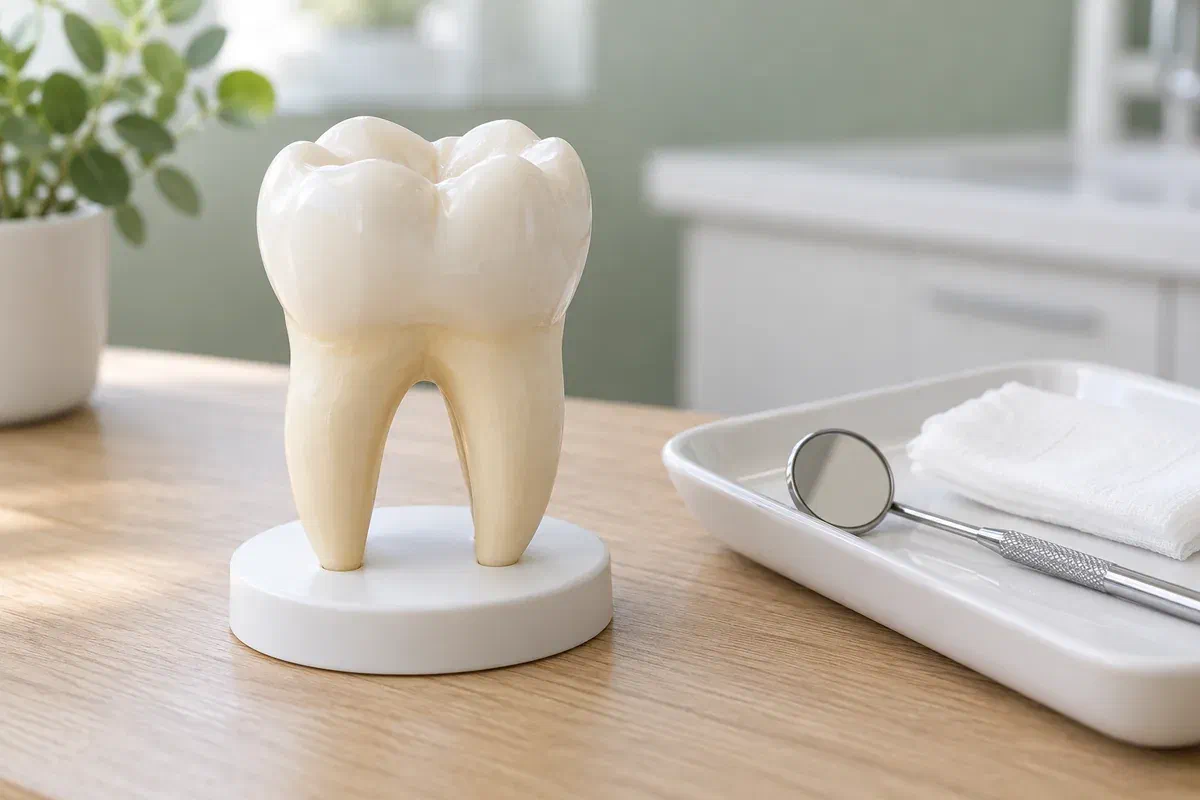
Illustrative two-root molar teaching model beside a dental mirror and gauze
Why a more involved approach may be discussed

The tooth's position, condition, and surroundings shape the plan.

An examination and appropriate imaging help explain the proposed approach. Ask the clinician to relate the findings to your own tooth instead of assuming that every surgical extraction follows the same sequence or carries the same risks.

A tooth or root is difficult to access

A tooth may be partly covered by gum or bone, or a broken root may remain below the visible surface. The clinician assesses the position and the reason for removal before deciding how access should be obtained. A tooth being difficult to see does not, on its own, establish that it must be extracted.

The remaining tooth structure or root shape complicates removal

Extensive breakdown, a fracture, or roots with a challenging shape may influence the approach. Dividing the tooth can sometimes be part of the planned procedure rather than an unexpected failure. Ask which steps are anticipated and whether the plan may need to change if the findings differ during treatment.

Nearby structures or health factors need particular planning

The relationship to nerves, the upper-jaw sinus, neighbouring teeth, and surrounding bone may affect risks and referral decisions. Medical conditions and medicines can also change preparation or recovery advice. Give the clinician a complete history and ask which considerations are relevant to this specific extraction.

Do not stop prescribed blood thinners or other medicines independently before surgery. The treating clinician should review your history and coordinate any necessary instructions with the appropriate medical provider.

What careful extraction planning provides

A considered approach to removal and a practical plan for what follows.

Planning helps identify the appropriate technique, treatment setting, and support before the appointment. Ask how the clinician has assessed the tooth and why the proposed approach is suitable. An explanation of the risks should be specific enough to help you decide, without suggesting that every possible complication is equally likely for every patient.

The conversation should also include the space left behind when that is relevant. Some extractions are part of a broader restorative or orthodontic plan; others address a tooth that cannot reasonably be retained. Discuss whether later replacement, monitoring, or another step is expected, and what should be coordinated before removal.

Patient information: Liverpool University Dental Hospital — surgical removal of teeth or roots

Clarify the reason for removing the tooth

Ask what problem extraction is intended to address and why other options are unsuitable or less appropriate. The clinician should explain the expected benefits and the consequences of delaying or declining treatment in your situation. An irreversible decision deserves a clear discussion of the actual findings.

Choose an appropriate comfort and treatment arrangement

Discuss local anaesthetic, anxiety, previous experiences, and any need for additional support. Surgical extraction does not automatically mean general anaesthesia. Where another approach or provider is needed, ask what assessment, transport, escort, or preparation requirements apply before assuming they are the same as a routine visit.

Prepare for the first days and the follow-up

Ask about eating, work, activity, medicines, and who to contact after the procedure. Recovery varies with the surgery and the individual. A useful plan gives you expectations and contact instructions while making clear which symptoms should be reassessed rather than simply tolerated until a fixed date.

What happens when surgical extraction is planned

Assess, explain, remove with the appropriate approach, and review recovery.

Ask questions before the procedure and agree on a way to signal discomfort or request a pause. Preparation instructions should come from the treating provider and reflect the planned anaesthetic and your medical needs.

  1. Review the tooth, images, history, and alternatives

    The clinician examines the area and considers appropriate imaging, the reason for extraction, and relevant health information. Ask about the expected approach, particular risks, and any referral recommendation. Confirm whether further treatment or records are needed before surgery can appropriately proceed.

  2. Confirm consent and the comfort arrangements

    Discuss the planned treatment and any reasonable alternatives before giving consent. The provider explains local anaesthetic and any additional arrangements that have been assessed as appropriate. Tell the team if the area does not feel adequately numb or if you need a pause; sharp pain should not be silently endured.

  3. Create the necessary access and remove the tooth or roots

    The procedure may involve lifting gum tissue, removing some bone, or dividing the tooth, according to the plan and findings. Pressure, movement, or vibration may be noticeable even with local anaesthetic. The clinician manages the site and decides whether stitches or other measures are needed before concluding treatment.

  4. Explain home care and arrange the appropriate review

    Receive instructions for bleeding control, cleaning, eating, discomfort, and activity. Ask whether stitches require removal and whether a review is planned. Confirm the contact route for concerns and any next stage of dental care, including restoration planning when relevant to the reason for the extraction.

Recovering from the surgical extraction

Protect the healing site and pay attention to the direction of recovery.

Follow the procedure-specific instructions supplied by the treating clinician. The extent of surgery, medical history, and any special measures can change the advice, so a general checklist should not override your own care plan.

Protect the clot and avoid injuring numb tissues

Avoid disturbing the socket with fingers or the tongue. Initial instructions commonly include avoiding rinsing or spitting during the first day, then beginning gentle cleaning as advised. Take care with hot foods and drinks and avoid biting the lip or cheek while the local anaesthetic is still affecting sensation.

Follow the agreed food, activity, and medicine advice

Choose foods that are comfortable and follow the instructions about exercise, smoking, and care of the site. Use pain relief only as advised and within its directions, taking account of your health and other medicines. Do not add leftover antibiotics or independently change prescribed medication during recovery.

Contact the provider when symptoms need reassessment

Seek advice for persistent bleeding, severe or increasing pain, worsening swelling, fever, or concerns about sensation. Explain the timing and any change from the instructions you received. Do not assume that every painful socket is an infection or that worsening symptoms are automatically an expected part of healing.

Patient information: UCLH — protecting the site and following extraction aftercare

Choosing the appropriate treatment pathway

Discuss retaining the tooth, removing it, or seeking further assessment.

The decision depends on the diagnosis and the realistic options for that tooth. Ask what each recommendation would involve, including its limitations and the consequences of leaving the problem unresolved.

When the tooth can appropriately be assessed for retention

A tooth-preserving approach when it is reasonable

Restorative, root canal, periodontal, or other care may be relevant depending on the problem. Ask about prognosis and what treatment would require. Not every damaged tooth can be retained, but a surgical extraction discussion should explain why preservation is or is not a reasonable option in your situation.

When extraction is indicated and extra access is needed

Planned surgical removal in an appropriate setting

The clinician explains the proposed approach and the preparation needed for the procedure. Ask which steps are anticipated and how recovery and later dental needs will be addressed. Treatment should be planned according to the tooth and the patient, without promising a fixed duration or an identical recovery for everyone.

When anatomy, complexity, or health needs call for additional input

Specialist assessment or a revised plan

Referral may be appropriate for difficult anatomy, particular risks, or care requirements beyond the planned setting. Ask what the specialist will assess and whether any interim care is needed. In selected circumstances the balance of risks can change the removal plan; this requires individual assessment rather than a general rule.

Questions before a surgical extraction

Understand the proposed approach before the day of treatment.

Bring questions about access, anaesthetic, recovery, and the reason for removal. The clinician can explain which considerations apply to your tooth and which do not.

(905) 876-4488
Does a surgical extraction mean I must be put to sleep?
No. Many surgical extractions are performed with local anaesthetic, although individual needs may call for other assessed arrangements or referral. Discuss anxiety and previous experiences early. Do not assume sedation or general anaesthesia is included or available without a specific assessment and plan.
Why might a dentist divide a tooth during a surgical extraction?
Dividing a tooth or its roots can allow removal in separate parts when the anatomy or access makes that appropriate. It may be a planned step rather than a complication. Ask the treating clinician to explain the approach expected for your tooth and any uncertainty in the plan.
Is surgical removal needed for every tooth covered partly by gum or bone?
No. The position helps determine how removal might be performed, but the need for extraction depends on the diagnosis and clinical circumstances. Ask why removal is being considered and what monitoring or other options would mean for your situation.
Will every surgical tooth extraction require stitches?
Not every procedure is identical. The clinician decides whether closure or other measures are appropriate for the site. If stitches are used, ask which type they are, whether removal is needed, and what to do if one becomes loose or bothersome.
Can I plan the same recovery time for two different surgical extractions?
Not necessarily. Tooth position, the extent of surgery, health factors, and the work or activity you plan to resume can affect recovery advice. Ask the treating provider for guidance specific to the procedure rather than relying on a previous extraction or another person’s experience.
Why would a surgical extraction assessment lead to a specialist referral?
The anatomy, anticipated complexity, particular risks, or medical and comfort needs may make another setting more appropriate. Ask what the referral is intended to address and what happens meanwhile. The recommendation helps match the procedure to the expertise and support required.
Discuss surgical extraction in Milton

Make the reason, the approach, and the recovery plan clear.

Contact Milton Dental Clinic to discuss an extraction assessment or a recommendation you have already received. Bring available images and records, and tell us about current symptoms, medical considerations, and any concerns about the procedure.

The treatment approach and provider are determined by individual assessment. Call for urgent symptoms.

Visit Milton Dental Clinic
Unit 1, 342 Bronte St. S, Milton, ON L9T 5B7
Get directions Clinic hours
Monday–Thursday
11am–7pm
Friday–Sunday
By appointment only

How can we help?

Milton Dental Clinic

Have a question about your smile? Choose the option that works best for you.

For urgent dental concerns, please call.
Messages are reviewed during clinic hours.