

Illustrative discussion of a planned surgical tooth extraction
Specialized Care

Surgical Tooth Extractions in Erin

Much of a surgical extraction happens after you leave the chair: the drive home, the first evening, the first night. For Erin and Hillsburgh households, we explain why removal is advised and how the tooth is reached, then help you get home ready for those early hours.

Preparing for the hours after

Soft food in the fridge, a pillow propped up, and a number on the counter.

People tend to focus on the procedure and forget about the evening that follows. Both deserve thought. A surgical extraction is the approach taken when a tooth or root cannot reasonably be lifted out simply. It may mean opening a small area of gum, removing a little of the bone that surrounds the tooth, or cutting the tooth into sections. How much of that is needed affects how the first hours and days feel.

Before any of the practical planning, there is a decision to make. Is removal the right step? Could the tooth be treated and kept instead? Ask what the examination found, what each alternative would involve, and how they compare for you. Knowing why comes first; knowing how, and getting ready for afterwards, follows.

From Erin, north of Milton in Wellington County, a little extra preparation helps, particularly if you live on a rural property. We will go through the findings, outline an appropriate pathway and arrange a referral if your needs or the complexity call for it. Let us know about your health, medicines and past dental experiences, so you head home with a plan for comfort, recovery and urgent contact.

Plan your extraction and your first evening
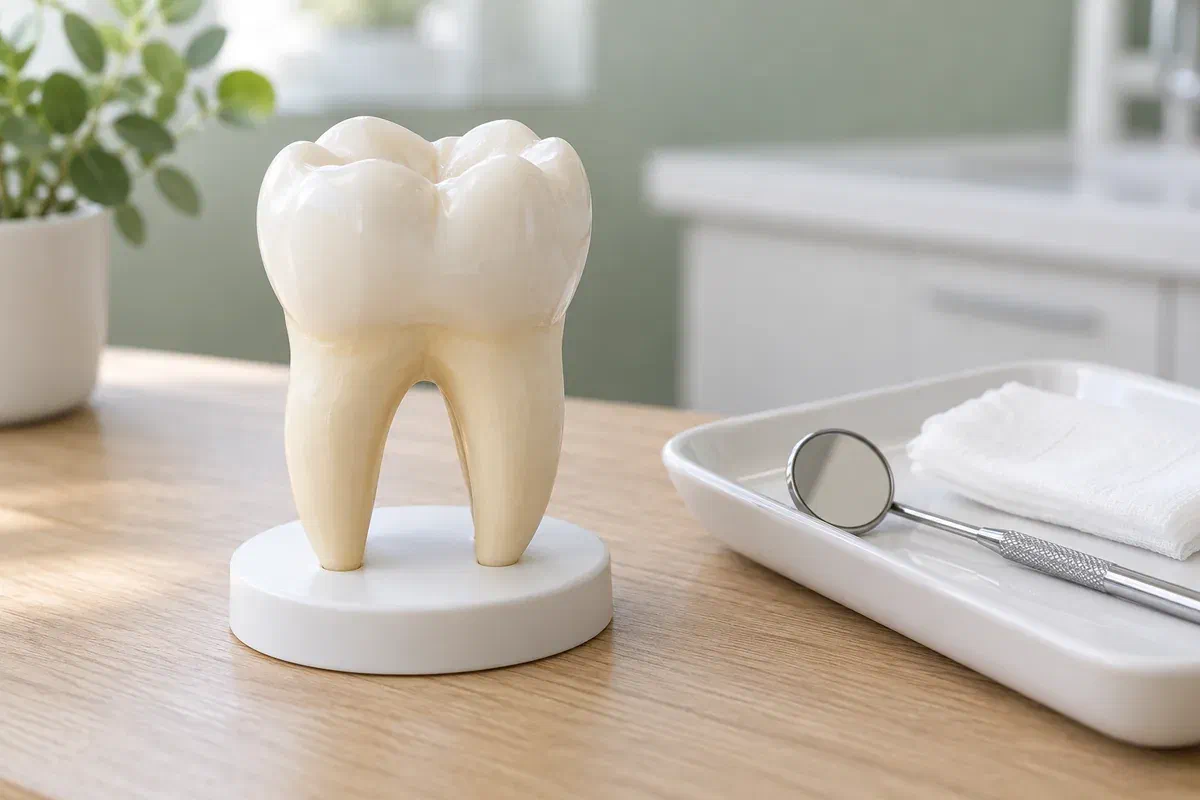
Illustrative two-root molar teaching model beside a dental mirror and gauze
What may make an extraction surgical

When the tooth will not simply lift out.

What the clinician sees in your mouth and on any images is the basis for proposing a surgical route. Ask them to walk you through it, because two people’s extractions rarely follow identical steps or carry the same risks.

Part of the tooth is beneath gum or bone

A tooth may not have fully emerged, or a broken root may lie below the gumline. Its position and the reason for removing it are considered together. Difficulty seeing a tooth does not, by itself, settle whether it needs to come out.

Decay, cracks or root shape get in the way

A badly broken tooth, a fracture or roots that curve or splay may prevent removal in one piece. Sectioning is often a planned step. Ask what the clinician anticipates and how the plan might shift once they can see more of the tooth.

Nearby anatomy and your health history

A nerve running close by, the sinus above an upper molar, or the teeth on either side can all shift the risks and the case for referral. So can your general health and the prescriptions you take. Tell the clinician everything, and they can sort out which points really count here.

Carry on with blood thinners and other prescribed medicines unless your clinician gives different advice. Any changes are coordinated between the treating clinician and the provider who prescribes them, after a review of your history.

Why planning ahead helps at home

Arriving home prepared makes the first night easier.

When the method, setting and support are agreed beforehand, you can arrange help, supplies and time to rest. Ask what the assessment found and why this approach was chosen for your tooth. A good risk discussion applies to your circumstances, so you can weigh it sensibly, rather than making every rare outcome sound equally likely.

The space left behind may matter too. Sometimes an extraction is part of a broader restorative or orthodontic plan; sometimes it removes a tooth with no reasonable future. Ask whether a replacement or monitoring is expected later, and whether anything should be arranged before the procedure.

Patient information: Liverpool University Dental Hospital — surgical removal of teeth or roots

Confidence about the reason

Ask what removal is intended to fix and why other treatments are unsuitable or less appropriate. You should hear about the expected benefit and what waiting or declining might mean. A step that cannot be undone should rest on what was actually found.

Comfort and transport sorted in advance

Discuss local anaesthetic, nerves and past experiences, and whether more support would help. Being put to sleep is not an automatic part of a surgical extraction. If another approach is used, ask whether you will need someone to drive you home and stay with you.

A home set up for recovery

Ask about soft foods, rest, sleeping position, medicines and who to call. Recovery depends on the procedure and the person. A practical plan prepares you for the first evening and tells you which symptoms should be checked rather than slept on.

From the chair to your front door

Four stages, ending with the drive home.

Ask your questions in advance and agree on a way to signal a pause. Any instructions about eating beforehand or medicines come from the treating provider and should suit the anaesthetic and your health.

  1. Examine the tooth and review your history

    Your mouth is examined, imaging is considered where it would help, and your medical details are read alongside the case for removal. This is when to raise the method, the main risks and any thought of referral. Find out, too, whether anything else must happen before a date is set.

  2. Consent and comfort

    Nothing goes ahead until the plan and any sensible alternatives have been explained and you have agreed. The numbing, plus any other assessed arrangement, is described in advance. Let the team know if something feels sharp or you need a moment; quiet suffering is not expected.

  3. Reaching and removing the tooth

    As the plan and findings require, gum may be raised, bone removed or the tooth sectioned. Pressure and vibration are often still felt when numb. The clinician then cares for the socket, placing sutures when they are judged appropriate.

  4. Instructions before you head home

    Guidance covers bleeding, cleaning, food, soreness and activity. Ask whether sutures dissolve or must be removed, and whether a review is booked. Jot down the clinic’s number and whatever dental step comes after healing.

The first evening and beyond

Rest, keep things gentle, and know what normal looks like.

Your clinician’s procedure-specific advice comes first. How extensive the surgery was, your history and any special steps taken can all alter it, so do not let a general list override your own plan.

Leave the clot to do its work

However tempting, keep your tongue and fingertips off the spot. Most instructions say to hold off on rinsing and spitting until the next day, and then to clean gently as directed. Let hot drinks cool, and be careful not to bite your cheek or lip while numb.

Eat softly, rest well, use medicines as advised

Choose soft foods, rest with your head a little raised if advised, and follow guidance about exercise and smoking. Stick to the pain relief you were told suits you, at the dose on the label. Old antibiotics in the cabinet are not a substitute for advice, and regular prescriptions stay as they are unless you are told otherwise.

Call if the evening does not go as expected

Phone for advice if bleeding will not slow with pressure, pain is severe or climbing, swelling keeps increasing, you develop a fever, or numbness worries you. Say when it began and what is different. Worsening is not automatically part of healing.

Patient information: UCLH — protecting the site and following extraction aftercare

Before you plan the evening

Make sure removal is the right choice first.

What fits depends on the diagnosis and on how much of a future the tooth realistically has. For each route, ask what is involved, where it falls short, and what doing nothing would lead to.

When keeping it is a reasonable possibility

Treatment that saves the tooth

A filling or crown, root canal therapy or periodontal treatment might address the problem, according to what caused it. Ask how well the tooth is likely to do and how much work is involved. Not every tooth is savable, and you should hear plainly why yours is or is not.

When extraction is advised and access is difficult

A planned surgical removal

You are told how the tooth will be reached and what to do beforehand. Ask what each stage involves and how healing, and any later dental work, will be looked after. A sound plan fits your tooth and your life, and it does not promise a fixed duration or recovery.

When anatomy, risks or medical needs suggest another setting

A specialist opinion

An oral surgeon may be the better choice for tricky anatomy, higher risks or needs a general practice cannot meet. Ask what that visit is for and whether anything should be done while you wait. Occasionally the risks are high enough to rethink removal altogether, which only an individual assessment can decide.

First-evening questions

What to expect once you are home in Erin.

Questions about the evening at home are just as welcome as ones about the procedure. Ask them at the planning visit, while there is time to prepare.

(905) 876-4488
How long will the numbness last after I get home?
It varies with the type and amount of local anaesthetic and the area treated. Numbness commonly lasts a few hours. Avoid hot drinks and chewing until feeling returns, and ask the clinician about your own case if it seems to persist.
Is some oozing on the pillow overnight normal?
A little pink-tinged saliva can be common early on. Bleeding that is steady or heavy, or that does not slow with firm pressure as instructed, should be reported. Ask how to manage it before you leave.
What foods are sensible for the first evening?
Soft, lukewarm or cool foods are often easiest, such as yogurt, soup that has cooled or mashed vegetables. Avoid anything that needs heavy chewing near the site. Follow any specific advice your clinician gives.
When will swelling be at its worst?
Swelling often builds over the first day or two before easing, though patterns vary. Swelling that keeps increasing after that, spreads quickly or affects breathing or swallowing needs prompt assessment.
Should I sleep differently the first night?
Some clinicians suggest keeping your head slightly raised. Ask what is advised for your procedure, and keep gauze and your contact numbers within reach in case you need them.
Do I need someone with me for the trip back to Erin?
If sedation or another arrangement is used, you will usually need someone to drive you and stay with you. With local anaesthetic alone it is less often required, but having someone nearby can still help. Ask what applies to your plan.
Plan ahead from Erin

Get the facts, then get ready for the evening after.

Contact Milton Dental Clinic to arrange an extraction assessment or to discuss a removal that has already been suggested. Bring available images, and mention your symptoms, health, who will be at home with you and anything that worries you.

How the tooth is treated, and by whom, is settled at your own assessment. Please call promptly about urgent symptoms.

Visit Milton Dental Clinic
Unit 1, 342 Bronte St. S, Milton, ON L9T 5B7
Get directions Clinic hours
Monday–Thursday
11am–7pm
Friday–Sunday
By appointment only

Areas we serve

  • Milton
  • Oakville
  • Mississauga
  • Georgetown
  • Halton Hills
  • Acton
  • Campbellville
  • Brampton
  • Burlington
  • Puslinch
  • Rockwood
  • Erin
  • Caledon
  • Etobicoke
  • Old Milton
  • Bronte Meadows
  • Timberlea
  • Dorset Park
  • Dempsey
  • Clarke
  • Beaty
  • Coates
  • Harrison
  • Scott
  • Willmott
  • Ford
  • Bowes
  • Cobden
  • Walker
  • Mountain View
  • Milton Heights
  • Hawthorne Village
  • Valley View
  • Fallingbrook
  • Nassagaweya
  • Trafalgar
  • Esquesing
  • Nelson
  • Brookville
  • Moffat
  • Glen Williams
  • Norval
  • Limehouse
  • Stewarttown
  • Ashgrove
  • Hornby
  • Silver Creek
  • Speyside
  • Scotch Block
  • North Oakville
  • River Oaks
  • Glen Abbey
  • West Oak Trails
  • Palermo
  • Bronte Creek
  • College Park
  • Joshua Creek
  • Uptown Core
  • Preserve
  • Iroquois Ridge
  • Lisgar
  • Meadowvale
  • Meadowvale Village
  • Churchill Meadows
  • Erin Mills
  • Central Erin Mills
  • Streetsville
  • East Credit
  • Creditview
  • Heartland
  • Sheridan
  • Mount Pleasant
  • Credit Valley
  • Huttonville
  • Churchville
  • Springbrook
  • Northwest Brampton
  • Bram West
  • Fletcher's Meadow
  • Fletcher's Creek South
  • Alton Village
  • Orchard
  • Millcroft
  • Headon Forest
  • Tansley
  • Brant Hills
  • Tyandaga
  • Kilbride
  • Lowville
  • Aberfoyle
  • Morriston
  • Arkell
  • Hillsburgh
  • Freelton
  • Carlisle
  • Waterdown
  • Flamborough
  • Mountsberg

How can we help?

Milton Dental Clinic

Have a question about your smile? Choose the option that works best for you.

For urgent dental concerns, please call.
Messages are reviewed during clinic hours.