

Illustrative discussion of a planned surgical tooth extraction
Specialized Care

Surgical Tooth Extractions in Etobicoke

Coming from Etobicoke for a surgical extraction means it pays to plan well. We can help you keep visits few and purposeful, understand why the tooth needs removing and how it will be reached, and know in advance when closer urgent care is the better call.

Making a longer trip worthwhile

Fewer visits, each one doing more.

From the west end of Toronto, nobody wants to make a trip only to find out that records are missing or another test is needed. Good planning avoids that. It starts with understanding the procedure itself: a surgical extraction is how a tooth or root is removed when a simple lift will not do. Gum may be opened slightly, a little bone taken away, or the tooth split into parts, as the findings dictate.

Before arranging any dates, step back to the core question. Does this tooth genuinely need to come out? A treatment that preserves it may be possible, or may not. Ask what was found, what the alternatives would involve and what each would mean for you. Knowing how it will be removed is useful only once you understand why.

If you are travelling in from Etobicoke, send images and records ahead where you can. We will go over the findings, discuss a suitable pathway and suggest referral if the complexity or your needs are better met by another provider, possibly one closer to home. Tell us about your health, medicines and past experiences, and we will help you organise preparation, comfort, recovery and a contact plan.

Plan a surgical extraction from Etobicoke
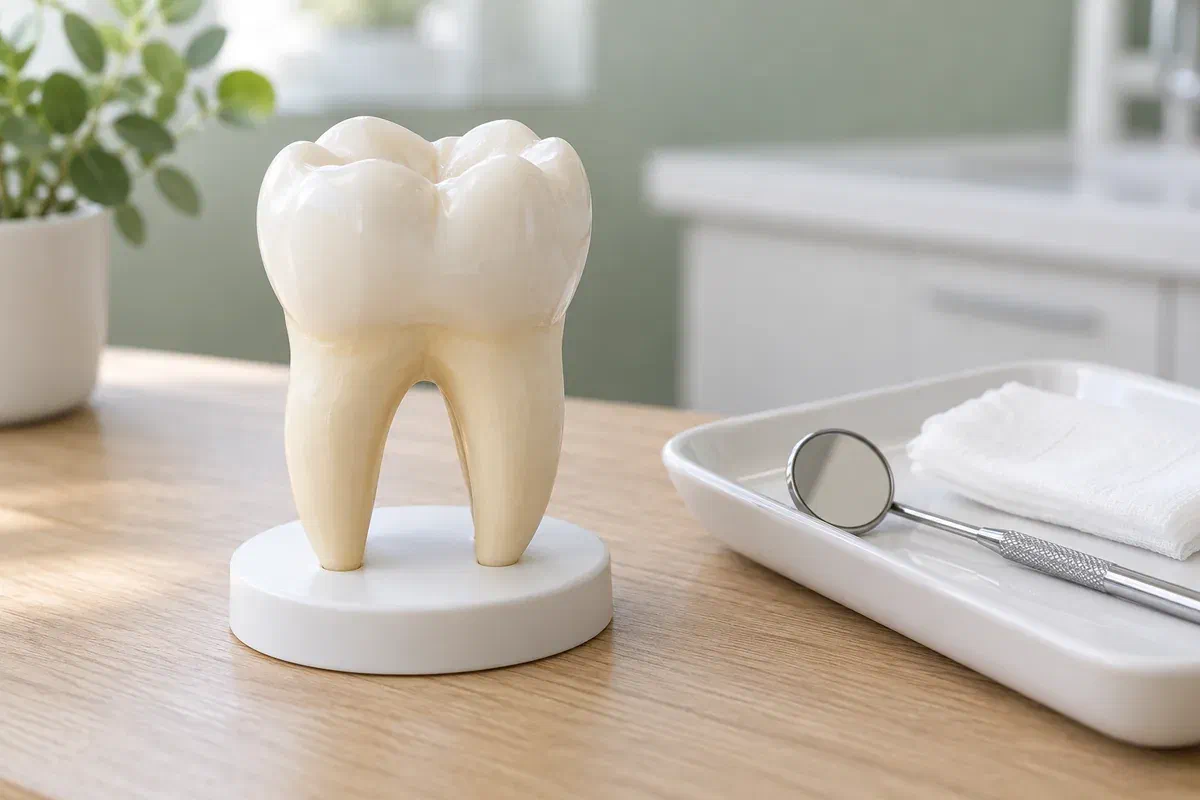
Illustrative two-root molar teaching model beside a dental mirror and gauze
When a simple extraction will not work

Hidden roots, difficult shapes, delicate neighbours.

Your examination and appropriate imaging are what justify a surgical method. Ask the clinician to explain how those findings apply to your tooth, because neither the steps nor the risks are fixed from one case to another.

Covered by tissue or broken below the surface

A tooth may be partly enclosed in gum or bone, or a fragment of root may remain under the gumline. The clinician considers its position together with the reason for removing it. Something being difficult to see is not by itself a reason for extraction.

Weakened, fractured or with challenging roots

Substantial decay, a crack or roots that curve sharply can change the approach. Dividing the tooth into sections is frequently intended from the start. Ask what the clinician expects to do, and how they would respond if conditions turn out differently once they begin.

Nerves, sinus, adjacent teeth and your health

Where the tooth sits in relation to nerves, the upper sinus, neighbouring teeth and the jawbone may affect risks and referral. Medical conditions and medicines can change preparation and healing. A full history helps identify which issues matter for your extraction.

Keep taking any prescribed blood thinner or other medicine unless you are told otherwise by the people managing your care. The treating clinician reviews your history and coordinates changes, if any, with your prescriber.

What good planning saves you

Wasted trips, last-minute surprises and uncertainty afterwards.

A plan settled in advance identifies the method, the setting and the support you will need, which matters more when each visit involves a longer journey. Ask how the tooth was assessed and why this approach is preferred. A meaningful risk discussion relates to your own case, rather than listing every possibility as though all were equally likely.

Think ahead about the space, too. Removal can be one part of a larger restorative or orthodontic plan, or it can address a tooth with no realistic future. Ask whether a replacement or monitoring will follow, and whether some of those next steps could be lined up to reduce the number of separate visits.

Patient information: Liverpool University Dental Hospital — surgical removal of teeth or roots

Certainty about the purpose

Find out what the extraction should resolve and why other options are unsuitable or less appropriate. You should hear the expected benefit and the consequences of putting it off or declining. A permanent decision needs to rest on what the examination actually showed.

Comfort and travel arranged together

Discuss local anaesthetic, anxiety and previous experiences, and whether further support would help. A surgical extraction does not automatically involve being put to sleep. If a different approach is needed, check whether you will need an escort, a driver or special preparation for the journey home.

Recovery planned for the distance

Ask about food, work, activity, medicines and how to get advice once you are home. Healing varies with the procedure and the person. A useful plan tells you what to expect, which symptoms need review, and whether a nearby clinic or hospital is more appropriate if something urgent comes up.

Keeping the steps efficient

What each visit is for, so nothing is left to chance.

Gather your questions before the procedure day and agree on a signal for a pause. Preparation advice comes from whoever is treating you and depends on the anaesthetic and your medical needs.

  1. One thorough assessment

    The clinician examines the tooth, considers whether imaging you already have is sufficient, and reviews the reason for removal with your health details. Ask about the expected method, significant risks and whether referral is likely. Make sure any extra records or treatment are arranged before the procedure date.

  2. Clear consent and comfort plans

    You are told about the planned treatment and reasonable alternatives before agreeing. Local anaesthetic is explained, as well as any further arrangements that have been assessed as suitable. If something is sharp or you need a moment, say so; you should not be expected to tolerate pain in silence.

  3. The extraction itself

    Depending on the plan and what is found, gum may be raised, some bone removed or the tooth divided. Even with effective numbing, pressure and vibration are common sensations. At the end the clinician cares for the socket and decides whether sutures are needed.

  4. Leaving prepared for the trip home

    You get instructions for bleeding, cleaning, eating, soreness and activity. Ask whether your sutures dissolve, since that may save a return visit, and whether a review is necessary. Note how to reach the team and what the next stage of dental care will be.

Recovering away from the clinic

Heal at home, and know where to turn if something changes.

Follow the instructions written for your procedure. The extent of surgery, your medical background and any special measures can change the guidance, and a general list should never take precedence over it.

Protect the socket and numb tissues

Avoid touching the site with your tongue or fingers. Instructions commonly ask you not to rinse or spit during the first day and to begin gentle cleaning later as advised. Be cautious with hot food and drinks, and avoid biting your lip or cheek before sensation returns.

Rest, eat sensibly and use medicines as directed

Choose comfortable foods and follow advice on exercise, smoking and site care. Take only the pain relief you were advised to use, within its directions, and consider your health and other medicines. Do not take leftover antibiotics or alter prescriptions yourself.

Decide early whether to call or seek care closer by

Contact the team for bleeding that continues, severe or worsening pain, growing swelling, fever, or concerns about sensation, and describe when it started. If you cannot be seen promptly, ask whether a nearer dental or medical service is the safer choice. Worsening symptoms are not automatically normal.

Patient information: UCLH — protecting the site and following extraction aftercare

Routes to consider

Retain, remove or refer, depending on what the tooth needs.

The right path depends on your diagnosis and the realistic future of that tooth. Ask about what each one involves, what it cannot achieve, and the effect of leaving things untreated.

When saving it deserves a proper look

Trying to keep the tooth

Restorative work, root canal treatment or gum care may be relevant, according to the cause. Ask about the outlook and how many visits the treatment would take. Some teeth cannot be kept, but you should understand the reasoning in your own case.

When extraction is advised and the tooth needs extra access

Surgical removal, organised in advance

The clinician outlines the method and the preparation required. Ask which stages to expect and how healing and later dental needs will be handled. The plan should suit the tooth and you, and it should not promise a fixed appointment length or recovery.

When anatomy, risk or medical needs point elsewhere

A specialist or a different plan

Referral may make sense for difficult anatomy, particular risks or needs beyond what the planned setting offers, and it may be closer to where you live. Ask what will be assessed and whether interim care is needed. Sometimes the risks shift the plan for removal itself.

Planning from farther away

Questions that help you organise a surgical extraction.

List what you want to know before your first visit, from records and timing to anaesthetic and healing. The clinician can explain what applies to your tooth and how to keep the number of trips sensible.

(905) 876-4488
Can I send my X-rays and records before the first appointment?
Yes, and it often helps. Ask your current or previous dental office to forward recent images and notes. The clinician will still decide whether further imaging is needed, but having records ready can make the assessment more productive.
Could the assessment and extraction happen on the same day?
Occasionally, but not always. It depends on the complexity, your health, the need for imaging or medical coordination, and whether you have had time to consider the options. Ask what is realistic for your situation.
Are dissolving stitches an option?
The clinician chooses the type of closure that suits the site, and some stitches dissolve on their own. Ask which kind will be used for you and whether a removal appointment will be needed.
What should I do if a problem starts late in the evening at home in Etobicoke?
Before the procedure, ask for the after-hours contact route. For breathing or swallowing difficulty, rapidly spreading swelling or uncontrolled bleeding, go to the nearest emergency department. For other concerns, call for advice and ask whether a closer service is more appropriate.
Is it safe to drive home after a surgical extraction?
It depends on the anaesthetic and any other arrangements used. With some forms of sedation you must not drive and will need an escort. Ask the clinician in advance so you can plan the journey.
Would a referral mean seeing someone in Toronto instead?
It might. If the anatomy, complexity or your medical needs suit another setting, the referral could be to a provider who is more convenient for you. Ask what the referral is for and how the handover of records will work.
Organise your visit from Etobicoke

Send your records, and we will plan the visits with you.

Get in touch with Milton Dental Clinic to arrange an assessment or discuss an extraction someone has already recommended. Share images and records ahead of time if you can, and tell us about symptoms, your medical history and any concerns.

The treatment approach and provider are decided through individual assessment. For urgent symptoms, call promptly or seek nearby emergency care.

Visit Milton Dental Clinic
Unit 1, 342 Bronte St. S, Milton, ON L9T 5B7
Get directions Clinic hours
Monday–Thursday
11am–7pm
Friday–Sunday
By appointment only

Areas we serve

  • Milton
  • Oakville
  • Mississauga
  • Georgetown
  • Halton Hills
  • Acton
  • Campbellville
  • Brampton
  • Burlington
  • Puslinch
  • Rockwood
  • Erin
  • Caledon
  • Etobicoke
  • Old Milton
  • Bronte Meadows
  • Timberlea
  • Dorset Park
  • Dempsey
  • Clarke
  • Beaty
  • Coates
  • Harrison
  • Scott
  • Willmott
  • Ford
  • Bowes
  • Cobden
  • Walker
  • Mountain View
  • Milton Heights
  • Hawthorne Village
  • Valley View
  • Fallingbrook
  • Nassagaweya
  • Trafalgar
  • Esquesing
  • Nelson
  • Brookville
  • Moffat
  • Glen Williams
  • Norval
  • Limehouse
  • Stewarttown
  • Ashgrove
  • Hornby
  • Silver Creek
  • Speyside
  • Scotch Block
  • North Oakville
  • River Oaks
  • Glen Abbey
  • West Oak Trails
  • Palermo
  • Bronte Creek
  • College Park
  • Joshua Creek
  • Uptown Core
  • Preserve
  • Iroquois Ridge
  • Lisgar
  • Meadowvale
  • Meadowvale Village
  • Churchill Meadows
  • Erin Mills
  • Central Erin Mills
  • Streetsville
  • East Credit
  • Creditview
  • Heartland
  • Sheridan
  • Mount Pleasant
  • Credit Valley
  • Huttonville
  • Churchville
  • Springbrook
  • Northwest Brampton
  • Bram West
  • Fletcher's Meadow
  • Fletcher's Creek South
  • Alton Village
  • Orchard
  • Millcroft
  • Headon Forest
  • Tansley
  • Brant Hills
  • Tyandaga
  • Kilbride
  • Lowville
  • Aberfoyle
  • Morriston
  • Arkell
  • Hillsburgh
  • Freelton
  • Carlisle
  • Waterdown
  • Flamborough
  • Mountsberg

How can we help?

Milton Dental Clinic

Have a question about your smile? Choose the option that works best for you.

For urgent dental concerns, please call.
Messages are reviewed during clinic hours.