

Illustrative discussion of a planned surgical tooth extraction
Specialized Care

Surgical Tooth Extractions in Mississauga

A surgical extraction has to fit into a real week of work, school runs and commitments. From Mississauga, plan it with us properly: why the tooth needs removing, what extra access involves, which alternatives exist, and what recovery could mean for your calendar.

Fitting surgery into a busy life

Calendar open, questions ready.

The first thing many people ask is how many days to block off. That is a sensible question, but the answer depends on what the procedure involves. In a surgical extraction, the tooth or root cannot appropriately be lifted out in the simple way. Reaching it might mean moving some gum aside, removing a small amount of bone, or cutting the tooth into sections. The extent of that work shapes the recovery.

Scheduling also should not crowd out the bigger question of whether the tooth must go at all. Ask what problem removal will solve, whether a treatment that keeps the tooth is realistic, and what you would be choosing between. The word surgical tells you how; it does not tell you why, and both deserve a proper answer.

For people coming from Mississauga, especially the western neighbourhoods, we try to make the planning visit count. We review the findings, discuss an appropriate pathway and arrange a referral where your needs or the anatomy call for it. Mention your health conditions, medicines, earlier dental experiences and any constraints around work or caregiving, so preparation, comfort and recovery are planned together.

Plan your surgical extraction visit
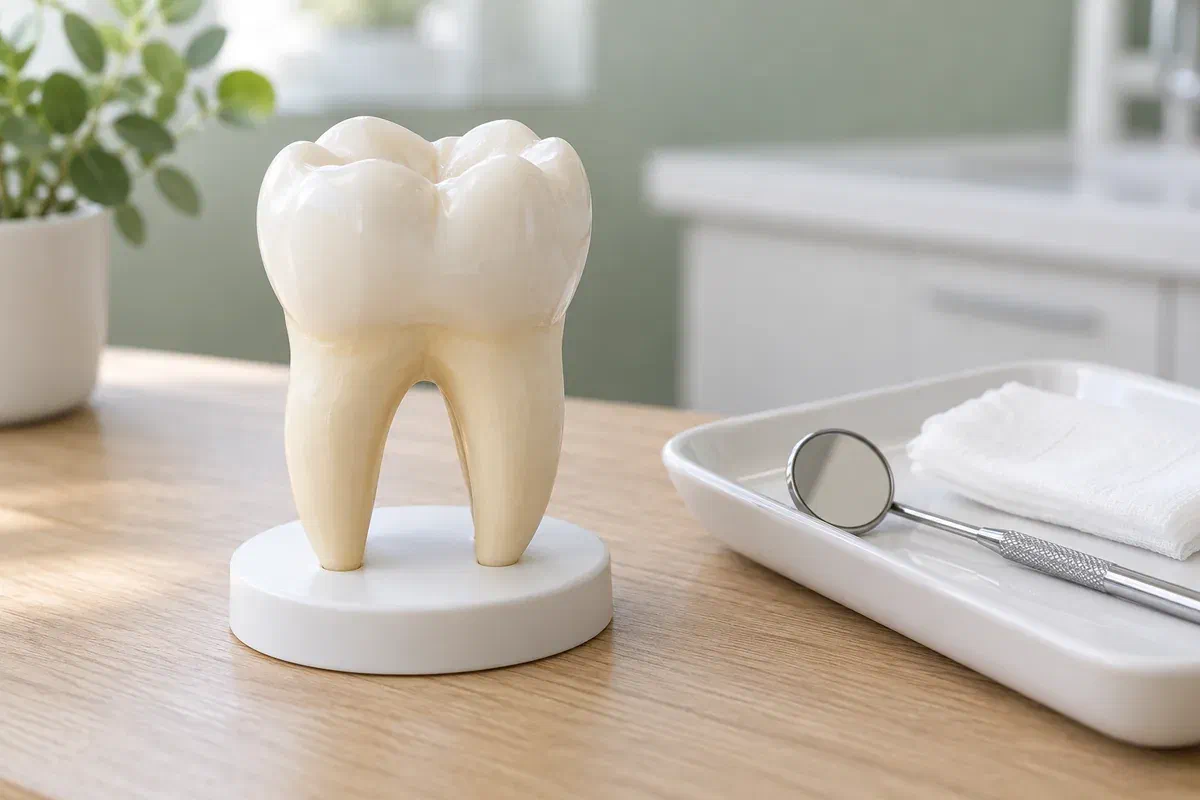
Illustrative two-root molar teaching model beside a dental mirror and gauze
What decides how involved it will be

Position, structure and surroundings set the scale of the job.

The examination, with imaging where it is appropriate, explains why extra access is being suggested. Ask how the findings relate to your tooth, since the steps and the likely recovery are not the same for every surgical extraction.

Access is blocked by gum or bone

The tooth may be partly buried, or a fractured root may be sitting out of sight. The clinician considers where it lies and why it needs removing before deciding how to reach it. A hard-to-reach tooth is not automatically one that must come out.

Breakdown or root shape complicates things

Extensive decay, a crack, or roots with an unusual curve can change the method and sometimes the length of the procedure. Sectioning the tooth may be planned rather than improvised. Ask which steps are expected and whether the plan could change once the clinician can see more.

Nearby structures and health factors

Proximity to nerves, the upper sinus, neighbouring teeth and the supporting bone can affect risks and referral. Your medical conditions and medicines may also alter preparation or recovery advice. A complete history lets the clinician tell you what is relevant for this particular tooth.

Do not decide on your own to stop a blood thinner or other prescribed medicine before your procedure. If a change is truly needed, it is worked out between the dentist doing the extraction and the doctor responsible for that prescription.

The payoff of planning ahead

Book the right day, with the right support, for the right reasons.

Planning helps settle the technique, setting and support before treatment, which also helps you arrange the time around it. Ask how the tooth was assessed and why this approach was chosen. A risk discussion should be specific to your situation; it is meant to help you decide, not to make every rare complication sound equally probable.

Think too about the gap that follows, if it matters for you. Some extractions belong to a wider restorative or orthodontic plan; others deal with a tooth that cannot sensibly be kept. Ask whether a replacement, monitoring or another stage is expected, and what to schedule before the extraction so later steps run smoothly.

Patient information: Liverpool University Dental Hospital — surgical removal of teeth or roots

Confirm the purpose of the extraction

Ask what removal will address and why alternatives are less suitable. The clinician should explain the expected benefit and what could happen if you put it off or decline. Because the choice is permanent, the explanation should rest on what was actually found.

Settle the comfort arrangements early

Discuss local anaesthetic, anxiety, past experiences and any extra support you may need. A surgical procedure does not automatically mean general anaesthesia. If a different approach or provider is involved, ask about assessment, transport, an escort or preparation so you can arrange the day.

Map the first days around your routine

Ask about eating, returning to work, exercise, medicines and who to call afterwards. Recovery varies with the procedure and with you. A practical plan gives realistic expectations and a contact route, and it makes clear which symptoms should be reviewed rather than worked through.

How the appointments are arranged

Plan it, agree to it, have it done, recover well.

Use the planning visit for questions so the procedure day is focused, and agree on a way to ask for a break. Any instructions about eating, medicines or preparation come from the treating provider and suit the anaesthetic and your health.

  1. Planning visit: tooth, images and history

    This first appointment covers an examination, any imaging that would help, and a look at your health alongside the case for extraction. Use it to ask about method, notable risks and referral. Check whether other treatment or records are needed first, so the procedure date is realistic.

  2. Consent and comfort on the day

    Before you agree, the provider explains the planned treatment and reasonable alternatives. Local anaesthetic is discussed, along with any further arrangements assessed as suitable. Speak up if numbness seems incomplete or you need to pause. Sharp pain is a signal to stop and check, not to push through.

  3. The procedure itself

    According to the plan and what is found, gum may be lifted, some bone removed or the tooth divided. You may feel pressure, movement or vibration even with good numbing. The clinician cares for the site at the end and judges whether closing it with stitches is appropriate.

  4. Going home with a clear plan

    Written guidance covers bleeding, cleaning, food, discomfort and activity. Before you leave, put any suture check or review in your calendar, save the clinic’s number in your phone, and ask when restoration planning, if relevant, should start.

The days that follow

Go easy on yourself and keep an eye on progress.

The sheet your own clinician hands you outranks anything general. How much surgery was done, what is in your medical file and any extra steps taken on the day can all reshape the advice, so treat online checklists as background only.

Protect the socket while it starts to heal

Hands and tongue stay away from the area. A common early rule is to skip rinsing and spitting for a day, then switch to gentle cleaning once you are cleared to. Let coffee and soup cool before you sip, and watch out for chewing a numb cheek during that first lunch break.

Follow the guidance on food, exercise and medicines

Choose foods that are easy to manage and follow what you were told about workouts, smoking and site care. Pain relief should be the kind recommended for you, taken at the labelled dose and checked against anything else you use. Leftover antibiotics are off the table, as is changing a prescription without advice.

Get advice when recovery seems off track

Ring the office if bleeding keeps going, pain is severe or building, swelling grows day by day, you run a temperature, or feeling in your lip or tongue seems wrong. Give the timeline and what has changed. Not every sore socket is infected, and worse is not automatically normal.

Patient information: UCLH — protecting the site and following extraction aftercare

Before you book the date

Make sure surgery is the right path, not just the scheduled one.

The best option depends on the diagnosis and the realistic outlook for that tooth. Ask what each path would involve, its limits, and what leaving the problem untreated would mean.

When the tooth may be worth retaining

Keeping the tooth when it makes sense

Restorative work, root canal treatment, gum care or other options may be relevant, depending on the cause. Ask about prognosis and the time and visits involved. Not every damaged tooth can be saved, but you should hear why preservation is or is not reasonable.

When extraction is indicated and access is limited

A scheduled surgical removal

You will hear how the tooth is to be reached and what to arrange beforehand. Ask how long the day might reasonably take, what healing looks like, and who handles any restoration later. Honest planning avoids promising a fixed duration or a recovery that matches a colleague’s.

If the case is more involved than a general office should take on

Specialist assessment or an adjusted plan

Tricky anatomy, higher risks or care needs outside what this setting provides may lead to an oral surgeon. Find out what that appointment would cover and whether you need anything in the meantime. Once in a while, the risks tip the balance enough to rethink removal, and that is an individual call.

Scheduling and recovery questions

Practical questions people ask before booking time off.

Bring your calendar questions along with any about the procedure, numbing or the reason for removal. Your clinician can explain what applies to your tooth and your routine.

(905) 876-4488
How much time off work should I plan for?
There is no single answer. It depends on the extent of the procedure, your health and the physical demands of your job. Ask the treating provider for advice that suits your work, and keep a little flexibility in case your recovery needs more time than expected.
Is it better to book the extraction before a weekend?
Some people prefer to have quieter days afterwards, but the right timing depends on your situation. Make sure you know how to reach help after hours, whatever day you choose. Ask the clinician whether a review visit should be planned soon after.
Can I exercise or go to the gym the next day?
Follow the activity advice you are given. Strenuous exercise soon after surgery may not be recommended, and the guidance depends on the procedure and your health. Ask when it is reasonable to return to your usual routine.
Will I be able to speak normally on a work call afterwards?
Numbness, gauze and some soreness can affect speech for a while. How long varies with the procedure and the anaesthetic. If you have important calls or meetings, ask the clinician what to expect and consider keeping that day light.
Is every surgical extraction the same length of appointment?
No. Tooth position, root shape, access and your own needs all affect how long the procedure takes. Ask for a realistic estimate at the planning visit, understanding that it may change once treatment begins.
What should I plan for when travelling from Mississauga on the day?
Ask whether you need someone to accompany you, whether you should avoid driving afterwards, and what to bring. Knowing the after-hours contact route before you head home is especially useful if you live some way from the clinic.
Mississauga extraction planning

Let us help you set the date with confidence.

Contact Milton Dental Clinic to book an extraction assessment or to review a recommendation from another office. Bring available images and records, and tell us about your symptoms, health, work demands and any concerns about the procedure.

Treatment approach and provider are decided by individual assessment. Call promptly for urgent symptoms.

Visit Milton Dental Clinic
Unit 1, 342 Bronte St. S, Milton, ON L9T 5B7
Get directions Clinic hours
Monday–Thursday
11am–7pm
Friday–Sunday
By appointment only

Areas we serve

  • Milton
  • Oakville
  • Mississauga
  • Georgetown
  • Halton Hills
  • Acton
  • Campbellville
  • Brampton
  • Burlington
  • Puslinch
  • Rockwood
  • Erin
  • Caledon
  • Etobicoke
  • Old Milton
  • Bronte Meadows
  • Timberlea
  • Dorset Park
  • Dempsey
  • Clarke
  • Beaty
  • Coates
  • Harrison
  • Scott
  • Willmott
  • Ford
  • Bowes
  • Cobden
  • Walker
  • Mountain View
  • Milton Heights
  • Hawthorne Village
  • Valley View
  • Fallingbrook
  • Nassagaweya
  • Trafalgar
  • Esquesing
  • Nelson
  • Brookville
  • Moffat
  • Glen Williams
  • Norval
  • Limehouse
  • Stewarttown
  • Ashgrove
  • Hornby
  • Silver Creek
  • Speyside
  • Scotch Block
  • North Oakville
  • River Oaks
  • Glen Abbey
  • West Oak Trails
  • Palermo
  • Bronte Creek
  • College Park
  • Joshua Creek
  • Uptown Core
  • Preserve
  • Iroquois Ridge
  • Lisgar
  • Meadowvale
  • Meadowvale Village
  • Churchill Meadows
  • Erin Mills
  • Central Erin Mills
  • Streetsville
  • East Credit
  • Creditview
  • Heartland
  • Sheridan
  • Mount Pleasant
  • Credit Valley
  • Huttonville
  • Churchville
  • Springbrook
  • Northwest Brampton
  • Bram West
  • Fletcher's Meadow
  • Fletcher's Creek South
  • Alton Village
  • Orchard
  • Millcroft
  • Headon Forest
  • Tansley
  • Brant Hills
  • Tyandaga
  • Kilbride
  • Lowville
  • Aberfoyle
  • Morriston
  • Arkell
  • Hillsburgh
  • Freelton
  • Carlisle
  • Waterdown
  • Flamborough
  • Mountsberg

How can we help?

Milton Dental Clinic

Have a question about your smile? Choose the option that works best for you.

For urgent dental concerns, please call.
Messages are reviewed during clinic hours.