
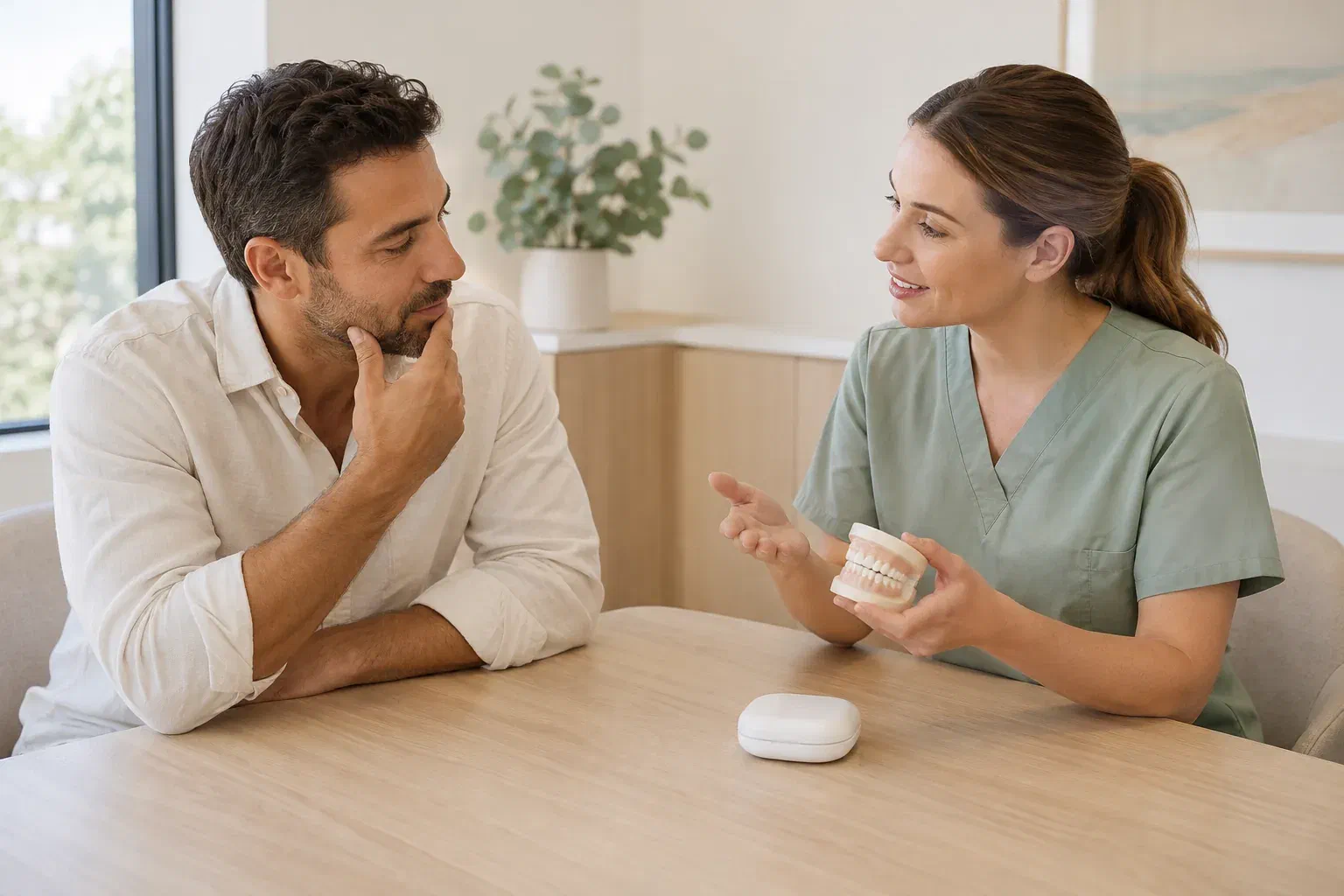
Illustrative consultation about teeth grinding and possible tooth wear
Specialized Care

Teeth-Grinding Treatment

Grinding sounds, changing tooth surfaces, or repeated chips can raise questions about bruxism. Discuss teeth grinding in Milton and explore assessment, protection, and management that reflect your dental findings and everyday experience.

A closer look at teeth grinding

Understand the wear before choosing how to protect your teeth.

Teeth grinding involves movement of the teeth against one another and can occur while awake or asleep. It is commonly discussed under the term bruxism, which also includes clenching. You may hear about it from a partner, notice changes in tooth edges, or ask about a pattern of jaw tiredness and damaged restorations.

An examination helps put those observations in context. Not all tooth wear comes from grinding, and the appearance of an older worn surface does not establish how much activity is occurring now. The dentist considers the history, current symptoms, and oral findings before discussing monitoring, protection, repair, or another assessment.

At Milton Dental Clinic, tell us what prompted your concern and whether you have tried a guard or received advice before. Bring the device if you have one. We can discuss a plan with a defined purpose, such as protecting vulnerable surfaces or investigating persistent symptoms, without promising that a mouthguard will permanently stop grinding.

Discuss grinding and changes to your teeth
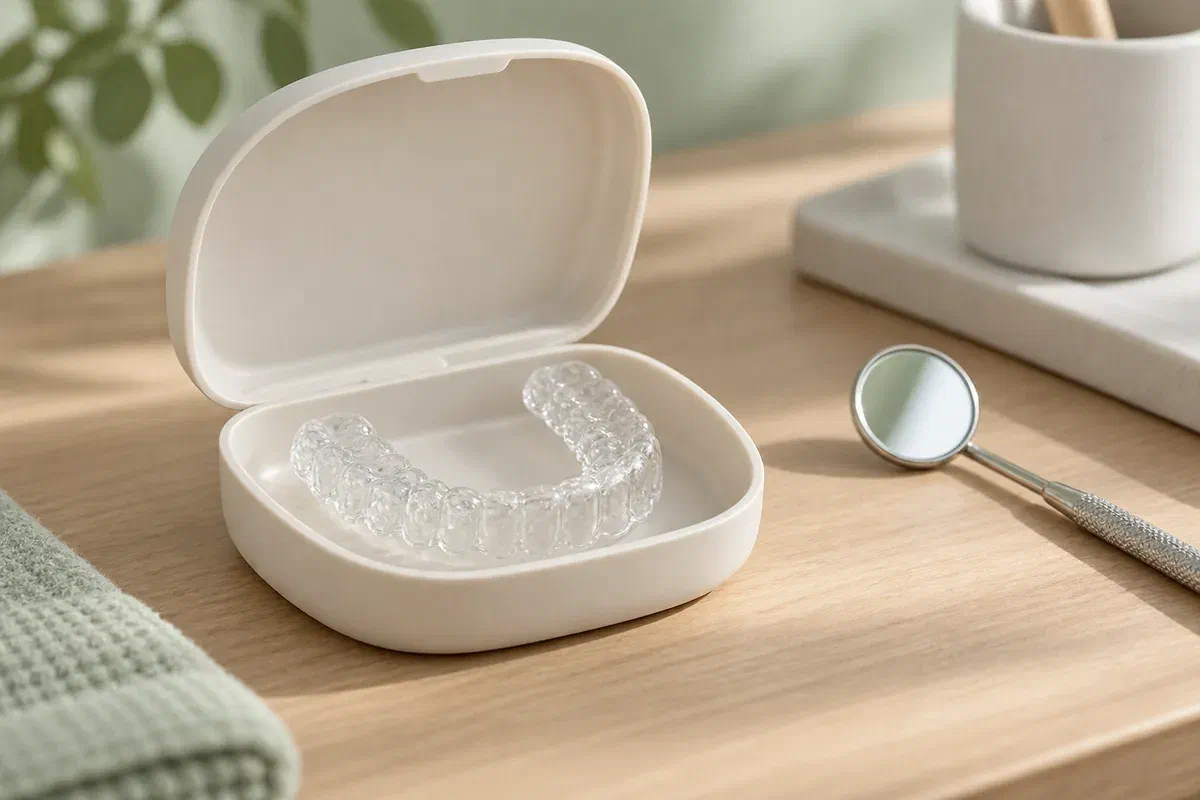
Illustrative single-arch clear dental nightguard in a protective case
Reasons to arrange a review

A sound, a symptom, and a worn surface each add part of the picture.

Describe what you or someone else has noticed and when it happens. A few useful observations are enough to begin; you do not need a nightly recording or proof of every grinding episode.

Grinding sounds during sleep

Tell the clinician what has been reported and whether there are other sleep concerns. The report can contribute to assessment, but it does not quantify tooth damage or identify every relevant cause. Mention snoring, breathing pauses, or daytime sleepiness so appropriate medical evaluation can be discussed when needed.

Chipped edges, sensitivity, or changing tooth surfaces

Explain whether a change is new, painful, or affecting eating. The dentist needs to consider the condition of the tooth and other possible contributors to wear. Do not assume that sensitivity is harmless grinding-related soreness when a particular tooth may need further investigation.

A guard or restoration that repeatedly causes concern

Bring a worn, cracked, or uncomfortable guard and describe repeated problems with fillings or crowns. The device and the mouth should be reviewed together. Damage does not automatically mean a stronger guard or another restoration is the answer; the findings need to guide the next decision.

Seek prompt advice for a broken tooth, severe pain, swelling, or a sudden change in jaw movement. A long-term grinding concern should not delay assessment of a new dental problem.

What a considered grinding plan can provide

Separate protection, symptom management, and repair into clear decisions.

Different recommendations serve different purposes. An appliance may be considered to protect teeth, while a damaged tooth may need a restoration and a persistent jaw symptom may require its own assessment. Ask which finding each recommendation addresses so you can understand why more than one step may be discussed.

The plan should also include a way to review progress. Your comfort, ability to use an appliance, and changes in the teeth can all be relevant. Comparing findings over time can be more useful than judging success only by whether a partner hears grinding on a particular night or whether the device shows a mark.

Patient information: NIDCR — bruxism assessment and management

Assess whether wear is changing and what contributes to it

Earlier photographs, records, or examinations may help the dentist interpret current surfaces. Discuss other relevant history rather than assigning every worn edge to grinding. Ask what is being monitored and when a change would justify treatment instead of assuming every worn tooth needs an immediate crown.

Consider protection that suits the mouth and the purpose

If a guard is appropriate, ask about its intended role, fit, wearing instructions, and limitations. It should be assessed clinically and reviewed if uncomfortable. A sports guard, orthodontic retainer, and sleep-apnea appliance have different purposes and should not be treated as interchangeable solutions for grinding.

Address related concerns without blaming one factor

Discuss sleep, medicines, daily habits, and stress when relevant. These conversations can inform care without suggesting that every problem has a single cause or that symptoms are your fault. The clinician may recommend coordination with another provider when the history raises a question beyond the dental assessment.

How grinding concerns are assessed

Review the pattern, examine the effects, and agree on a proportionate response.

Bring an existing appliance and explain what has or has not helped. The first appointment should clarify the findings and choices, rather than assume that everyone with grinding sounds needs the same treatment.

  1. Discuss the observations and relevant history

    Describe reported sounds, symptoms, the timing of discomfort, and any changes to teeth or restorations. Mention medicines, sleep concerns, and previous treatment. If you do not know whether grinding occurs at night, say so; uncertainty can be considered alongside the examination rather than filled in with an assumption.

  2. Examine teeth, restorations, and symptomatic areas

    The dentist assesses relevant wear, fractures, sensitivity, and jaw findings. A particular tooth may need further tests, while older records may help establish change over time. Ask what the findings support and which symptoms could have another explanation before deciding on a device or restorative procedure.

  3. Compare monitoring, protection, and necessary treatment

    Discuss whether active intervention is needed and what each option aims to achieve. A plan may include conservative advice, an assessed guard, repair of identified damage, or another evaluation. Ask about the expected benefit and limitations rather than treating the most extensive option as automatically the most effective.

  4. Review the response and adjust the plan when indicated

    Agree on follow-up and the changes to report sooner. If an appliance is supplied, its comfort and condition need review along with the teeth. Persistent symptoms or repeated damage may require a fresh assessment, not simply a succession of replacement devices without reconsidering the underlying questions.

Looking after your teeth between reviews

Follow a manageable plan and report changes that affect its usefulness.

Your instructions depend on the findings and any device or dental treatment provided. Keep the plan practical and ask for clarification when advice seems inconsistent with a previous appliance or another provider's instructions.

Care for a prescribed guard according to its instructions

Use the recommended cleaning and storage method and bring the guard to review. Do not heat, bend, trim, or modify it yourself. Contact the provider for an altered fit, cracks, or pain, and do not continue with a broken or painful appliance while assuming discomfort is part of the treatment.

Notice daytime pressure without repeatedly testing the bite

If awake clenching or grinding is part of the pattern, use the agreed awareness strategies and allow a comfortable resting position. Avoid repeatedly rubbing the teeth together to check worn areas. Discuss any habit changes that are difficult to maintain so the advice can be made more useful.

Keep dental and relevant medical reviews connected

Report new tooth symptoms, changes in sleep, or a possible relationship with a medicine change. Do not stop a prescription independently. If another provider is involved, ask what information should be shared so the dental plan and the wider health assessment do not develop in isolation.

Choosing care for grinding-related concerns

The findings determine whether to monitor, protect, repair, or investigate further.

Ask what would happen with each reasonable option, including observation when appropriate. Treatment should respond to an identified need rather than promise that changing the shape of the teeth will necessarily eliminate grinding.

When the findings support a conservative approach

Monitoring and practical management

Not every reported grinding episode requires a device or a restoration. The dentist may discuss useful habits and a review plan, with attention to changes in symptoms or wear. Ask what is being observed and which development would lead to a different recommendation.

When teeth or restorations have a defined protection or repair need

An appropriate protective appliance and targeted dental care

An assessed guard may help protect surfaces, while a damaged tooth may need its own treatment. Discuss the purpose, limitations, and follow-up of each step. Restoring a worn tooth does not itself prove that the grinding activity has stopped or that another tooth no longer needs monitoring.

When the history or response calls for additional assessment

Further evaluation for unresolved symptoms or related concerns

Persistent jaw pain, a painful tooth, relevant sleep symptoms, or a medicine question may require additional dental or medical input. Ask what the next assessment is intended to clarify. Avoid assuming that a stronger appliance or permanent bite alteration is the solution before those questions are addressed.

Patient information: NHS — when to seek review for teeth grinding

Questions about grinding and tooth protection

Understand what the examination shows and what a device can reasonably do.

Bring the observations that made you concerned, even if they are intermittent. The discussion should help you distinguish a useful protective measure from a promise that cannot be made.

(905) 876-4488
Does hearing grinding at night mean every tooth needs treatment?
No. Reported sounds are part of the history, but the dentist needs to examine the teeth and other findings. Some situations may call for monitoring or protection, while identified damage may need treatment. The sound alone does not establish the extent of dental damage.
Can tooth wear remain visible after the grinding pattern has changed?
Yes. Existing wear records what has happened to the surfaces and does not by itself measure current activity. The dentist considers symptoms, history, and change over time. Ask whether earlier records can help interpret the findings before assuming all visible wear is recent.
Should I bring a cracked grinding guard to the dentist instead of throwing it away?
Yes. Stop using a broken device and bring it for assessment. Its condition and fit can help inform the discussion, but damage does not automatically identify the cause or the best replacement. Ask how the teeth and appliance will be reviewed together.
Can I use my orthodontic retainer as a grinding guard?
Do not assume the devices are interchangeable. A retainer is designed for tooth-position maintenance, while a protective guard has a different purpose. Discuss both needs with the providers involved so any appliance recommendation accounts for retention, fit, and the dental findings.
Does teeth grinding automatically mean I have obstructive sleep apnea?
No. Grinding does not establish that diagnosis. Tell the clinician about snoring, breathing pauses, or daytime sleepiness if present so appropriate medical evaluation can be discussed. A grinding guard is not a substitute for a sleep assessment or prescribed sleep-apnea treatment.
Will rebuilding worn teeth with crowns cure the grinding itself?
That should not be assumed. Restorative treatment addresses a tooth’s condition and function; it does not guarantee that grinding stops. Ask why restoration is indicated, what alternatives exist, and how ongoing protection and review will be handled before agreeing to irreversible treatment.
Discuss teeth grinding in Milton

Bring the concern, the appliance, and the questions about your teeth.

Contact Milton Dental Clinic to review grinding sounds, changing tooth surfaces, or concerns about a guard or restoration. Tell us about pain or a recent break so the urgency and appropriate appointment can be discussed.

Management depends on the examination and may involve monitoring, protection, dental care, or further assessment.

Visit Milton Dental Clinic
Unit 1, 342 Bronte St. S, Milton, ON L9T 5B7
Get directions Clinic hours
Monday–Thursday
11am–7pm
Friday–Sunday
By appointment only

How can we help?

Milton Dental Clinic

Have a question about your smile? Choose the option that works best for you.

For urgent dental concerns, please call.
Messages are reviewed during clinic hours.