
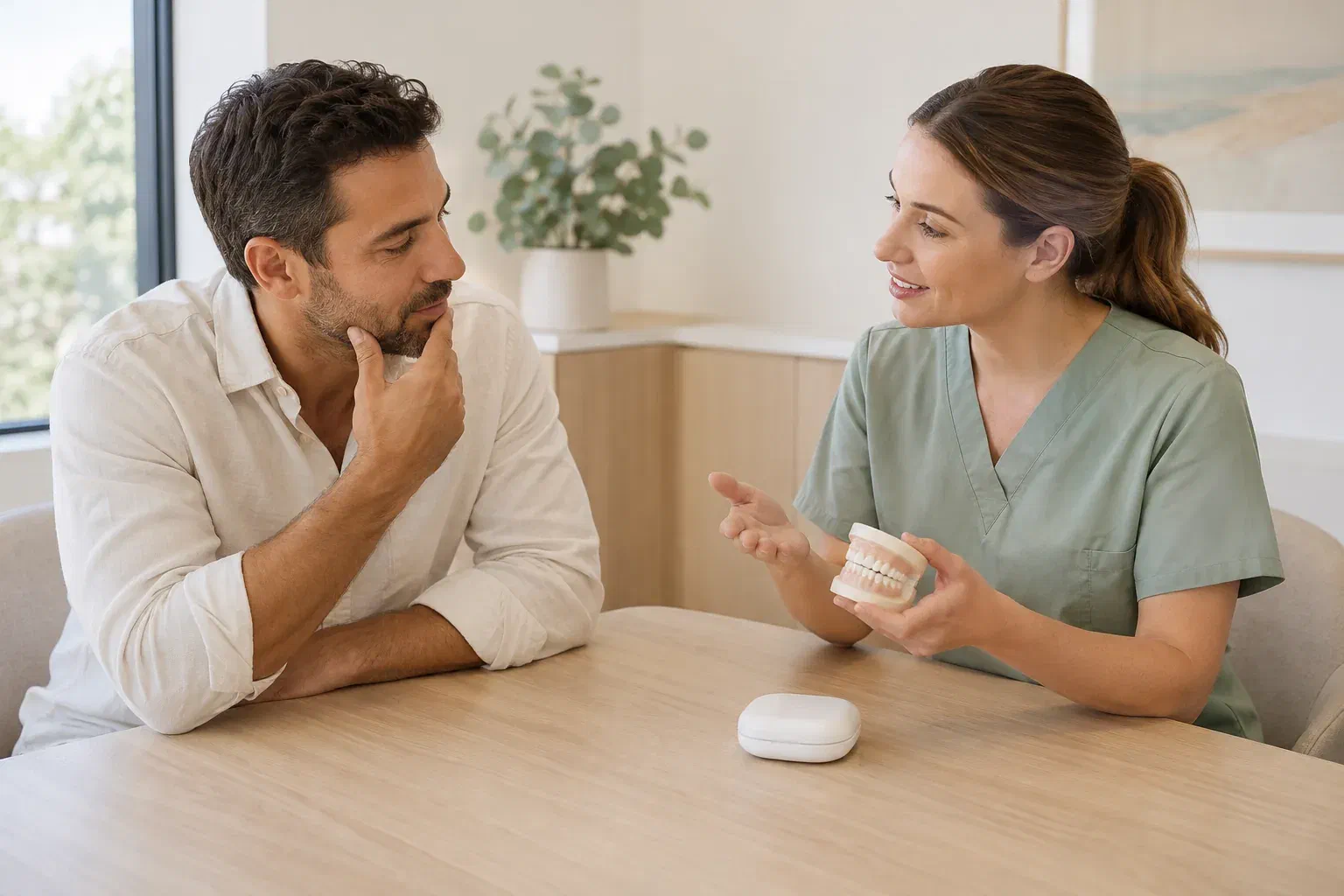
Illustrative consultation about teeth grinding and possible tooth wear
Specialized Care

Teeth-Grinding Treatment in Acton

Grinding sometimes appears after a change in life: a new medicine, a stretch of poor sleep, a demanding season at work. For adults in Acton, an assessment looks at what your teeth show and how that timing fits, so protection or repair is chosen for a reason.

When did it start? Grinding care for Acton

Timing can be one of the most useful clues.

Some people can name the month their jaw started aching or a partner first heard grinding. Perhaps it followed a new prescription, a move, a bereavement or a run of broken sleep. Others have no idea when it began. Either way, the history helps. Bruxism, the term dentists use for grinding and clenching, can occur during sleep or while awake.

The dental examination adds the other half. Tooth surfaces can wear for reasons that have nothing to do with grinding, and a flat edge may be decades old rather than recent. The dentist considers your story, current symptoms and what is seen in your mouth before discussing whether to keep watch, protect the teeth, repair damage or look further.

Before your visit, jot down roughly when things changed and what else was happening then, including any medicine started, stopped or adjusted. Bring any guard you own. A good plan is honest about its purpose, perhaps protecting surfaces while a medical question is explored, and never suggests that an appliance alone will make the grinding stop for good.

Discuss when your grinding began
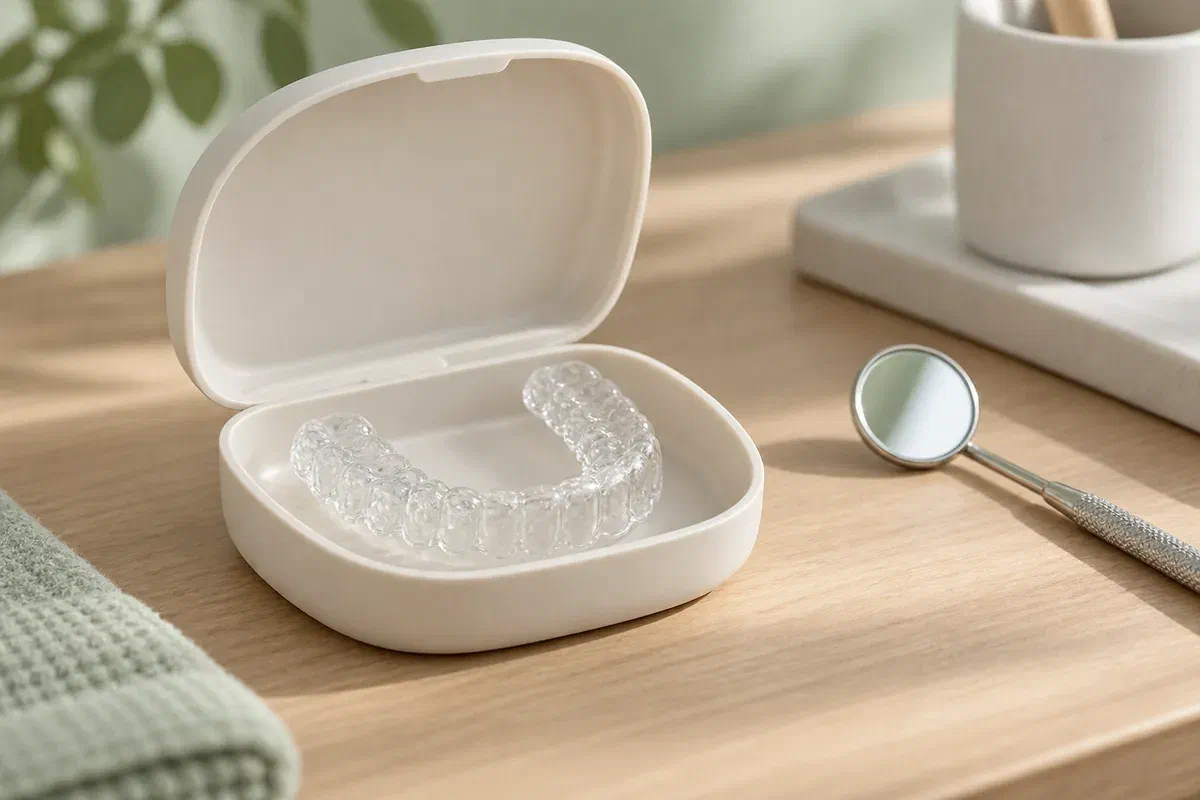
Illustrative single-arch clear dental nightguard in a protective case
Changes worth raising

New noise, new soreness, new wear

A rough timeline is helpful but not required. Bring what you remember and what others have told you; the examination does the rest.

Grinding at night that seems recent

Tell us when it was first noticed and whether sleep itself has changed. A new report is valuable history, though it cannot show how much the teeth have been affected or confirm a cause. If snoring, pauses in breathing or heavy daytime tiredness have appeared too, mention them so a medical review can be suggested if appropriate.

Teeth or a jaw that started to feel different

Note when tenderness, sensitivity or a chip appeared and whether eating is affected. The dentist considers grinding alongside other causes. A single tooth that has begun to hurt deserves its own investigation instead of being folded into the grinding explanation.

An old guard brought back into use, or dental work failing

If you have dug out an old appliance or noticed fillings chipping, bring the guard and mention the restorations. Seeing both together is useful. Problems with either do not automatically mean a stronger device or larger repair is needed.

A broken tooth, pain that is severe, swelling, or a jaw that suddenly moves in a new way should not wait. Call us promptly about any of those, whatever the grinding plan.

Why the history matters

Connect the dental findings to what changed in your life.

Once timing and findings are both on the table, the plan can be broken into sensible parts. A guard might protect teeth during a period of heavier grinding, a damaged tooth might need its own treatment, and a medical question might be passed to your physician. Ask which part each recommendation is responding to.

Change over time is also part of the story. If grinding began with a particular event, it may ease, persist or shift. Reviewing comfort, whether you can wear an appliance and how the teeth look across visits is more reliable than judging by one night.

Patient information: NIDCR — bruxism assessment and management

Work out whether wear is recent or longstanding

Earlier photos, charts or X-rays help the dentist decide whether today's surfaces have changed since the timing you describe. Other causes of wear are kept in mind. Ask what will be followed and what would make treatment worthwhile rather than continued observation.

Choose protection for the period ahead

If a guard is advised, ask what it is meant to achieve, how it should fit and be worn, and where its limits lie. It should be fitted by a clinician and checked if it is uncomfortable. A sports guard, retainer or sleep-apnea appliance does a different job and should not be swapped in.

Keep medical questions with the right person

Medicines, sleep, stress and routines may be relevant, and none of them is a judgement on you. Some medicines have been associated with grinding in some people, but only your prescriber should decide on any change. We can help you work out what to ask them.

What happens at the visit

A short timeline, a careful look, a clear next step

Bring your notes about timing, a list of medicines and any guard you use. The first appointment should clarify the findings and choices rather than treat every grinding concern the same way.

  1. Build a simple timeline together

    We talk through when sounds or discomfort began, what was happening in your life and health then, and what has changed in your teeth or dental work. If you cannot pinpoint a start date, that is common; the examination is interpreted with that uncertainty in mind.

  2. Examine teeth, restorations and the jaw

    The dentist checks for wear, fractures, sensitivity and tenderness in the jaw muscles and joints. Particular teeth may need tests, and older records can help show change. You should come away knowing what the findings support and whether another explanation is possible.

  3. Decide on a proportionate plan

    For a grinding pattern that started recently, watching with practical advice is often a reasonable first move. Where teeth are already at risk, a fitted guard or a repair may be discussed, and a medical question may go to your physician. Ask what each step is meant to do and what it cannot; a bigger intervention is not automatically more effective.

  4. Review as circumstances change

    Follow-up is planned around how things evolve. If a medicine is changed by your prescriber, or sleep improves, tell us at review. Persistent symptoms or repeated damage call for a fresh assessment rather than a chain of replacement guards.

Looking after things at home

Simple routines while life settles

Your instructions depend on the findings and any device or treatment provided. If something seems to conflict with advice from another provider, ask us to clarify rather than guessing.

Treat your guard gently

Clean and store it as you were shown and bring it to your reviews. Do not heat, bend or trim it. Contact us about cracks, a change in fit or pain, and stop wearing a broken appliance rather than assuming discomfort is normal.

Ease off the jaw when you notice tension

During stressful moments, check whether your teeth are clenched and let them part slightly with the jaw relaxed. Avoid grinding on purpose to feel worn areas. If this is hard to keep up, tell us so the approach can be adjusted.

Keep your prescriber informed, not sidelined

Report new tooth symptoms or sleep changes to us, and discuss any suspected medicine link with the person who prescribed it. Do not stop or alter a medicine on your own. Ask what we should share so your dental and medical care stay joined up.

Acton care options

Three ways forward, depending on what is found

Ask what each reasonable option involves, including waiting to see whether things settle. Care should match a real need and should never promise that reshaping teeth will end grinding.

When wear is limited and symptoms are mild

Monitoring while circumstances change

If grinding seems linked to a recent change, watching for a while with practical habits may be sensible. Ask what the dentist will look for at review and what would lead to protection or treatment instead.

When surfaces or restorations are at risk or damaged

Protection now, repair where needed

During a stretch of heavier grinding, a fitted guard can help shield enamel and existing dental work. A tooth that has already chipped or cracked is handled as a separate job. Discuss what each is for and how it will be reviewed, and remember that a successful repair says nothing about whether the grinding itself has eased.

When the history points beyond the teeth

Medical or specialist input

A possible medicine link, sleep symptoms, persistent jaw pain or a tooth that keeps hurting may need further dental or medical evaluation. Ask what the next step should clarify. Stronger appliances or permanent bite changes should not come first.

Patient information: NHS — when to seek review for teeth grinding

Acton grinding questions

Questions about timing, medicines and protection

Bring whatever you have noticed, even if it is inconsistent. These answers aim to help separate sensible protection from promises nobody can keep.

(905) 876-4488
Can a new medication cause teeth grinding?
Some medicines have been linked with grinding in some people. Mention every medicine you take, including recent changes. Do not stop or adjust a prescription yourself; the dentist may suggest raising the question with your prescriber.
If my grinding started during a stressful time, will it go away on its own?
It may ease, persist or change shape, and nobody can reliably predict which. That is why the dentist may suggest monitoring and, if the teeth need it, protection in the meantime, with reviews spaced to see how things develop as the stressful period passes.
Is it worth seeing a dentist if the grinding is new?
Yes. An early examination gives a baseline for later comparison, shows whether any teeth or fillings are already damaged and helps decide whether protection is needed now or monitoring is enough. It also gives you a chance to raise any sleep or medicine questions while the timing is fresh in your mind.
Can my family doctor and dentist work together on grinding?
They can when it is relevant, for example if sleep symptoms or a medicine question arise. Ask what information should be shared, and give consent for records to be exchanged where needed.
Will a guard help if I mostly clench during the day?
A night guard covers only the hours it is worn. Daytime clenching is usually addressed with awareness strategies instead, such as noticing when your teeth are touching and letting them part. Ask the dentist which pattern seems to apply to you and what would fit your routine.
Does grinding mean I have a sleep problem?
Not by itself. Mention snoring, breathing pauses or daytime sleepiness if they occur, as a medical evaluation may be worthwhile. A grinding guard does not treat a sleep disorder.
Grinding visits for Acton

Bring your timeline and your questions.

Get in touch with Milton Dental Clinic to talk about grinding that seems new, a change in your teeth or a guard that is not working. Mention pain or a recent break so we can decide how soon you should come in.

Next steps depend on the examination and your history, and may involve watching, protecting, repairing or referring.

Visit Milton Dental Clinic
Unit 1, 342 Bronte St. S, Milton, ON L9T 5B7
Get directions Clinic hours
Monday–Thursday
11am–7pm
Friday–Sunday
By appointment only

Areas we serve

  • Milton
  • Oakville
  • Mississauga
  • Georgetown
  • Halton Hills
  • Acton
  • Campbellville
  • Brampton
  • Burlington
  • Puslinch
  • Rockwood
  • Erin
  • Caledon
  • Etobicoke
  • Old Milton
  • Bronte Meadows
  • Timberlea
  • Dorset Park
  • Dempsey
  • Clarke
  • Beaty
  • Coates
  • Harrison
  • Scott
  • Willmott
  • Ford
  • Bowes
  • Cobden
  • Walker
  • Mountain View
  • Milton Heights
  • Hawthorne Village
  • Valley View
  • Fallingbrook
  • Nassagaweya
  • Trafalgar
  • Esquesing
  • Nelson
  • Brookville
  • Moffat
  • Glen Williams
  • Norval
  • Limehouse
  • Stewarttown
  • Ashgrove
  • Hornby
  • Silver Creek
  • Speyside
  • Scotch Block
  • North Oakville
  • River Oaks
  • Glen Abbey
  • West Oak Trails
  • Palermo
  • Bronte Creek
  • College Park
  • Joshua Creek
  • Uptown Core
  • Preserve
  • Iroquois Ridge
  • Lisgar
  • Meadowvale
  • Meadowvale Village
  • Churchill Meadows
  • Erin Mills
  • Central Erin Mills
  • Streetsville
  • East Credit
  • Creditview
  • Heartland
  • Sheridan
  • Mount Pleasant
  • Credit Valley
  • Huttonville
  • Churchville
  • Springbrook
  • Northwest Brampton
  • Bram West
  • Fletcher's Meadow
  • Fletcher's Creek South
  • Alton Village
  • Orchard
  • Millcroft
  • Headon Forest
  • Tansley
  • Brant Hills
  • Tyandaga
  • Kilbride
  • Lowville
  • Aberfoyle
  • Morriston
  • Arkell
  • Hillsburgh
  • Freelton
  • Carlisle
  • Waterdown
  • Flamborough
  • Mountsberg

How can we help?

Milton Dental Clinic

Have a question about your smile? Choose the option that works best for you.

For urgent dental concerns, please call.
Messages are reviewed during clinic hours.