

Illustrative consultation about teeth grinding and possible tooth wear
Specialized Care

Teeth-Grinding Treatment in Burlington

Sometimes it starts with a photo: front teeth that look shorter or more even than you remember. For people in Burlington noticing that change, we look at whether grinding is part of it and talk through protection, repair or simply keeping watch.

A Burlington starting point

The smile in the photo looked a little different.

Edges that once had small bumps can become straight and flat. Corners may chip. Many people only notice when they compare a recent picture with an older one. Grinding is one possible reason. Dentists use the word bruxism for grinding and clenching together, and either can happen during sleep or while you are awake and busy.

Appearance, though, is a poor guide to cause. Erosion from acidic food and drink, the natural effects of age, and an uneven bite can all shorten teeth too. The flat edge you see now may have formed slowly over many years. Your dentist puts what you have noticed beside the clinical findings and your history before suggesting any next step.

When you visit, bring the photos if they helped you spot the change, along with any guard you already own. Let us know whether the concern is mostly how the teeth look, how they feel, or both. A sensible plan may protect what remains, repair a damaged edge or simply track the surfaces, and it should never claim that a device will cure the habit.

Have shortened or chipped teeth assessed
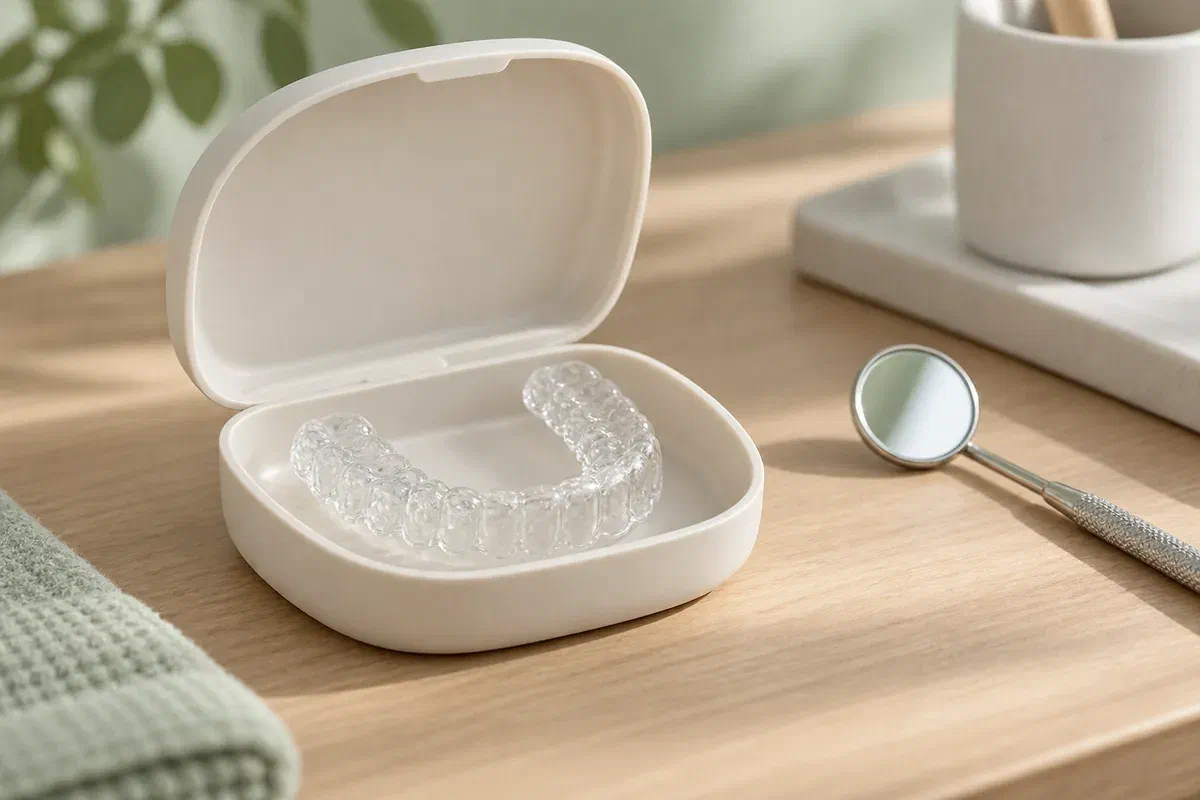
Illustrative single-arch clear dental nightguard in a protective case
Noticed any of these?

Shorter edges, morning soreness, a cracked guard

Mention whatever you have seen or felt, however minor it seems. Partial information is normal, and it is the examination, not a perfect account, that fills in the gaps.

Night-time sounds reported by someone at home

Describe what was heard and any other worries about your sleep. A second-hand report adds to the picture but does not reveal how much enamel has been lost or why. Loud snoring, breathing that stops and starts, or struggling to stay awake in the day should be raised so a doctor's assessment can be considered.

Front teeth that chip, thin or feel sharp

Tell us when it started, whether anything hurts and whether biting into food has changed. Edges can wear for several reasons, and the dentist looks at each one. If a single tooth has become sensitive, it may need its own check rather than being filed under grinding by default.

Repairs or a guard that will not last

Bonding on a front edge that keeps chipping, or a guard that has split, tells part of the story. Bring the guard so it can be compared with your teeth. A failure like this does not by itself mean the answer is a thicker appliance or a larger restoration.

Some things should not wait for a grinding appointment: a broken tooth, pain that is severe, swelling in the face or gums, or a jaw that abruptly moves in a new way. Call us about those straight away.

What you gain from a clear plan

Looks, protection and comfort, each handled on its own terms

If the main worry is appearance, it helps to know that rebuilding edges and protecting them are separate decisions. A guard may shield teeth at night, bonding or another restoration may restore a chipped edge, and jaw discomfort may need attention of its own. Ask which concern each recommendation is meant to address.

Cosmetic repair on teeth that are still being worn down may not last as long as hoped, which is why the plan should include a way to judge progress. How your teeth look and feel over the following months, and whether you can wear any appliance comfortably, tells far more than one quiet night.

Patient information: NIDCR — bruxism assessment and management

See whether the shortening is still happening

Your own photos, plus any earlier dental records, can help the dentist compare edges over time. Other causes of wear are considered alongside grinding. Ask which teeth will be measured or photographed at the next visit and what amount of change would make treatment worth it.

Protect edges with a properly fitted guard

If protection is advised, find out what the guard is for, how it should sit on your teeth, when it should be worn and where its protection ends. A clinician should fit it and recheck it if it feels wrong. A sports mouthguard or a retainer was built for a different job and is not a substitute.

Explore other contributors fairly

Diet, sleep, stress, medicines and daily habits may all be part of a fuller picture. Talking about them is not about blame and does not assume one single trigger. When something sits outside dentistry, we may suggest you speak with your family doctor or another provider.

Your assessment

Here is how the first visit usually goes.

Bring photos, an old guard or notes from another dentist if you have them. The goal of the first appointment is to understand your teeth and lay out choices, not to apply a standard grinding package.

  1. Compare what you have seen with your history

    We talk about the change in appearance, any sounds reported at night, when soreness shows up and past dental work. Medicines and sleep are part of the conversation too. If you are unsure whether you grind at all, that is fine; the examination will be read with that uncertainty in mind.

  2. Look closely at edges, enamel and jaw

    The dentist checks wear patterns, cracks, sensitivity and how the jaw muscles and joints respond. Photographs may be taken so future visits have a baseline. Ask what the findings point to and whether something other than grinding could explain them before committing to any procedure.

  3. Decide what, if anything, to do now

    Options may include monitoring with practical advice, a fitted guard, cosmetic or functional repair of a damaged edge, or a referral. For each, ask what it should achieve and what it will not. A bigger intervention is not automatically a better one, especially for teeth that may still be wearing.

  4. Come back and compare

    A follow-up visit lets the dentist compare edges, check any appliance and hear how you have been. Tell us sooner if something cracks or hurts. If symptoms carry on or damage keeps recurring, the plan is reconsidered rather than simply replacing the guard again.

Caring for teeth and appliance

Protect the work you have had done.

Home care depends on what was found and on any guard or repair you received. If the instructions seem to clash with what you were told about earlier bonding or a previous appliance, check with us.

Keep a fitted guard clean and intact

Follow the cleaning and storage routine you were given and bring the guard to appointments. Never heat it, bend it or cut away parts that feel bulky. A crack, a changed fit or new soreness is a reason to call, and a damaged guard should be set aside until it is checked.

Give repaired edges an easier time

During the day, notice when your teeth are pressed together and let your jaw relax with the teeth slightly apart. Avoid testing new bonding by sliding your teeth across it or biting hard objects. If keeping these habits up is difficult, we can look for a more workable approach.

Let your doctor and dentist share notes

Report fresh tooth symptoms, changes in sleep or a medicine that seems to coincide with the grinding. Leave any change to a prescription to the person who prescribed it. If you see another clinician, ask what we should share so your care is not split into unconnected pieces.

Burlington treatment paths

Three directions the plan can take

Ask about every reasonable route, including leaving things alone for now. Nothing should be sold on the promise that reshaping or rebuilding teeth will stop grinding.

When wear looks stable and symptoms are mild

Keep watch, with practical habits

Not every flattened edge calls for a device or repair. A baseline photo, a few daytime habits and a set review date may be the most proportionate plan. Ask what change at the next visit would lead to a different recommendation.

When edges or restorations need shielding or rebuilding

Protect, then repair where needed

A fitted guard can help shield teeth, and a chipped or broken edge may need bonding or another repair. Each has its own purpose, limits and follow-up. A rebuilt front tooth looking better does not mean grinding has stopped elsewhere in the mouth.

When symptoms or responses raise new questions

Investigate what is still unexplained

Jaw pain that persists, one tooth that keeps aching, sleep problems or a question about a medicine may need further dental or medical opinion. Ask what that assessment will clarify. A stronger guard or a permanent reshaping of the bite should wait until it does.

Patient information: NHS — when to seek review for teeth grinding

Burlington FAQs

Questions about worn edges and grinding

Bring any observations, even occasional ones. The aim is to sort a useful step from a claim that cannot be honestly made.

(905) 876-4488
Can worn-down front teeth be built back up?
Often they can, using bonding or other restorations, depending on how much tooth is left and why it wore. The dentist will usually want to understand and, where possible, protect against the cause first, so the repair is not worn away in turn.
Is it possible that acid, not grinding, is shortening my teeth?
Yes. Acidic food and drink, reflux and other factors can thin enamel, sometimes alongside grinding. The pattern of wear and your history help the dentist tell these apart, and the answer may change what protection makes sense.
Do I need a guard before having chipped edges repaired?
It depends on the findings. If active grinding seems likely, protection may be discussed so the repair has a better chance of lasting. Ask the dentist how they see the order of steps for your teeth.
Can my partner's description of grinding tell you how bad the damage is?
Not on its own. A report of noise is useful history, but only an examination shows the condition of the teeth. Some people with loud grinding have little damage, and some quiet clenchers have more.
Will a guard change the way my smile looks?
A night guard is usually worn only during sleep and removed during the day, so it should not affect your smile while you are out. Ask about its thickness and coverage if you are concerned about comfort.
Once edges are repaired, are the grinding questions resolved?
No. A repair restores the tooth but does not prove the habit has stopped. Ongoing protection and follow-up are part of the plan, and neighbouring teeth still need watching.
Grinding assessment for Burlington

Bring the photo that worried you.

Call Milton Dental Clinic to talk about edges that look shorter, a guard that has cracked or reported grinding at night. If something is broken or painful, say so when you call so we can judge timing.

Next steps follow the examination and may include monitoring, protection, repair or referral elsewhere.

Visit Milton Dental Clinic
Unit 1, 342 Bronte St. S, Milton, ON L9T 5B7
Get directions Clinic hours
Monday–Thursday
11am–7pm
Friday–Sunday
By appointment only

Areas we serve

  • Milton
  • Oakville
  • Mississauga
  • Georgetown
  • Halton Hills
  • Acton
  • Campbellville
  • Brampton
  • Burlington
  • Puslinch
  • Rockwood
  • Erin
  • Caledon
  • Etobicoke
  • Old Milton
  • Bronte Meadows
  • Timberlea
  • Dorset Park
  • Dempsey
  • Clarke
  • Beaty
  • Coates
  • Harrison
  • Scott
  • Willmott
  • Ford
  • Bowes
  • Cobden
  • Walker
  • Mountain View
  • Milton Heights
  • Hawthorne Village
  • Valley View
  • Fallingbrook
  • Nassagaweya
  • Trafalgar
  • Esquesing
  • Nelson
  • Brookville
  • Moffat
  • Glen Williams
  • Norval
  • Limehouse
  • Stewarttown
  • Ashgrove
  • Hornby
  • Silver Creek
  • Speyside
  • Scotch Block
  • North Oakville
  • River Oaks
  • Glen Abbey
  • West Oak Trails
  • Palermo
  • Bronte Creek
  • College Park
  • Joshua Creek
  • Uptown Core
  • Preserve
  • Iroquois Ridge
  • Lisgar
  • Meadowvale
  • Meadowvale Village
  • Churchill Meadows
  • Erin Mills
  • Central Erin Mills
  • Streetsville
  • East Credit
  • Creditview
  • Heartland
  • Sheridan
  • Mount Pleasant
  • Credit Valley
  • Huttonville
  • Churchville
  • Springbrook
  • Northwest Brampton
  • Bram West
  • Fletcher's Meadow
  • Fletcher's Creek South
  • Alton Village
  • Orchard
  • Millcroft
  • Headon Forest
  • Tansley
  • Brant Hills
  • Tyandaga
  • Kilbride
  • Lowville
  • Aberfoyle
  • Morriston
  • Arkell
  • Hillsburgh
  • Freelton
  • Carlisle
  • Waterdown
  • Flamborough
  • Mountsberg

How can we help?

Milton Dental Clinic

Have a question about your smile? Choose the option that works best for you.

For urgent dental concerns, please call.
Messages are reviewed during clinic hours.