
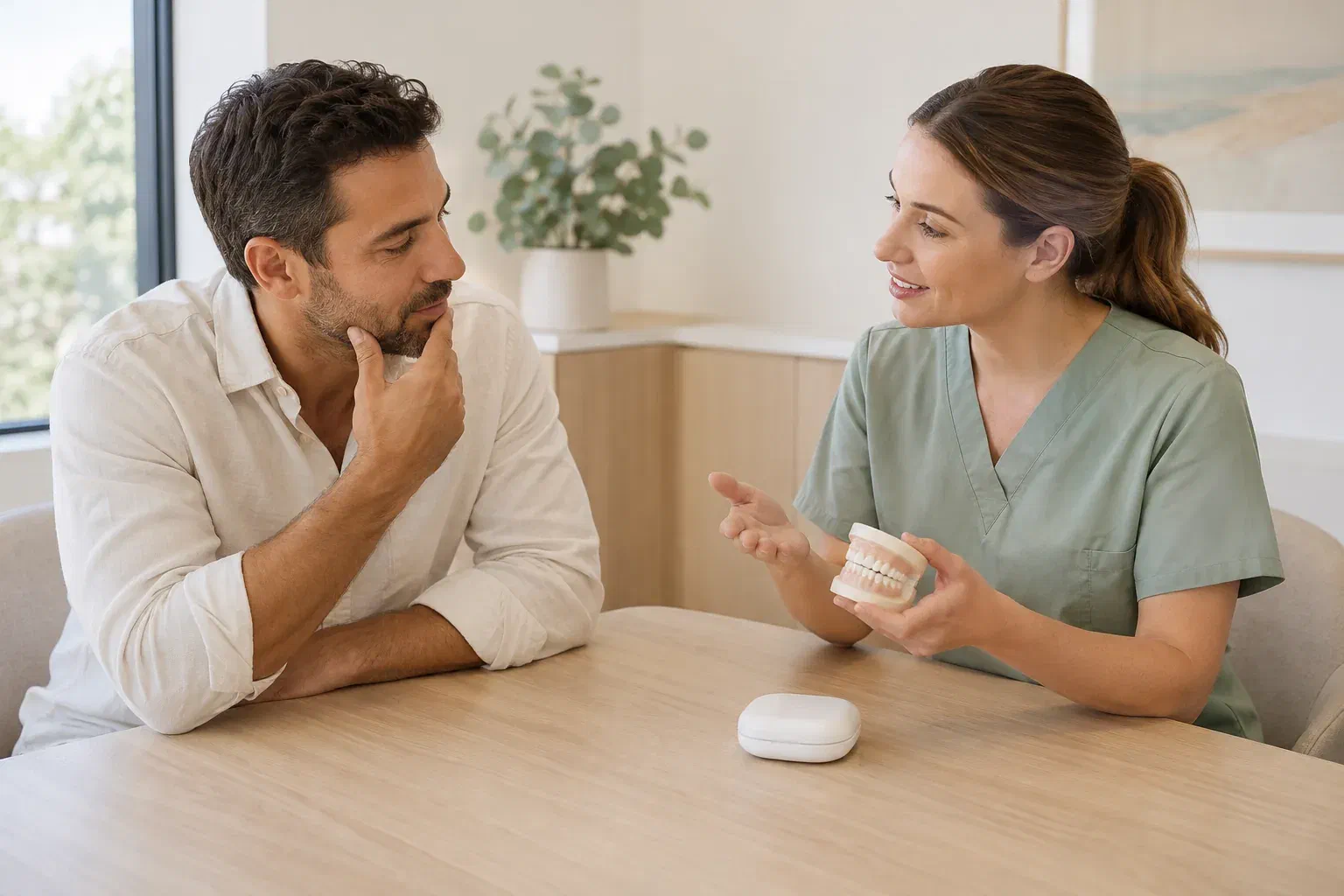
Illustrative consultation about teeth grinding and possible tooth wear
Specialized Care

Teeth-Grinding Treatment in Etobicoke

Grinding care usually unfolds over a few appointments: an assessment, perhaps a fitting, then reviews. For anyone coming from Etobicoke, we plan those visits so each one counts, and we explain which problems are better handled by urgent care nearer home.

Planning grinding care from Etobicoke

Make each trip do more of the work.

When a dental office is a longer drive away, it pays to arrive prepared. Grinding and clenching, which dentists together call bruxism, can happen asleep or awake, and sorting out what is going on in your mouth usually takes more than a single conversation. A little planning means fewer wasted journeys.

The first visit is mostly about evidence. Worn enamel can have several causes, and a flattened edge may have reached that state years before anyone mentioned grinding. The dentist pulls together your account, your current symptoms, any records you bring and the examination, then explains whether monitoring, protection, repair or another assessment fits best.

Bring everything in one go: any guard you use, names of medicines, notes from a previous dentist and what others have heard at night. Ask at the end of the visit how many further appointments are likely and what each is for. We aim for a plan with a clear purpose, without pretending a guard will end grinding permanently.

Plan a grinding assessment from Etobicoke
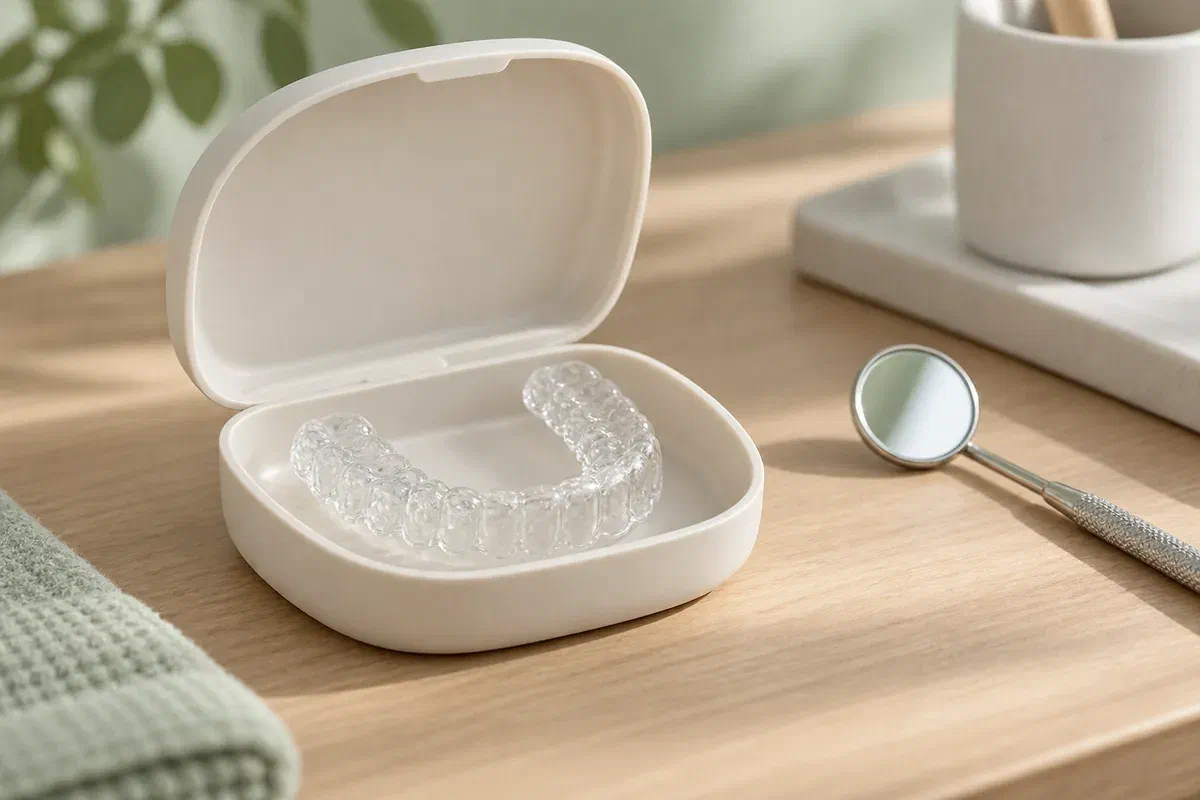
Illustrative single-arch clear dental nightguard in a protective case
Worth a visit

Not sure if the trip is justified? These are good reasons.

One or two observations are plenty. You do not have to record every night or be certain the problem is grinding before booking an assessment.

Reports of grinding or gnashing in your sleep

Let us know what has been heard and anything else about your sleep that concerns you. Such reports help but cannot measure wear or tell us why it happens. Snoring, interrupted breathing or real difficulty staying alert during the day deserve a mention so a medical assessment can be suggested where sensible.

Edges, fillings or teeth that are changing

Say whether the change is new, uncomfortable or affecting meals. Grinding is only one of several things that wear enamel, and the dentist considers each. A tooth that aches on its own may need specific investigation, so do not write it off as nothing more than night-time wear.

A guard that has worn through or cracked

Bring it, even if it is in pieces, and mention any crowns or fillings that keep failing. The device and your teeth are best assessed together. A damaged guard is not automatic proof that you need a thicker one or another restoration.

Some problems should not wait for a planned trip: a tooth that has snapped, pain that keeps you awake, facial or gum swelling, or a jaw that suddenly will not open or close. Call us, and if getting here is not practical right then, an urgent dental or medical service closer to home is the safer choice.

The payoff of a planned approach

Fewer visits, each with a clear job

Because protection, repair and symptom relief are separate tasks, grouping them sensibly saves time. An impression for a guard might be taken at the same appointment as an examination, while a damaged tooth may be scheduled for its own visit and a sore jaw may need separate follow-up. Ask what each appointment is for.

Reviews still matter, even from a distance. Comfort, whether you can wear the appliance and how the teeth look over months show whether the plan is working. Those signals mean more than one quiet night or a guard that happens to show a few marks.

Patient information: NIDCR — bruxism assessment and management

Use old records to save time

X-rays, photos or charts from a previous dental office can help the dentist see whether wear has progressed, and sending them ahead makes the first visit more productive. Other causes of wear are still considered. Ask what will be monitored and at what point treatment would be worth the trip.

Get protection that will not need constant adjusting

If a guard is recommended, ask about its job, fit, wearing schedule and limits. A clinician should fit it and check it if it feels wrong. Sports guards, retainers and sleep-apnea appliances are built for different purposes, so one is not a stand-in for another.

Coordinate with clinicians near you

Sleep, stress, routines and medicines can all be relevant, and none of them implies blame. If a question belongs with your family doctor or another provider closer to home, we can suggest what to discuss and what information would be helpful to share.

How we schedule it

Assessment, decision, fitting, review

Bring an existing appliance and any paperwork from earlier care. The first visit sets out the findings and options; it should not assume everyone who grinds needs identical treatment.

  1. A thorough first conversation

    We go through reported sounds, when discomfort occurs, past dental work, medicines and sleep. A short written list prepared at home keeps anything from being forgotten on the day. If nobody knows whether you grind overnight, that is a valid answer; uncertainty is weighed against the examination rather than filled with assumptions.

  2. A careful examination in the same visit

    The dentist checks for wear, cracks, sensitivity and jaw muscle or joint tenderness. Any tooth that needs further tests may be scheduled so the work can be grouped. Ask what the findings support and whether something other than grinding might explain your symptoms.

  3. A clear plan with the number of visits spelled out

    You may be advised to monitor, to have a fitted guard made, to repair a damaged tooth or to seek another opinion. Ask what each step should achieve, its limits and how many trips it involves. More extensive treatment is not automatically better.

  4. Reviews timed to make sense

    Follow-up is set at an interval that gives useful information. Bring the guard so it can be checked with your teeth. If symptoms persist or damage keeps recurring, the plan is reconsidered rather than replaced with a series of new guards.

Between visits

Know what you can handle at home, and what needs a call.

Your home routine depends on the findings and any treatment or device provided. If something in the plan seems to clash with earlier advice, phone us before the next trip so you are not left guessing.

Keep the guard in good shape

Clean and store it as instructed, and pack it for every review. Avoid heat, bending or trimming. If it cracks, loosens or causes pain, call us; we may be able to advise by phone whether it can wait or whether you should stop using it until it is seen.

Ease daytime clenching on your commute and at work

Long drives and focused work can bring on clenching. Use the reminders we discussed and let your jaw relax with the teeth apart. Do not grind deliberately to check rough spots. If a habit is hard to keep, let us know at review.

Keep your health team informed

Tell us about new tooth pain, sleep changes or a medicine that seems connected. Do not stop a prescription yourself. If another clinician is involved, ask what should be shared so dental and medical care stay connected.

Options, weighed for the trip

Which of these fits your findings?

Ask about each sensible route, including monitoring. Treatment should respond to a clear need, and no one should promise that reshaping teeth will stop grinding.

When a conservative start suits the findings

Watching and simple strategies

Many grinding concerns do not need a device or restoration straight away. Practical habits and a well-timed review may be enough for now, and this route usually involves the fewest trips. Ask what the dentist will compare at the next visit and what result would change the plan.

When teeth or restorations need shielding or fixing

Protection plus targeted repair

A fitted guard can help protect enamel, and a damaged tooth may need treatment of its own, ideally scheduled to limit extra trips. Ask about the purpose and follow-up of each. Repair alone does not show the grinding has stopped.

When symptoms persist or the history raises questions

Additional assessment for unresolved issues

Ongoing jaw pain, a tooth that stays sore, sleep symptoms or a medicine question may need further input, possibly from a provider closer to you. Ask what that assessment should clarify before considering a stronger appliance or permanent bite changes.

Patient information: NHS — when to seek review for teeth grinding

Questions from Etobicoke

Practical answers before you book

Bring what you have noticed, even if it is patchy. These answers aim to help you tell realistic protection from promises nobody can keep.

(905) 876-4488
How many appointments does grinding care usually take from start to finish?
It varies. Some people need only an assessment and a later review, while others need a guard fitting or dental repair as well. Ask at the end of the first visit for a rough outline of what comes next, so you can plan time off work and trips in advance rather than one appointment at a time.
What should I do if my guard breaks between visits?
Stop wearing it and call. Keep the pieces and bring them to your next appointment. If a tooth is also broken or painful, ask whether you should be seen sooner or seek urgent care closer to home.
Can records from my previous dentist be sent ahead of time?
Often, yes, with your consent. Ask the previous office how to request them. Having them before your visit can help the dentist compare older findings with what is seen now.
Does visible wear mean the grinding is still active?
Not necessarily. Wear shows what has happened over time, not how much grinding is happening now. Comparing today’s findings with earlier records, or with photographs taken at a later review, is usually what answers that question, which is one more reason old records are worth bringing.
Is a guard enough if I also snore loudly?
No. Snoring and breathing pauses may warrant a medical evaluation, and a grinding guard is not a sleep-apnea treatment. Mention these symptoms so appropriate next steps can be discussed.
Will having a few teeth rebuilt stop me grinding?
That should not be assumed. Restorations treat the teeth, not the habit. Ask why repair is recommended, what alternatives exist and how protection and review will continue afterwards.
Booking from Etobicoke

Plan the visit and bring everything with you.

Contact Milton Dental Clinic to set up a grinding assessment, and ask about grouping steps to reduce trips. Tell us about pain or a recent break when you call, so we can advise whether to come in or seek urgent care nearby.

The plan follows the examination and may include monitoring, protection, dental treatment or further assessment.

Visit Milton Dental Clinic
Unit 1, 342 Bronte St. S, Milton, ON L9T 5B7
Get directions Clinic hours
Monday–Thursday
11am–7pm
Friday–Sunday
By appointment only

Areas we serve

  • Milton
  • Oakville
  • Mississauga
  • Georgetown
  • Halton Hills
  • Acton
  • Campbellville
  • Brampton
  • Burlington
  • Puslinch
  • Rockwood
  • Erin
  • Caledon
  • Etobicoke
  • Old Milton
  • Bronte Meadows
  • Timberlea
  • Dorset Park
  • Dempsey
  • Clarke
  • Beaty
  • Coates
  • Harrison
  • Scott
  • Willmott
  • Ford
  • Bowes
  • Cobden
  • Walker
  • Mountain View
  • Milton Heights
  • Hawthorne Village
  • Valley View
  • Fallingbrook
  • Nassagaweya
  • Trafalgar
  • Esquesing
  • Nelson
  • Brookville
  • Moffat
  • Glen Williams
  • Norval
  • Limehouse
  • Stewarttown
  • Ashgrove
  • Hornby
  • Silver Creek
  • Speyside
  • Scotch Block
  • North Oakville
  • River Oaks
  • Glen Abbey
  • West Oak Trails
  • Palermo
  • Bronte Creek
  • College Park
  • Joshua Creek
  • Uptown Core
  • Preserve
  • Iroquois Ridge
  • Lisgar
  • Meadowvale
  • Meadowvale Village
  • Churchill Meadows
  • Erin Mills
  • Central Erin Mills
  • Streetsville
  • East Credit
  • Creditview
  • Heartland
  • Sheridan
  • Mount Pleasant
  • Credit Valley
  • Huttonville
  • Churchville
  • Springbrook
  • Northwest Brampton
  • Bram West
  • Fletcher's Meadow
  • Fletcher's Creek South
  • Alton Village
  • Orchard
  • Millcroft
  • Headon Forest
  • Tansley
  • Brant Hills
  • Tyandaga
  • Kilbride
  • Lowville
  • Aberfoyle
  • Morriston
  • Arkell
  • Hillsburgh
  • Freelton
  • Carlisle
  • Waterdown
  • Flamborough
  • Mountsberg

How can we help?

Milton Dental Clinic

Have a question about your smile? Choose the option that works best for you.

For urgent dental concerns, please call.
Messages are reviewed during clinic hours.