
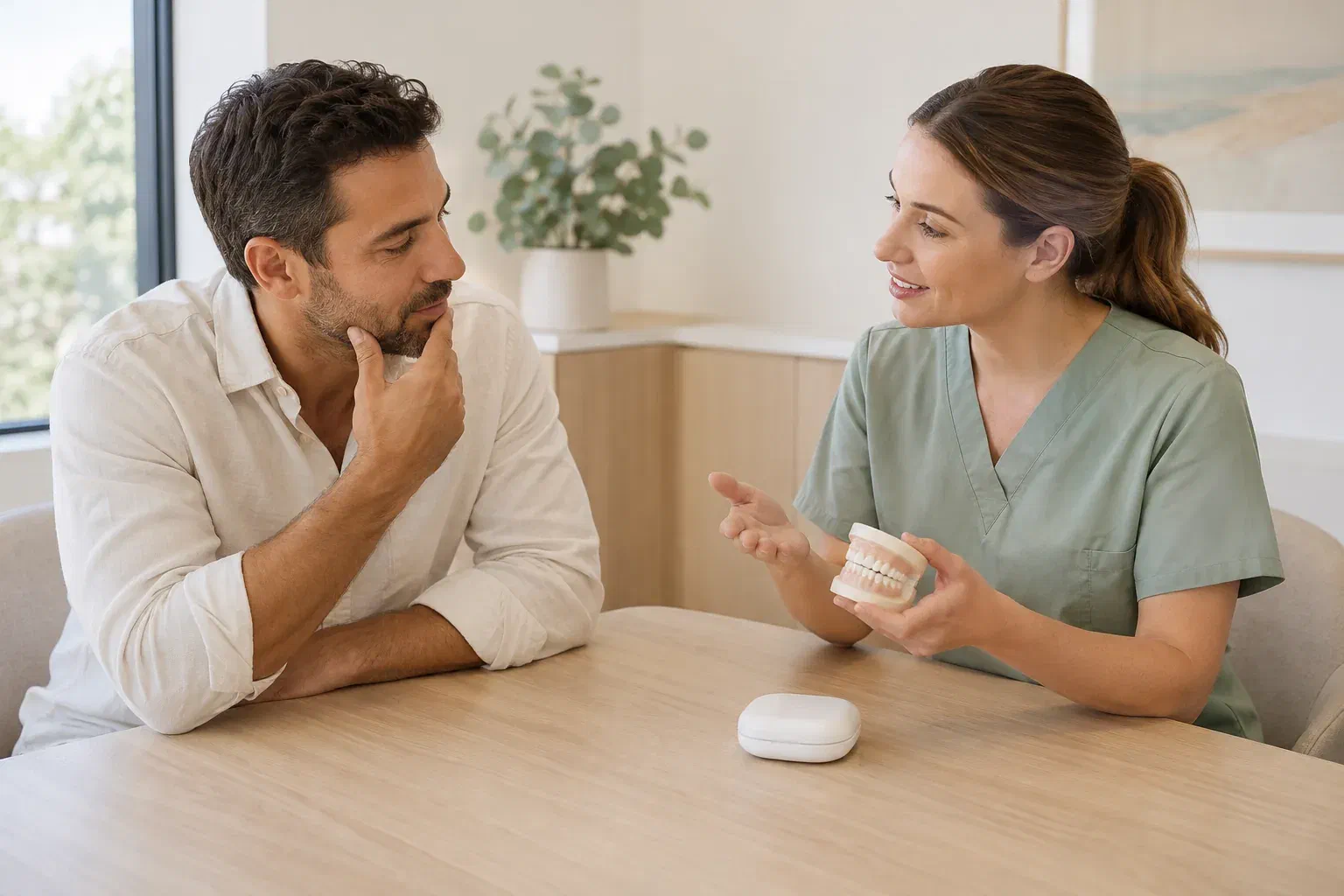
Illustrative consultation about teeth grinding and possible tooth wear
Specialized Care

Teeth-Grinding Treatment in Georgetown

A nightguard that has thinned, split or started to pinch raises a fair question: order the same again, or step back and reassess? From Georgetown, bring the guard to us and we will look at it alongside your teeth before deciding what should come next.

Georgetown guard reviews

Your old guard has a story to tell.

Grooves, thin patches and cracks on a well-used guard are tempting to read as a simple verdict: you grind hard, so get a tougher one. The marks are worth studying, but they are only part of the evidence. Bruxism, the dental term for grinding and clenching, can happen during sleep or waking hours, and teeth, jaw and history all need a look too.

Your mouth may also have changed since the guard was made. New fillings, a crown, shifting teeth or gum changes can all alter how an appliance sits. And not every worn tooth surface is the result of grinding; older wear says little about what is happening now. The dentist weighs these together before talking about continued use, a new appliance, repair or another assessment.

Bring the guard in its case, even if it is broken, and tell us how long you have had it and how often you wear it. Mention what made you start using it in the first place. A sensible plan names its purpose, such as protecting surfaces overnight or investigating a symptom that has crept in, and does not claim that any appliance will stop grinding outright.

Bring your guard for a review
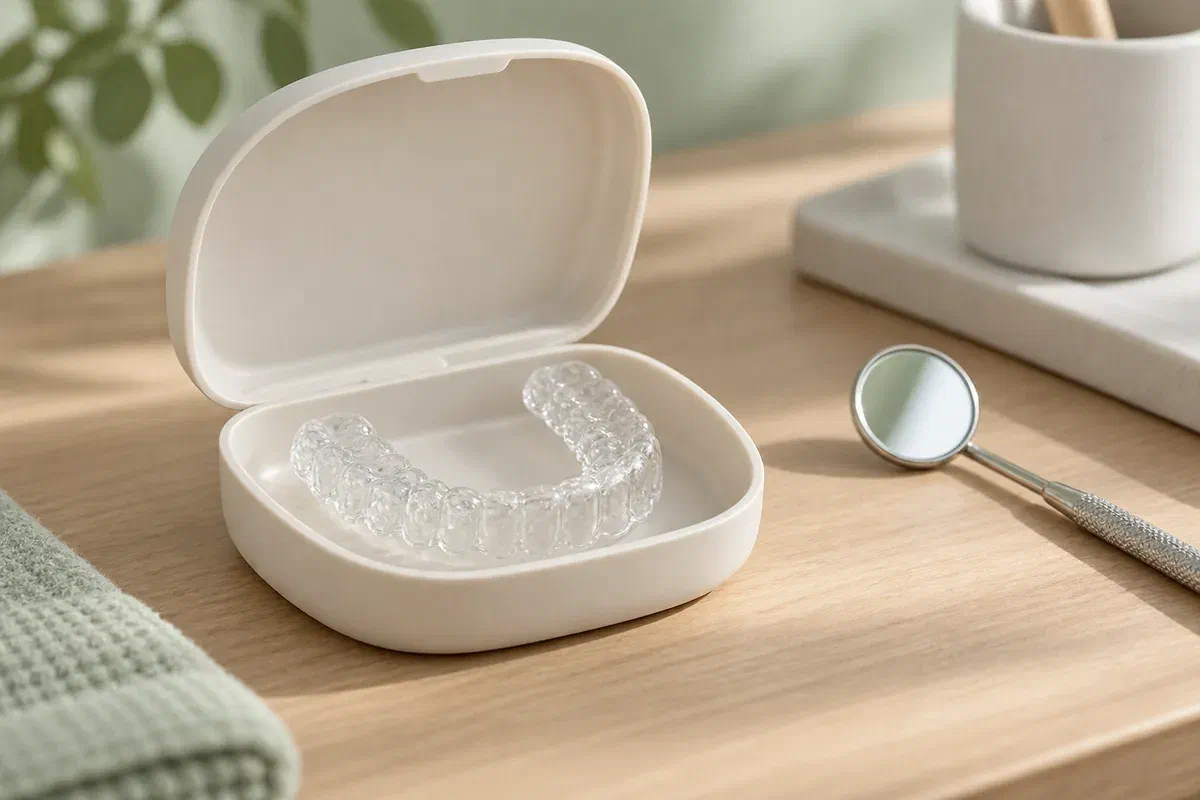
Illustrative single-arch clear dental nightguard in a protective case
Time for a review?

Signs a guard and your teeth should be checked together

A single change is reason enough to ask. You do not need to know the cause or bring a record of every night before we take a look.

Grinding noises that continue with the guard in

Tell us whether someone still hears grinding and whether sleep has changed. Ongoing noise is useful history but does not show whether the guard is failing to protect or how much wear is occurring. If you snore, seem to stop breathing or feel drained during the day, mention it so a doctor's assessment can be considered.

New soreness, chips or a tooth that feels different

Describe when it started and whether it hurts to chew. A guard that no longer fits well can press on certain teeth, but a crack or decay could be responsible instead. A tooth that is sore on its own deserves its own check rather than being blamed on the appliance or the habit.

A guard that is cracked, loose or wearing through

Stop using a guard that is broken or painful, and bring it along with details of any crowns or fillings that keep failing. Assessing the appliance and teeth side by side is far more useful than looking at either alone. Damage on its own does not prove that a thicker guard is the right replacement.

Some things outrank a guard review. Phone us straight away about a tooth that has broken, intense pain, any swelling, or a jaw that has abruptly started locking or catching.

Why reassess before replacing

The next guard should fit the mouth you have now.

Ordering the same appliance again assumes nothing else has changed. A review can separate the jobs: a new or adjusted guard to protect surfaces, a repair for any tooth that has been damaged, and attention to a jaw that has started aching. Ask what each step responds to, so the plan makes sense as a whole.

It also helps to agree how success will be judged this time. Comfort through the night, whether the guard stays intact for a reasonable period and whether the teeth look stable at review are better guides than a quiet night or a fresh scratch on the plastic.

Patient information: NIDCR — bruxism assessment and management

Compare today's teeth with earlier records

Photos, X-rays or notes from when the old guard was made can show whether wear has moved on since. Other reasons for wear are also considered, so not every flat edge is pinned on grinding. Ask what the comparison shows and what would justify treatment beyond a new appliance.

Get a guard designed for its current job

If a new appliance makes sense, find out why its design was chosen, how it should feel when seated, how often to wear it and where its protection stops. It should be fitted and adjusted by a clinician. A sports guard, a retainer or a sleep-apnea device is built for something else and cannot fill in.

Revisit what might be contributing

Sleep, stress, routines and medicines can shift over the years a guard is in use. Discussing them does not imply blame or a single cause. If something belongs with your physician or another provider, we can suggest how to keep that conversation connected to your dental care.

The review, step by step

Guard on the table, teeth in the chair

Bring your current guard, any earlier ones you kept and details of where they were made. The appointment is about understanding what has happened, not automatically reordering what you had before.

  1. Hear how the guard has been going

    We ask how long you have worn it, how often, whether it has felt comfortable and what has changed. Reports of grinding, medicines, sleep and recent dental work are part of the conversation. If you are not sure how much you grind now, that is normal and is weighed with the examination.

  2. Examine the guard and the teeth

    The dentist checks the appliance for fit, cracks and wear, then examines your teeth, restorations, jaw muscles and joints. Some teeth may need extra tests. Before anything is ordered, you should hear what the evidence points to and whether a cause other than grinding fits the changes better.

  3. Decide whether to keep, adjust, replace or rethink

    Sometimes the current guard can carry on, sometimes it can be adjusted, sometimes a new one is warranted, and sometimes the plan needs repair work or a referral instead. Ask what each option offers and its limits; a bulkier appliance is not automatically more protective.

  4. Schedule a check on the new arrangement

    Agree on a follow-up and the signs that should bring you back earlier. A new or adjusted guard is reviewed along with your teeth. If damage or symptoms keep recurring, the original questions are reopened rather than simply issuing one replacement after another.

Making the guard last

Care that protects the appliance and the teeth

Instructions depend on what was found and what was provided. If they differ from what you were told about an earlier appliance, ask why, since materials and designs vary.

Clean, store and transport it properly

Follow the cleaning method you were given and keep the guard in its case when it is not in your mouth. Bring it to every review. Avoid hot water, bending or trimming at home. Call if it cracks, warps or starts to hurt, and set a damaged guard aside until it is checked.

Relax the jaw during the day

If clenching happens while you are awake, use the cues we agreed on and let your jaw rest with the teeth slightly apart. Resist checking worn spots by grinding on them. If a daytime habit change is not working, let us know so the approach can be adjusted.

Tell us what changes over time

New tooth symptoms, sleep changes, dental work done elsewhere or a medicine that seems linked can all affect the plan. Leave prescription changes to your prescriber. Where a physician or specialist is also following you, we can agree on what each of us needs to know.

Next steps for Georgetown wearers

Keep going, refit, repair or refer

Ask what each sensible option would involve, including carrying on with the guard you have. Nothing should be promised on the basis that reshaping teeth will end grinding.

When the guard still fits and teeth look stable

Continue, with monitoring

If the appliance is intact and the teeth have not changed, there may be no need for anything new. Practical habits and a review date can be enough. Ask what will be compared next time and what would prompt a change.

When the appliance or specific teeth need attention

A refitted or new guard, plus repair where needed

An adjusted or replacement guard can help protect surfaces, while a damaged tooth may be treated separately. Each gets its own explanation and its own check later on. Repairing a tooth does not show that grinding has stopped or that the rest of the mouth no longer needs watching.

When problems persist despite a guard

A wider look at unresolved symptoms

Jaw pain that will not ease, a tooth that keeps hurting, sleep concerns or a medicine question may need further dental or medical evaluation. Find out what that evaluation should answer before agreeing to a stronger appliance or a permanent change to your bite.

Patient information: NHS — when to seek review for teeth grinding

Guard questions from Georgetown

Wear marks, fit and replacement: what people ask

Bring whatever made you wonder about the guard, even if it only bothers you some nights. The answers here aim to sort realistic protection from claims that cannot be made.

(905) 876-4488
How long should a nightguard last?
There is no fixed lifespan. It depends on the material, how much force it meets, how it is cared for and whether your teeth change. Bringing it to reviews lets the dentist judge when it needs adjusting or replacing.
Do deep marks on my guard mean it is working?
Marks show that the guard has met grinding forces, which is part of its job, but they do not prove your teeth are fully protected or that grinding has reduced. The dentist reviews the guard and teeth together.
My guard feels tight after a filling. Is that normal?
Dental work can change how an appliance seats. Do not try to adjust it yourself. Call so the fit can be checked, and stop wearing it if it causes pain.
Should I keep wearing a cracked guard until the new one is ready?
No. A cracked appliance can irritate the mouth or break further. Stop using it and bring it in. Ask whether interim advice is needed while a decision is made about replacement.
Why do I still wake up with a sore jaw while wearing my guard?
A guard protects surfaces but may not change muscle activity, and jaw soreness can have other causes. Persistent soreness is a reason for reassessment rather than a sign you need a thicker guard.
Can the dentist reshape my bite so I no longer need a guard?
Permanent changes to the bite should not be assumed to stop grinding. Ask why any such change is proposed, what the alternatives are and how review would continue, before agreeing to anything irreversible.
Guard and grinding reviews for Georgetown

Cracked, loose or just old: we would like to see it.

Call Milton Dental Clinic to have your guard and teeth reviewed together, or to discuss grinding that seems to continue. If a tooth has broken or pain is severe, mention it so we can judge how soon to see you.

We decide on next steps after examining both the guard and your teeth; that may be monitoring, adjustment, replacement, repair or referral.

Visit Milton Dental Clinic
Unit 1, 342 Bronte St. S, Milton, ON L9T 5B7
Get directions Clinic hours
Monday–Thursday
11am–7pm
Friday–Sunday
By appointment only

Areas we serve

  • Milton
  • Oakville
  • Mississauga
  • Georgetown
  • Halton Hills
  • Acton
  • Campbellville
  • Brampton
  • Burlington
  • Puslinch
  • Rockwood
  • Erin
  • Caledon
  • Etobicoke
  • Old Milton
  • Bronte Meadows
  • Timberlea
  • Dorset Park
  • Dempsey
  • Clarke
  • Beaty
  • Coates
  • Harrison
  • Scott
  • Willmott
  • Ford
  • Bowes
  • Cobden
  • Walker
  • Mountain View
  • Milton Heights
  • Hawthorne Village
  • Valley View
  • Fallingbrook
  • Nassagaweya
  • Trafalgar
  • Esquesing
  • Nelson
  • Brookville
  • Moffat
  • Glen Williams
  • Norval
  • Limehouse
  • Stewarttown
  • Ashgrove
  • Hornby
  • Silver Creek
  • Speyside
  • Scotch Block
  • North Oakville
  • River Oaks
  • Glen Abbey
  • West Oak Trails
  • Palermo
  • Bronte Creek
  • College Park
  • Joshua Creek
  • Uptown Core
  • Preserve
  • Iroquois Ridge
  • Lisgar
  • Meadowvale
  • Meadowvale Village
  • Churchill Meadows
  • Erin Mills
  • Central Erin Mills
  • Streetsville
  • East Credit
  • Creditview
  • Heartland
  • Sheridan
  • Mount Pleasant
  • Credit Valley
  • Huttonville
  • Churchville
  • Springbrook
  • Northwest Brampton
  • Bram West
  • Fletcher's Meadow
  • Fletcher's Creek South
  • Alton Village
  • Orchard
  • Millcroft
  • Headon Forest
  • Tansley
  • Brant Hills
  • Tyandaga
  • Kilbride
  • Lowville
  • Aberfoyle
  • Morriston
  • Arkell
  • Hillsburgh
  • Freelton
  • Carlisle
  • Waterdown
  • Flamborough
  • Mountsberg

How can we help?

Milton Dental Clinic

Have a question about your smile? Choose the option that works best for you.

For urgent dental concerns, please call.
Messages are reviewed during clinic hours.