
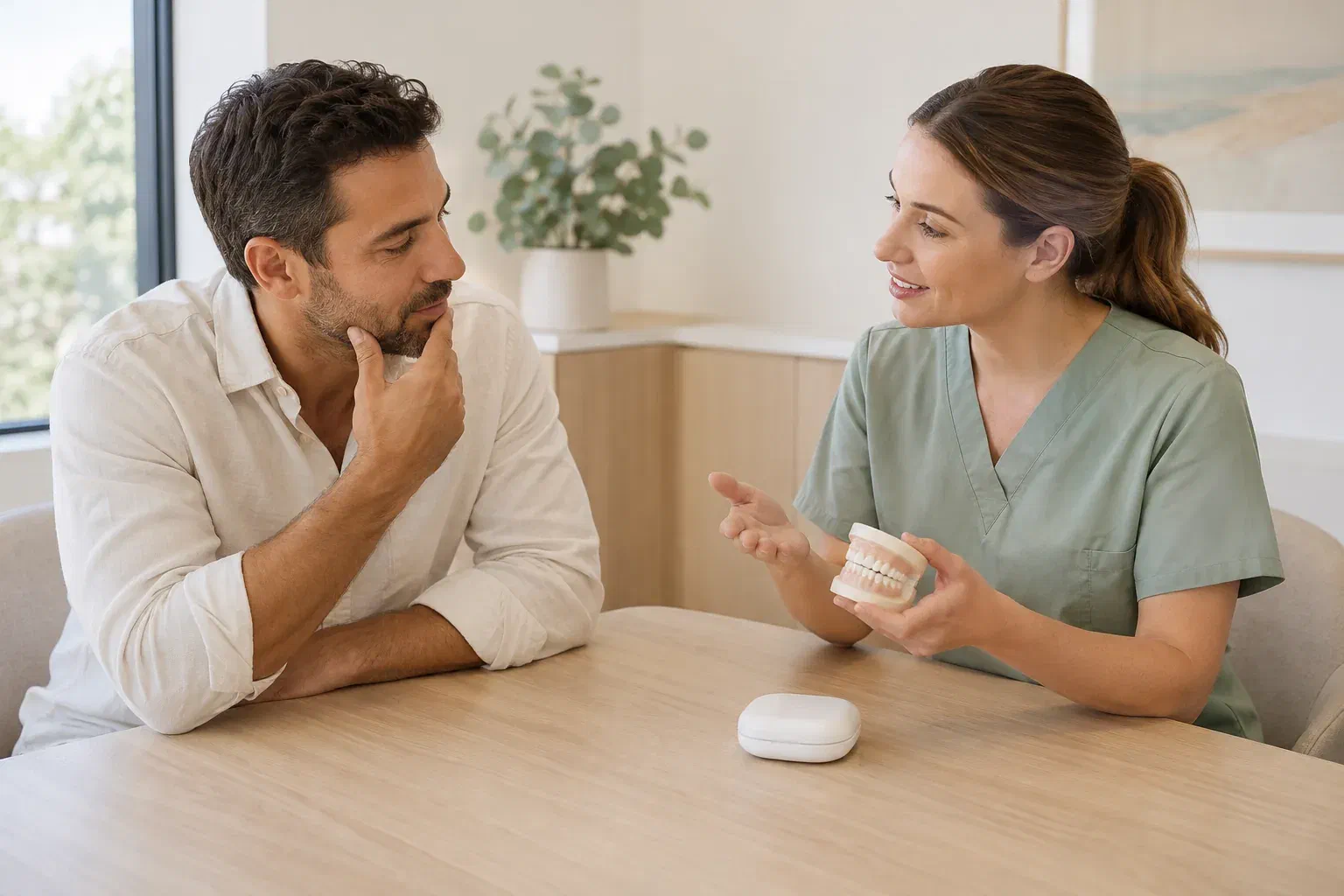
Illustrative consultation about teeth grinding and possible tooth wear
Specialized Care

Teeth-Grinding Treatment in Halton Hills

A twinge with cold water, a tooth that feels bruised after sleep: is that grinding, or something else? Households across Halton Hills, from Georgetown to Acton and Glen Williams, can have the question examined properly before settling on a guard or any repair.

Sensitivity and grinding in Halton Hills

Sore tooth or sore habit? It matters which.

Grinding can leave teeth feeling tender, and worn enamel can make them more reactive to cold. So it is easy to assume any new sensitivity is just the habit catching up with you. Sometimes that is true. Other times, a crack, decay or a problem with an existing filling is the real reason, and that tooth needs attention in its own right.

Dentists refer to grinding and clenching together as bruxism, and both can happen awake or asleep. Not every worn surface is caused by them, and older wear says little about how much is happening this year. The examination looks at the sensitive tooth specifically as well as the pattern across your mouth, so the plan addresses what is actually there.

When you call, describe the sensitive tooth: which side, what sets it off, and how long the feeling lasts. Mention any guard you wear and bring it with you. Our goal is a plan with a purpose you can name, such as investigating that tooth or protecting surfaces overnight, not a blanket promise that an appliance will end grinding.

Have a sensitive tooth and grinding checked
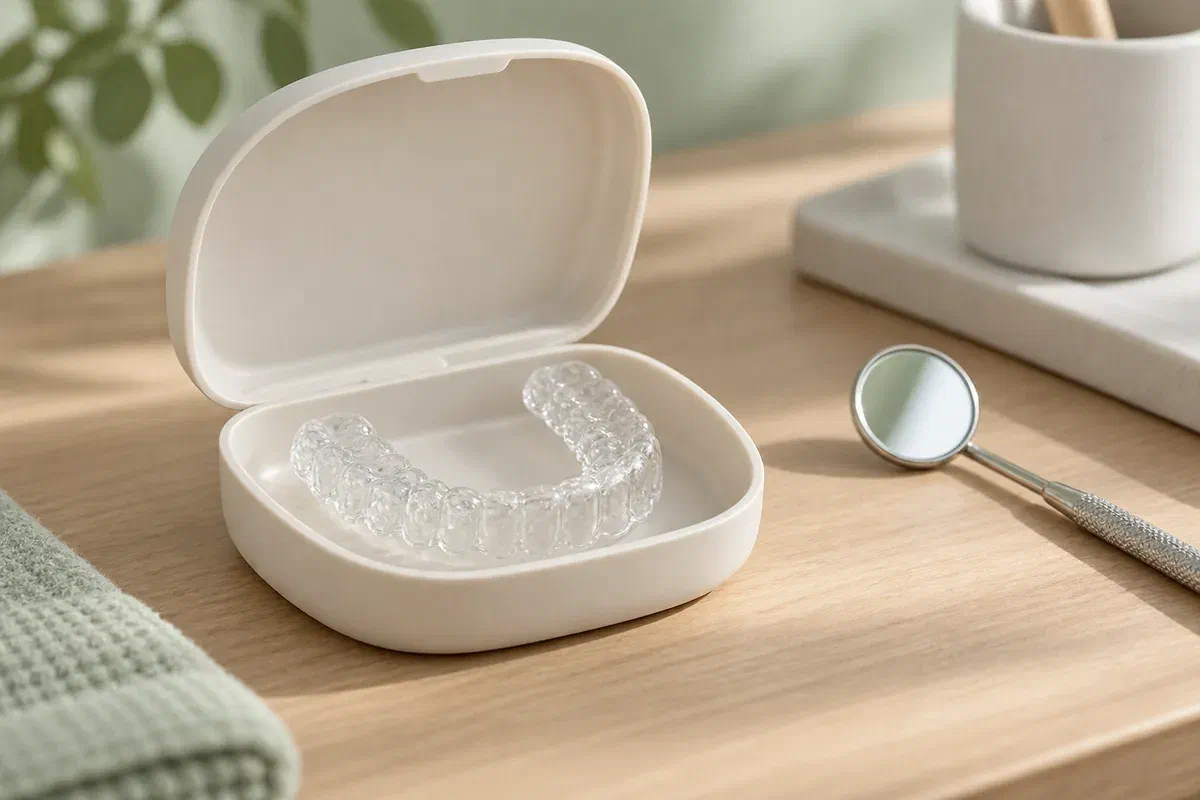
Illustrative single-arch clear dental nightguard in a protective case
Clues to mention

Pain, noise and wear each point somewhere a little different.

Share whatever you have noticed, in whatever order it comes to mind. You do not need certainty or a sleep log; the examination is designed to work with incomplete information.

Grinding that someone has heard at night

Report what was described and any wider sleep concerns. On its own, that report cannot measure damage or identify the cause, though it adds to the history. Snoring, choking or pauses in breathing, and being exhausted during the day, should be mentioned so a medical evaluation can be discussed.

One tooth that aches, twinges or feels bruised

Tell us when it began, what triggers it and whether chewing hurts. This is the concern most worth separating from grinding, because a crack, decay or an inflamed nerve can feel similar. Please do not assume the discomfort is harmless; the tooth may need specific tests.

A guard or filling that keeps causing trouble

If your guard has become uncomfortable or cracked, or a filling keeps breaking, bring the guard and mention the history. Looking at both together helps. A recurring failure does not automatically mean a stronger device or another filling is the answer.

Sensitivity that becomes severe, a tooth that breaks, swelling or a jaw that suddenly moves differently all need prompt advice. Call us rather than waiting for a routine grinding review.

Why separate the questions

One tooth may need treatment while the rest need protecting.

When sensitivity and grinding overlap, it helps to split the plan into parts. A specific tooth might need a filling, a crown or further tests, while a guard might protect the remaining teeth and an aching jaw might call for its own approach. Asking which concern each step answers keeps everything clear.

The plan should also say how you will know it is working. Less sensitivity, a guard you can wear comfortably and stable surfaces at review are more telling than one quiet night or a mark on the appliance. Over several visits, those comparisons guide whether to continue or adjust.

Patient information: NIDCR — bruxism assessment and management

Pinpoint the source of sensitivity

Tests on a particular tooth, along with X-rays or earlier records, can help distinguish a localised problem from general wear. Other causes of enamel loss are considered too. Ask what the dentist has ruled in or out, and what would justify treatment rather than monitoring.

Protect worn teeth while the cause is clarified

A fitted guard can take night-time contact off worn enamel while the sensitive tooth is being sorted out. Before you start wearing one, be clear on its role, the snug-but-comfortable fit to expect and how many nights a week it is meant for. It will not mend a cracked or decayed tooth, and neither a sports guard nor a retainer is a substitute.

Talk about everyday factors without blame

Diet, sleep, stress, medicines and habits may all be part of the story, particularly when sensitivity is involved. These conversations inform the plan without suggesting a single cause or that you are at fault. When a question goes beyond dentistry, another provider may be involved.

How the visit works

First the sensitive tooth, then the bigger picture

Bring any guard you use and describe what has or has not helped. The first appointment clarifies findings and choices, rather than assuming that everyone with tender teeth simply grinds.

  1. Describe the symptom and its timing

    We ask which tooth is sensitive, what triggers it and whether it is worse in the morning. Reports of night-time grinding, medicines, sleep quality and past dental work matter too. If you are unsure whether you grind, that is fine and becomes part of what the examination weighs.

  2. Test the sore tooth and examine the rest

    The dentist may test the sensitive tooth, check for cracks or decay, and look at wear patterns elsewhere, along with the jaw muscles and joints. Earlier records can help show change. Ask what the findings support and whether another explanation fits better than grinding.

  3. Agree on what to treat and what to protect

    The plan might include treating the sensitive tooth, a fitted guard, practical habits or a referral. Ask what each step aims to achieve and what its limits are. Treating the most teeth or choosing the biggest procedure is not automatically the best approach.

  4. Review symptoms and surfaces together

    At follow-up, the dentist checks whether sensitivity has settled, how any guard is wearing and whether surfaces have changed. Call sooner if pain worsens. Persistent problems call for a fresh look rather than another replacement guard.

Home care

Small steps that support the plan

Advice depends on what was found and any treatment or appliance provided. If a toothpaste, guard or instruction from before seems to conflict with the new plan, ask us which to follow.

Wear and clean a guard as directed

Clean it and store it as instructed, and bring it to your reviews. Do not heat, bend or trim it. If it causes new pain, fits differently or cracks, stop and call rather than assuming the discomfort is expected.

Notice clenching and give the jaw a rest

If you catch yourself clenching during the day, use the cues we discussed and let your teeth part slightly. Avoid testing the sensitive tooth by pressing or grinding on it. Tell us if a habit is difficult to change so the advice can be adapted.

Report changes in symptoms or medicines

Let us know if sensitivity changes, new pain appears or sleep shifts. If a medicine change seems linked, talk with your prescriber; do not stop a prescription on your own. Ask what should be shared when another clinician is involved.

Options in Halton Hills

Monitor, protect, treat the tooth, or look further

Ask what each reasonable option involves, including watching for now. Care should match an identified need and should not promise that reshaping teeth will stop grinding.

When wear is mild and sensitivity is minor

Watch and adjust daily habits

If the sensitive tooth checks out and the wear looks stable, a few simple habits and a planned review may be all that is needed for now. Ask what the dentist will look at next time, and what kind of change in that tooth or the wider wear would lead to a different recommendation.

When a specific tooth or restoration needs care

Treat the tooth and protect the others

A tooth with a crack or other problem may need its own treatment, while a fitted guard may help protect remaining surfaces. Discuss the purpose and follow-up of each. Fixing one tooth does not prove grinding has stopped elsewhere.

When pain continues or the history raises new questions

Further evaluation when symptoms persist

Sensitivity that refuses to settle after treatment, jaw pain that lingers, signs of disturbed breathing at night or a question about a medicine can each warrant another opinion. That might be a dental specialist or your family doctor. Be clear about what the referral is for, and hold off on stronger appliances or permanent bite changes until it has been answered.

Patient information: NHS — when to seek review for teeth grinding

Halton Hills grinding FAQs

Sensitivity, wear and guards: common questions

Bring whatever prompted your concern, even if it comes and goes. The aim is to separate useful protection from promises no one can honestly make.

(905) 876-4488
Can grinding make my teeth sensitive to cold?
It can contribute, because worn enamel may expose more sensitive layers. But decay, a crack or receding gums can cause the same feeling. The dentist examines the specific tooth before linking the sensitivity to grinding.
How can a dentist tell a cracked tooth from grinding soreness?
Through specific tests, such as checking how the tooth responds to biting or temperature, along with a visual examination and sometimes X-rays. The pattern of discomfort also helps. This is why one consistently painful tooth should be checked.
Should I use sensitivity toothpaste while I wait for an appointment?
A desensitising toothpaste may ease mild symptoms, but it should not delay an examination, especially if one tooth hurts more than the rest. It can also mask how a tooth responds, so mention what you have been using and for how long when you come in.
Will a guard stop my teeth from feeling sensitive?
It may help protect surfaces from further wear, but it does not treat a crack or decay. If sensitivity persists while wearing a guard, ask for the tooth to be reassessed.
Does older wear on my teeth mean I am still grinding?
Not necessarily. Wear records past activity and does not measure what is happening now. Edges can stay flat for years after grinding has eased. The dentist considers your symptoms and history, and may photograph the teeth so that any further change can be judged at a later visit.
Can I use my old sports mouthguard at night instead?
It is not a good idea to assume so. Sports guards are designed to cushion impacts, not for overnight wear against grinding. Ask the dentist whether protection is needed and what type suits your teeth.
Book from Halton Hills

Bring the sensitive tooth, the guard and your questions.

Contact Milton Dental Clinic to have a sensitive tooth, reported grinding or a troublesome guard looked at. Tell us if pain is severe or a tooth has broken so we can judge how soon to see you.

Whatever is found decides the next step: watching, a guard, treating a tooth, or sending you on for another view.

Visit Milton Dental Clinic
Unit 1, 342 Bronte St. S, Milton, ON L9T 5B7
Get directions Clinic hours
Monday–Thursday
11am–7pm
Friday–Sunday
By appointment only

Areas we serve

  • Milton
  • Oakville
  • Mississauga
  • Georgetown
  • Halton Hills
  • Acton
  • Campbellville
  • Brampton
  • Burlington
  • Puslinch
  • Rockwood
  • Erin
  • Caledon
  • Etobicoke
  • Old Milton
  • Bronte Meadows
  • Timberlea
  • Dorset Park
  • Dempsey
  • Clarke
  • Beaty
  • Coates
  • Harrison
  • Scott
  • Willmott
  • Ford
  • Bowes
  • Cobden
  • Walker
  • Mountain View
  • Milton Heights
  • Hawthorne Village
  • Valley View
  • Fallingbrook
  • Nassagaweya
  • Trafalgar
  • Esquesing
  • Nelson
  • Brookville
  • Moffat
  • Glen Williams
  • Norval
  • Limehouse
  • Stewarttown
  • Ashgrove
  • Hornby
  • Silver Creek
  • Speyside
  • Scotch Block
  • North Oakville
  • River Oaks
  • Glen Abbey
  • West Oak Trails
  • Palermo
  • Bronte Creek
  • College Park
  • Joshua Creek
  • Uptown Core
  • Preserve
  • Iroquois Ridge
  • Lisgar
  • Meadowvale
  • Meadowvale Village
  • Churchill Meadows
  • Erin Mills
  • Central Erin Mills
  • Streetsville
  • East Credit
  • Creditview
  • Heartland
  • Sheridan
  • Mount Pleasant
  • Credit Valley
  • Huttonville
  • Churchville
  • Springbrook
  • Northwest Brampton
  • Bram West
  • Fletcher's Meadow
  • Fletcher's Creek South
  • Alton Village
  • Orchard
  • Millcroft
  • Headon Forest
  • Tansley
  • Brant Hills
  • Tyandaga
  • Kilbride
  • Lowville
  • Aberfoyle
  • Morriston
  • Arkell
  • Hillsburgh
  • Freelton
  • Carlisle
  • Waterdown
  • Flamborough
  • Mountsberg

How can we help?

Milton Dental Clinic

Have a question about your smile? Choose the option that works best for you.

For urgent dental concerns, please call.
Messages are reviewed during clinic hours.