

Illustrative consultation about jaw-joint movement and discomfort
Specialized Care

TMJ Assessment

A useful jaw assessment begins with how the problem feels and affects your day. Discuss TMJ concerns in Milton, review movement and relevant dental findings, and understand whether monitoring, conservative care, imaging, or another assessment is appropriate.

A closer look at assessing the jaw joints

Start with the symptoms before deciding what they mean.

The temporomandibular joints sit on either side of the jaw and work with muscles to support movement. A TMJ assessment considers those joints within the wider picture of your symptoms, oral health, and function. It is a process of asking questions and examining relevant findings, rather than a single test that explains every kind of facial discomfort.

You may be concerned about pain, clicking, catching, limited opening, or a change in how the teeth meet. The meaning depends on the history and examination. A painless sound is different from a newly restricted jaw, and pain near a joint does not establish that the joint itself is the source.

At Milton Dental Clinic, tell us what prompted the visit and which activities have become difficult. Bring previous reports or appliances if available and explain what advice you have already received. We can discuss the appropriate examination and next steps, including when another dental, medical, or specialist assessment would help answer an unresolved question.

Discuss your jaw-assessment concerns
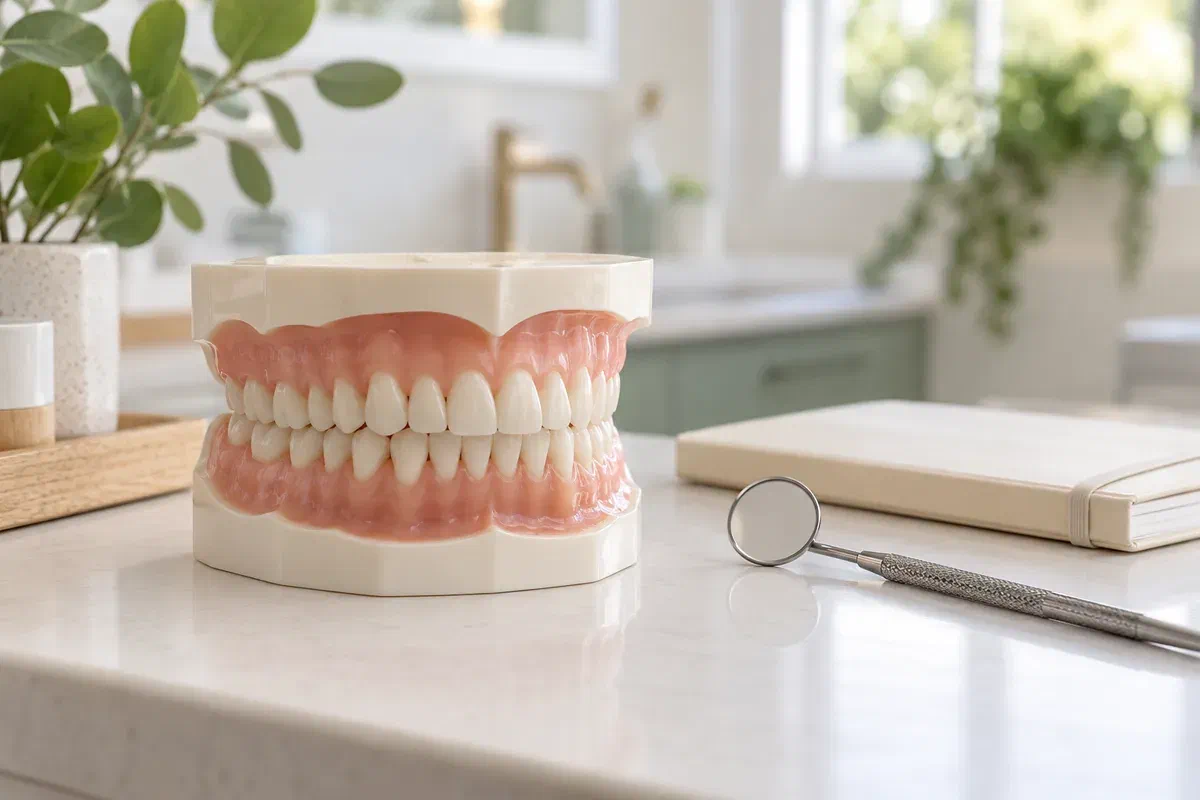
Illustrative supported dental teaching cast beside a mirror and closed notebook
What to describe before the examination

The history helps decide which findings need a closer look.

Tell the clinician what changed, when it began, and whether symptoms are constant or come and go. You do not need to arrive with a diagnosis or demonstrate a painful movement repeatedly.

The location and timing of pain

Point out the area and explain whether discomfort occurs with chewing, opening, waking, or at other times. Mention pain in a particular tooth or symptoms elsewhere in the face. The examination can then consider relevant alternatives rather than assuming that everything near the ear is a jaw-joint disorder.

A change in opening, closing, or the way the teeth meet

Describe catching, restriction, or a bite that feels different, including whether the change is recent or follows an injury. Do not force the jaw to reproduce the problem. A sudden inability to open or close normally requires prompt advice rather than waiting for a routine assessment date.

Joint sounds and their effect on everyday function

Explain whether a sound is painful, associated with locking, or simply something you have noticed. A noise alone does not determine the need for treatment. The clinician considers it alongside movement, symptoms, and the history rather than treating loudness as a measure of damage.

Call promptly about a recent injury, significant swelling, fever, or sudden movement difficulty. Seek urgent medical help for serious associated symptoms or inability to eat or drink rather than treating every jaw concern as a routine TMJ problem.

What a useful assessment should clarify

Understand what is supported by the findings and what still needs investigation.

A careful assessment can help distinguish a tooth-related concern, muscle or joint findings, and symptoms that need another provider's input. Ask the clinician to explain the reasoning in plain language. Sometimes the next step is monitoring or conservative care; sometimes more information is needed before a specific recommendation can be made.

The appointment should also establish a practical starting point for comparison. Knowing the current symptom pattern and functional limitations helps make a later review more meaningful. The aim is not to assign a permanent label from one observation, but to give you an understandable plan and a way to revisit it when circumstances change.

Patient information: NIDCR — history, examination, and diagnostic considerations for TMD

A history that includes the effect on your life

Explain what you can no longer do comfortably and which changes matter most to you. Difficulty eating a normal meal or managing a dental visit can be more useful to discuss than a number alone. Your priorities help shape the questions and the goals of any subsequent care.

An examination directed by the symptoms

The clinician may assess jaw movement, joints, muscles, teeth, and other relevant areas. Tell them when a finding reproduces your familiar discomfort and when it feels different. The examination should be performed within appropriate limits, with pauses or modifications when needed.

A reasoned decision about tests, review, or referral

Ask what a proposed image or further assessment would help determine and how the result might change care. Not every jaw concern needs the same test. If the next step is observation, ask what to monitor and what would justify an earlier appointment.

What to expect at a jaw assessment

Describe the experience, examine the relevant areas, and discuss the next question.

Let the team know before the visit if opening the mouth is limited or a long appointment is difficult. Bring previous imaging reports where available, but do not delay seeking advice for a new concern while trying to collect every record.

  1. Review the history and earlier care

    Discuss onset, symptom changes, injuries, previous dental treatment, medical history, and any appliances or exercises tried. Mention what improved or worsened the problem. If symptoms fluctuate, explain the usual pattern rather than feeling that a relatively comfortable day makes the appointment unnecessary.

  2. Assess movement and relevant dental or muscular findings

    The clinician examines the areas indicated by the history and observes movement as appropriate. You may be asked about tenderness or whether a movement produces familiar symptoms. Speak up if something is uncomfortable; forcing repeated opening is not a requirement for your concern to be taken seriously.

  3. Explain the findings and the limits of the assessment

    Ask what appears most relevant, which alternative explanations have been considered, and whether a working diagnosis can reasonably be made. Further investigation may be needed for a particular question. A normal-looking finding does not mean that your pain is unreal or that the discussion must end.

  4. Agree on the next step and when to review

    Discuss monitoring, conservative guidance, a further test, or referral according to the findings. Ask who will arrange the next action and how results will be explained. Clarify which new symptoms should bring you back sooner so you are not left waiting without a contact plan.

After the assessment

Keep the agreed plan clear and report meaningful changes.

You may leave with advice to try, a review appointment, or a recommendation for further assessment. Ask for clarification if you are unsure which part is optional, which is next, or who is responsible for arranging it.

Follow the advice provided for your actual findings

Use any recommended comfort or activity changes within the limits discussed. Do not add forceful exercises or attempt to reposition the jaw based on an internet description of a disc problem. If a step increases symptoms, stop that activity and ask the treating provider how to proceed.

Record a brief account of change without constant testing

Note whether eating, opening, or daily comfort has improved or worsened and whether a new symptom has appeared. Avoid repeatedly provoking a click or measuring the jaw at home to check progress. A practical account of function is often easier to discuss at review than continuous self-testing.

Complete the agreed follow-up or referral

Confirm how any imaging or other appointment will be arranged and who will interpret the findings with you. Tell the team if access or scheduling is a problem. A recommendation for further assessment should lead to a clear next action rather than leave you to guess whether the concern is resolved.

Where the examination may lead

Choose the next step according to the question that remains.

An assessment does not automatically mean treatment is required. Ask why the proposed approach is appropriate and what evidence would support changing it at a later review.

When the findings do not call for active treatment

Explanation and monitoring

A painless sound or a stable finding may be discussed without a device or procedure. Ask what would count as a meaningful change and whether review is needed. Monitoring is a deliberate plan when appropriate, not an instruction to ignore new pain or loss of function.

When the findings support initial symptom management

A supported conservative care plan

The clinician may discuss practical measures and a review of their effect on daily function. Ask which steps to try and when to return. The plan should be specific enough to use and flexible enough to revisit if symptoms persist or the initial explanation becomes less convincing.

When additional information is needed for a decision

Targeted imaging or another provider's assessment

Different investigations answer different questions, and a medical or specialist referral may be more useful than another routine dental procedure. Ask what the result would change and how it will be discussed. An image must be interpreted alongside the symptoms and examination, rather than treated as the whole diagnosis.

Questions before a TMJ assessment

Know what to bring, what to expect, and what an examination can tell you.

The visit should help make the concern more understandable. You can ask about the limits of testing and the reasons for the next recommendation before deciding on treatment.

(905) 876-4488
Do I need to make my jaw click during a TMJ assessment?
No. Describe the sound and the circumstances in which it occurs, but do not repeatedly provoke pain or force movement to demonstrate it. The clinician can guide the examination and consider your account alongside the findings, including symptoms that are not present at that moment.
Will a TMJ assessment always include an MRI or CT scan?
No. Imaging is considered when it can answer a relevant clinical question and help guide care. Different tests show different structures, and not every concern needs advanced imaging. Ask why a test is being recommended and how its result would affect the plan.
Can I attend a jaw assessment on a day when the symptoms happen to be mild?
Yes. Explain the usual pattern and what happens during more difficult periods. A brief account of timing, triggers, and functional changes can help. Fluctuating symptoms do not make the concern invalid, and you should not provoke a flare simply to make the examination more obvious.
Should I bring an old splint to my first TMJ assessment?
Yes, if available. Bring its instructions and explain how long you used it, whether it helped, and any problems it caused. The clinician can consider the device alongside the current findings without assuming that the earlier recommendation should automatically be continued.
Can pain near my ear be assessed as a jaw concern without assuming it is TMD?
Yes. The history and examination help consider jaw-related findings and alternative explanations. Some symptoms need medical evaluation as well as dental review. Tell the clinician about hearing changes, other ear symptoms, or concerns elsewhere so the appropriate next step can be discussed.
Does a normal-looking jaw image mean my symptoms should be dismissed?
No. Imaging is only one part of the assessment and does not explain every source of pain or functional difficulty. The clinician should consider the history, examination, and limits of the test, then discuss whether further review or another assessment is appropriate.
Arrange a jaw assessment in Milton

Bring the story of the problem, not a diagnosis you had to make yourself.

Contact Milton Dental Clinic about jaw discomfort, movement changes, or questions about a previous recommendation. Tell us about sudden restriction or a recent injury so the urgency and appropriate assessment arrangements can be discussed.

The assessment may lead to monitoring, conservative advice, further investigation, or referral.

Visit Milton Dental Clinic
Unit 1, 342 Bronte St. S, Milton, ON L9T 5B7
Get directions Clinic hours
Monday–Thursday
11am–7pm
Friday–Sunday
By appointment only

How can we help?

Milton Dental Clinic

Have a question about your smile? Choose the option that works best for you.

For urgent dental concerns, please call.
Messages are reviewed during clinic hours.