
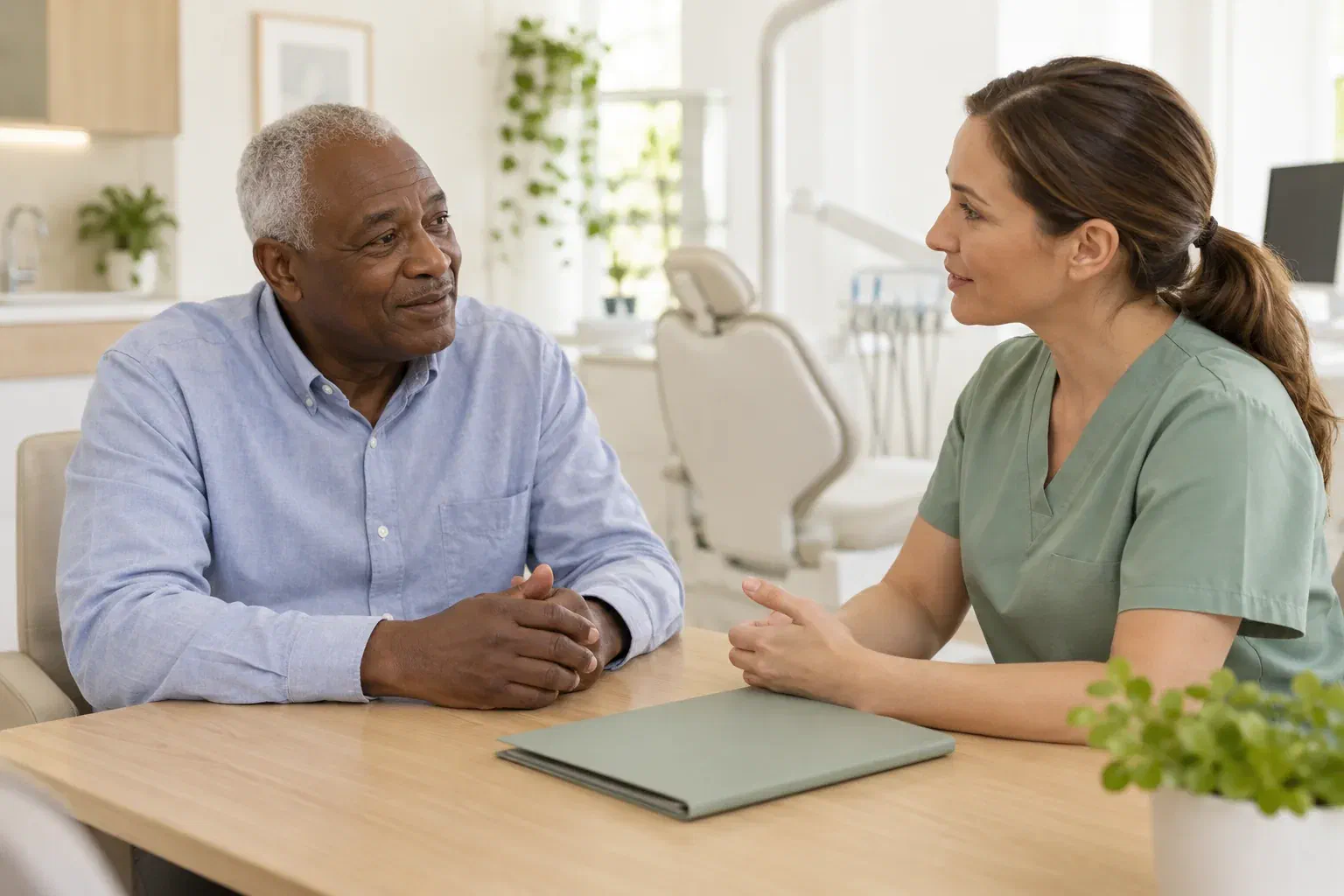
Illustrative consultation about jaw-joint movement and discomfort
Specialized Care

TMJ Assessment in Acton

A fall on the ice, an elbow during a game, a hard bite on something unexpected: jaw trouble sometimes starts with a moment you can name. If you're in Acton, a TMJ assessment helps sort out what needs prompt attention and what can be booked routinely, then reviews movement, the teeth and sensible next steps.

After a knock to the jaw

Urgent today, or a booked visit next week?

The first question after any blow to the face is safety. Trouble breathing or swallowing, a head injury, heavy bleeding, a jaw that won't close, or teeth that suddenly don't meet at all call for urgent medical care, not a dental booking. Once those are ruled out, a lingering ache, a new click or a jaw that tires easily can be looked at in a planned TMJ assessment.

The temporomandibular joints sit in front of your ears and rely on the chewing muscles to move smoothly. After an injury, discomfort can come from the joint, the muscles, a damaged tooth or something else, and more than one can be involved. Rather than a single test, the clinician pieces it together from what happened, how you feel now and what a careful examination shows.

When you call from Acton, describe what happened and when, and what has felt different since. Mention any emergency or medical visit and bring the paperwork if you have it. We can then judge how soon to see you, plan a suitable examination, and tell you when a medical, dental or specialist colleague is better placed to answer a question.

Ask about a jaw check after an injury
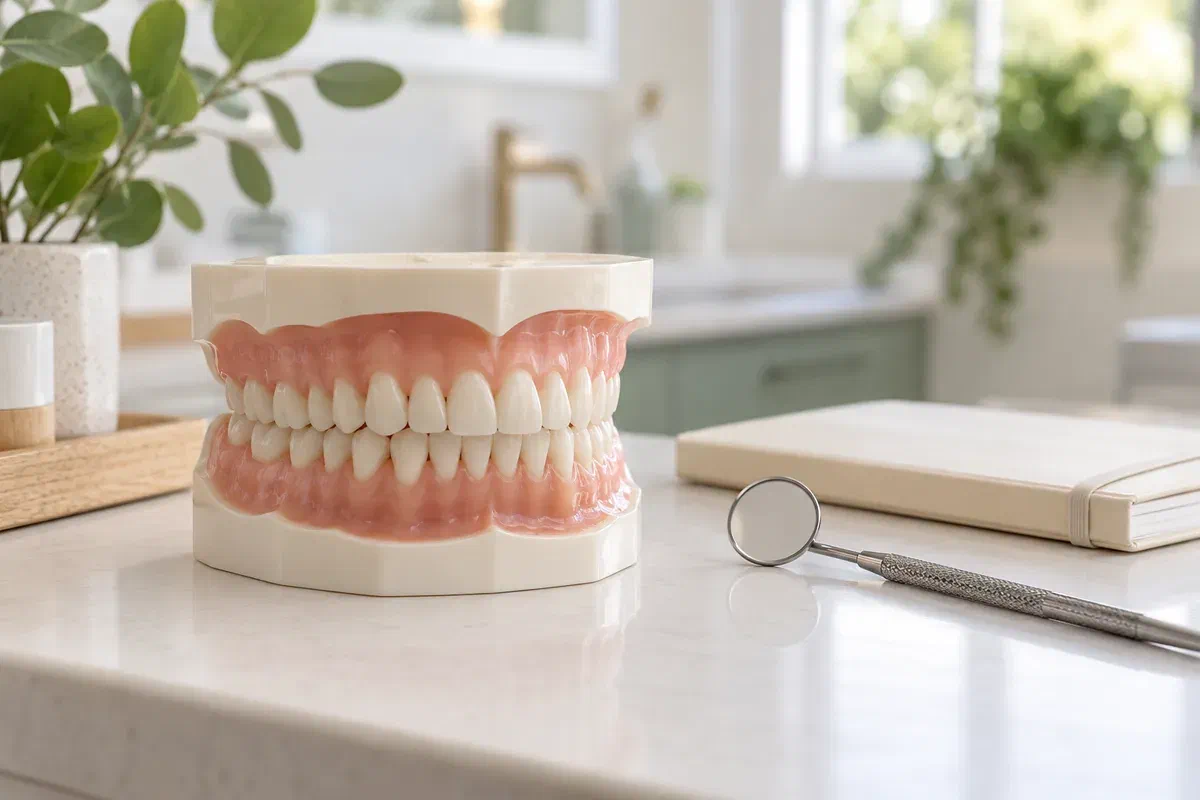
Illustrative supported dental teaching cast beside a mirror and closed notebook
What happened, and what's changed

Describe the injury first, then the symptoms.

How did it happen, when, and what has improved or worsened since? Is the discomfort constant or does it come and go? You don't need to know what's damaged, and you won't be asked to repeat painful movements.

Pain since the injury

Point to where it hurts and say whether chewing, opening, talking or rest makes a difference. Mention a tooth that feels loose, chipped or tender, and pain elsewhere in the face. That lets the clinician think about teeth, muscles and joints together rather than assuming a single source.

Opening, closing or a bite that no longer lines up

A bite that feels different after a blow, or a jaw that catches or won't open as far, needs attention. Don't force it. If it can't open or close normally, or the teeth suddenly don't meet, seek prompt advice and consider urgent medical care.

New noises from the joint

Note whether a click or grating sound appeared after the injury and whether it hurts. A noise on its own doesn't decide treatment, and loudness isn't a sign of severity. The clinician interprets it with your history and examination.

Recent trauma with swelling, numbness, bleeding, fever, a changed bite or difficulty breathing, swallowing, eating or drinking needs urgent medical assessment. Don't wait for a routine jaw appointment in those situations.

What a planned assessment adds

Once the urgent questions are answered, the details matter.

After emergency concerns are dealt with, a TMJ assessment can help distinguish a dental injury, muscle or joint involvement, and symptoms that need another provider. Ask for the reasoning in plain terms. Sometimes the right step is to let things settle with simple care and a review. Sometimes further imaging or a referral is needed before a clear recommendation can be made.

It also records where you are now. Knowing your current symptoms and limitations gives the next visit something to compare against, so you can tell whether recovery is on track. The aim isn't a permanent label from one appointment; it's a plan you understand and a sensible time to check progress.

Patient information: NIDCR — history, examination, and diagnostic considerations for TMD

How the injury has affected daily life

Think about what you haven't been able to do comfortably since it happened, such as eating certain foods, opening for a sandwich or getting through work. That's often more useful than a pain score, and it helps set realistic goals for recovery.

An examination paced to an injured jaw

The clinician may check movement, the joints, chewing muscles and teeth, gently and within comfortable limits. Tell them when something reproduces your pain. Pauses are fine, and nothing should be forced after an injury.

Clear reasons for imaging or referral

After trauma, imaging is sometimes needed to answer a specific question. Ask what it would show and how it could change your care. If monitoring is suggested, find out what changes should bring you back earlier.

What to expect

From the moment of injury to a recovery plan

Tell us when booking if opening is limited or a long visit would be hard. Bring any emergency or hospital reports if available, but don't delay seeking advice while you collect records.

  1. The injury and your history

    We'll ask how and when it happened, what care you've had since, and about past dental work, medical history and previous jaw symptoms. Mention whether anything has improved or worsened. If symptoms vary, describe the usual pattern.

  2. A gentle examination

    The clinician checks the areas your history points to, including teeth that may have been affected, and observes how the jaw moves. Light pressure on the muscles may help show which spots match the pain you've had since the injury. Say stop if it hurts; you don't need to push through, and the exam can be shortened if the jaw is very sore.

  3. What the findings suggest

    You'll hear which findings seem most relevant, which possibilities were considered and how clear the picture is at this point. Some questions need imaging or another assessment. A normal-looking finding doesn't mean your pain isn't real.

  4. A plan for recovery and review

    Options may include letting it settle with guidance, a further test or a referral. Make sure you know who arranges each part and how you'll hear about results. Agree which symptoms mean you should call or seek care sooner.

While your jaw recovers

Give it time, follow the plan and watch for warning signs.

Recovery after a knock is rarely a straight line. You might go home with some guidance, a time to be rechecked, or a referral to another provider. If you're unsure which step comes next or who's arranging it, ask before you go.

Follow advice suited to your injury

Use any recommended comfort measures or food changes within the limits discussed. Don't start forceful exercises or try to realign the jaw yourself. If something increases pain or stiffness, stop and check with the provider.

Keep a short recovery note

Every few days, note whether eating, opening and comfort are better or worse, and anything new. Avoid repeatedly testing the jaw. A brief record helps the review show whether recovery is on track.

Complete imaging or referrals

Find out where any test will be done, who books it and who explains the results. Tell us if scheduling or travel is a problem. A referral should lead to a clear next step rather than leave you unsure.

Paths after an injury assessment

Settle, support, or investigate

An assessment doesn't automatically mean treatment. Ask why a route suits your injury and what signs would change it at review.

When findings suggest it may settle

Explanation and watchful recovery

Mild soreness or a new painless sound may be explained and reviewed as you recover, without a device or procedure. Ask what change would matter. Watching is a plan, and worsening pain or movement should bring you back.

When managing symptoms is the first step

Conservative support while it heals

Practical measures, such as softer foods for a while, may be suggested with a review of how function improves. You should know which steps are yours and roughly when the next check falls. The plan can change if recovery stalls or the explanation stops fitting.

When an injury raises a specific question

Imaging or another assessment

After trauma, a targeted image or a medical or specialist assessment may answer what an exam can't. Ask what the result could change and who will explain it. Images are interpreted alongside your symptoms and examination.

Acton injury questions

Jaw injuries and what to do next

Injuries raise their own worries. It's fine to ask what an exam or image can realistically show after trauma, and why a step is being suggested, before you agree to any treatment.

(905) 876-4488
Should I go to emergency or a dentist after a hit to the jaw?
Go to emergency if you have trouble breathing or swallowing, a head injury, heavy bleeding, or a jaw that won’t open or close. For a sore jaw without those features, contact the dental office for advice.
Can a jaw problem appear days after an injury?
Sometimes symptoms become noticeable later, once swelling eases or normal eating resumes. Mention the injury even if it seemed minor at the time, as it helps the clinician understand the history and decide what to examine more closely.
My tooth feels loose after a fall. Is that part of a TMJ assessment?
A loose or damaged tooth needs prompt dental attention on its own. Call the office so it can be checked, and mention any jaw symptoms at the same time.
Can sports injuries cause jaw joint problems?
A blow to the face during sport can affect the teeth, muscles or joints, sometimes all three. Describe what happened and how you felt afterwards. Once the jaw has been assessed, it’s also worth asking about a properly fitted mouthguard for future games.
Will I need an X-ray after a jaw injury?
It depends on the findings and symptoms. Imaging may be considered after trauma to answer specific questions. Ask why it’s suggested and what it would show.
How long should a sore jaw take to settle after an injury?
It varies with the injury and the person. Ask the clinician what to expect for your situation and which signs would mean you should be seen sooner.
Calling from Acton

Tell us what happened, and we'll help you decide how soon.

Contact Milton Dental Clinic about jaw pain, stiffness or a bite that feels different after an injury. If you have serious symptoms, seek urgent medical care first. For everything else, a quick description of the injury over the phone lets us discuss timing.

Next steps may include a period of recovery with guidance, further investigation or a referral.

Visit Milton Dental Clinic
Unit 1, 342 Bronte St. S, Milton, ON L9T 5B7
Get directions Clinic hours
Monday–Thursday
11am–7pm
Friday–Sunday
By appointment only

Areas we serve

  • Milton
  • Oakville
  • Mississauga
  • Georgetown
  • Halton Hills
  • Acton
  • Campbellville
  • Brampton
  • Burlington
  • Puslinch
  • Rockwood
  • Erin
  • Caledon
  • Etobicoke
  • Old Milton
  • Bronte Meadows
  • Timberlea
  • Dorset Park
  • Dempsey
  • Clarke
  • Beaty
  • Coates
  • Harrison
  • Scott
  • Willmott
  • Ford
  • Bowes
  • Cobden
  • Walker
  • Mountain View
  • Milton Heights
  • Hawthorne Village
  • Valley View
  • Fallingbrook
  • Nassagaweya
  • Trafalgar
  • Esquesing
  • Nelson
  • Brookville
  • Moffat
  • Glen Williams
  • Norval
  • Limehouse
  • Stewarttown
  • Ashgrove
  • Hornby
  • Silver Creek
  • Speyside
  • Scotch Block
  • North Oakville
  • River Oaks
  • Glen Abbey
  • West Oak Trails
  • Palermo
  • Bronte Creek
  • College Park
  • Joshua Creek
  • Uptown Core
  • Preserve
  • Iroquois Ridge
  • Lisgar
  • Meadowvale
  • Meadowvale Village
  • Churchill Meadows
  • Erin Mills
  • Central Erin Mills
  • Streetsville
  • East Credit
  • Creditview
  • Heartland
  • Sheridan
  • Mount Pleasant
  • Credit Valley
  • Huttonville
  • Churchville
  • Springbrook
  • Northwest Brampton
  • Bram West
  • Fletcher's Meadow
  • Fletcher's Creek South
  • Alton Village
  • Orchard
  • Millcroft
  • Headon Forest
  • Tansley
  • Brant Hills
  • Tyandaga
  • Kilbride
  • Lowville
  • Aberfoyle
  • Morriston
  • Arkell
  • Hillsburgh
  • Freelton
  • Carlisle
  • Waterdown
  • Flamborough
  • Mountsberg

How can we help?

Milton Dental Clinic

Have a question about your smile? Choose the option that works best for you.

For urgent dental concerns, please call.
Messages are reviewed during clinic hours.