
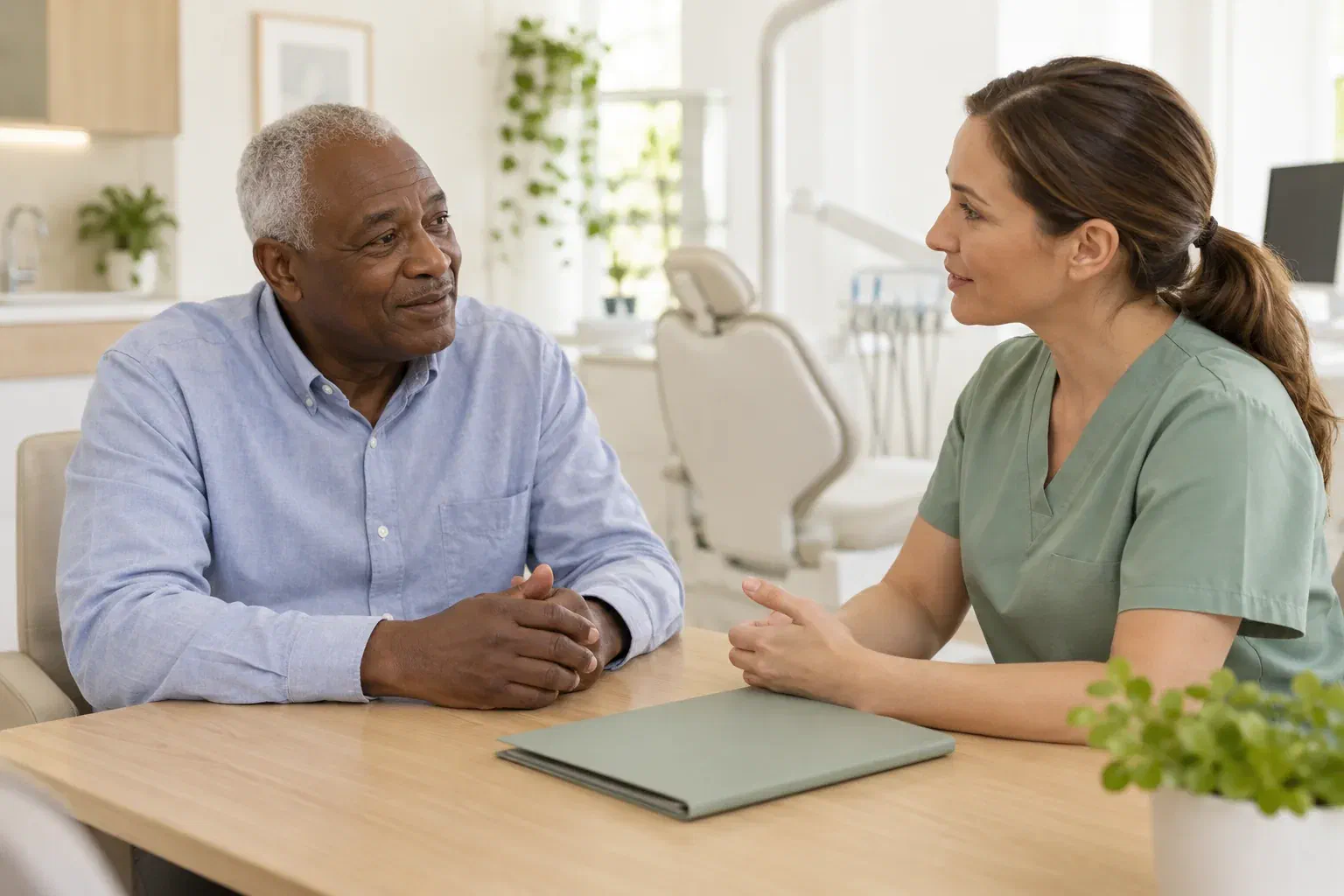
Illustrative consultation about jaw-joint movement and discomfort
Specialized Care

TMJ Assessment in Caledon

Ear fullness, an ache by the temple, a doctor who said “maybe it's your jaw.” Pain around the ear often sends people between providers. For anyone coming from Bolton or elsewhere in Caledon, a TMJ assessment checks the jaw side of the question carefully and helps coordinate with your physician or a specialist when the answer lies elsewhere.

Between the doctor and the dentist

Pain near the ear, and a question about where it starts

The jaw joint sits so close to the ear that the two are easy to confuse. Someone sees their family doctor about an earache, the ear looks fine, and they're told to have their jaw checked. Or the reverse happens: a dentist finds little in the jaw and suggests a medical visit. Being passed back and forth is frustrating, and a well-organised assessment can help bring the pieces together.

Your temporomandibular joints connect the lower jaw to the skull just in front of each ear, moving with the chewing muscles whenever you speak or eat. A TMJ assessment looks at that area alongside your teeth and general health. It doesn't rely on one test. The clinician listens, examines what your story points to, and keeps in mind that discomfort near the joint may still come from the ear, sinuses, a tooth or elsewhere.

When you book from Caledon, tell us what you've already been told and by whom. Bring notes from your physician, any hearing or imaging reports, and appliances you've used. We'll focus the examination on the jaw side of things, explain what we find, and say clearly when your doctor or a specialist is the right next stop.

Have the jaw side of the question checked
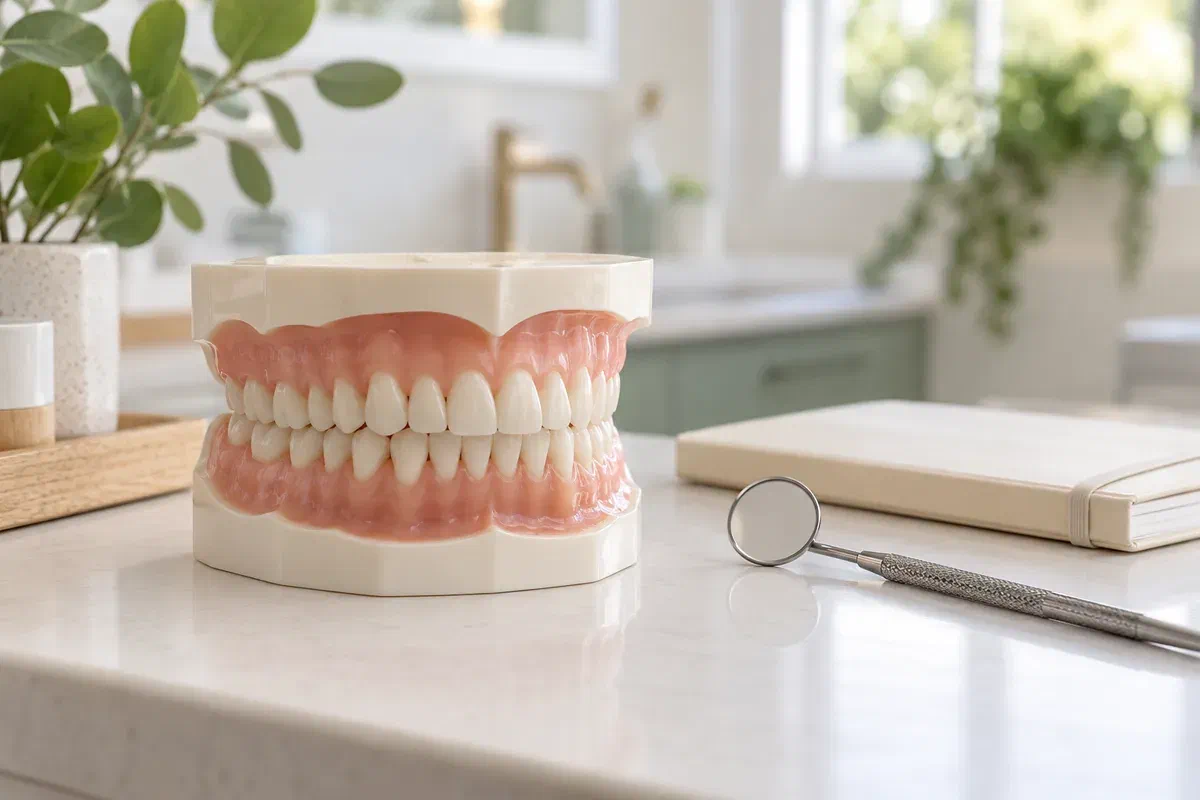
Illustrative supported dental teaching cast beside a mirror and closed notebook
Clues that help separate jaw from ear

Describe everything, even the parts that seem unrelated.

Explain when it started, how it has changed and whether it's constant or intermittent. Mention ear, sinus or headache symptoms too. Deciding which provider owns the problem isn't your job, and nobody will make you keep opening into pain to prove it.

Where the ache sits and what sets it off

Point to the spot and say whether chewing, opening wide, waking or nothing in particular triggers it. Note whether it feels deep in the ear or in front of it. Mention a sore tooth or pain elsewhere in the face so several sources can be weighed rather than one being assumed.

Jaw movement and the way your teeth meet

Restriction, catching or a bite that feels different points more toward the jaw, especially after an injury. Don't force it to demonstrate. If the jaw suddenly won't open or close normally, call promptly instead of waiting for a regular appointment.

Sounds, and whether they're in the joint or the ear

A click with jaw movement is different from ringing, muffled hearing or fullness in the ear. Tell us which you notice. A joint sound alone doesn't mean treatment is needed, and loudness doesn't reflect damage. Ear symptoms may need medical review.

Call promptly after an injury, or if you develop marked swelling, fever or sudden difficulty moving the jaw. Sudden hearing loss, severe ear pain, discharge or other serious symptoms need prompt medical attention rather than a routine dental assessment.

What a joined-up assessment offers

Clarity on the jaw, and a clear handoff if it's something else

A careful assessment helps show whether the source looks dental, whether the jaw's muscles or joint seem involved, or whether the trail leads back to your physician or an ear, nose and throat specialist. Ask for the reasoning in everyday terms. Sometimes the jaw is clearly involved and simple care or monitoring makes sense. Sometimes the right outcome is a well-explained referral.

Recording today's findings also helps the other people involved in your care. With your consent, a clear note of what was and wasn't found in the jaw can save repeated questions elsewhere. The point isn't to settle on a permanent label after one visit; it's to move you toward an answer with a plan everyone understands.

Patient information: NIDCR — history, examination, and diagnostic considerations for TMD

How the symptoms affect your life

Tell us what's become difficult, whether that's eating, sleeping on one side, using a phone or concentrating through the ache. These everyday details help decide which questions matter most and what any care should aim for.

A jaw-focused examination

The clinician may check movement, the joints, chewing muscles and teeth. Say when something reproduces the pain you've been feeling near your ear. The examination stays comfortable, and you can pause at any time.

Coordination instead of guesswork

If a referral or test is suggested, ask what it would answer and how information will be shared. If the jaw seems unlikely to be the cause, ask what to tell your physician. If monitoring is the plan, find out what to watch.

How the visit runs

Gather the story, examine the jaw, then coordinate.

Let us know if opening wide is difficult or a long visit would be hard. Bring physician notes, hearing test results or imaging reports if you have them, but don't put off advice about a new symptom to collect them.

  1. The full history, including other providers

    We'll ask about onset, changes, injuries, dental and medical history, medications and what other providers have said or tried. Mention ear, sinus or headache symptoms. If things vary, describe the typical pattern.

  2. A focused jaw examination

    Opening, closing and sideways glides are observed, and the joint area, the cheek and temple muscles and the teeth are examined. You may be asked whether pressing a muscle reproduces the ache near your ear. Speak up if anything hurts; there's no need to push through.

  3. An honest account of what was found

    Ask what seems jaw-related, what doesn't, and which other explanations remain. Some questions need medical or specialist input. Finding little in the jaw doesn't mean your pain isn't real; it may mean the answer lies elsewhere.

  4. A plan, and who does what

    The plan might be monitoring, conservative care, a test or a referral to your physician or a specialist. Ask who will arrange each step and how findings will be shared with you and other providers. Know which new symptoms mean calling sooner.

Afterwards

Keep everyone in the loop.

You may leave with advice, a review date, a referral or a note for your physician. If you're unsure which step is next or who is arranging it, ask before you go.

Follow the jaw advice you were given

Use recommended comfort measures within the limits discussed. Avoid forceful exercises or online jaw-repositioning techniques. If something makes your symptoms worse, stop and contact the provider.

Note both jaw and ear symptoms

Jot down how eating, opening and comfort are going, along with any ear or headache symptoms. Avoid constantly testing the jaw. A brief record helps both the dental and medical sides of your care.

Follow through with other providers

If a physician or specialist visit is recommended, book it and let us know what they find. Ask how reports will be shared. Tell the team if timing or distance is a problem.

Where things may lead

Jaw care, watchful waiting or the right referral

An assessment doesn't automatically mean dental treatment. Ask why a direction is suggested and what would change it.

If nothing in the jaw calls for treatment

Explanation and monitoring

Sometimes the jaw shows only a harmless click or a finding that is steady and not worth treating. You'd leave with an explanation, perhaps a note for your doctor, and no appliance or procedure. Ask which changes would alter that view. Keeping watch is deliberate, and fresh pain or stiffness means a call.

When the jaw seems to be contributing

Conservative jaw care

Where the muscles or joint do seem to play a part, you may be given a few everyday measures and a date to compare notes on eating, talking and the ache by your ear. Be sure you know your part in it. If things don't improve, both the plan and the possibility of a non-jaw cause are looked at again.

When the answer may lie beyond the jaw

Medical or specialist assessment

If findings suggest an ear, sinus or other medical cause, a referral may be more useful than any dental step. Imaging may also be considered. Ask what it would clarify and how the results will be shared and explained.

Caledon ear-and-jaw questions

When it's hard to tell the jaw from the ear

Ask what an examination can and can't show and why a referral or test is suggested before deciding on treatment.

(905) 876-4488
Why does jaw trouble sometimes feel like an earache?
Because the joint sits just in front of the ear, discomfort from the joint or chewing muscles can be felt nearby. The reverse can also happen. An examination helps sort out which is more likely.
My doctor found nothing wrong with my ear. Should I see a dentist?
A jaw assessment can be a reasonable next step. Bring any notes from your doctor and describe what was checked, so the dental assessment can build on it.
Can ringing in the ears be related to the jaw?
Ear symptoms such as ringing have many causes and often need medical evaluation. Mention them during the jaw assessment, and the clinician can discuss whether a medical review is appropriate.
Will the dentist send a report to my family doctor?
With your consent, relevant findings can be shared with other providers. Ask about this during your visit so everyone involved has the same information.
Could sinus problems feel like jaw pain?
Sinus issues can cause discomfort in the upper teeth and face. Tell the clinician about congestion or recent colds so they can consider it alongside jaw findings.
What happens if neither the doctor nor the dentist finds a cause?
Your symptoms are still real. Ask both providers what further assessment or specialist opinion might help, and keep a record of symptoms to share at each visit.
Book from Caledon

Let's check the jaw, and help you find the right next step.

Contact Milton Dental Clinic about pain near the ear or temple, jaw stiffness, clicking or advice from another provider. A jaw that has just locked, or a recent blow to the face, can change how quickly you should be seen, so mention either on the phone.

Next steps may include monitoring, conservative care, imaging or a referral to a physician or specialist.

Visit Milton Dental Clinic
Unit 1, 342 Bronte St. S, Milton, ON L9T 5B7
Get directions Clinic hours
Monday–Thursday
11am–7pm
Friday–Sunday
By appointment only

Areas we serve

  • Milton
  • Oakville
  • Mississauga
  • Georgetown
  • Halton Hills
  • Acton
  • Campbellville
  • Brampton
  • Burlington
  • Puslinch
  • Rockwood
  • Erin
  • Caledon
  • Etobicoke
  • Old Milton
  • Bronte Meadows
  • Timberlea
  • Dorset Park
  • Dempsey
  • Clarke
  • Beaty
  • Coates
  • Harrison
  • Scott
  • Willmott
  • Ford
  • Bowes
  • Cobden
  • Walker
  • Mountain View
  • Milton Heights
  • Hawthorne Village
  • Valley View
  • Fallingbrook
  • Nassagaweya
  • Trafalgar
  • Esquesing
  • Nelson
  • Brookville
  • Moffat
  • Glen Williams
  • Norval
  • Limehouse
  • Stewarttown
  • Ashgrove
  • Hornby
  • Silver Creek
  • Speyside
  • Scotch Block
  • North Oakville
  • River Oaks
  • Glen Abbey
  • West Oak Trails
  • Palermo
  • Bronte Creek
  • College Park
  • Joshua Creek
  • Uptown Core
  • Preserve
  • Iroquois Ridge
  • Lisgar
  • Meadowvale
  • Meadowvale Village
  • Churchill Meadows
  • Erin Mills
  • Central Erin Mills
  • Streetsville
  • East Credit
  • Creditview
  • Heartland
  • Sheridan
  • Mount Pleasant
  • Credit Valley
  • Huttonville
  • Churchville
  • Springbrook
  • Northwest Brampton
  • Bram West
  • Fletcher's Meadow
  • Fletcher's Creek South
  • Alton Village
  • Orchard
  • Millcroft
  • Headon Forest
  • Tansley
  • Brant Hills
  • Tyandaga
  • Kilbride
  • Lowville
  • Aberfoyle
  • Morriston
  • Arkell
  • Hillsburgh
  • Freelton
  • Carlisle
  • Waterdown
  • Flamborough
  • Mountsberg

How can we help?

Milton Dental Clinic

Have a question about your smile? Choose the option that works best for you.

For urgent dental concerns, please call.
Messages are reviewed during clinic hours.